When Firefighters May Take an ATV on the Road
Oh, the open road! For us ATV and UTV enthusiasts in Virginia, that phrase usually conjures images of winding forest trails, dusty backroads within designated riding areas, or maybe even a quick dash across a farm field. But for most of our machines, the asphalt of a public highway is strictly off-limits. It's a rule etched into Virginia law, and for good reason – safety for everyone on the road. However, there are crucial exceptions, and today we're going to dive deep into one of the most vital: when our dedicated firefighters and rescue squads can legally take an ATV or UTV onto a public road during an emergency. This guide will clarify the specific circumstances and responsibilities involved, giving you a better understanding of how these incredible machines serve our communities when it matters most.
The General Rule: Why ATVs Are Off-Limits on Virginia Roads
Let's get straight to it: for the average rider, your ATV or UTV and Virginia's public roads simply do not mix. It's a fundamental safety regulation designed to protect both the rider and other motorists.
Public Highways Are Banned
Virginia law, specifically § 46.2-915.1, makes it abundantly clear that ATVs and UTVs are not considered "motor vehicles" in the same way cars and trucks are for general road use. This distinction means they aren't designed or regulated for highway speeds, traffic flow, or the specific safety requirements of public roads. Think about it: a quad, with its high center of gravity and lack of traditional safety features like enclosed cabins and airbags, is a different beast entirely from a pickup truck. It's nimble and powerful off-road, but those very characteristics make it unsuitable for pavement and mixed traffic. Trying to navigate a busy Route 29 on an ATV, even for a short stretch, would be incredibly dangerous. The law exists to prevent these kinds of hazardous situations, and the penalties for regular riders caught doing so can be steep. [Virginia Bans ATVs on Public Highways] for good reason. It’s all about keeping everyone safe, whether they're on two wheels, four wheels, or four knobby tires.
Exceptions Are Few and Far Between
Now, while the general rule is strict, Virginia law does acknowledge that there are specific, limited circumstances where an ATV or UTV might need to cross or briefly use a public road. We're talking about things like crossing a highway by the most direct route to get from one private property to another, or for very specific agricultural purposes on a farm. There are even a few designated coalfield routes in specific counties where ATVs are permitted under strict conditions, but these are rare and highly localized. These aren't loopholes for joyriding; they are carefully carved-out permissions for practical needs. For instance, a farmer might use their utility vehicle to cross a minor road between two fields they own, but they wouldn't be allowed to drive it five miles down the highway to the hardware store. It’s a very tight window of exception, and outside of these specific cases, the general prohibition holds firm. [Virginia Rules for Crossing a Highway] details these tight restrictions.
The Specific Exception for Emergency Services
This brings us to the crucial exception that allows our first responders to operate ATVs and UTVs on public roads. It's not a free pass, but a targeted allowance to perform essential duties.
What the Law Says for Firefighters and Rescue Squads
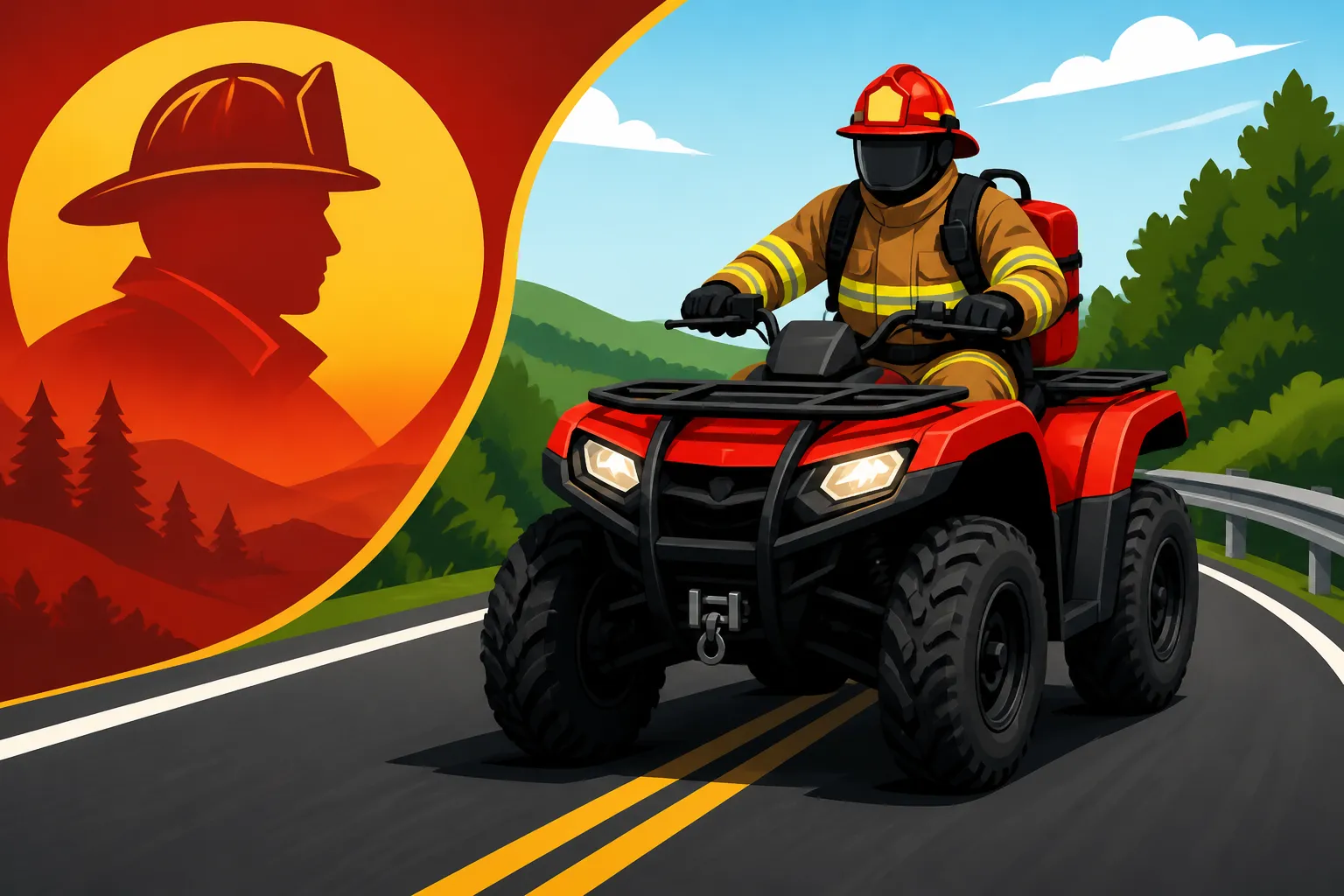
Virginia Code § 46.2-915.1, the very same section that usually bans ATVs from roads, includes a specific clause for emergency services. It states that the prohibition "shall not apply to any all-terrain vehicle or utility vehicle being operated by any law-enforcement officer, firefighter, or emergency medical services personnel in the performance of their duties." This is the cornerstone of the exception. It means that when a firefighter, working for a recognized fire department, is actively engaged in an emergency operation or performing official duties, they can use an ATV or UTV on a public road if it's necessary. This isn't just about getting to the scene; it can also include transporting specialized equipment, accessing remote areas for search and rescue, or even moving personnel. The key here is "in the performance of their duties." This isn't for personal use or general travel; it's strictly for official, emergency-related functions. [Virginia Emergency Responder Exceptions] exist because these machines are indispensable tools in certain situations.
Practical Scenarios for Firefighter ATV Use
So, what does this look like in the real world? Imagine a call comes in about a brush fire deep in the George Washington National Forest, several miles off the nearest paved road. A traditional fire engine, as capable as it is, simply cannot navigate the narrow, unpaved logging trails, steep inclines, and dense undergrowth. This is where an ATV, or more commonly a specialized utility vehicle (UTV) equipped with a small pump and water tank, becomes a lifesaver. Firefighters can quickly load their gear onto the UTV – perhaps a heavy-duty bed rack from a company like SuperATV for extra capacity – and zoom directly to the fire's edge, often reaching it much faster than crews on foot or via slower, larger vehicles.
Another scenario might involve a search and rescue operation for a lost hiker in a rugged, mountainous area of Southwest Virginia. Covering vast tracts of uneven, sometimes flooded, or heavily wooded terrain on foot is exhausting and time-consuming. ATVs and UTVs allow search teams to sweep large areas efficiently, carry medical supplies, and even transport an injured person out to an awaiting ambulance on the nearest paved road. These machines offer unparalleled maneuverability and off-road capability that larger emergency vehicles simply can't match, making them critical assets for departments protecting Virginia's diverse landscapes. Without this specific legal allowance, emergency response in many rural and wildland areas would be severely hampered, putting lives and property at greater risk.
Limitations and Responsibilities for Firefighter ATV Use
While the law grants this vital exception, it's not a carte blanche. Emergency personnel operating ATVs and UTVs on public roads still have significant responsibilities to ensure safety.
Training and Equipment Considerations
Just because firefighters can operate an ATV on a public road during an emergency doesn't mean they're exempt from all safety precautions. In fact, training is paramount. Firefighters often undergo specialized training for off-road vehicle operation, covering everything from navigating challenging terrain to safely carrying equipment and understanding the dynamics of these machines. This isn't just about driving; it's about tactical operation in stressful, often dangerous, environments.
Furthermore, these emergency ATVs and UTVs are typically not your average recreational machines. They are often outfitted with specific modifications for their duties. This can include:
- Emergency Lighting and Sirens: Essential for alerting other motorists to their presence and urgency, especially when operating on public roads. [Virginia Lighting Rules on a Machine] still applies in spirit, even if the letter of the law differs for emergency vehicles.
- Specialized Tires: For optimal grip across various terrains, from mud to pavement.
- Heavy-Duty Suspension and Skid Plates: To withstand the rigors of off-road emergency travel.
- Cargo Racks and Storage: Firefighters need to carry pumps, hoses, medical kits, extrication tools, and personal protective equipment. Companies like SuperATV offer robust cargo solutions, from sturdy bed extensions to headache racks, that are often adapted for emergency service use.
- Winches: In remote or difficult areas, a winch can be invaluable for self-recovery or moving obstacles.
These machines are tools, and like any tool, they must be used by trained individuals with the right setup to maximize effectiveness and minimize risk.
Maintaining Public Safety While Responding
Even with the urgency of an emergency, firefighters operating ATVs or UTVs on public roads are expected to do so with the highest regard for public safety. While they may be exempt from certain traffic laws in an emergency (like exceeding the speed limit or proceeding through a red light), they must still drive with due regard for the safety of all persons. This means:
- Prudent Speed: Driving at a speed that is reasonable and safe for the conditions, even if it's above the posted limit.
- Visible and Audible Warnings: Actively using lights and sirens to make their presence known to other drivers, pedestrians, and cyclists.
- Anticipating Other Drivers: Recognizing that other road users might not immediately see or hear an ATV/UTV, especially if they are accustomed to larger, more traditional emergency vehicles.
- Avoiding Unnecessary Risks: While the mission is critical, reckless endangerment is never acceptable.
It’s a delicate balance between rapid response and ensuring the safety of everyone on the road. The law acknowledges the need for speed and access during an emergency, but it doesn't excuse negligence. For the average citizen, understanding that an ATV on the road could be an emergency responder can also help prevent misunderstandings. This is a far cry from the [Virginia's Civil Penalty for Illegal Riding] that a regular rider would face for unauthorized road use; it's about authorized, professional, and responsible operation under extreme circumstances.
Why This Exception Is Crucial for Virginia Communities
The ability for firefighters and rescue squads to utilize ATVs and UTVs on public roads is not just a legal technicality; it’s a critical component of effective emergency response across our diverse Commonwealth.
Accessing Remote and Difficult Terrain
Virginia is a state of incredible natural beauty and varied landscapes. From the rugged peaks of the Appalachian Mountains in the west to the dense forests of the Piedmont and the extensive waterways of the Tidewater region, much of our land is not easily accessible by traditional paved roads. Imagine a wildfire sparking up in the remote stretches of a state park, or a mountain biker falling and sustaining an injury deep within a vast tract of timberland. In these scenarios, a standard fire truck or ambulance would be utterly useless in reaching the exact location.
This is where the specialized capabilities of ATVs and UTVs shine. These machines can traverse narrow trails, ford shallow streams, climb steep grades, and navigate muddy or rocky terrain that would immobilize larger vehicles. By allowing emergency personnel to use these vehicles on public roads to get to these remote access points, the law significantly reduces response times. A delay of even a few minutes can mean the difference between life and death in a medical emergency, or the spread of a small brush fire into a raging inferno. These vehicles are vital for everything from delivering immediate medical care to locating lost individuals, even potentially aiding in the investigation of an [Virginia Accident Reporting for an ATV Crash] that occurred off-road. They are literally the bridge between paved roads and the wilder, harder-to-reach parts of our communities.
The Role of Volunteer Departments
Many of Virginia's communities, especially in rural areas, rely heavily on the dedication and selflessness of volunteer fire and rescue departments. These departments often operate on tighter budgets than their municipal counterparts, yet they are responsible for covering vast geographic areas with diverse terrain. For these departments, ATVs and UTVs represent a highly efficient and cost-effective solution for extending their reach.
Instead of needing multiple, expensive specialized vehicles, a well-equipped UTV can perform a multitude of tasks, from rapid assessment at a remote scene to transporting critical gear or even assisting in small-scale search operations. This flexibility allows volunteer departments to maximize their resources and provide a higher level of service to their communities. It means that whether you live in a bustling suburb or a quiet mountain hollow, your local emergency services have the tools, and the legal right, to reach you effectively, even if it means momentarily using a public road to get there. This allowance truly empowers these vital volunteers to protect lives and property across every corner of Virginia.
| Aspect | General ATV Road Use (Civilian) | Emergency Responder ATV Road Use (Fire/Rescue) |
|---|---|---|
| Legality on Public Roads | Generally Prohibited | Permitted in performance of official duties |
| Primary Purpose | Recreation, farm work, property crossing | Emergency response, search & rescue, official transport |
| Required Equipment | Basic safety gear (helmet, eye protection) | Emergency lights, sirens, specialized safety equipment |
| Training | Not legally required for general riding | Often specialized off-road and emergency ops training |
| Speed Limits | Strict adherence | Due regard for safety, may exceed limits in emergency |
| Right-of-Way | Yield to all traffic | Priority, but must drive with due regard |
| Penalties for Illegal Use | Civil penalties, fines, potential impoundment | None if operating legally in performance of duty |
Disclaimer
This article is for general informational purposes only and does not constitute professional advice. Laws, prices and regulations vary by location and change over time. Consult a qualified professional for guidance on your specific situation.