Virginia Rules for Riding a Power Line Cut
Finding new and exciting places to ride your ATV or UTV in Virginia can feel like a constant quest, especially when you've explored the usual trails and are looking for something different. Power line cuts often appear as inviting, open pathways, cutting through dense woods, and it's easy to wonder if they're a legitimate option for off-road adventure. This guide aims to clear up the confusion surrounding riding on power line cuts in Virginia, detailing the legalities, risks, and responsible ways to enjoy your machine without running afoul of the law or putting yourself in danger.
The Basics: Why Power Line Cuts Are Tricky in Virginia
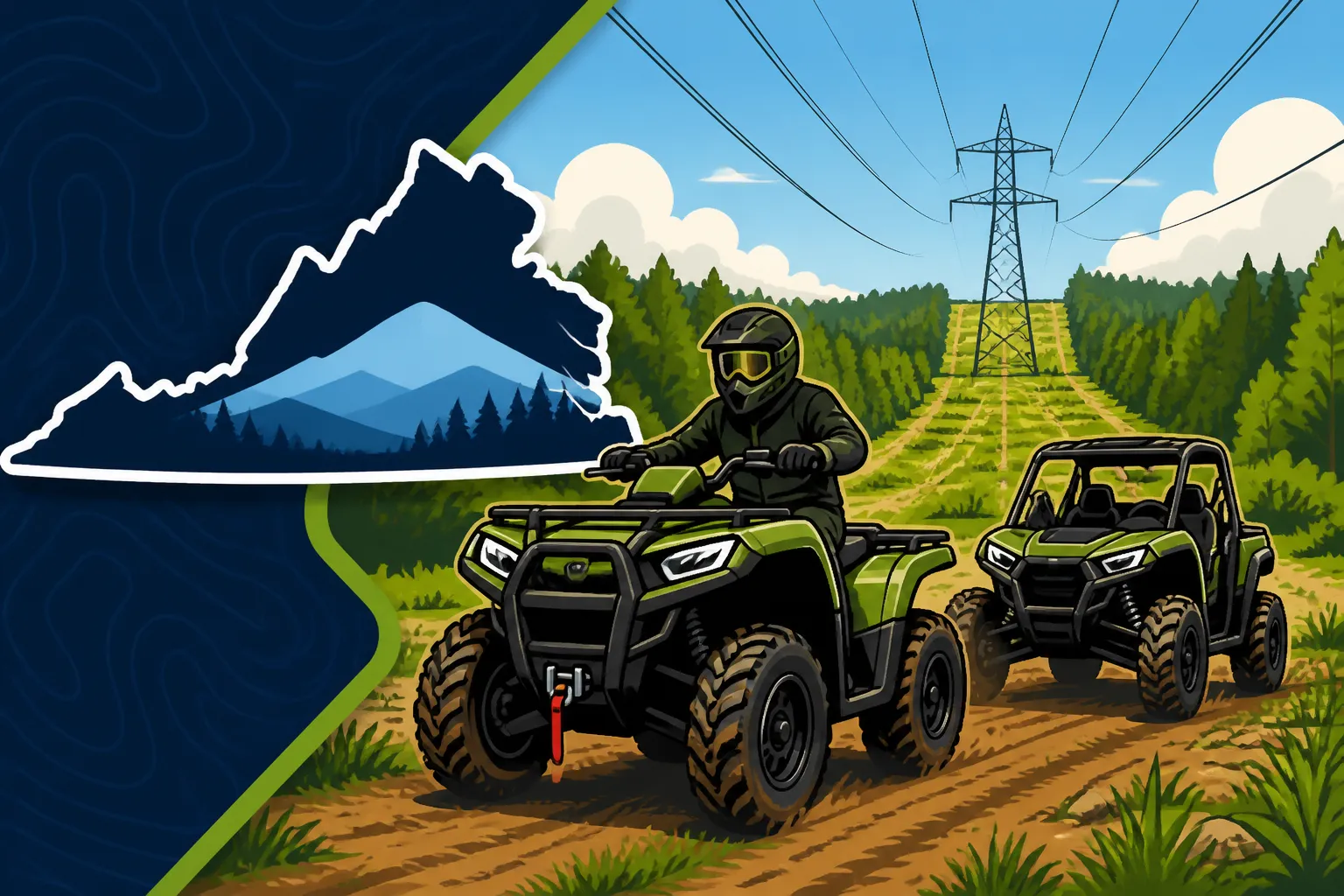
It's a common sight across Virginia's landscape: wide, clear swaths of land cutting through forests, often following the contours of the terrain. These are power line cuts, maintained by utility companies to ensure clear passage for their electrical lines and to prevent vegetation from interfering with service. While they might look like ideal, ready-made trails for off-road enthusiasts, the reality of their legal status is far more complex than it appears on the surface.
Understanding Property Ownership and Easements
The biggest misconception about power line cuts is that because they're maintained by a utility company, they must be public land or somehow open for public use. This simply isn't the case in Virginia. A power line cut exists because a utility company has obtained an "easement" over privately owned land. Think of an easement as a legal right granted to one party (the utility company) to use another party's land for a specific purpose (like running power lines and maintaining them). The crucial detail here is that the land itself still belongs to the private landowner, not the utility company, and certainly not the general public.
This means that while the utility company has the right to access and maintain that strip of land for their infrastructure, they do not own it outright. Therefore, they generally cannot grant permission for recreational activities like ATV riding. The property owner—the person or entity who holds the deed to the land—retains all other rights, including the right to control access. It's a subtle but profoundly important distinction, and misunderstanding it can lead to serious legal trouble.
The Default Rule: Private Land is Off-Limits Without Permission
Virginia's laws are clear on this point: unless a property is explicitly designated as public access or you have the landowner's express permission, it is considered private property, and riding your ATV or UTV on it constitutes trespassing. There's no "implied consent" just because the land looks open or unposted. Many landowners, especially those with large tracts of undeveloped land that include power line easements, choose not to post "No Trespassing" signs everywhere simply because it's impractical or expensive. However, the absence of a sign does not mean you have permission to ride.
This rule applies universally across Virginia. Even if a power line cut seems remote, undeveloped, or like it hasn't been used by anyone in years, it's almost certainly still owned by someone. The burden is always on the rider to know whether they have legal access. Relying on the idea that "no one will notice" or "it's just a power line" can lead to fines, legal action, and a damaged reputation for the off-road community. To avoid issues, always assume private land is off-limits until proven otherwise, especially for areas that lack clear public access signage. For deeper insights into this, check out [Virginia Rules for Riding Private Land].
Navigating Permission: Getting It Right
So, if riding a power line cut requires landowner permission, how do you go about getting it? It's not always a straightforward process, especially given that these cuts can stretch for miles and cross many different parcels of land, each with a different owner. However, for those determined to explore these unique terrains legally, there is a path forward.
Identifying the Right Landowner
The first and often most challenging step is figuring out who actually owns the land under the power line cut. You can't just ask the power company; as discussed, they hold an easement, not ownership. You'll need to turn to local government resources. Most counties and cities in Virginia have online Geographic Information System (GIS) maps or tax assessor databases that are publicly accessible. These tools allow you to zoom in on specific parcels of land and identify the property owner's name and sometimes even their mailing address.
Power line cuts, however, rarely follow single property lines. They might bisect dozens of properties over a short distance. This means you could be looking at contacting multiple landowners to get permission for even a modest stretch of riding. It can be a tedious process, involving cross-referencing maps, property records, and sometimes even physically walking the land (with permission, of course) to understand the boundaries. Tracking down absentee owners or those with outdated contact information can add another layer of complexity. Persistence and meticulous record-keeping are key here.
Approaching Landowners for Consent
Once you've identified the landowners, the next step is to make contact and politely request permission. This isn't a task to be taken lightly; a respectful and well-prepared approach significantly increases your chances of success. Here are some tips:
- Be Prepared: Have a clear explanation of who you are, what you want to do (ride your ATV/UTV), when you plan to do it, and for how long.
- Highlight Benefits (if any): Can you offer to help clear brush, check fence lines, or report any issues you see on their property? Some landowners might appreciate the extra eyes on their remote land.
- Address Concerns: Be ready to discuss potential concerns like noise, damage to property, or liability. Reassure them you'll ride responsibly. You might even offer to carry personal liability insurance for your machine, even though [Virginia Requires No ATV Insurance] by law.
- Put it in Writing: If permission is granted, ask for it in writing. A simple, signed document outlining the terms of your access (e.g., specific dates, areas, types of machines allowed) can prevent misunderstandings later on. This is where a formal [What a Landowner's Written Permission Note Should Say] comes in handy, protecting both you and the landowner. Without it, you could face charges under [Virginia Trespass Law for Riders] even if you thought you had verbal permission.
Remember, many landowners are protective of their property, and unsolicited requests can sometimes be met with skepticism. Approach them as a neighbor seeking a favor, not demanding a right. The goal is to build a positive relationship and demonstrate that you are a responsible and trustworthy rider.
Legal Repercussions and Safety Concerns
The temptation to ride an appealing-looking power line cut without permission can be strong, but the legal and safety risks associated with doing so are substantial and simply not worth it. Virginia has clear laws designed to protect private property, and utility easements come with their own set of unique hazards.
Penalties for Trespassing on Private Land
Riding an ATV or UTV on private land without explicit, written permission from the landowner is a violation of Virginia law. This isn't just a minor infraction; it can lead to significant legal consequences. In Virginia, trespassing can result in:
- Civil Penalties: You could be subject to fines. While not a criminal charge, these penalties are still costly.
- Criminal Charges: In some cases, especially if damage occurs, or if you ignore requests to leave, trespassing can escalate to a misdemeanor charge, which can mean higher fines and even potential jail time.
- Impoundment of Your Machine: Law enforcement has the authority to impound your ATV or UTV if it's involved in illegal activity. The costs associated with retrieving an impounded vehicle – towing fees, storage fees, and release fees – can quickly add up, often exceeding the cost of the initial fine.
- Liability for Damages: If your riding causes any damage to the property, you could be held liable for the repair or replacement costs. This could include rutting up fields, damaging fences, or disturbing wildlife habitats.
- Negative Impact on the Riding Community: Each instance of illegal riding contributes to a negative perception of ATV and UTV riders as a whole, making it harder for responsible riders to gain access and eroding goodwill with landowners and local communities.
It's crucial to understand that even if you didn't see a "No Trespassing" sign, the law still holds. Ignorance of the specific property owner or their rules is not a defense. The financial implications alone, between [Virginia Ticket Costs for Riders] and [Virginia Court Costs for a Citation], can be a significant blow. Don't let a moment of unauthorized fun turn into a costly legal nightmare.
Unique Hazards of Power Line Cuts
Beyond the legal risks, power line cuts present specific physical dangers that riders need to be aware of. These are not recreational trails; they are utility access routes, and they are not designed with rider safety in mind.
- Uneven Terrain and Obstacles: Utility companies clear vegetation, but they don't grade the land for smooth riding. You'll encounter deeply rutted sections from heavy equipment, large rocks, stumps hidden by grass, washouts, and steep, eroded inclines and declines. These conditions can easily lead to rollovers, collisions, and serious injuries. Even a well-equipped machine with SuperATV skid plates and heavy-duty suspension can be challenged by truly unmaintained terrain, and no aftermarket part makes trespassing okay.
- Utility Equipment and Structures: Power line cuts are, by definition, home to electrical infrastructure. This means power poles, guy wires (which can be hard to see), transformers, and access roads with heavy vehicle traffic. Colliding with any of these can be catastrophic.
- Electrocution Hazards: While rare, downed power lines are an extreme danger. Even if a line appears inactive, never approach or touch it. The ground around it can also be energized. Always assume any downed line is live and extremely dangerous.
- Environmental Concerns: Power line cuts are often managed with herbicides to keep vegetation down, which can create unhealthy dust or ground conditions. They can also cross sensitive wetlands or conservation areas that are not suitable for off-road vehicle traffic.
- Lack of Emergency Access: Many power line cuts are in remote areas, far from paved roads. If an accident occurs, emergency services may have extreme difficulty locating you and accessing the scene, delaying critical medical attention. Cell service is also often spotty or nonexistent in these areas.
Considering these serious dangers, even with permission, extreme caution is necessary when riding on a power line cut. These are not the well-maintained, designated trails you'd find at a place like [Spearhead Trails in Virginia Explained]. Always ride with appropriate safety gear, a first aid kit, and never alone.
Alternatives to Power Line Cuts
Given the legal complexities and safety concerns associated with power line cuts, it’s often much smarter, safer, and more responsible to seek out legal and designated riding areas. Virginia offers several excellent options for ATV and UTV enthusiasts who want to enjoy their machines without the constant worry of trespassing or encountering unexpected hazards.
Legally Designated Trails and Riding Areas
Virginia is home to some fantastic trail systems and private parks specifically designed for off-road vehicle use. These areas offer a secure and enjoyable environment where you can ride with peace of mind.
- Spearhead Trails: Located in Southwest Virginia's coalfields, the Spearhead Trails system is a major draw for off-road riders. It boasts hundreds of miles of diverse trails, ranging from easy scenic routes to challenging technical climbs. You'll find well-marked paths, maps, and often amenities in nearby trail towns. A permit is required, but it gives you access to an extensive network including Coal Canyon, Mountain View, and Original Pocahontas. This is the gold standard for legal, public-access riding in the state.
- Peters Mill Run OHV Trails: For riders in the northern part of the state, the Peters Mill Run and Taskers Gap system in the George Washington National Forest provides a different kind of experience. These trails wind through beautiful forest land, offering a mix of terrain. A National Forest OHV permit is required, and there are often seasonal closures, so it's essential to check ahead.
- Private Off-Road Parks: In addition to public trail systems, Virginia also has several private off-road parks. These parks often provide a range of trails, from beginner-friendly loops to extreme rock crawling. They typically operate on a day-pass or membership system and have their own specific rules regarding helmets, age limits, and machine types. Many also offer amenities like camping, wash stations, and sometimes even rentals. These private parks are a fantastic way to ride legally and often provide a controlled environment for learning and pushing your limits safely. For more options, explore [Virginia Private Off-Road Parks].
The key advantage of these designated areas is that they are managed, often mapped, and legally sanctioned for off-road recreation. You pay a fee, you get a permit, and you ride knowing you're not breaking any laws or encroaching on someone else's property.
Riding on Farm or Hunting Lease Land
If you already have a relationship with a landowner, perhaps through a hunting lease or by helping out on a farm, you might explore the possibility of riding your ATV or UTV on that private property. However, it's crucial not to assume that a hunting lease automatically grants you permission for recreational ATV riding.
- Explicit Permission is Still Required: Even if you have a hunting lease, that agreement might only cover access for hunting purposes. You must get separate, explicit permission from the landowner for recreational ATV use. This should ideally be added as an amendment to your lease or documented in a separate written agreement. Clearly define where you can ride, when, and what activities are permitted.
- Farm Use vs. Recreation: Virginia law does offer certain exemptions for ATVs used for agricultural purposes under [Virginia Farming and Household Exceptions]. However, these exemptions apply when the machine is being used as a tool for farm work (e.g., hauling feed, checking fences, moving equipment) on the owner's farm. They do not extend to purely recreational riding, even on a farm. If you're riding for fun, you still need that explicit recreational permission.
- Respect the Landowner's Trust: If a landowner trusts you with access to their property for one purpose, maintain that trust by strictly adhering to the agreed-upon terms. Violating that trust, even inadvertently, can jeopardize your access and the landowner's willingness to allow others on their property.
Ultimately, whether it's a dedicated trail system or private land where you have a relationship, the guiding principle remains the same: always secure explicit, clear, and ideally written permission before you ride. This commitment to responsible riding protects you, the landowner, and the future of off-road recreation in Virginia.
Here's a quick comparison of common land types for ATV riding in Virginia:
| Land Type | Legal Access Requirement | Common Hazards | Pros | Cons |
|---|---|---|---|---|
| Power Line Cut (Private) | Explicit, written permission from landowner(s) | Uneven terrain, utility equipment, erosion, downed lines | Appears open, unique terrain if permitted, often remote | High risk of trespassing, multiple landowners, specific dangers, no services |
| Designated Trail Systems | Permit/Pass (e.g., Spearhead, National Forest) | Varying difficulty, other users, potential closures | Legal, mapped, maintained (to varying degrees), community, amenities | Permit fees, specific rules, can be crowded |
| Private Off-Road Parks | Day pass/Membership, waiver | Park-specific hazards, varying challenge levels | Legal, often well-maintained, diverse trails, safety staff, amenities | Entry fees, strict park rules, can be crowded |
| Farm/Hunting Lease Land | Explicit, written permission from landowner | Natural obstacles, livestock, farm equipment, fences | Convenient if you have existing access, private, varied terrain | Requires strong landowner relationship, limited scope of access, no services |
| Public Roads/Highways | Strictly Prohibited | High-speed traffic, collisions, legal penalties, impoundment | (No pros, as it's illegal for ATVs in Virginia) | Severe legal consequences, extreme danger, vehicle impoundment |
Disclaimer
This article is for general informational purposes only and does not constitute professional advice. Laws, prices and regulations vary by location and change over time. Consult a qualified professional for guidance on your specific situation.