Why the ATV Club Pays for the Road Signs
It can be incredibly frustrating, can't it? You finally get some common-sense road access for your ATV in certain parts of Virginia, allowing you to connect trails or reach amenities, only to find out that the burden of signage falls squarely on local ATV clubs. It feels like an extra hoop to jump through when all you want to do is ride legally and safely. This guide dives deep into why this responsibility lies with clubs, how the system works, and the invaluable role these groups play in making legal riding possible in the Commonwealth.
The Specific Virginia Law That Opens Certain Roads to ATVs
Let's start by looking at the foundation for this unique situation. Most of Virginia's public highways are unequivocally off-limits to ATVs. This isn't just a suggestion; it's written directly into the code. However, there's a specific carve-out in the Virginia Code, specifically § 46.2-915.1, that provides limited exceptions. This section is a beacon of hope for riders in the western part of the state, particularly in Buchanan and Tazewell counties.
The law grants the boards of supervisors in these two counties the authority to designate certain secondary highways – think those unpaved, gravel, or less-traveled roads – for ATV use. But this isn't a free-for-all. There are very specific conditions that must be met for these roads to be opened. Riders often wonder, [Virginia Crossings of Numbered State Routes], or what about linking up trails? This law is designed to address exactly those kinds of practical riding needs.
Crucially, the law isn't about making ATVs street-legal in the conventional sense. It's about providing controlled, designated access to specific road sections. You won't be cruising down Route 58 in your side-by-side. Instead, these are typically connector routes, allowing riders to move between different sections of a trail system, access fuel and food in a trail town, or reach a trailhead without having to trailer their machine for short distances. It's a pragmatic solution born from the recognition of the economic and recreational value of ATV riding in these regions.
Why Local ATV Clubs Fund the Necessary Road Signs
So, if the state passes a law allowing this access, why doesn't the state, through the Department of Transportation (VDOT) or another agency, pay for the signs? This is where the budget realities and the spirit of local initiative come into play. Virginia's state budget prioritizes maintaining major road networks and essential services. While ATV recreation is valuable, it's not typically seen as a core function for state-funded road infrastructure, especially for a type of vehicle generally prohibited from those roads.
The burden of funding and installing these signs falls to local ATV clubs because the permission to use these roads is granted at the county level, often as a result of direct advocacy from these clubs and their communities. It's a classic case of "if you want it, you help pay for it." The state allows the exception but doesn't necessarily fund the implementation of that exception. This arrangement effectively transfers the financial responsibility from the state to the local organizations that stand to benefit most from the designated road access.
These signs are not just decorative; they are a critical safety component and a legal requirement. They inform both ATV riders and other motorists about the designated use of the road. Without proper signage, the legal allowance for ATVs on these specific roads wouldn't be enforceable, and it would create a chaotic and dangerous situation. Imagine trying to navigate [Virginia's Named Route in Buchanan County] or [Virginia's Named Route in Tazewell County] without clear indicators! So, while it might seem unfair that clubs foot the bill, it’s a direct consequence of the legislative compromise to gain limited road access.
Understanding the Highway Department's Role in Signage
Even though ATV clubs pay for the signs, the Virginia Department of Transportation (VDOT) or the relevant Highway Department still plays a vital role. They don't just let clubs slap up any old sign. The state has strict standards for road signs – their design, size, reflectivity, placement, and content. These standards are in place for safety, uniformity, and to ensure they are easily understood by all drivers, regardless of their familiarity with local ATV routes.
This means that ATV clubs can't just order signs from any print shop and put them up. They must work directly with VDOT to ensure the signs meet all official specifications. VDOT will review the proposed sign designs, approve the exact locations, and sometimes even oversee the installation to ensure compliance. It's a collaborative process, but VDOT maintains ultimate authority over anything that goes up on a state-maintained road right-of-way. This ensures that even though the cost is borne by the clubs, the professional integrity and safety standards of public road signage are upheld. It’s not just about getting permission to put up signs; it’s about putting up the right signs in the right way.
The Broader Role of ATV Clubs in Virginia's Riding Community
The fact that ATV clubs pay for road signs is just one example of the immense, often unsung, contributions these organizations make to the Virginia off-road community. These aren't just social groups; they are crucial advocates, stewards, and facilitators for riding opportunities across the state. They understand the nuances of [Virginia ATV Road Rules Under 46.2-915.1] better than anyone.
Beyond financial contributions for signage, clubs are actively involved in trail maintenance, volunteer work, and promoting responsible riding. They often organize trail clean-up days, help maintain sections of systems like the Spearhead Trails, and work to educate riders on safety and environmental responsibility. They're also a vital voice in local and state government, lobbying for continued or expanded access, working through complex issues like [Virginia Written Consent on Private Land], and representing the interests of riders.
Think about the effort involved in creating and sustaining large trail systems. Clubs often partner with regional authorities like the Spearhead Trails Regional Authority, private landowners, and even companies that provide aftermarket parts, like SuperATV, to ensure trails are well-marked, safe, and accessible. Without these dedicated groups, many of the riding opportunities we enjoy today simply wouldn't exist or would quickly fall into disrepair. They bridge the gap between individual riders and the complex legal and logistical frameworks of land access.
Advocacy and Relationship Building
One of the most significant roles of ATV clubs is advocacy. They are the ones at county board meetings, talking with local supervisors, presenting data on economic impact, and explaining the benefits of opening certain roads or designating new trails. This advocacy is crucial, especially when you consider the challenges posed by [Virginia Bans ATVs on Public Highways]. Without a strong, organized voice, it would be much harder to carve out exceptions and gain support for off-road recreation.
Clubs build relationships with local law enforcement, emergency services, and other community stakeholders. This collaboration helps ensure that when incidents occur, there's a clear line of communication and understanding. It also helps foster a more positive public perception of ATV riders, moving away from stereotypes of reckless behavior towards an image of responsible, community-minded enthusiasts. These relationships are the bedrock upon which limited road access and trail expansion are built.
The Process of Getting Road Signs Approved and Installed
For an ATV club to get signs up on a designated road, it's a multi-step process that requires patience, coordination, and a clear understanding of state and local regulations. It's not as simple as deciding a road needs a sign and then putting one up.
Here’s a general overview of how it typically works:
- County Approval: First and foremost, the county's board of supervisors (in Buchanan or Tazewell counties) must formally pass an ordinance designating specific secondary roads for ATV use. This usually follows public hearings and presentations by ATV clubs and other community members.
- VDOT/Highway Department Consultation: Once the county approves the road designation, the ATV club works with VDOT or the relevant Highway Department district office. This is where the specifics of signage are ironed out. The club might propose locations, but VDOT will have the final say based on visibility, safety, and regulatory compliance. The types of signs needed, whether they're "ATV Route," "Share the Road," or specific directional signs for [Spearhead Trails in Virginia Explained], are all determined in this phase.
- Sign Specification and Ordering: VDOT will provide specifications for the signs. This includes material, reflectivity, dimensions, and the exact text and symbols to be used. The ATV club then typically contracts with a qualified sign manufacturer to produce these signs, adhering strictly to VDOT's guidelines. This ensures consistency with other road signage in the Commonwealth.
- Funding and Payment: As discussed, the club is responsible for the financial cost of manufacturing these signs. This money usually comes from club membership dues, fundraising events, grants, or donations from businesses that support the off-road community.
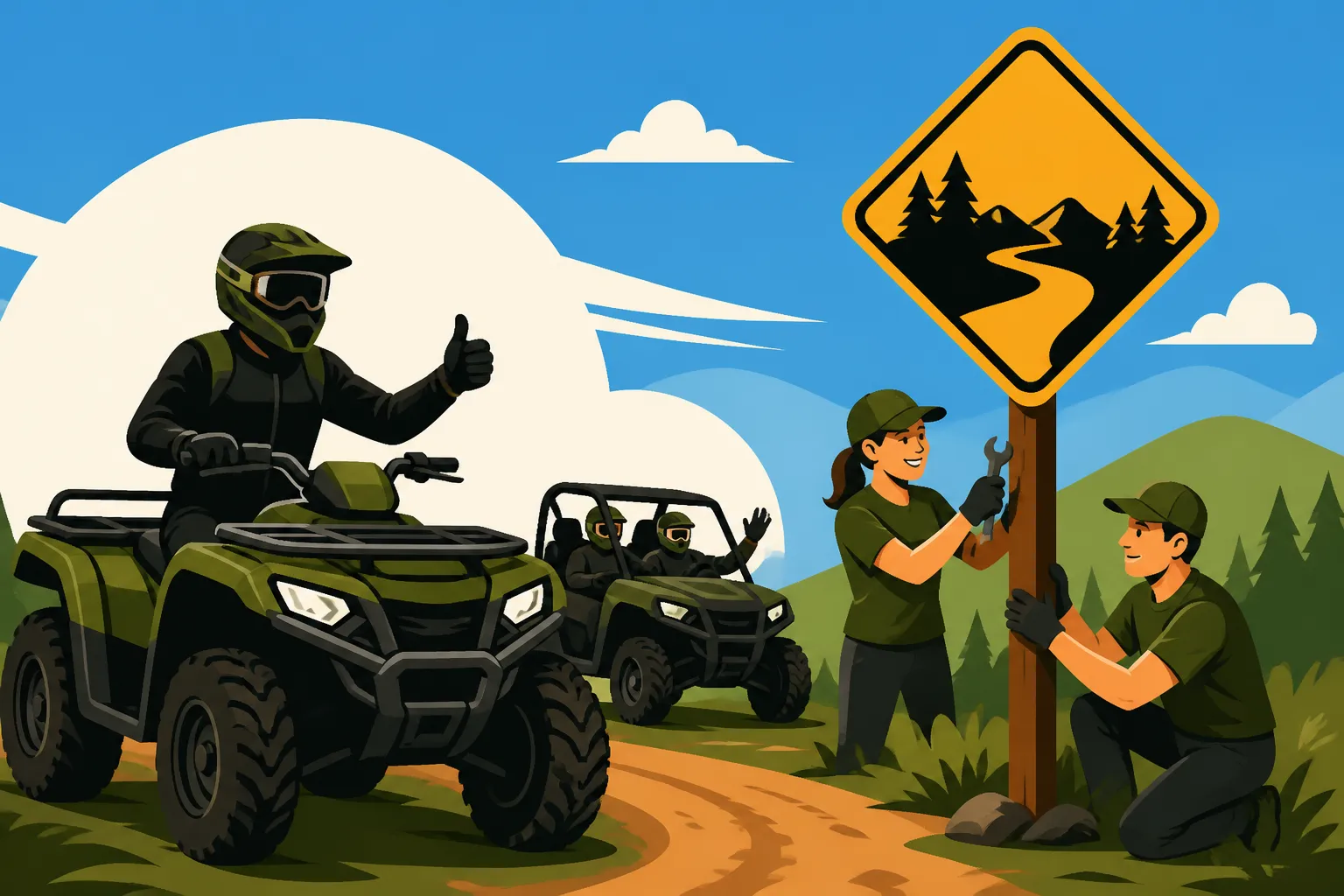
- Installation: Often, VDOT crews will perform the installation themselves, with the club covering the labor costs, or they will supervise the club's volunteers to ensure signs are installed correctly and safely within the road's right-of-way. Improperly installed signs can be a hazard and could lead to their removal.
This rigorous process underscores the professionalism and dedication required from ATV clubs to ensure that legal, safe road access is not just granted but properly implemented. It's a testament to their commitment to the riding community.
| Responsibility Area | Virginia Department of Transportation (VDOT) | Local ATV Clubs (e.g., in Buchanan/Tazewell) |
|---|---|---|
| Legal Authority | Sets standards for all road signs | Advocates for county road designations |
| Road Designation | Oversees state road networks | Lobbies County Board of Supervisors |
| Sign Design Approval | Provides specifications and approves designs | Proposes initial sign needs/locations |
| Sign Manufacturing Cost | N/A (State budget not allocated for this) | Funds the production of all signs |
| Sign Installation | Performs or supervises installation | May provide volunteer labor, covers labor cost |
| Maintenance & Upkeep | Oversees overall road infrastructure | Often responsible for sign reporting/repair |
The Impact on Riders and the Local Economy
The outcome of all this effort, including clubs paying for signs, is significant. For riders, it means legitimate, safe passage between trails, to gas stations, or local restaurants. It enhances the overall riding experience and reduces the temptation for illegal road use, which carries [Virginia's Civil Penalty for Illegal Riding]. For the local economy in places like Buchanan and Tazewell counties, it means more visitors staying longer, buying fuel, food, and lodging. This economic boost is a key argument ATV clubs make to county boards when advocating for road access.
Local businesses thrive when riders can easily access their establishments from the trails. Imagine being on the [Mountain View Trail System in Virginia] and being able to ride directly into a trail town for lunch, rather than having to load your machine onto a trailer. This convenience directly translates into increased revenue for small businesses. Companies like SuperATV, which equip riders for these very trails, also benefit from a more robust and accessible riding network, further cementing the symbiotic relationship between clubs, riders, and the broader off-road industry.
Ultimately, the fact that ATV clubs pay for road signs in these designated areas highlights their crucial, active role in shaping the future of off-road riding in Virginia. It's a system born of necessity and local initiative, demonstrating that when a community truly wants something, its dedicated members are often willing to step up and make it happen.
Disclaimer
This article is for general informational purposes only and does not constitute professional advice. Laws, prices and regulations vary by location and change over time. Consult a qualified professional for guidance on your specific situation.