1 Mile Between Two Trails
It's incredibly frustrating when you're out on your ATV or UTV, exploring the beautiful Virginia landscape, and you hit a patch of pavement, unsure if you're breaking the law just by trying to get from one trail to another. Many riders feel like they're navigating a minefield of rules, especially when it comes to riding on public roads. This guide aims to clear up the confusion surrounding Virginia's specific exceptions that allow off-road machines to use a small stretch of public road to connect trails.
The Broad Ban: Why ATVs Are Generally Not Welcome on Virginia Roads
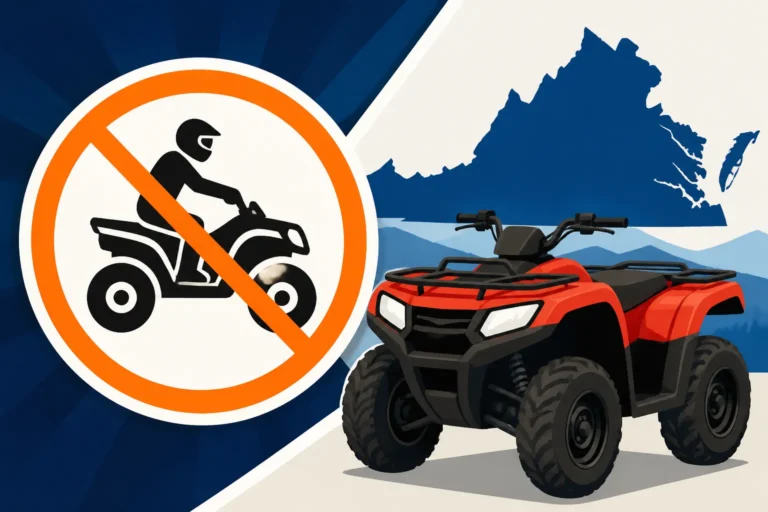
Let's start with the hard truth that often catches new riders, or even seasoned folks from other states, off guard: Virginia has a pretty strict stance against ATVs and UTVs on its public highways. When you envision cruising down a county road or even a quiet back lane on your quad, Virginia law generally says, "Nope, not happening." The state code, Section 46.2-915.1, is pretty clear about it. It states that ATVs, and by extension most UTVs, are primarily designed for off-road use and are therefore prohibited from operating on public highways, streets, or even sidewalks.
This general prohibition isn't meant to be a killjoy for no reason. It's rooted in safety concerns. ATVs and UTVs lack many of the safety features found on street-legal vehicles, like turn signals, rearview mirrors, specific lighting requirements for road use, and the structural integrity to withstand typical road collisions. Imagine trying to stop a fully loaded side-by-side quickly on asphalt when a car suddenly pulls out. It's a recipe for disaster. This is why Virginia, like many states, draws a firm line in the sand. You can find more details about these broader restrictions in [The Five ATV Bans Written Into Virginia Law].
Understanding "Public Highways" in Virginia
When the law talks about "public highways," it's not just referring to interstates or major routes. It's a much broader definition. In Virginia, a "highway" generally means the entire width between the boundary lines of every way or place open to the use of the public for purposes of vehicular traffic. This includes city streets, county roads, state routes, and even some public alleys. So, that seemingly quiet gravel road leading to your hunting club, if it's open to public vehicle use, likely falls under this "public highway" definition. This broad interpretation is often where riders get into trouble, as they assume a dirt or gravel road doesn't count.
This definition can be particularly frustrating for those living in rural areas where the distinction between a private path and a public road can seem blurry. You might have grown up riding a certain stretch that felt like your own backyard, only to discover it's technically a public thoroughfare and off-limits for your machine. This is a common pain point, and it's why understanding the specific exceptions, like the one-mile rule, becomes so crucial for responsible riding.
Consequences of Ignoring the General Ban
Riding your ATV or UTV on a public highway without a valid exception isn't just frowned upon; it carries tangible penalties. Virginia law treats these violations seriously. You're looking at potential fines, and depending on the specific circumstances and location, your machine could even be impounded. An officer isn't going to give you a pass just because you "didn't know" or thought a dirt road was exempt. These enforcement actions are in place to deter illegal road use and protect both ATV riders and other motorists. It's far better to know the rules upfront than to face a hefty fine or the hassle of retrieving an impounded machine. For a deeper dive into the repercussions, check out [Virginia's Civil Penalty for Illegal Riding].
The One-Mile Exception: Connecting Trails Legally
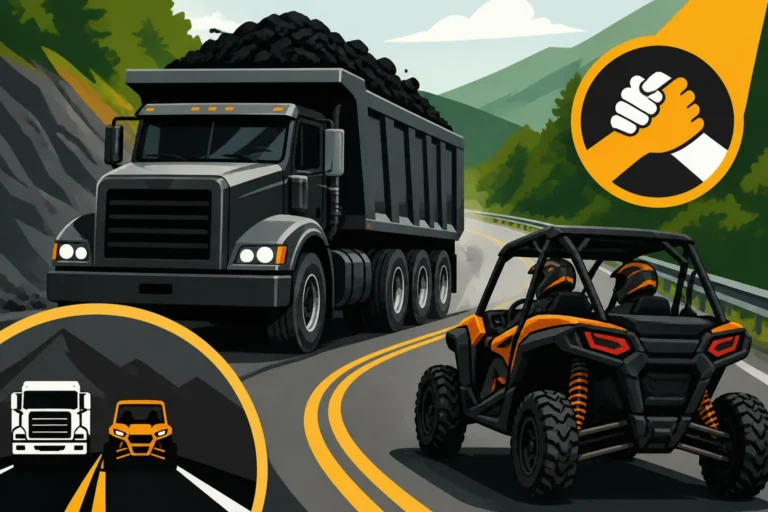
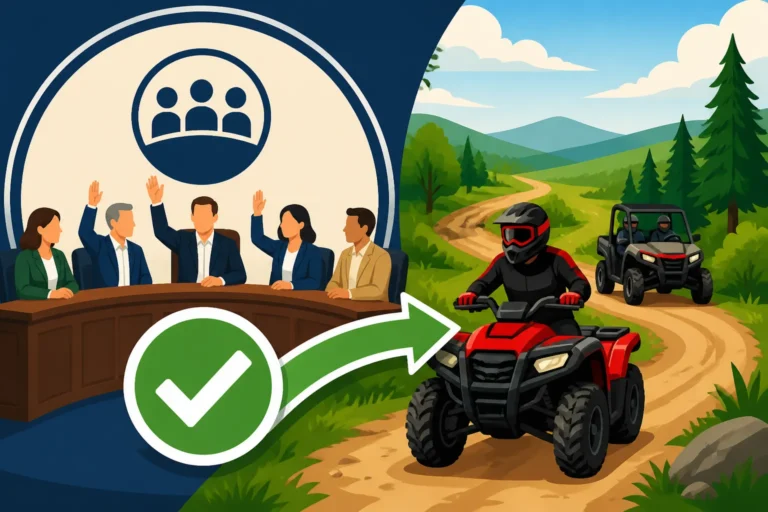
Now, for the good news amidst the strict rules: Virginia law does provide a very specific, limited exception to the general ban on ATVs on public roads. This exception is critical for trail riders who often encounter situations where a short stretch of public road is the only way to get from one section of an off-road trail system to another. The law explicitly allows ATVs and UTVs to operate on public highways for a distance of up to one mile, but only under very particular conditions. This isn't a free pass to ride a mile down any road; it's a precisely defined allowance designed solely for trail connectivity.
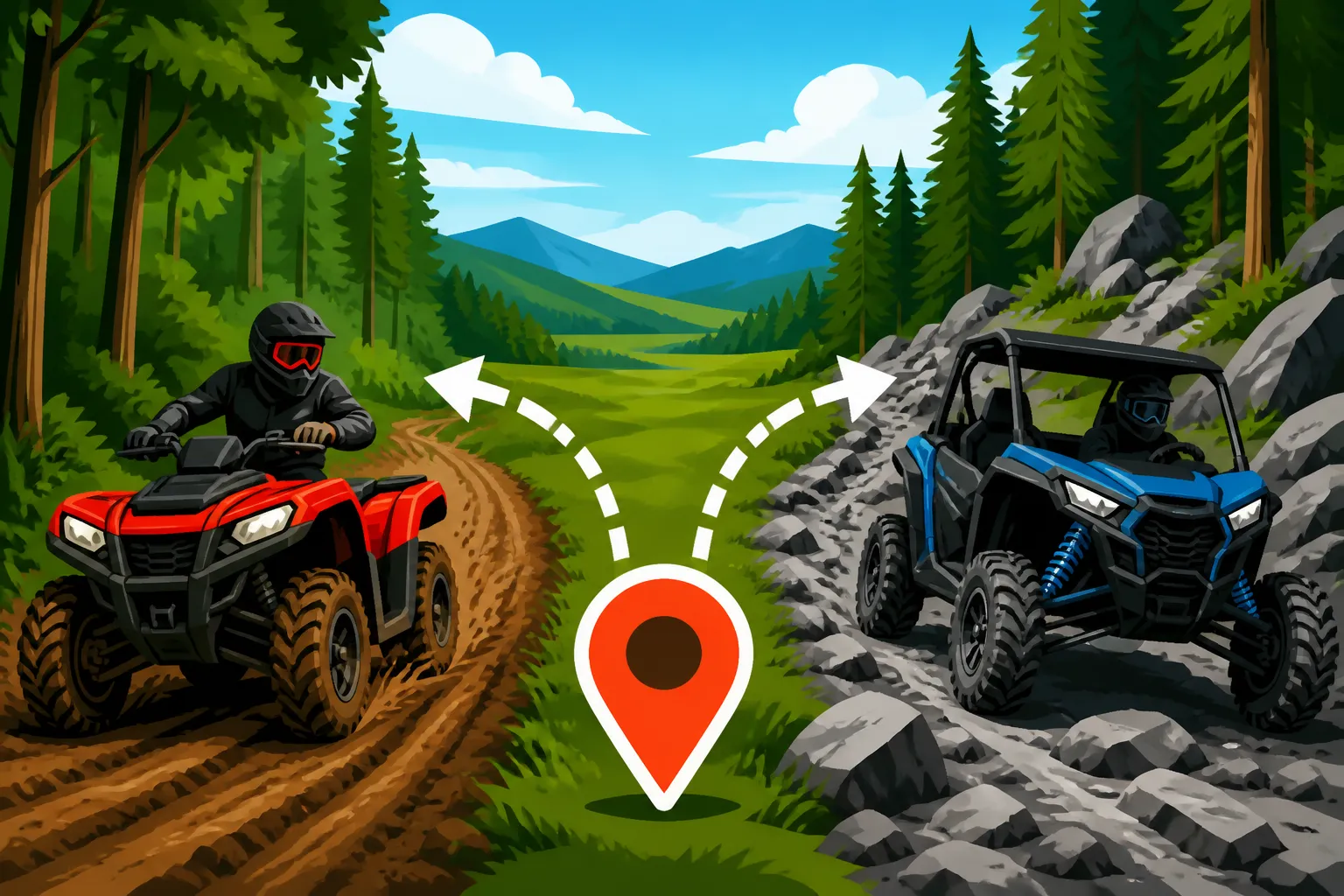
This exception primarily benefits riders accessing large, interconnected trail systems, like the [Spearhead Trails in Virginia Explained] network in the southwestern part of the state. Imagine you're on a fantastic trail, and suddenly it ends at a paved county road, only to pick up again a quarter-mile down the road. Without this exception, your ride would be over, or you'd have to load your machine onto a trailer for that short hop – a major inconvenience. The one-mile rule provides a practical solution to keep the riding experience flowing.
Where and When This Rule Applies
The "1 mile between two trails" rule is specifically enshrined within the Virginia Code, often discussed in conjunction with the counties that have actively opened roads to ATV use, like Buchanan and Tazewell. However, the one-mile connector rule itself is a broader allowance that applies statewide, not just in those specific coalfield counties, though it's most commonly utilized in areas with extensive trail systems. It's about traversing a public highway solely for the purpose of moving between two designated off-road riding areas or trails.
It's crucial to understand the intent behind this rule: it's for connecting trails, not for joyriding or using public roads as part of your primary route. This distinction is paramount. An officer observing you might ask about your destination and where the trails you're connecting are located. Having a clear answer and demonstrating that you're genuinely moving between trail sections is key. Consider carrying a map of the trail system to show your route if questioned.
How "SuperATV" Products Can Help You Prepare
When you're navigating these short road sections, even for just a mile, it's smart to have your machine equipped for maximum visibility and safety. While Virginia doesn't require ATVs to be street-legal in the traditional sense, having auxiliary lighting, better mirrors, or even a horn can significantly improve your safety on that mile-long stretch. Companies like SuperATV offer a range of products designed for off-road machines that can enhance their functionality. For example, upgrading to brighter LED headlights or adding a durable UTV rearview mirror can make a real difference when sharing the road, even briefly, with cars. These additions aren't about making your ATV street-legal, but about making it safer during those critical connector moments.
Strict Conditions for Utilizing the 1-Mile Connection
While the one-mile exception offers much-needed flexibility, it comes with a stringent set of conditions that riders absolutely must adhere to. This isn't a loophole; it's a carefully crafted allowance. Failing to meet even one of these conditions can negate the exception and put you in violation of the law. Think of these conditions as a checklist you need to run through every time you consider using a public road for a trail connection.
Here are the key conditions:
1. Direct Route Only
The law specifies that the use of the public highway must be "by the most direct route" between the two off-road trails or areas. This means no detours, no stopping at a roadside store for a snack if there's a more direct path, and certainly no scenic cruises. You are simply transiting from point A (end of trail) to point B (start of next trail) as efficiently as possible. Any deviation from the most direct route could be seen as abusing the exception and might result in a citation. This emphasizes the functional, rather than recreational, purpose of the road usage. For more on this, look into [Virginia Crossings by the Most Direct Route].
2. Daylight Hours Only
This one is non-negotiable: you can only use the one-mile connection during daylight hours. As soon as dusk starts to settle, or if it's before sunrise, this exception is off the table. This is another safety measure, as ATVs and UTVs often have less robust lighting systems than street-legal vehicles, and visibility for other motorists is significantly reduced in low-light conditions. Planning your rides to ensure you complete any road connections well within daylight is paramount. If your trail ride runs longer than expected, you might need an alternative plan for that connection rather than risking a violation.
3. Helmet Requirement for All Riders
Everyone on the ATV or UTV, regardless of age, must wear a Virginia-approved helmet during these road connections. Virginia has a universal helmet law for ATVs, which applies even on private land in many contexts, but it's especially critical and strictly enforced on any public thoroughfare. This is for your own safety; impacts with road surfaces or other vehicles at even low speeds can be devastating without proper head protection. Don't take chances with this rule – no helmet, no road connection. Learn more about [Virginia Helmet Law Applies to Every Rider].
4. No Passengers Unless Designed For It
If your ATV or UTV is designed by the manufacturer to carry a passenger (meaning it has a designated passenger seat and handholds), then a passenger may be on board for the one-mile connection. However, if your ATV is a single-rider machine, no passengers are allowed, even if they're perched on the cargo rack. This rule is about ensuring the safety of all occupants and preventing unstable riding situations on public roads. Always check your machine's manufacturer specifications for passenger capacity.
5. Compliance with Virginia ATV Age and Engine Size Rules
All riders and operators must still comply with Virginia's age and engine size restrictions, even for these short road stretches. For example, a rider under 16 operating a machine over 90cc (or under 12 operating over 70cc) would be in violation, regardless of the one-mile exception. These rules are in place to ensure operators have the maturity and skill level appropriate for the machine they are riding. Don't let a short road connection overshadow the importance of these fundamental safety laws. You can refresh your memory on these regulations with [Virginia ATV Age Requirements].
Practical Tips for Utilizing the 1-Mile Connection Safely
Even with the legal green light for short road connections, safety should always be your top priority. These stretches of road, however brief, expose you to different hazards than the trails do. Other drivers might not expect to see an ATV or UTV, and the terrain itself is unforgiving. Taking a few extra precautions can make all the difference in ensuring a safe and legal journey.
Increase Your Visibility
When you're on a public road, even for a mile, you're sharing space with cars and trucks that travel at higher speeds and don't always expect off-road vehicles. Make yourself as visible as possible. This means wearing bright, high-contrast clothing. Consider adding reflective tape to your machine, especially if it's a darker color. Ensure your lights are functioning – front and rear – and consider adding accessory lights for better daytime visibility. A bright flag on a pole, often used on dunes, can also be a good idea for any area where you might encounter blind spots or hills. While SuperATV products might not be specifically "street legal," many of their accessories, like enhanced lighting kits or wider mirrors, can significantly improve your visibility and awareness on these brief road excursions.
Be Alert and Drive Defensively
Public roads present different challenges than trails. You'll encounter oncoming traffic, blind curves, driveways, and potentially distracted drivers. Assume that other drivers might not see you. Maintain a lower speed that allows you to react quickly to unexpected situations. Stick to the far right side of the lane, as if you were riding a bicycle, to give other vehicles as much room as possible to pass safely. Avoid sudden movements or swerving. If you're riding in a group, maintain a safe distance between machines and ride in a single file line. You don't want to become evidence for [Virginia Violations and Negligence Evidence].
Understand Local Ordinances
While the one-mile rule is a state law, local counties and cities might have their own ordinances regarding ATV use on public roads. Even in counties known for opening roads to ATVs, like Buchanan and Tazewell, specific restrictions can apply, such as speed limits (often 25 mph) or designated routes. Before you plan your ride, especially if it involves any road sections, take a few minutes to check with the local county or town administration for any additional rules that might apply to your specific area. [Virginia Town Ordinances in Coal Country] are a real thing, and being informed can save you a lot of trouble.
Carry Essential Documentation
Always carry your valid driver's license (if required for operating the machine you're on, and if you're on a public road, it often implies you have one, even if not strictly required for the ATV itself in Virginia), proof of ownership (like your ATV title or registration for machines over 50cc bought new after 2006), and any trail permits you might need for the off-road systems you're accessing. If you're on private land, written permission from the landowner is a must. If you get stopped by law enforcement, having your paperwork in order will make the interaction much smoother and help demonstrate you're a responsible rider adhering to the rules.
| Rule Category | General Virginia Public Road Rule (ATVs) | 1-Mile Trail Connection Exception |
|---|---|---|
| Basic Legality | Generally Prohibited | Allowed Under Specific Conditions |
| Purpose | Not Permitted | Connecting Designated Off-Road Trails |
| Distance Limit | N/A (Prohibited) | Maximum 1 Mile |
| Route Requirement | N/A | Must Be the Most Direct Route |
| Operating Hours | N/A | Daylight Hours Only |
| Helmet Required | N/A | Yes, for All Riders |
| Passenger Rules | N/A | Only if Machine is Manufacturer-Designed for Passengers |
| Age/Engine Limits | N/A | Yes, All State Age/Engine Rules Apply |
| Penalties | Fines, Potential Impoundment | Fines, Potential Impoundment (if conditions not met) |
The one-mile exception for connecting trails is a valuable tool for Virginia ATV and UTV riders, allowing access to more extensive and enjoyable trail networks. However, it's not a blanket permission slip. Riders must understand and strictly adhere to the specific conditions and limitations, always prioritizing safety and legal compliance. By staying informed and riding responsibly, you can make the most of Virginia's incredible off-road opportunities without running afoul of the law.
Disclaimer
This article is for general informational purposes only and does not constitute professional advice. Laws, prices and regulations vary by location and change over time. Consult a qualified professional for guidance on your specific situation.