Virginia Rules for a Visiting North Carolina Rider
Heading north from North Carolina into Virginia with your ATV or UTV might seem like a simple hop across a state line, but the rules governing off-road vehicles can be drastically different, leading to confusion and potential fines if you're not prepared. Many riders assume that if their machine is legal for certain uses in North Carolina, it'll automatically be good to go in Virginia, only to discover the hard way that Virginia operates under a unique set of laws. This guide is here to untangle that knot, offering clear, actionable advice so your visit to the Old Dominion is smooth, safe, and free from unexpected headaches.
Understanding Virginia's Core ATV and UTV Philosophy
It's easy to assume that neighboring states will have similar laws, especially when it comes to off-road fun. You might be accustomed to certain allowances in North Carolina, perhaps even limited road use for your UTV. However, Virginia approaches ATVs and UTVs with a distinctly conservative mindset, prioritizing off-highway use and severely restricting anything resembling street legality. This foundational difference is the most crucial thing for any visiting North Carolina rider to grasp.
The "No Street Legal" Reality for ATVs and UTVs in Virginia
Let's get this out of the way upfront: Virginia does not have a pathway to make your ATV or UTV street legal. Period. While North Carolina has specific provisions for registering certain UTVs for limited road use – a convenience many riders appreciate – Virginia has no such equivalent for any ATV or UTV. This means that if you're planning to ride your machine to a restaurant, a store, or even just across town on a public road, you're likely breaking Virginia law. The state's stance is unequivocal: these are off-road machines, and they belong off-road.
This strict interpretation means that common sense about "short distances" or "unpaved roads" often doesn't apply to public thoroughfares in Virginia. An ATV or UTV is generally banned from all public highways, streets, and even sidewalks. This isn't just a minor infraction; [Virginia Bans ATVs on Public Highways] is a cornerstone of the state's off-road vehicle statutes. For a North Carolina rider used to more flexibility, this can be a significant mental shift, but it's vital to avoid citations. Your expensive machine, which might be perfectly legal for a quick jaunt down a country road in North Carolina, instantly becomes a target for law enforcement if ridden similarly on public property in Virginia.
Key Differences in Titling and Registration You'll Notice
Another area where Virginia diverges significantly from North Carolina is in its approach to titling and registration. In North Carolina, you might have specific registration plates or decals for your OHV, especially if you're using designated state-managed trails or have it street-registered. Virginia, however, has a more peculiar system that often confuses newcomers.
In Virginia, ATVs and UTVs are titled by the Department of Motor Vehicles (DMV) if they meet certain criteria (like being over 50cc and purchased new since July 2006). However, and this is the critical distinction, they are never registered for road use, nor do they receive license plates or decals. You might have a valid Virginia title in your name, but it serves purely as proof of ownership and for lien recording, not as permission to operate on public roads. [Virginia Titles ATVs but Never Registers Them] is a fact that catches many by surprise. There are no annual registration fees, no sticker to affix to your fender, and no metal plate to screw on the back. [Virginia Issues No Plates for ATVs] for off-road vehicles. This means when you cross the border, you won't be looking for a Virginia plate or registration sticker on local machines, and law enforcement will instead look for proof of ownership (like your North Carolina title or registration) if you're stopped.
Where You CAN Ride Your Machine in Virginia
Given Virginia's strict "no street legal" policy, you might wonder where you can actually enjoy your machine. The good news is that Virginia offers fantastic riding opportunities, but they are almost exclusively confined to specific types of terrain and designated trail systems. Knowing these legal avenues is paramount for a stress-free trip.
Private Land: The Easiest Path (With a Catch)
For many Virginia residents and visitors, private land is the go-to spot for ATV and UTV riding. If you have friends or family with private property, or if you're staying at a rental cabin that explicitly allows ATV use, you're generally in good shape. However, there's a significant catch that North Carolina riders often overlook: [Virginia Requires Written Landowner Consent]. Unlike some areas where verbal permission might suffice, Virginia law explicitly states that you must have written permission from the landowner to operate an ATV or UTV on their property if it's not your own.
This isn't just a formality; it's a legal requirement. Imagine you're visiting a friend with a large farm near the Virginia-North Carolina border. You've ridden there before without issue, but now you're in Virginia. An officer responding to a complaint, or simply on patrol, could ask for proof of permission. Without a signed note from the property owner, you could be cited for trespassing or illegal operation, even if your friend gave you the nod. This written consent should be clear, specify the dates or duration of permission, and ideally include the property address. Always double-check this, especially if you're riding on leased hunting land or at a vacation rental that advertises trail access.
Designated Trail Systems: Spearhead and National Forests
Virginia boasts some incredible, professionally managed off-road trail systems that welcome ATVs and UTVs. These are often the best and safest places for a visiting rider to enjoy their machine. The two primary categories are the Spearhead Trails system and trails located within the George Washington & Jefferson National Forests.
The Spearhead Trails network, predominantly found in the southwestern coalfields of Virginia, offers hundreds of miles of diverse terrain. Systems like Coal Canyon, Mountain View, and Jawbone provide challenging climbs, scenic vistas, and connecting routes through charming trail towns. To ride Spearhead Trails, you'll need a permit, which can be purchased online. [Virginia Spearhead Trail Permits] are generally offered as annual or three-day options. Spearhead Trails are well-maintained and typically have clear signage, but they do have specific rules regarding machine width, helmet use, and age restrictions, so it's wise to check their website before you haul your rig. You'll often find amenities in the nearby towns, from fuel to food, making for a comprehensive riding experience.
In contrast, the George Washington & Jefferson National Forests also offer designated OHV trails, such as [Peters Mill Run OHV Trails in Virginia] in the northern Shenandoah Valley. These trails operate under different regulations and require a separate National Forest OHV permit. [Virginia National Forest OHV Permits] are usually available for daily, three-day, or annual use and can often be purchased at ranger district offices or some local vendors. Forest trails often have stricter rules regarding spark arresters, noise limits, and seasonal closures (Peters Mill Run, for instance, typically closes during winter months). The terrain can be quite different too, with more emphasis on natural forest paths rather than the reclaimed mining lands of Spearhead.
When preparing for these trails, consider how your North Carolina machine might handle Virginia's terrain. If you're coming from flatter lands, a lift kit, heavier-duty tires, or enhanced skid plates from a brand like SuperATV could make a real difference on rocky Appalachian climbs. Good lighting is always a plus, even if you're planning to ride only during daylight hours, for those unexpected shaded sections or late returns to the trailhead.
Limited Road Access in Specific Coalfield Counties
While the general rule is "no public roads," Virginia does offer a very narrow, highly conditional exception in two southwestern counties: Buchanan and Tazewell. This is a unique program designed to connect trail systems and allow residents limited access to services. However, it is not a blanket permission for road riding and comes with extremely strict caveats.
Specifically, [Virginia Buchanan and Tazewell County Road Access] laws allow ATVs and UTVs to operate on designated, named routes within these counties. These routes are typically unpaved county roads or specific connector roads. The conditions are severe: you must ride at or below [Virginia's 25 mph Coalfield Road Limit], only during daylight hours, and often only to connect to a trail system or to access essential services like gas or food. These are not open invitations for joyriding on public streets. Furthermore, any crossing of a numbered state highway must be by the most direct route, and riding on interstate highways or primary state routes is strictly forbidden.
As a visiting North Carolina rider, it's crucial to understand that unless you are expressly on one of these designated, signed routes in Buchanan or Tazewell county, and adhering to all the conditions, you are still subject to the general ban on public roads. Relying on local whispers or incomplete information could lead to a hefty fine and a ruined trip. When in doubt, stick to designated trail systems or private land with written permission.
What to Bring and How to Be Prepared
Preparation is key to a smooth and enjoyable off-road adventure, especially when you're visiting a new state with different rules. Beyond packing your usual gear, a North Carolina rider needs to ensure their machine and their paperwork align with Virginia's specific requirements.
Essential Gear and Machine Requirements
First and foremost, helmets are mandatory for everyone on an ATV or UTV in Virginia, regardless of age or whether you're on private or public land. This is a non-negotiable rule. [Virginia Helmet Law Applies to Every Rider], and failing to wear one is an easy way to get a ticket or, worse, sustain a serious injury. Make sure your helmet is properly fitted and meets recognized safety standards. While North Carolina also emphasizes helmet use, Virginia's law is all-encompassing.
Beyond helmets, your machine itself needs to be in good working order. Spark arresters are almost universally required on public lands, especially within National Forests, to prevent wildfires. Check your exhaust system to ensure it has a functional spark arrester. Basic maintenance like checking tire pressure, brakes, and fluid levels is always a good idea before heading out. For UTVs, ensure seatbelts are functioning, as they are often required on managed trail systems like Spearhead.
Consider any modifications you might have made to your machine. If your North Carolina setup included modifications for limited road use, like turn signals or mirrors, understand that these do not grant you road legality in Virginia, but they can be beneficial on trails for signaling other riders. Robust aftermarket parts, like a durable windshield or side mirrors from SuperATV, can improve visibility and safety on trails without implying street legality.
Paperwork You'll Need to Carry
When riding in Virginia, even on trails, you should always have certain documents readily accessible. Think of it as your "trail wallet."
- Proof of Ownership: This is critical. Carry your North Carolina ATV or UTV title or registration. This proves the machine is yours and isn't stolen.
- Written Landowner Permission: As discussed, if you're on private land that isn't your own, you must have written consent. Keep this piece of paper with you.
- Trail Permits: If you're planning to ride Spearhead Trails or National Forest trails, ensure you have your valid permit, whether it's a printed copy or a digital confirmation accessible on your phone (though be aware of areas with no cell service). [Virginia Permit Verification Steps] often involve a ranger looking up your name or scanning a QR code.
- Photo ID: Always carry a valid driver's license or state-issued ID. This is often required to verify your trail permit and can be requested by law enforcement or trail rangers.
- Proof of Insurance (Recommended): While Virginia does not require ATV or UTV insurance by law, having liability and comprehensive coverage is always a smart move. An accident can happen anywhere, and insurance can protect you financially. What an insurer asks for on an untitled Virginia quad might be different than for a registered one in NC, so verify your coverage before you leave.
It's a good practice to keep these documents in a waterproof bag or pouch on your person or securely on your machine, rather than tucked away in your truck back at the trailhead.
Age and Passenger Rules: Don't Get Caught Off Guard
Virginia has specific age restrictions for ATV riders based on engine size, which can differ from North Carolina's regulations. It's important for parents or guardians visiting from North Carolina to be aware of these.
Virginia generally restricts riders under 12 to machines with an engine size of 70cc or less. Riders aged 12 to 16 are limited to machines 90cc or less. Once a rider is 16 and over, there are no engine size restrictions. [Virginia Age Limits by Engine Size] are strictly enforced. There is also no "supervised escape clause" in Virginia law that allows younger riders to operate larger machines even with adult supervision, unlike some other states where a parent's presence might waive some restrictions.
Regarding passengers, Virginia law is specific: an ATV or UTV can only carry a passenger if it was specifically designed by the manufacturer to do so. This means it must have a designated passenger seat and handholds. [Virginia Passenger Rules on an ATV] are not something to guess at. If your ATV is a single-rider machine and you have someone clinging on behind you, you're in violation. UTVs with multiple seats are generally fine for the number of passengers they were designed for, as long as everyone is properly belted in. These rules are in place for safety, so don't risk it.
Avoiding Common Mistakes and Penalties
Even with the best intentions, it's easy for a visiting rider to make assumptions that lead to trouble. Understanding Virginia's enforcement approach and being a respectful visitor will ensure your trip is memorable for the right reasons.
The Trap of Road Riding and Its Consequences
The single biggest mistake North Carolina riders make when visiting Virginia is assuming they can ride their ATV or UTV on public roads. Because some UTVs can be street legal in North Carolina, or because rural roads might seem "safe enough" for a quick run, riders often inadvertently break the law. Virginia's law enforcement takes illegal road riding seriously.
The penalties for illegal ATV/UTV operation on public highways or property can be substantial. [Virginia Penalties for Illegal Riding] include civil penalties of up to $500 for each offense. It's not a criminal charge, but it's a costly citation that can quickly sour a vacation. Beyond fines, cities and counties in Virginia have the power to impound illegally operated machines. [Virginia City Impoundment Powers] means that if you're caught riding on a city street or sidewalk, your machine could be seized, incurring additional towing and storage fees on top of any legal penalties. Imagine the hassle and expense of trying to retrieve your machine from an impound lot hours from home!
It's tempting to think you won't get caught, or that an officer will give you a pass. But in Virginia, especially in areas with trail systems, local law enforcement is very familiar with these laws and actively enforces them to ensure public safety and minimize conflict with other road users. Don't risk it; stick to designated off-road areas.
Respecting the Land and Local Customs
Beyond the letter of the law, being a good visitor involves respecting the environment and the local communities you pass through. Virginia's beautiful natural landscapes and the hospitality of its residents are part of the riding experience.
Always practice Leave No Trace principles: pack out everything you pack in, and don't litter. Stay on marked trails; cutting new paths damages the ecosystem and can lead to trail closures. Be mindful of noise, especially when riding near residential areas or campgrounds. [Virginia Noise Complaints About Quads] are a real concern for local communities, and repeated issues can lead to stricter regulations or reduced access.
When passing through trail towns, obey speed limits, be courteous to pedestrians, and support local businesses. Many of Virginia's trail systems, especially Spearhead, are designed to integrate with rural communities, and their success depends on riders being responsible and respectful. Remember that you are an ambassador for the entire off-road riding community.
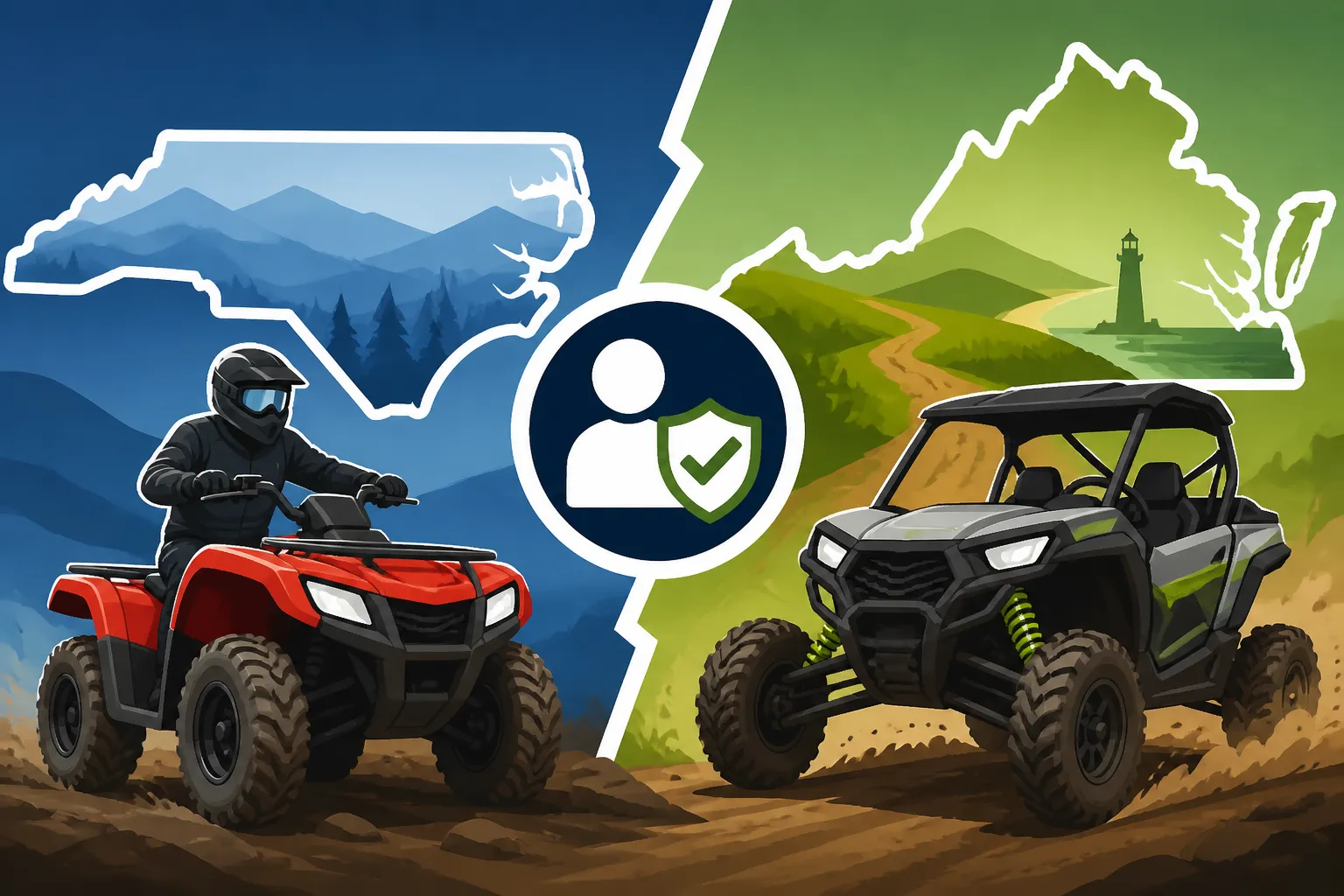
Here's a quick comparison of some key rules between Virginia and North Carolina for a clearer picture:
| Feature | Virginia (Visiting Rider) | North Carolina (Typical Home State Context) |
|---|---|---|
| Street Legal Status | No path for ATVs/UTVs to be street legal. | Limited street-legal registration for UTVs possible. |
| Registration/Plates | Titled, but no registration, plates, or decals for ATVs/UTVs. | May have OHV registration/plates/decals for designated trails or street use. |
| Helmet Law | Mandatory for all riders (ATV/UTV), regardless of age or property type. | Mandatory for riders under 16; recommended for all others. |
| General Road Use | Banned on public highways/property, with very limited exceptions in specific counties. | Generally banned, but limited road use for registered UTVs is allowed under specific conditions. |
| Written Landowner Consent | Required by law for riding on private property that isn't your own. | Often good practice, but not always a statutory requirement. |
| Passenger Rules | Only on machines designed by manufacturer for passengers. | Similar, generally requires manufacturer-designed seating. |
| Trail Permits | Required for Spearhead and National Forest OHV trails. | Required for designated state OHV parks/trails (e.g., Uwharrie). |
| Penalties for Illegal Road Use | Civil penalty up to $500, plus potential impoundment. | Fines vary, potential for misdemeanor charges for unregistered operation. |
Disclaimer
This article is for general informational purposes only and does not constitute professional advice. Laws, prices and regulations vary by location and change over time. Consult a qualified professional for guidance on your specific situation.