Signs Approved by the Highway Department
Riding ATVs and UTVs in Virginia can be an absolute blast, especially with the incredible trails and growing opportunities for road access in certain areas. But let's be real: trying to figure out exactly where you can and cannot ride legally on public roads is often a huge headache, fraught with confusion and conflicting information. Many riders assume that if a road looks open, or if they see any kind of sign, it's fair game. That's a dangerous assumption. This guide is here to clear up the critical role that specific, officially approved signage from the Virginia Department of Transportation (VDOT) plays in establishing legal ATV and UTV routes, helping you distinguish between legitimate access and risky guesswork.
The Foundation: Why Highway Department Approval Matters for ATV Signs
When we talk about off-road vehicles like ATVs and UTVs being allowed on public roads in Virginia, we're not talking about a free-for-all. This isn't about local towns just putting up any old sign they feel like. There's a stringent process involved, and the Virginia Department of Transportation (VDOT), often referred to as the "Highway Department" by many, is the gatekeeper for official signage. Their approval isn't just a bureaucratic hoop; it's a fundamental requirement that underpins the legality, safety, and uniformity of any designated ATV route.
The Legal Mandate for Specific Signage
The reason VDOT approval is so crucial boils down to state law and public safety. Virginia's Code, specifically section [Virginia ATV Road Rules Under 46.2-915.1], outlines the conditions under which counties (currently only Buchanan and Tazewell, with specific named routes) can open public highways or portions thereof to ATVs and UTVs. A key component of these conditions is that any such route must be clearly marked with signs. But not just any signs. These signs must meet specific state standards for design, placement, and maintenance.
Imagine a situation where a county board votes to open a road to ATVs, but then just puts up some hastily painted wooden signs. From a rider's perspective, this might seem like a green light. However, without VDOT's stamp of approval, those signs hold no legal weight. If you're pulled over by an officer, those homemade signs won't protect you. Moreover, think about the liability implications: if an accident occurs on an improperly signed route, the county could be in serious legal hot water, and riders could face significant penalties for illegal operation. The legal mandate ensures consistency and clarity, protecting both the public and the riders themselves.
Ensuring Uniformity and Safety on Designated Routes
VDOT's role extends beyond mere approval; it's about ensuring uniformity and maximizing safety. The state follows national guidelines, like the Manual on Uniform Traffic Control Devices (MUTCD), which dictate the precise specifications for road signs. This means everything from the size of the sign, its color, the font used, the reflectivity level, and even its mounting height and location are standardized. This isn't just for aesthetics; it's vital for quick recognition and understanding by all road users, whether they're in a car or on a quad.
Consider how confusing it would be if every county could invent its own signs for ATV routes. A rider from one part of Virginia traveling to the coalfields might encounter completely different-looking signs for the same type of information. This lack of uniformity would lead to rider confusion, increase the risk of missing critical instructions (like speed limits or specific route changes), and ultimately compromise safety. VDOT's oversight ensures that when you see an official "ATV Route" sign in Buchanan County, it conveys the same meaning and visual information as it would in Tazewell County, providing clear, consistent guidance. It's also worth noting that local ATV clubs often work tirelessly to advocate for and even help fund these signs, as detailed in [Virginia Signs Paid For by a Club], recognizing their importance for a legal and safe riding experience.
Understanding VDOT's Role in ATV Route Signage
The process of opening a public road to ATVs and UTVs in Virginia is much more involved than just a local vote. VDOT is deeply embedded in this process, ensuring that any new route integrates safely and effectively into the existing road network. Their involvement primarily centers on the rigorous approval of signage, which is key to communicating the legality and rules of these special routes.
The Approval Process for Local ATV Routes
When a local Board of Supervisors, like those in Buchanan or Tazewell County, decides to designate a public road or segment of a road for ATV use, it kicks off a detailed approval process involving VDOT. It's not enough to simply pass an ordinance. The county must submit a comprehensive plan to VDOT, which typically includes traffic studies, safety assessments, and, crucially, a detailed signage plan. This plan specifies the exact location, type, and design of every sign that will be erected along the proposed ATV route.
VDOT's engineers and safety experts review these plans meticulously. They'll look at factors such as sight distances, existing traffic patterns, intersections, and the appropriateness of the proposed sign wording and graphics. For instance, if a county proposes a sign that uses an unfamiliar symbol or deviates significantly from MUTCD standards, VDOT will almost certainly require revisions. Their goal is to ensure that the signage is unambiguous, effective, and consistent with statewide and national traffic control standards. This painstaking review process, which ensures adherence to guidelines like those discussed in [Virginia Crossings of Numbered State Routes], is what elevates a local decision to a state-approved, legal riding opportunity.
Types of Signs and Their VDOT Specifications
The signs you'll see on approved ATV routes in Virginia aren't generic. They fall into categories, each with strict VDOT specifications. These include:
- Regulatory Signs: These signs inform road users of traffic laws or regulations that, if disregarded, constitute an offense. Examples include speed limit signs (crucial for adhering to [Virginia's 25 mph Coalfield Road Limit]), "STOP" signs, and "NO ENTRY" signs at the end of an approved ATV segment. They typically have a white background with black lettering or a red background with white lettering (like stop signs).
- Warning Signs: These signs alert riders to potential hazards or changed road conditions ahead. Think "Sharp Curve," "Steep Grade," or "Uneven Pavement." They are usually yellow with black lettering or symbols, designed to grab attention and allow riders to react safely.
- Guide/Informational Signs: These signs provide direction, confirm routes, and give riders information. "ATV Route" signs, directional arrows pointing to the next trail segment, or signs indicating services (like fuel in a nearby trail town) fall into this category. While "ATV Route" signs might be unique to these specific paths, their overall design principles (readability, reflectivity) must still meet VDOT standards.
Every aspect of these signs, from their precise dimensions to the retroreflectivity of the material (how much light they bounce back at night), is specified. This attention to detail ensures that the signs are visible day or night, in varying weather conditions, and are universally understood by anyone who encounters them, whether they are familiar with the area or not. This is why you won't see a sign for a legal route that looks like it was painted in someone's garage; it has to be professionally manufactured to VDOT's exacting standards.
Practical Implications for Virginia ATV Riders
For you, the Virginia ATV or UTV rider, understanding VDOT-approved signage isn't just about obscure regulations; it's about staying legal, staying safe, and maximizing your enjoyment on the trails and designated roads. Knowing what to look for and recognizing official markings can save you a lot of grief and potential fines.
Identifying Legal ATV Routes Through Approved Signs
The most straightforward way to identify a legal ATV route in Virginia, especially on a public road, is the presence of official VDOT-approved signage. These signs are your primary indicator that you are on a legitimate, designated route. If you don't see these clear, official signs, assume the road is not open to ATVs, even if you see others riding there. It's simple: no official sign, no legal access.
When you're out riding, be vigilant. Look for signs that are consistently placed, professionally manufactured, and clearly legible. An official "ATV Route" sign, often coupled with directional arrows or speed limit signs specific to the route, tells you that the local authorities and VDOT have done their homework. These are the signs that mark the officially designated routes in [Virginia's Named Route in Buchanan County] and [Virginia's Named Route in Tazewell County], among others. If you come across a route that appears to be open, but the signs look homemade, faded, or are inconsistently placed, it's a huge red flag. Always err on the side of caution; riding on an undesignated road can lead to [Virginia Penalties for Illegal Riding], which can be costly and ruin your day. Trust the official signs, not hearsay or unofficial markers.
The Role of Signs in Rider Safety and Compliance
Beyond legality, VDOT-approved signs are absolutely critical for rider safety. They do more than just tell you where to go; they communicate vital information to prevent accidents and ensure everyone follows the rules. Speed limit signs keep riders aware of the maximum permissible speed, which is especially important on routes that might share space with other vehicles or have limited sight lines. Warning signs alert you to upcoming hazards like sharp turns, steep descents, or areas where the road surface might change, giving you crucial seconds to adjust your riding.
For riders navigating unfamiliar terrain, especially visitors, these signs are invaluable for wayfinding. They help confirm you're still on the designated path and guide you to the next section of trail or a nearby town for supplies. Think about how confusing it would be trying to follow a trail without clear directional markers, especially if you're riding [Daylight Only on a Road Trail] and losing sunlight. While official signs are paramount, aftermarket equipment can complement safe riding. For instance, high-quality lighting systems from brands like SuperATV can significantly improve your visibility to others, and even help you spot distant road signs more clearly, especially on unlit stretches or during those twilight hours when visibility becomes a challenge. Remember, while your machine might have great accessories, they don't replace the need to carefully observe and comply with all posted VDOT-approved signs for a safe and legal ride.
Common Misconceptions and What to Watch Out For
Navigating the rules for ATV and UTV road access in Virginia can be tricky, and several common misconceptions can lead riders astray. Understanding these pitfalls is as important as knowing the official rules themselves, helping you avoid unnecessary trouble and ride responsibly.
Homemade Signs vs. Official Signage
One of the biggest pitfalls for riders is confusing homemade or unofficial signs with official, VDOT-approved signage. It's not uncommon to see "ATV Welcome" or "Trail Access" signs put up by landowners, businesses, or even well-meaning local enthusiasts. While these signs might suggest an inviting atmosphere, they carry no legal authority on public roads. Only signs that conform to VDOT's strict standards and have undergone their approval process designate a legal ATV route on public land.
The legal risks of relying on unofficial signage are substantial. If you ride on a public road that is not officially designated and signed by VDOT, you are operating your ATV or UTV illegally. This could lead to citations, fines, and even impoundment of your machine. Furthermore, if you're riding based on a homemade sign and inadvertently trespass onto private property, you could face additional legal consequences. A business might put up a sign saying "Trail Access" thinking it's helpful, but if that access leads onto a county road not opened by VDOT, you're on the wrong side of the law. Always look for the professional, standardized signs that signify official approval, as outlined when considering [Can You Ride an ATV on the Road in Virginia?]. Anything less should be viewed with extreme skepticism.
Reporting Missing or Damaged Signs
Given the critical role that VDOT-approved signs play in designating legal ATV routes and ensuring safety, it's vital that they remain in good condition and visible. Unfortunately, signs can get damaged by weather, accidents, or even vandalism. If you're riding an approved route and notice a sign is missing, damaged, or obscured, it's not just an inconvenience—it's a potential safety hazard and a legal grey area.
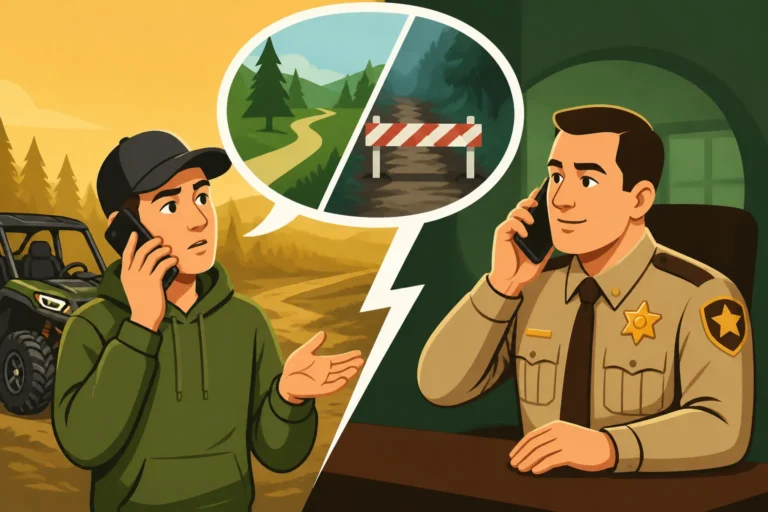
As responsible riders, we all have a part to play in maintaining the integrity of these routes. If you spot a problem with a sign, you should report it. The best course of action is to contact the local county's public works department or the specific ATV club that manages or advocates for that trail system. These clubs, like those responsible for [The Virginia Law Behind Every ATV Rule], often work directly with VDOT and the county to ensure signs are properly maintained. You can also reach out to VDOT directly, as they are ultimately responsible for road signage. Providing them with the exact location and a description of the issue helps ensure that the sign can be repaired or replaced promptly, keeping the routes safe and legal for everyone. Your proactive reporting helps protect fellow riders and maintain the hard-won access to these incredible Virginia trails.
| Feature | Official VDOT-Approved ATV Route Sign | Unofficial/Homemade Sign |
|---|---|---|
| Appearance | Professional, uniform design (size, color, font), highly reflective, often with VDOT or state seal (implied standards). | Varies widely, may be hand-painted, faded, non-reflective, inconsistent. |
| Authority | Erected by or with explicit approval from VDOT and the local governing body (e.g., County Board of Supervisors). | Placed by private individuals, businesses, or groups without official state approval for public road use. |
| Legal Standing | Legally designates a public road segment as open to ATVs/UTVs under specific conditions; provides legal protection if followed. | No legal standing to authorize ATV/UTV use on public roads; following it can lead to legal violations. |
| Rider Risk | Low risk if all other riding laws (speed, helmet, age, etc.) are followed. | High risk of citations, fines, impoundment, or trespassing charges; no legal defense in case of incident. |
| Maintenance | Maintained by VDOT or county, often with support from local clubs; designed for durability. | Maintenance is inconsistent or nonexistent; prone to rapid deterioration. |
Disclaimer
This article is for general informational purposes only and does not constitute professional advice. Laws, prices and regulations vary by location and change over time. Consult a qualified professional for guidance on your specific situation.