Virginia Noise Complaints About Quads
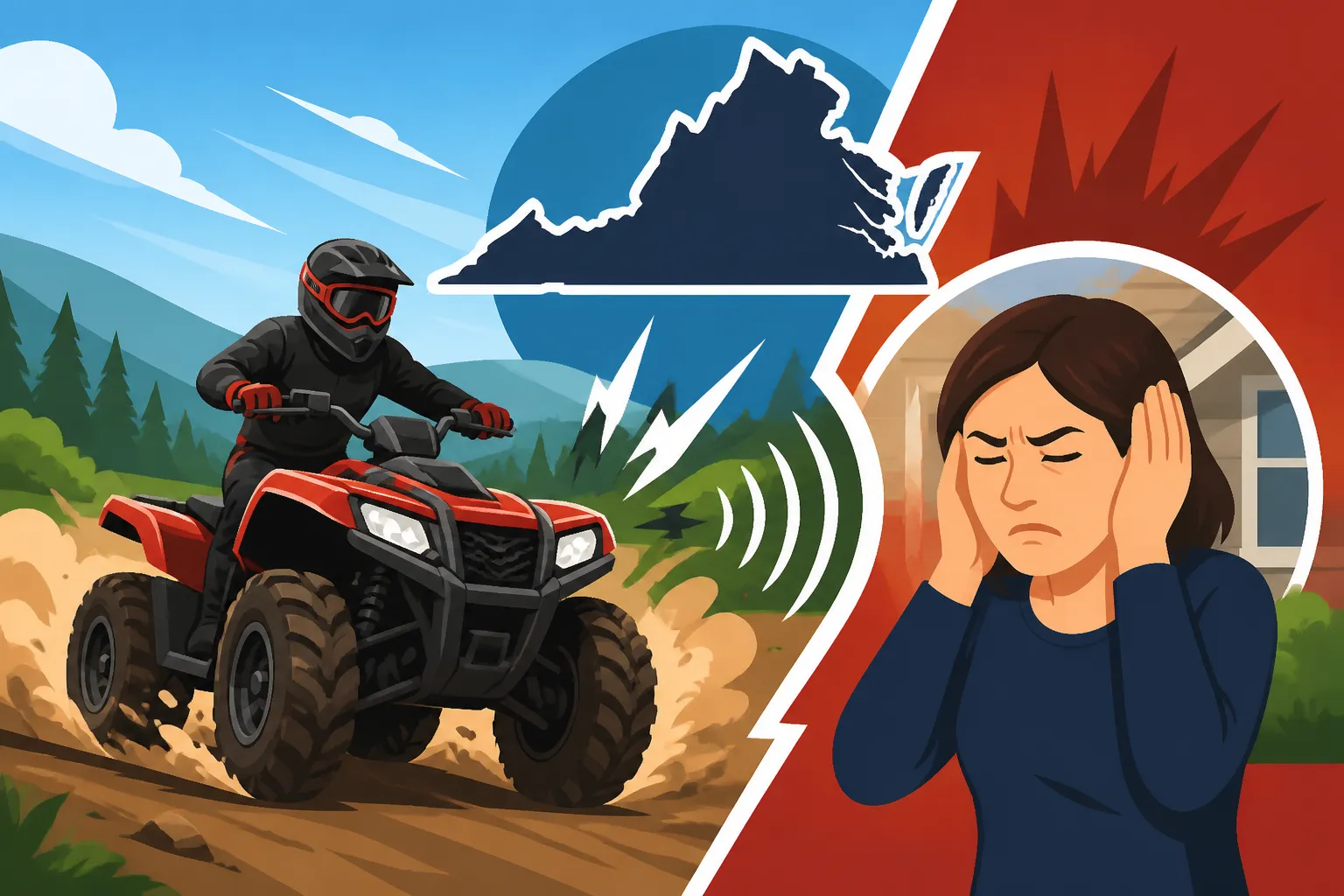
There's nothing quite like the freedom of hopping on your ATV or UTV and hitting the trails or cruising across your property. The rumble of the engine, the feeling of power beneath you—it’s all part of the experience. But let's be honest, that same wonderful rumble can quickly become a headache for neighbors, leading to those uncomfortable, and sometimes legally tricky, Virginia noise complaints about quads. This guide is here to walk you through the nuances of ATV and UTV noise in the Commonwealth, helping both riders understand their responsibilities and residents know their options when the peace is disturbed.
Understanding the Landscape of ATV and UTV Noise in Virginia
The sound of an ATV or UTV isn't just a simple decibel reading; it's a complex issue tied to property rights, community harmony, and the differing expectations of rural and suburban living. For many, the noise is an unavoidable byproduct of a cherished pastime or necessary farm work. For others, it’s an unwelcome intrusion that disrupts everything from quiet family dinners to the peaceful enjoyment of their own backyard.
Virginia is a diverse state, from the sprawling farmlands and dense forests of Appalachia to the more suburban and even urban fringes where larger lots still allow for off-road recreation. What might be considered acceptable noise on a sprawling property in rural Lee County could be a serious point of contention in a more densely populated area like Chesterfield. The sound perception also varies widely depending on the type of machine, its modifications, and how it’s being ridden. A stock utility quad used for chores is often far less offensive than a high-performance sport quad with an aftermarket exhaust ripping through the gears. This initial friction is where most of the complaints originate, often before anyone even thinks about calling the authorities.
The Subjective Nature of "Loud"
One of the biggest challenges with ATV and UTV noise complaints is just how subjective "loud" can be. What might be background noise to an enthusiast can be incredibly irritating to someone trying to enjoy a quiet afternoon. Factors like the time of day, how often the noise occurs, and the duration all play a role in whether a sound transitions from mere presence to outright nuisance. It's not just the volume; it's the context. The same ATV noise that's barely noticed at 2 PM on a Saturday might feel unbearable at 7 AM on a Sunday or late at night.
Consider a family trying to enjoy a backyard barbecue in a suburban setting. The constant drone of an ATV from a nearby property, even if technically "legal," can quickly sour the experience. Similarly, a shift worker trying to sleep during the day might find afternoon riding incredibly disruptive. These are the real-life scenarios that escalate friendly neighborhood disagreements into official complaints.
The Impact on Community and Property Values
Beyond personal annoyance, persistent ATV noise can have tangible impacts on a community. It can lead to neighborhood disputes, create divisions, and even influence property values in areas where peace and quiet are highly prized. When residents feel their quality of life is being diminished, they will naturally seek solutions, and sometimes that means turning to official channels.
For riders, this means understanding that their actions, even on their own land, can have wider ripple effects. Being a good neighbor isn't just about sharing a cup of sugar; it's also about respecting the shared environment and understanding how your recreational activities affect those around you. This is why addressing noise concerns proactively, rather than reactively, is always the better approach.
What Virginia Law Says About ATV and UTV Noise
This is where things can get a little murky, and it's a common source of confusion for both those making complaints and those riding their machines. Unlike passenger vehicles, which have specific state-mandated noise limits for exhaust systems, Virginia's state code is largely silent on specific decibel limits for off-road vehicles when they are being operated legally on private property.
The primary focus of Virginia's state ATV and UTV laws revolves around where these machines can be ridden, not typically how loud they are. The biggest restriction, and the one most often violated, is the outright ban on ATVs and UTVs on public highways and public property. [Virginia Bans ATVs on Public Highways]. When an ATV is ridden illegally on a public road, the noise it creates becomes secondary to the illegal operation itself.
State Statutes: More About Where Than How Loud
Virginia Code § 46.2-915.1 is the cornerstone of ATV regulation in the Commonwealth, dictating where these machines can and cannot operate. It outlines strict prohibitions against riding on public highways, streets, sidewalks, and other public rights-of-way. It also details specific exceptions, such as crossing a highway by the most direct route or the limited road access in Buchanan and Tazewell counties. If an ATV is making noise on one of these prohibited surfaces, the complaint isn't really about the noise itself, but the illegal activity. The penalties for such violations can be significant, including civil penalties up to $500. [Virginia Penalties for Illegal Riding].
However, when an ATV or UTV is being operated legally on private land, Virginia state law does not generally impose specific decibel limits. This doesn't mean you can run a completely unmuffled machine without consequence, but rather that enforcement often falls under broader nuisance laws or local ordinances, if they exist. This is a critical distinction that many people miss, often leading to frustration when a noise complaint doesn't result in immediate action based solely on volume.
General Nuisance Laws and Local Ordinances
Without specific ATV noise statutes at the state level for private property, complaints often pivot to general nuisance laws. These laws typically address activities that unreasonably interfere with a person's enjoyment of their property. What constitutes an "unreasonable interference" is often determined on a case-by-case basis and can involve factors like the duration, intensity, and frequency of the noise.
Crucially, counties, cities, and towns in Virginia have the authority to enact their own local ordinances. Many localities have general noise ordinances that may or may not specifically mention ATVs, but could still be applied. These local rules can define "quiet hours," set acceptable noise levels for certain zones, or prohibit excessive noise that disturbs the peace. For example, a town might have an ordinance prohibiting loud noises between 10 PM and 7 AM, which would apply to an ATV just as it would to a loud stereo or power tools. [Virginia Town Ordinances in Coal Country] are a great example of how local rules can be tailored to specific community needs.
It's absolutely vital for both residents and riders to check their specific county or city's ordinances, as these can vary widely. What’s permitted in one jurisdiction might be a violation in another. Calling your local sheriff's department or police non-emergency line, or even checking your local government's website, is the best way to determine if specific local noise regulations apply to off-road vehicles in your area.
| Complaint Scenario | Typical Legal Basis | Enforcement Focus | Potential Outcome |
|---|---|---|---|
| ATV on Public Road | State Code § 46.2-915.1 | Illegal Operation | Civil Penalty, Impoundment |
| ATV Noise on Private Land (Daytime) | General Nuisance Law / Local Ordinance (if specific) | Unreasonable Interference / Ordinance Violation | Warning, Citation (if ordinance applies) |
| ATV Noise on Private Land (Nighttime) | General Nuisance Law / Local Ordinance (e.g., quiet hours) | Violation of Quiet Hours / Unreasonable Interference | Warning, Citation (if ordinance applies) |
| Trespassing with ATV | State Code § 18.2-119 | Unlawful Presence | Arrest, Fines |
Dealing with ATV and UTV Noise Complaints: Actionable Steps
Navigating a noise complaint, whether you're the one bothered by the noise or the one making it, requires a thoughtful approach. Emotions can run high, but a calm, informed strategy is always more effective.
For Those Affected by ATV/UTV Noise
If you're a Virginia resident consistently bothered by ATV or UTV noise, here's a breakdown of steps you can take:
-
Communicate with Your Neighbor (If Comfortable and Safe): Often, the rider might not even realize their activities are causing a disturbance. A friendly, non-confrontational conversation can often resolve the issue without involving authorities. Approach them with a spirit of cooperation, explaining how the noise affects you (e.g., "The ATV noise late in the evening makes it hard for my kids to sleep") rather than accusatory language. Suggest potential solutions, like specific riding times or using a quieter machine.
-
Document Everything: If direct communication doesn't work or isn't an option, start keeping a detailed log. Note the date, time, duration, and nature of each noise incident. You might even consider video or audio recordings (though be mindful of privacy laws on private property). This documentation becomes invaluable if you need to involve law enforcement or local authorities.
-
Understand Local Ordinances: Before calling anyone, do your homework. Contact your county or city administrator's office or police department (non-emergency line) and ask about specific noise ordinances, especially those pertaining to off-road vehicles or general nuisance laws. This knowledge will empower you and help you know what to expect when you involve officials.
-
Contact Local Law Enforcement (Non-Emergency): If the noise persists and you've exhausted other options, it's time to call the local sheriff's office or police department's non-emergency number. Clearly state that you are making a noise complaint. Provide your documentation. Officers will likely assess the situation based on local ordinances or general nuisance laws. Remember, if the ATV is being ridden on a public road or trespassing, that's a different and more serious violation that law enforcement will address directly. [Virginia Rules for Riding Private Land] and [Virginia Trespass Law for Riders] are critical here.
-
Consider Community Mediation: In some areas, community mediation services can help neighbors resolve disputes without legal action. This can be a good option for finding common ground and fostering better long-term relationships.
For ATV and UTV Riders Facing Complaints
If you're a rider and have received a noise complaint, whether from a neighbor or authorities, it's a call to action. Being proactive and considerate can prevent escalation and help maintain your riding privileges.
-
Be a Good Neighbor: First and foremost, acknowledge the complaint. Even if you believe you're in the right, a neighbor's discomfort is real. Open a dialogue if possible. Offering to ride at specific times, for shorter durations, or in areas further from homes can go a long way. This goes beyond the letter of the law and fosters good community relations.
-
Inspect Your Machine: Is your exhaust system stock and in good condition? Over time, mufflers can degrade, leading to louder operation. Aftermarket exhaust systems, especially those designed for performance, can significantly increase noise levels. Consider replacing worn components or opting for quieter, baffled systems. Brands like SuperATV offer various exhaust components that can help manage sound while maintaining performance. Always ensure your machine is equipped with a functional spark arrester, especially if you plan to ride on permitted trail systems like those in the National Forests. [Virginia Spark Arrester Requirements]
-
Review Local Rules and Riding Habits: Re-familiarize yourself with any local noise ordinances that apply to your property or the area where you ride. Pay attention to "quiet hours." Avoid riding excessively early in the morning or late in the evening. If you're riding on private land, ensure you have explicit [Written Consent From a Landowner] if it's not your own property. Remember, riding on public roads or streets is almost universally illegal in Virginia, and will undoubtedly lead to complaints and penalties. [Virginia Rules for Riding a County Road].
-
Maintain Your Machine: A well-maintained engine runs more smoothly and often quieter. Regular service can prevent excessive vibrations or mechanical noises that contribute to overall sound levels.
-
Educate Yourself and Others: Share information about responsible ATV riding within your local riding community. The more riders who understand and respect noise concerns, the fewer complaints there will be overall, preserving everyone's right to enjoy their machines. Understanding what an officer can legally ask for at a trailhead, for instance, can help you be prepared and demonstrate responsible ownership. [What an Officer Can Ask For at a Trailhead].
The Role of Local Ordinances and Community Harmony
As we've explored, local ordinances often fill the gap where state law is silent on ATV and UTV noise on private property. These ordinances are the community's way of setting standards for acceptable behavior and maintaining peace.
How Local Ordinances Are Created and Enforced
Local governments—county boards of supervisors, city councils, and town councils—have the power to create ordinances that regulate a wide array of activities, including noise. These ordinances are typically passed after public hearings, where residents can voice their concerns and opinions. This means that if persistent ATV noise is a significant issue in a particular locality, the community itself has the power to advocate for and implement specific regulations. [Asking a Virginia Town Council to Open Streets] on local road access is one example of local government power, and regulating noise falls into a similar category of local control.
Once an ordinance is in place, it is enforced by local law enforcement, typically the police department or sheriff's office. Enforcement might involve warnings for first offenses, followed by citations and fines for repeated violations. The specifics of penalties and enforcement mechanisms will be detailed within the ordinance itself.
Finding a Balance: Riders and Residents Working Together
The ideal scenario is one where riders and residents can coexist harmoniously. This often requires compromise from both sides. For residents, it means understanding the legal limitations on what law enforcement can do regarding noise on private property and being open to direct communication with neighbors. For riders, it means recognizing that just because something isn't explicitly illegal doesn't mean it isn't causing a genuine disturbance.
Forming local ATV clubs or community groups can also be an excellent way to bridge this gap. These groups can advocate for responsible riding, organize community clean-ups, and serve as a point of contact for local government regarding trail access, rules, and, yes, noise. By working together, communities can often find solutions that allow for recreational activities while respecting the peace and quiet of all residents.
Ultimately, navigating Virginia noise complaints about quads is less about finding a single, magic legal bullet and more about understanding the complex interplay of state law, local ordinances, personal responsibility, and community relations. Whether you're a rider or a resident, approaching the issue with respect and a willingness to communicate will always yield the best results.
Disclaimer
This article is for general informational purposes only and does not constitute professional advice. Laws, prices and regulations vary by location and change over time. Consult a qualified professional for guidance on your specific situation.