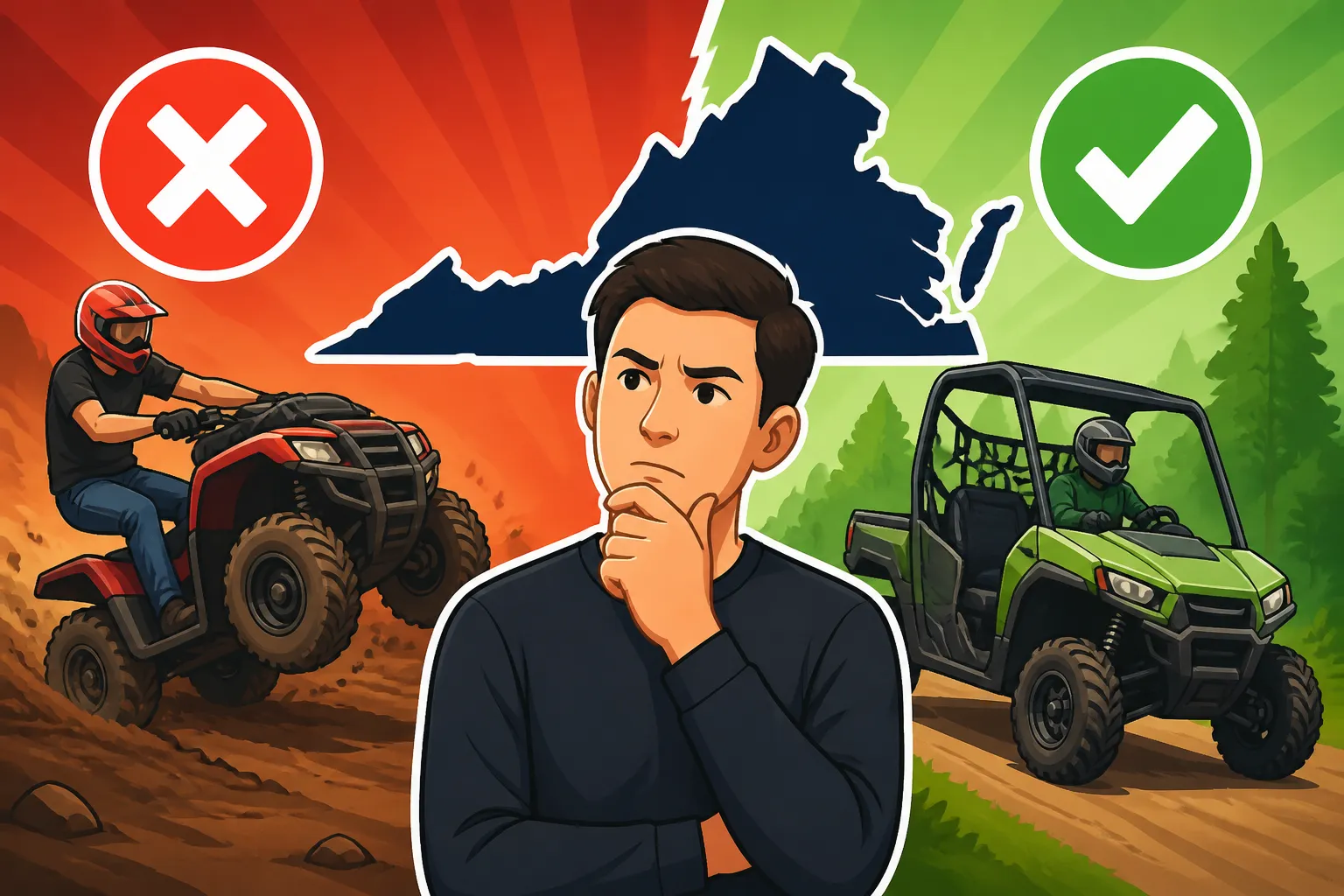
Virginia Rules Riders Get Wrong
Many Virginia ATV and UTV riders find themselves scratching their heads when it comes to the rules of the road, or more accurately, the rules off the road. It's easy to assume certain things, especially if you're coming from another state or just hearing bits and pieces from friends. But relying on assumptions can quickly lead to trouble, hefty fines, or even impoundment of your beloved machine. This guide is here to clear up the most common misunderstandings and set the record straight on what you can and cannot do with your ATV or UTV in the Commonwealth of Virginia.
The Myth of "Street Legal" ATVs and UTVs in Virginia
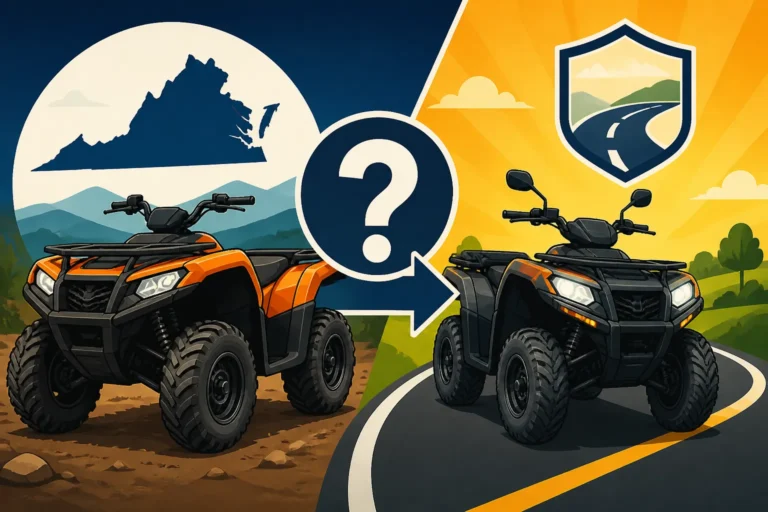
One of the most persistent myths circulating among off-road enthusiasts in Virginia is the idea that you can make your ATV or side-by-side "street legal." Perhaps you've heard a buddy talk about adding turn signals or mirrors, thinking that this will magically transform their utility vehicle into a road-worthy machine. This simply isn't the case in Virginia, and believing it can land you in serious legal hot water. The state's laws are very clear on what constitutes a street-legal vehicle, and unfortunately, ATVs and UTVs do not fit that definition.
Why ATVs and UTVs Aren't Like Dirt Bikes
It’s crucial to understand that Virginia law treats ATVs and UTVs very differently from off-road motorcycles, commonly known as dirt bikes. While there is a specific pathway in Virginia to convert certain dirt bikes for limited street use – involving a thorough inspection process and meeting federal safety standards, as outlined in [Virginia Dirt Bike Conversion Rules] – this option is simply not available for ATVs or UTVs. The physical design and inherent purpose of ATVs and side-by-sides are not intended for public highway operation, and the state's vehicle code reflects this distinction. You can add all the SuperATV accessories you want, like turn signals and horns, but they won't change the underlying legal classification.
The state defines an all-terrain vehicle (ATV) as any three-wheeled or four-wheeled motor vehicle, generally 50 inches or less in width, having a dry weight of 1,000 pounds or less, and designed for off-road travel. Utility vehicles (UTVs), often referred to as side-by-sides, are usually wider and heavier, sometimes even carrying multiple passengers. Neither of these classifications is eligible for street legalization. The legal framework simply doesn't provide a path for these machines to receive a conventional vehicle registration and license plate for routine road use.
The Reality of Road Crossings and Limited Exceptions
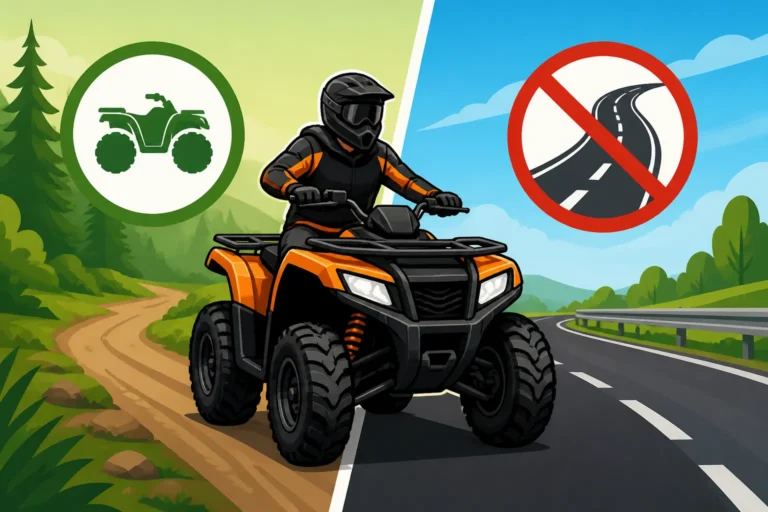
While the idea of leisurely cruising down a main road on your ATV is a non-starter, Virginia law does provide for very specific, highly limited instances where an ATV or UTV may cross a public highway. This is often where the confusion begins, as some riders interpret "crossing" as a green light for more extensive road use. Virginia Code § 46.2-915.1, the core of [Virginia ATV Road Rules Under 46.2-915.1], details these precise conditions. You can only cross a highway by the most direct route, and it must be done safely, preferably at a 90-degree angle to the roadway. This means no riding along the shoulder, no taking shortcuts down a paved residential street, and absolutely no joyrides on blacktop.
Beyond direct crossings, there are very narrow exceptions for farming, hunting, or other bona fide agricultural or household purposes, which generally involve operating the machine on private property adjacent to public roads, or briefly using the road only to travel between fields or sections of property. Even then, speed limits and safety precautions are paramount. It’s not an invitation to treat the road as part of your trail system. The law is very particular, and deviations can lead to significant penalties, including those outlined in [Virginia's Civil Penalty for Illegal Riding].
What "Not a Motor Vehicle" Really Means
You might hear phrases like "ATVs are not motor vehicles" tossed around, especially when discussing titling or registration. While it's true that [Virginia Titles ATVs but Does Not Register Them] and they typically aren't subjected to the same yearly registration fees or inspections as cars, this doesn't mean they're exempt from all rules, especially regarding public roads. For titling purposes, an ATV is treated differently than a car, but for operational purposes, it's still a powerful machine with rules of its own.
The key takeaway is that an ATV's status as "not a motor vehicle" in some administrative contexts does not magically grant it immunity from traffic laws when operated where it shouldn't be. This distinction often creates a false sense of freedom among riders, leading them to believe they can bypass speed limits, helmet requirements, or age restrictions on certain properties or public access points. In reality, while [Why a Virginia ATV Has No Yearly DMV Fee] might sound like a perk, it doesn't translate into permission to use public infrastructure for off-road recreation.
The Truth About Helmets and Age Limits for All Riders
Another common misconception revolves around who needs to wear a helmet and the strict age limitations for operating ATVs. Many riders assume that if they're adults or riding on private land, these rules don't apply. This is a dangerous assumption that can lead to severe injuries and legal repercussions. Virginia's laws are designed to protect riders of all ages, recognizing the inherent risks associated with ATV and UTV operation.
Virginia's Universal Helmet Law
Let's clear this up right away: [Virginia Helmet Law Applies to Every Rider]. This isn't just a suggestion; it's the law. Whether you're 8 or 80, whether you're ripping through a designated trail system like Spearhead or simply cruising across your own farm, every single person operating or riding as a passenger on an ATV in Virginia must wear an approved safety helmet. There is no exception for adults, and no exception for private land. The idea that "adults don't need a helmet on their own land" is one of Virginia Rules Riders Get Wrong most often.
This law is in place for a very good reason: head injuries are devastating. A helmet can mean the difference between walking away from a minor spill and suffering life-altering brain trauma. While Virginia doesn't require ATV insurance, wearing proper safety gear, including a high-quality helmet and eye protection, is simply good common sense. You can find excellent, robust helmets that meet safety standards from manufacturers like SuperATV and other reputable brands, ensuring you're protected.
Age and Engine Size Restrictions You Can't Ignore
Virginia takes youth rider safety very seriously, and there are explicit age limits tied to engine displacement, as detailed in [Virginia Age Limits by Engine Size]. These rules are not optional and apply regardless of supervision:
- Under 12 years old: May not operate an ATV with an engine size greater than 70 cubic centimeters (cc).
- 12 to 16 years old: May not operate an ATV with an engine size greater than 90 cc.
- 16 years old and over: No engine size restriction.
Crucially, [Virginia Has No Supervision Escape Clause]. This means that even if a parent or guardian is standing right next to a child, the child still cannot operate a machine larger than what the law allows for their age group. For example, a 10-year-old cannot ride a 250cc ATV, even with their experienced father guiding them. This is a strict rule designed to prevent serious accidents involving machines too powerful for young, developing riders.
Passengers: When Two is Allowed, and When It's Not
The question of carrying passengers is another area ripe for misunderstanding. Generally, an ATV is designed for a single operator. Unless the manufacturer explicitly designed the ATV for more than one person and equipped it with a designated passenger seat and footrests, carrying a passenger is illegal and incredibly dangerous. These machines are often built with a narrow, high center of gravity, and an extra person can drastically alter stability, especially during turns or over uneven terrain.
Utility vehicles (UTVs or side-by-sides) are a different story, as many are designed with multiple seats and roll cages specifically for carrying passengers. For these machines, [Virginia Passenger Rules on an ATV] generally allow passengers up to the manufacturer's designed capacity, provided everyone is wearing a helmet and adhering to seatbelt requirements if the machine is equipped with them. Always check your machine's manufacturer guidelines and ensure any passengers are within the design specifications for safety.
Private Land Isn't a Free-For-All: Consent and Continued Rules
Many ATV and UTV owners assume that once they're on private property, especially their own, all state laws regarding operation vanish. This is another major pitfall where riders get it wrong. While private land certainly offers more freedom than public roads, it doesn't create a legal vacuum. Important rules, particularly around consent, safety, and liability, still apply.
The Non-Negotiable Need for Written Consent
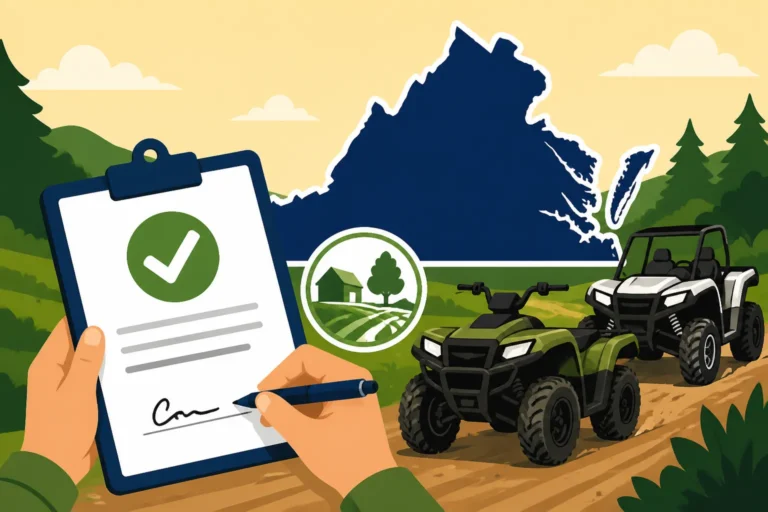
Even on land that isn't yours, but isn't a public highway, you absolutely must have permission from the landowner to ride. And in Virginia, that permission should ideally be in writing. [Virginia Requires Written Landowner Consent] for operating ATVs on private property other than your own. This isn't just about being polite; it's a legal safeguard. Without written permission, you could be charged with trespassing, even if you had a verbal agreement. Imagine hauling your rig for hours to a friend's hunting camp, only for a game warden or sheriff's deputy to find you riding on adjacent private timber company land without a signed letter. That trip could quickly turn into a costly citation.
A good written consent form should include the landowner's name and contact information, the rider's name, the dates or duration of permission, and a clear description of the property. This simple step protects both the rider and the landowner. It ensures that everyone is on the same page and helps avoid misunderstandings that can lead to legal issues or strained relationships with property owners.
Safety Rules Still Apply, Even in Your Own Backyard
While you might feel completely at ease on your own property, certain fundamental safety rules, particularly the helmet law and age restrictions, do not magically disappear. As discussed, [Public Highways and Public Property Are Both Off Limits] for routine ATV riding, but even on private land, the helmet law applies to all riders. So, if your 10-year-old is riding their 50cc youth quad in your backyard, they still need to be wearing an approved helmet. And they still can't jump on your 500cc machine, even under your watchful eye.
Ignoring these rules, even on your own land, isn't just about avoiding a fine; it's about preventing serious injury. Accidents can happen anywhere, and the risks of rollovers, collisions, or falls are just as real on a private trail as they are on a designated riding park. Ensuring everyone is properly geared up, including helmets, eye protection, and sturdy boots, is paramount for a safe experience. Accessories like mirrors from SuperATV can enhance situational awareness, even on private trails, reducing the chances of collision with other riders or obstacles.
Understanding Trespass and Liability
The distinction between permissible riding areas and prohibited zones is not always clear-cut, especially in rural Virginia where property lines can be poorly marked. Riding on unposted land without permission can still constitute trespassing. If you accidentally wander off your friend's property onto an adjacent parcel where you don't have permission, you are technically trespassing. This is why having a clear understanding of property boundaries, perhaps with a map, is just as important as having [Written Consent From a Landowner].
Furthermore, if an accident occurs on your private land involving someone else, questions of liability can arise. While state laws protect landowners who allow recreational use of their property from certain liabilities, this protection isn't absolute. Ensuring all riders are aware of and adhere to safety rules, and perhaps even having them sign waivers, can be crucial steps in mitigating risk. Always consult with legal professionals regarding specific liability concerns.
Common Riding Situations and Unexpected Penalties
Navigating Virginia's ATV and UTV rules can feel like a maze, especially with specific exceptions and severe penalties for violations. Understanding common scenarios where riders make mistakes can help you avoid costly citations or even the loss of your machine.
The Allure and Limits of Virginia's Coalfield Roads
For many riders, the promise of accessing extensive trail systems like Spearhead Trails is a huge draw. These trail systems often have designated "trail towns" and specific routes designed to connect trails or provide access to services. And indeed, Virginia does have unique provisions for certain coalfield counties. [Two Counties Named in the Code] — Buchanan and Tazewell — have special ordinances allowing ATVs and UTVs on certain designated secondary highways within those counties. This is a very specific and limited exception, not a blanket permit for all roads in those areas.
Even on these designated routes, strict rules apply: a maximum speed limit of [Virginia's 25 mph Coalfield Road Limit], daylight-only operation, and the continued requirement for helmets. These are not open invitations to speed through towns or take any paved road you see. These routes are meticulously managed and signed, often maintained through the efforts of local ATV clubs and Spearhead Trails itself. Riders should always check current maps and regulations for these specific areas before assuming any road access.
Avoiding Impoundment and Steep Fines
The penalties for violating Virginia's ATV laws are not trivial. Operating an ATV or UTV illegally on public highways or property can result in a civil penalty of up to $500 for each offense, as highlighted in [Riding Illegally Costs Up to $500 in Virginia]. This is a civil, not criminal, penalty, but it's still a significant hit to your wallet. Beyond fines, cities and counties also have the power to impound your machine if it's found being operated illegally, especially on sidewalks or public property. [Cities Can Impound an ATV Ridden on a Sidewalk] is a stark reminder that local ordinances can carry heavy consequences.
Retrieving an impounded ATV can be an expensive and time-consuming nightmare, involving impound fees, storage charges, and potentially legal costs on top of the initial fine. It's a situation no rider ever wants to find themselves in. Understanding and adhering to all the rules, from helmet laws to designated riding areas, is the best way to keep your machine out of the impound lot.
What an Officer Can (and Will) Check
When you're out riding, especially near public access points, designated trails, or areas where rules are commonly flouted, you should expect that law enforcement officers or trail rangers might stop you to verify compliance. They aren't just looking for speeding; they're checking a range of factors to ensure safety and adherence to the law.
Officers can and will check for:
- Helmets: Confirming every rider and passenger is wearing an approved helmet.
- Age and Engine Size: Verifying that youth riders are on appropriate machines for their age.
- Permits: On designated trail systems like Spearhead or National Forests, they will check for valid [Virginia Spearhead Trail Permits] or [Virginia National Forest OHV Permits].
- Manufacturer Compliance: Ensuring the machine isn't modified in a way that makes it unsafe or illegal for the operating area (e.g., width limits on certain trails like Taskers Gap).
- Written Consent: If you're on private land that isn't yours, they may ask for proof of landowner permission.
- Proof of Ownership: While not always required on trails, having documentation like your title or a bill of sale can prevent complications if questions arise, especially after an accident or if the machine is found where it shouldn't be.
Carrying essential paperwork, whether physical copies or digital images on your phone, can save you a lot of hassle. Know the rules, follow them diligently, and enjoy the incredible off-road opportunities Virginia has to offer responsibly.
| Virginia ATV/UTV Rule Summary | Public Highways/Roads | Designated Coalfield Roads (Buchanan/Tazewell) | Private Land (Non-Owner) | Private Land (Owner's Property) |
|---|---|---|---|---|
| Street Legal | No (ATVs/UTVs cannot be street legal) | No (Specific sections have limited access, not street legal) | No (ATVs/UTVs cannot be street legal) | No (ATVs/UTVs cannot be street legal) |
| Helmet Required | Yes (for operator & passenger) | Yes (for operator & passenger) | Yes (for operator & passenger) | Yes (for operator & passenger) |
| Age/Engine Size Limits | Yes (Strictly enforced) | Yes (Strictly enforced) | Yes (Strictly enforced) | Yes (Strictly enforced) |
| Written Landowner Consent | N/A (generally prohibited) | N/A (for public roads, not private access) | Yes (Highly recommended, legally safer) | N/A (you are the owner) |
| Passenger Allowed | No (unless factory-designed for multiple persons, very rare for ATVs) | No (unless factory-designed for multiple persons) | Yes (if factory-designed for multiple persons) | Yes (if factory-designed for multiple persons) |
| Fines/Impoundment for Violation | Up to $500 civil penalty, impoundment possible | Up to $500 civil penalty, impoundment possible | Trespassing charges, fines, impoundment possible | Fines for helmet/age violations, accident liability |
Disclaimer
This article is for general informational purposes only and does not constitute professional advice. Laws, prices and regulations vary by location and change over time. Consult a qualified professional for guidance on your specific situation.