The Virginia Law Behind Every ATV Rule
It can be incredibly frustrating to feel like you're constantly guessing about where you can and can't ride your ATV or UTV in Virginia, or what rules apply to you and your family. There's a lot of hearsay out there, and the actual laws can feel like they're written in a secret code. This guide is here to cut through that confusion, explaining the foundational Virginia laws that govern nearly every aspect of ATV and UTV use, so you can ride confidently and legally.
The Core Legislation: Virginia Code § 46.2-915.1
If you've ever wondered where all those rules about ATVs and UTVs come from in Virginia, you don't have to look much further than Virginia Code § 46.2-915.1. This isn't just some obscure document; it's the bedrock, the foundational law that dictates virtually every "do" and "don't" for off-road vehicle enthusiasts across the Commonwealth. Understanding this single piece of legislation is like holding the master key to unlocking all the other specific regulations and exceptions you might encounter. It sets the stage for everything from where you can ride to who can operate these machines and what safety gear is required.
Defining Off-Road Vehicles in Virginia Law
Before we dive into the nitty-gritty of the rules, it's crucial to understand how Virginia law actually defines an ATV or UTV. You might call it a quad, a side-by-side, or a four-wheeler, but the legal definitions matter immensely because they determine which regulations apply to your machine. Generally, an "all-terrain vehicle" (ATV) is defined as a motor vehicle that has three or more wheels, is designed for off-road use, and is 50 inches or less in width, with a dry weight of less than 900 pounds, and uses an engine of 50 cubic centimeters (cc) or more. This definition is pretty specific and helps differentiate ATVs from other vehicles, even something that might look similar.
Utility vehicles (UTVs), often called side-by-sides, also fall under this umbrella but are generally wider and heavier, designed to carry passengers side-by-side and sometimes cargo. While they share the "off-road use" designation, their larger size and seating arrangements come with their own set of considerations, particularly concerning passenger rules. Knowing these distinctions is vital because a law that applies strictly to an ATV might not apply in the exact same way to a UTV, or vice-versa. It’s worth checking out [Virginia ATV and Utility Vehicle Definitions] for a deeper dive into these classifications. For example, some after-market accessories from brands like SuperATV might be designed for UTVs, focusing on utility and cargo, while others are more geared towards the agility of ATVs.
The Blanket Ban: Why ATVs Are Off-Limits on Public Roads
Here's the big one, the rule that causes the most confusion and, let's be honest, the most frustration: Virginia's general prohibition against operating ATVs and UTVs on public highways. Section 46.2-915.1 unequivocally states that "No all-terrain vehicle shall be operated on any public highway, or other public property, in the Commonwealth." This isn't just a suggestion; it's a hard and fast rule, and it's enforced. The reasoning behind this blanket ban is rooted in safety. ATVs and UTVs are designed for off-road conditions – dirt, mud, rocks, and uneven terrain. They lack many of the safety features found on street-legal vehicles, like turn signals, rearview mirrors (though you can add them with a SuperATV kit, it won't make your machine street legal), standard brake lights, and crash protection systems designed for high-speed impacts with other vehicles.
Trying to use these machines on paved roads, especially alongside cars and trucks, creates a significant hazard for everyone involved. Their handling characteristics are different, their visibility to other drivers can be poor, and they simply aren't built for the demands of road travel. This is why you'll see a lot of emphasis on trail riding and private land use in Virginia, rather than street riding. The state wants to keep riders and the general public safe, and this broad prohibition is the primary way they achieve that goal. It's a tough pill for some riders to swallow, especially if they just want to cross a road to get to another trail, but the law is very clear on this. You can learn more about [Virginia Bans ATVs on Public Highways] to really understand the implications.
Essential Rider Rules and Safety Provisions
Beyond the broad prohibition on road use, Virginia's ATV laws delve into crucial safety provisions that directly impact riders. These rules aren't just arbitrary; they're designed to protect you, your passengers, and especially younger riders, from the inherent risks of off-road vehicle operation. Ignoring these can lead to serious injury, not to mention hefty fines.
Age and Engine Size Restrictions
Virginia takes the safety of young riders very seriously, which is why there are strict rules linking a rider's age to the maximum engine size they can operate. It's not a "one size fits all" situation, and supervisors need to pay close attention to these guidelines. For instance, riders under the age of 12 are restricted to ATVs with an engine size of 70cc or less. This ensures that younger, less experienced operators are on machines that are appropriately powered and sized for their capabilities. As riders gain experience and mature, the limits increase. Those between 12 and 16 years old can operate ATVs up to 90cc. Once a rider turns 16, these engine size restrictions no longer apply, and they can operate any size ATV, provided they meet other requirements.
It's important to note that these age and engine size rules apply whether you're on private land or a designated trail system. There's no "exception" for riding on your own property when it comes to these fundamental safety guidelines. Breaking these rules can not only put a young rider at risk but also result in penalties for the supervising adult. It’s a common misconception that if a child is supervised, they can ride a bigger machine, but the law doesn’t offer that escape clause. Dive into [Virginia Age Limits by Engine Size] for a comprehensive breakdown, and remember that [Virginia Rules for a 16-Year-Old Rider] are different than for a younger child.
The Mandatory Helmet Law
One of the most critical safety rules, and one that applies to all ATV and UTV riders in Virginia, regardless of age or experience, is the helmet law. Virginia Code § 46.2-915.1 mandates that "Every person operating an all-terrain vehicle shall wear a protective helmet." This isn't just for kids; it's for everyone. Whether you're a seasoned adult rider or a teenager just starting out, a helmet is non-negotiable. The law specifies that these helmets must meet the standards and specifications established by the State Police. This means you can't just throw on any old helmet; it needs to be one certified to protect you in an off-road incident.
The reason for this rule is simple: head injuries are among the most severe and preventable consequences of an ATV accident. Even a low-speed tip-over can result in a serious head injury if you're not wearing proper protection. This law is about minimizing that risk and ensuring that every rider has a fundamental layer of safety. So, before you even think about firing up your machine, make sure everyone has a properly fitted, approved helmet. You can find more detail on [Virginia Helmet Law Applies to Every Rider] and understand [Why Virginia Adults Must Wear a Helmet, Not Just Kids]. Even if you've added an overhead cage to your UTV, like some robust models from SuperATV, a helmet is still legally required and highly recommended.
Passenger Rules: One Rider Per Machine, Usually
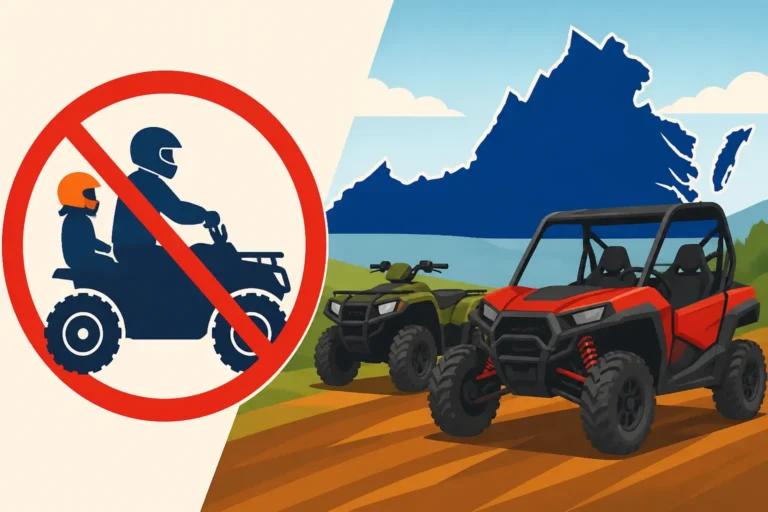
Another critical safety regulation addresses how many people can ride on an ATV or UTV. The general rule is clear: ATVs are designed for a single operator. The law states, "No operator of an all-terrain vehicle shall carry a passenger unless the all-terrain vehicle is designed to carry more than one operator." This means that if your ATV only has one seat, it's illegal and unsafe to carry a passenger, even if they're a small child clinging on behind you. These machines are engineered for specific weight distribution and handling by a single rider, and adding an extra person can severely compromise stability and control, especially on uneven terrain.
However, UTVs (side-by-sides) are often designed to carry multiple passengers, with factory-installed seats and seatbelts. In these cases, carrying passengers up to the designed capacity is permitted. The key here is "designed to carry." If your machine rolled off the factory line with a single seat, that's what it's for. If it has two or more distinct seats, then passengers are generally allowed in those designated spots. Always check your machine's manufacturer specifications and abide by them, along with the state law. It's a straightforward rule, but one that's often overlooked, leading to avoidable accidents. For more specific information, refer to [Virginia Passenger Rules on an ATV].
Navigating Exceptions and Specific Use Cases
While the general rules for ATVs in Virginia are quite strict, especially concerning public road use, the law does recognize that these machines have legitimate and often essential uses. Because of this, certain exceptions and specific use cases have been carved out, allowing for their operation under particular circumstances. These aren't loopholes; they're carefully defined allowances that riders need to understand thoroughly to avoid penalties.
Farm, Hunting, and Private Property Exemptions
One of the most significant areas of exception revolves around agricultural, hunting, and private property use. Virginia law understands that ATVs and UTVs are incredibly valuable tools for farmers, landowners, and hunters. Therefore, the general prohibition against public property use often doesn't apply when these machines are used directly for these purposes. For instance, you can typically operate your ATV on your own private land without the same restrictions that apply to public trails or roads. Farmers can use their utility vehicles for hauling feed, checking fences, or transporting tools without running afoul of the law, even if it involves briefly crossing a dirt farm road.
Similarly, those involved in hunting, trapping, or timbering activities can often use ATVs and UTVs on private lands, provided they have the landowner's consent. This usually requires [Virginia Written Consent on Private Land], which is a smart move even if you know the owner well. This written permission protects you if an enforcement officer questions your presence. It's crucial to remember that "private land" doesn't mean "any land that's not a highway." If you're on someone else's property, permission is paramount. These exemptions are practical and necessary, but they come with the expectation that riders are still operating safely and responsibly. You can find more details on [Virginia Farming and Household Exceptions].
Limited Road Access in Designated Coalfield Areas
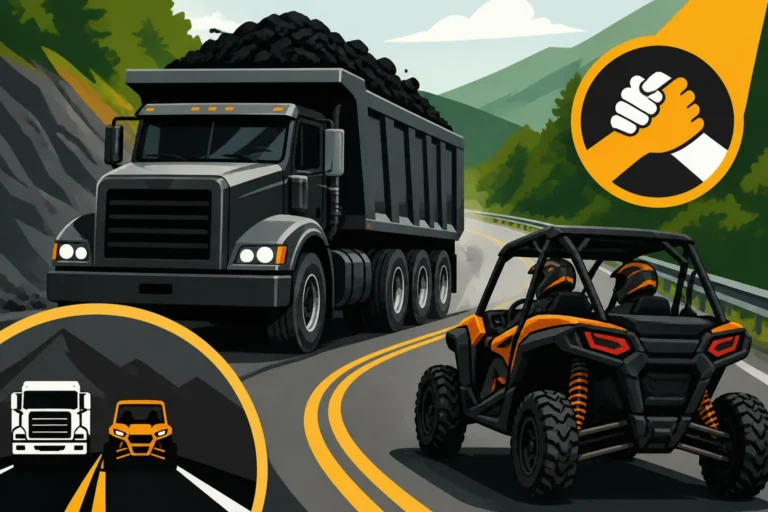
Here's an exception that often surprises people and highlights the unique landscape of Virginia: specific, limited road access for ATVs and UTVs in certain coalfield counties. Recognizing the rich riding culture and economic benefits of off-road tourism in these areas, Virginia law allows Buchanan and Tazewell counties to designate certain county roads as open to ATVs and UTVs. This isn't a free-for-all; it's a carefully controlled environment. These designated routes typically connect existing trail systems, allowing riders to access trailheads, local businesses, and lodging without having to trailer their machines short distances.
When operating on these designated routes, riders must adhere to additional rules, such as a maximum speed limit of [Virginia's 25 mph Coalfield Road Limit], and they can only be ridden during daylight hours. The routes are clearly marked, and riders are expected to stay on them. This unique provision is a testament to the local culture and the economic impact of off-road recreation in Southwest Virginia. If you're planning a trip to these areas, be sure to research the specific open routes and local ordinances. Understanding [Virginia Buchanan and Tazewell County Road Access] is key if you plan to explore these regions.
Emergency and Law Enforcement Privileges
Another important set of exceptions involves emergency services and law enforcement. When time is critical, and terrain is difficult, ATVs and UTVs become indispensable tools for first responders, search and rescue teams, and law enforcement officers. Virginia law provides allowances for these professionals to operate off-road vehicles on public highways or other public property when performing their official duties. This might include responding to an accident in a remote area, conducting a search for a missing person in dense woods, or patrolling state parks and trails.
These exceptions are not for casual use; they are strictly tied to the performance of official duties by authorized personnel. This means that a volunteer rescue squad member can use their UTV to navigate through rough terrain to reach a patient, or a game warden can use an ATV to patrol remote hunting lands. It's a practical recognition that these vehicles, despite their general road prohibition for the public, play a vital role in public safety and service when operated by trained professionals.
Consequences: Penalties and Enforcement
Understanding the rules is one thing, but it's equally important to grasp what happens if those rules are broken. Virginia's laws governing ATVs and UTVs aren't just suggestions; they carry real consequences, ranging from civil penalties to impoundment of your machine. It's a stark reminder that responsible operation isn't just about safety, but also about avoiding legal and financial repercussions.
Understanding Civil Penalties for Violations
Unlike some traffic violations which might be criminal offenses, most ATV-related infractions in Virginia are classified as civil penalties. This means you won't typically face jail time for riding your ATV on a prohibited road, but you will face a fine. The civil penalty for a violation of the ATV laws can be up to $500. This isn't a small amount, and it can certainly put a damper on your riding day or weekend. It's important to understand that these penalties can stack up. For example, if you're riding on a prohibited highway without a helmet, that's potentially two separate violations, each carrying its own potential penalty.
The civil nature of these penalties means they are handled much like a parking ticket or a minor speeding ticket – you'll receive a citation and typically have the option to pay the fine or contest it in court. However, the fact that they are civil doesn't make them any less serious. Repeated violations, or violations that result in property damage or injury, could lead to more severe outcomes. Always err on the side of caution and adhere to the regulations to avoid these costly fines. Checking out [Virginia's Civil Penalty for Illegal Riding] will give you a better idea of what to expect if you find yourself in such a situation.
Impoundment Powers and Court Actions
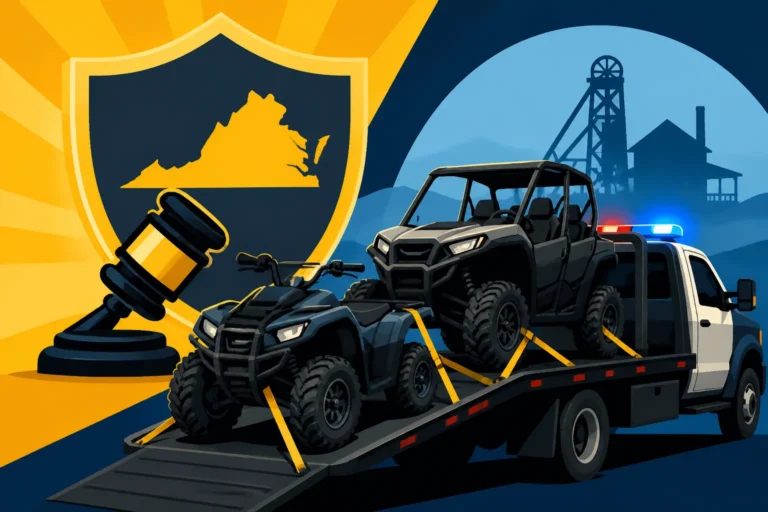
Beyond monetary fines, one of the most immediate and impactful consequences of violating Virginia's ATV laws is the potential for your machine to be impounded. The law grants cities and counties the power to impound ATVs and UTVs that are operated illegally, especially on public highways or property where they are explicitly forbidden. Imagine the frustration of having your beloved quad, perhaps equipped with high-performance SuperATV parts, seized by law enforcement and hauled away. It's a headache no rider wants.
If your machine is impounded, you'll likely be responsible for impoundment fees, towing charges, and storage costs, all in addition to any civil penalties you incur. These costs can quickly add up, often exceeding the initial fine itself. Getting your machine back can be a bureaucratic process, requiring proof of ownership and payment of all outstanding fees. In more severe cases, or for repeat offenders, authorities might even pursue court actions that could lead to further penalties or even the forfeiture of your machine, though that's less common for a first-time civil offense. The lesson here is clear: illegal operation can quickly become a very expensive and frustrating ordeal. Don't let your machine get tied up – understand and follow the rules, especially those outlined in [Virginia City Impoundment Powers]. And for a broader perspective on prohibited activities, check out [The Five ATV Bans Written Into Virginia Law].
| Rule Category | Core Requirement / Prohibition | Key Exemptions / Conditions | Common Penalty for Violation |
|---|---|---|---|
| Public Road Use | Generally prohibited on any public highway or public property. | Designated routes in Buchanan/Tazewell counties (25 mph, daylight only); farm use on private roads; emergency/law enforcement duties; crossing a highway by the most direct route. | Up to $500 civil penalty; impoundment. |
| Helmet Use | Every operator (and passenger, if designed for one) must wear a protective helmet meeting State Police standards. | No exemptions – applies to all ages, all types of off-road property, and designated trails. | Up to $500 civil penalty. |
| Age & Engine Size | Under 12: max 70cc; 12-16: max 90cc. Over 16: no engine size restriction. | No supervision "escape clause" – age/engine limits are strict. Applies on private land and trails. | Up to $500 civil penalty (for operator or supervising adult). |
| Passengers | ATVs (single-seat) generally cannot carry passengers. UTVs may carry passengers up to designed capacity (multi-seat). | Only if the machine is "designed to carry more than one operator" (i.e., multiple factory seats). | Up to $500 civil penalty. |
| Private Land Use | Allowed on private property with owner's consent. | Requires express or [Virginia Written Consent on Private Land] to avoid trespassing charges. Still subject to helmet, age, and passenger rules. | Trespassing charges (if no consent); civil ATV penalties still apply. |
Disclaimer
This article is for general informational purposes only and does not constitute professional advice. Laws, prices and regulations vary by location and change over time. Consult a qualified professional for guidance on your specific situation.