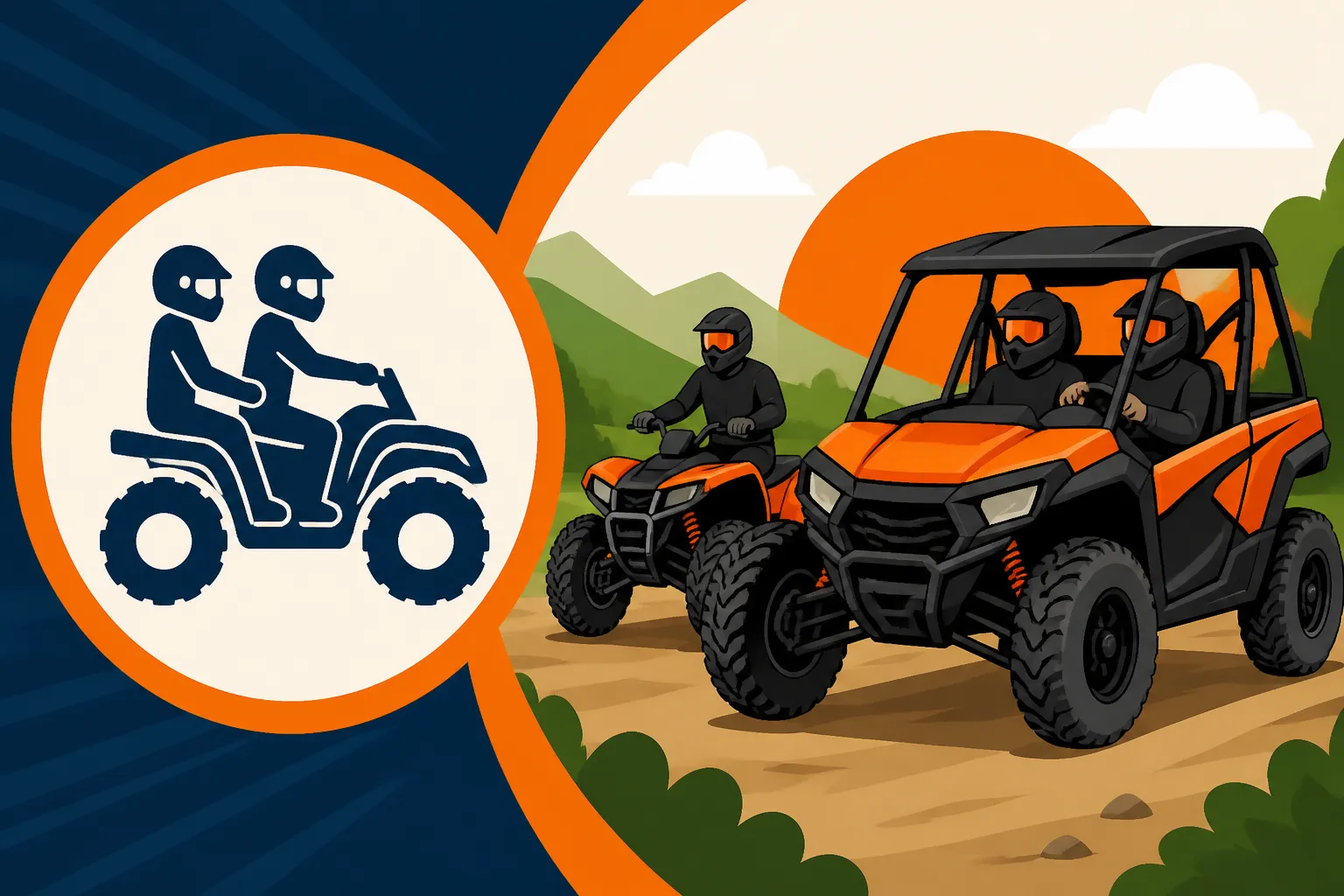
Virginia Passengers Only on Designed Machines
One of the trickiest parts of enjoying the trails and countryside in Virginia with your all-terrain vehicle or utility terrain vehicle is figuring out who can ride with you. It's not just about space; it's about what the law, and frankly, physics, says is safe and legal. This guide dives deep into Virginia's specific requirements, explaining what it means for a machine to be "designed" for a passenger and helping you keep everyone safe and compliant.
What "Designed Machines" Really Means for Passengers in Virginia
When Virginia's regulations talk about carrying a passenger, they consistently refer to machines that are "designed" for more than one rider. This isn't just some legal jargon; it’s a critical distinction that dictates whether you can legally (and safely) have someone riding behind or beside you. For many riders, especially those new to the sport or those who've always just hopped on with a friend, this can be a real head-scratcher. It's not just about adding a second set of footpegs or a small aftermarket seat. The design goes much deeper.
Distinguishing Single-Rider ATVs from Multi-Passenger UTVs
At the heart of "designed machines" is the fundamental difference between most ATVs and UTVs. A traditional ATV, or "quad," is overwhelmingly designed for a single operator. Think about its narrow seat, the way you straddle it, and how your body shifts with the machine's movements. This is a deliberate design choice that allows the rider to use their weight and balance to control the vehicle, especially in turns or over rough terrain. Adding a second person to this dynamic fundamentally alters the center of gravity and the rider's ability to maintain control. It makes an already challenging maneuver significantly more dangerous.
On the flip side, utility terrain vehicles (UTVs), often called side-by-sides, are typically manufactured with multiple seating positions, complete with seatbelts, grab handles, and sometimes even roll cages. These features are integral to their original design and intent, making them suitable for carrying passengers. Their wider stance and different suspension systems are built to accommodate the increased weight and different weight distribution that comes with multiple occupants. It's like comparing a motorcycle to a car; both are vehicles, but their design dictates their passenger capacity and safety features. You might see a brand like SuperATV offering replacement seats or harnesses for UTVs, but these are almost always for existing passenger configurations, not for converting a single-rider ATV.
Manufacturer Specifications as Your Primary Guide
The absolute best way to determine if your machine is designed for a passenger is to consult the manufacturer's specifications. This information is typically found in your owner's manual, on a decal on the machine itself, or on the manufacturer's official website. These specs will clearly state the vehicle's seating capacity, often indicating "operator only" for single-rider ATVs, or "operator and one passenger" (or more) for multi-rider models and UTVs.
Don't rely on assumptions or what you've seen others do. A small, padded area behind the driver on an ATV might look like a seat, but if the manufacturer explicitly states "single rider only," then it's not a designed passenger space. The manufacturer has engineered the frame, suspension, engine power, braking system, and overall stability for a specific load and rider distribution. Exceeding this, even with what appears to be a minor addition, can compromise the vehicle's integrity and handling, leading to unpredictable and dangerous situations. For example, some larger ATVs are indeed designed with an extended seat and dedicated footrests for a second rider, and these are the exceptions that prove the rule. Always check the official word from the factory. [When a Factory Seat Makes a Passenger Legal] is a critical distinction here.
The Dangers of Riding an Undesigned ATV with a Passenger
It's tempting to think that "just this once" won't hurt, or that you're a skilled enough rider to compensate for an extra person on an ATV not meant for two. However, the dangers associated with carrying a passenger on an undesigned ATV are numerous and severe, often leading to loss of control, serious injuries, or worse. Virginia's law isn't just about rules; it's about rider safety.
Compromised Balance and Control
The primary danger of an extra passenger on a single-rider ATV is the radical shift in the vehicle's balance and your ability to control it. ATVs are designed for active riding, meaning the operator uses their body weight to lean into turns, absorb bumps, and shift balance to navigate challenging terrain. When a passenger is added, especially one who isn't experienced in off-road riding, this dynamic is completely disrupted. The extra weight, positioned high and often behind the rear axle, significantly raises the center of gravity, making the ATV much more prone to rollovers, especially on inclines, declines, or while cornering.
Furthermore, the operator's ability to shift their own weight is severely hampered by a passenger directly behind them. Imagine trying to lean into a sharp turn with someone essentially strapped to your back. The ATV will feel heavy and unresponsive, making sudden evasive maneuvers incredibly difficult, if not impossible. Braking distances will also increase dramatically, and the suspension, designed for a single rider, will bottom out more easily, leading to a harsh, uncontrolled ride. This isn't just uncomfortable; it's a recipe for disaster on uneven trails or during unexpected obstacles.
Increased Risk of Rollovers and Ejection
Rollovers are one of the most common and dangerous types of ATV accidents. Carrying an extra passenger on a machine not designed for it dramatically amplifies this risk. The altered weight distribution makes the ATV inherently unstable, particularly when traversing side hills, making sharp turns, or encountering unexpected dips or bumps. Even a slight lean can be enough to initiate a rollover when the center of gravity is too high and too far back.
In the event of a rollover or even a sudden stop or impact, the passenger is at extreme risk of ejection. Unlike UTVs with seatbelts and sometimes roll cages, most single-rider ATVs offer no such protections. A passenger clinging to the operator or small handholds has very little to secure them to the machine, and the forces of an accident can easily throw them clear, often into harm's way. This ejection can lead to impacts with rocks, trees, or the rolling ATV itself, resulting in severe head trauma, broken bones, and internal injuries. Even if the driver manages to stay on, the passenger's uncontrolled movement can further destabilize the vehicle. [Virginia Helmet Law Applies to Every Rider] for all riders, which underscores the seriousness of head injury risk.
Virginia's Legal Stance on ATV Passengers and Machine Design
Virginia takes the issue of passenger safety on off-road vehicles seriously. The laws are designed to protect riders and prevent accidents, particularly those stemming from improper vehicle use. Understanding these regulations is key to responsible riding in the Commonwealth.
The Specifics of Virginia Law Regarding Passengers
Virginia's statutes are quite clear that an all-terrain vehicle (ATV) can only carry a passenger if it has been "specifically designed by the manufacturer to carry more than one person." This means that if your ATV came from the factory with one seat and no designated passenger footrests or handholds, then carrying a passenger is a violation of the law. The language leaves very little room for interpretation: it's about original manufacturer design, not aftermarket modifications. You might find a whole host of aftermarket parts from companies like SuperATV that enhance an ATV's performance or utility, but none of these can magically transform a single-rider ATV into a legally compliant multi-passenger vehicle in Virginia if it wasn't designed that way from the start.
This regulation applies across the board, whether you're riding on private land with permission, designated trails like those at Spearhead, or crossing a permissible road segment. It's a foundational rule for ATV operation. [Virginia Passenger Rules on an ATV] are consistently enforced, and violating them can lead to significant penalties. This isn't a recommendation; it's a legal requirement designed to prevent severe injuries and fatalities that occur when ATVs are operated outside their intended design parameters.
Penalties for Illegal Passenger Riding
Ignoring Virginia's passenger laws isn't just risky from a safety standpoint; it also carries legal consequences. Operating an ATV with an unauthorized passenger, meaning on a machine not designed for it, can result in a civil penalty. While the exact amount can vary, these fines are not trivial and are intended to deter unsafe practices. Beyond the immediate financial cost, a citation can also mean an unpleasant encounter with law enforcement, interruption of your ride, and potentially having to arrange alternative transport for your machine or passenger.
Moreover, if an accident occurs while you are illegally carrying a passenger, the legal ramifications can be far more severe. Your liability could increase significantly, potentially affecting insurance claims and leading to civil lawsuits for injuries sustained by the unauthorized passenger. [Virginia Penalties for Illegal Riding] can climb quickly when you factor in court costs and potential damages. It’s also important to remember that such an incident could lead to your insurance provider denying coverage for injuries or damages if the vehicle was being operated outside its intended design parameters and in violation of state law. This is a significant risk that far outweighs the convenience of squeezing an extra person onto a quad.
Identifying a Passenger-Ready ATV vs. a Single-Rider Model
Knowing the difference between a machine genuinely designed for multiple riders and one that isn't is paramount for safety and legal compliance in Virginia. While it might seem obvious to some, the nuances can be confusing, especially with various aftermarket accessories available.
Key Features of a Multi-Passenger Designed ATV or UTV
A truly multi-passenger designed ATV or UTV will have specific features incorporated by the manufacturer. For ATVs, these are much rarer than for UTVs, but they do exist. A multi-passenger ATV will typically feature an extended seat specifically contoured for two people, often with a raised section for the passenger, ensuring both riders have a stable and comfortable position. Crucially, it will have separate, designated footrests or floorboards for the passenger, distinct from the operator's. Handholds, often integrated into the seat or rack, are another clear indicator, providing the passenger with something secure to grip during the ride. Look for labels or markings near the seating area that explicitly state the machine's two-up capacity.
For UTVs (side-by-sides), the indicators are usually more apparent. They have bench seats or bucket seats with individual seatbelts for each designated occupant. Factory-installed roll cages, doors, and grab bars are standard safety features that underscore their multi-passenger design. The suspension and chassis are engineered from the ground up to handle the combined weight and dynamics of multiple riders. When considering upgrades or replacements, even for factory-designed UTVs, companies like SuperATV offer robust aftermarket options for things like seats, harnesses, and safety accessories, always intended to enhance the existing design, not to change a single-rider vehicle into a multi-rider one. [Virginia ATV and Utility Vehicle Definitions] highlight the legislative distinctions.
Dangers of Aftermarket "Buddy Seats"
The market is full of aftermarket accessories, including "buddy seats" or "pillion pads" that can be strapped onto the rear rack of a single-rider ATV. While these might appear to offer a solution for carrying a passenger, they are explicitly not considered a "designed" feature by the manufacturer or, by extension, by Virginia law. These additions do nothing to alter the vehicle's fundamental design, its center of gravity, its braking capacity, or its suspension system.
Attaching such a seat provides a false sense of security. It does not magically make the ATV safer or legal for two people. In fact, it can exacerbate the dangers by encouraging riders to carry a passenger on a machine utterly unequipped to handle the additional weight and altered dynamics. The result is often an unstable ride, poor handling, increased risk of rollover, and severe injury to both the operator and the unsuspecting passenger. Always remember that modifications, however well-intentioned, do not override manufacturer specifications or state law. If the factory didn't build it for two, then it's a single-rider machine.
Practical Considerations for Safe Passenger Riding in Virginia
Even if your ATV or UTV is genuinely designed for passengers, there are still crucial practical considerations to ensure the safety of everyone on board. Riding an off-road vehicle, especially with a passenger, demands extra vigilance and adherence to best practices.
Equipping Your Passenger for the Ride
Just like the operator, any passenger on an ATV or UTV in Virginia must be properly equipped. This means a helmet meeting specific safety standards is absolutely non-negotiable for every single rider, regardless of age or experience. [Virginia Helmet Standards From the State Police] are strict, and for good reason – head injuries are among the most serious risks in off-road accidents. Beyond the helmet, passengers should wear appropriate eye protection (goggles or a helmet visor), sturdy over-the-ankle boots, long pants, and a long-sleeved shirt or jacket. Gloves are also highly recommended to protect hands and improve grip.
It's not just about compliance; it's about protection. Loose clothing can get snagged, open-toed shoes offer no defense against impacts or scrapes, and exposed skin is vulnerable to branches, debris, and exhaust burns. Before setting out, do a quick gear check with your passenger, ensuring everything is properly fitted and secure. This simple step can significantly mitigate injuries in the event of an unexpected bump or minor incident.
Educating Your Passenger on Riding Etiquette
A passenger isn't just dead weight; they are an active, albeit passive, participant in the ride. It's the operator's responsibility to educate them on proper passenger etiquette and what to expect. This includes instructing them to hold on tightly to the designated handholds, keep their feet firmly on the footrests, and avoid sudden movements that could unbalance the machine. Teach them to lean with the operator in turns, without overcompensating, and to anticipate bumps or sudden changes in terrain.
Before you even start the engine, discuss a few basic hand signals or verbal cues for communication, especially if engine noise or helmets make conversation difficult. For example, a tap on the shoulder could mean "slow down" or "stop." Explain that the ride will be bumpy, dusty, and potentially loud. This preparation helps the passenger feel more secure and reduces the likelihood of them reacting in a way that compromises the vehicle's stability. [Virginia Safety Course Options] often cover passenger basics, and while not legally required, highly recommended.
Understanding Age and Machine Size Limits for Passengers
Virginia has specific age restrictions related to ATV operation, particularly concerning engine size. While these primarily apply to operators, they can indirectly influence passenger considerations, especially if the passenger is also a young person. For instance, a small youth ATV designed for an under-12 rider might have a severely limited weight capacity that makes carrying any passenger, even if theoretically "designed" for it (which is rare for youth quads), unsafe and ill-advised. [Virginia Age Limits by Engine Size] means a minor rider already has limits on what they can operate; adding a passenger compounds this.
For UTVs, which are often factory-designed for multiple occupants, age limits still apply to the operator. However, the question of a child passenger in a UTV is more about whether the child can safely reach the floorboards, fit properly in the seat with the seatbelt fastened, and maintain stability. Always adhere to the manufacturer's recommended age and weight limits for all occupants. Do not overload the machine, even if it has enough seats. The total weight capacity is a critical safety parameter that should never be exceeded.
Common Misconceptions About Passenger Riding on Virginia Roads & Trails
There are many myths and misunderstandings surrounding passenger rules for ATVs and UTVs in Virginia, often leading to unsafe practices and potential legal trouble. Let's clear up some of the most pervasive ones.
"It's Legal If We're on Private Land"
A very common misconception is that Virginia's ATV laws, including those concerning passengers, only apply to public trails or roads. The truth is, many of Virginia's ATV regulations apply regardless of land ownership. While some specific road-use rules (like [Virginia ATV Road Rules Under 46.2-915.1]) are, by nature, specific to public rights-of-way, fundamental safety rules like passenger limitations on undesigned machines are generally applicable to any riding scenario within the state.
The core principle behind the "designed by the manufacturer" rule is safety, not just public order. An ATV that is unstable with a passenger on a public trail is equally unstable with a passenger on private property. While enforcement might differ, the danger does not. Moreover, if an accident occurs on private land, operating the ATV illegally (e.g., with an unauthorized passenger) can still have significant legal ramifications regarding liability and insurance, even if no law enforcement citation is issued. Always ride by the rules, no matter where you are. [Virginia Written Consent on Private Land] addresses another aspect of private land riding, but doesn't negate passenger rules.
"My ATV Has a Big Enough Rack, So It Can Carry a Passenger"
This is a dangerous assumption that often leads to accidents. Many ATVs have robust rear racks designed to carry cargo, tools, or hunting gear. The size or strength of this rack, however, has absolutely no bearing on whether the ATV is designed or safe for a human passenger. Cargo is typically secured low, centrally, and within specific weight limits, and it doesn't shift its weight or balance like a person does.
Attempting to seat a passenger on a rear rack, even with some padding, is incredibly risky. The passenger is exposed, has no proper footrests or handholds, and sits far back from the operator, dramatically shifting the vehicle's weight distribution. This placement makes rollovers almost inevitable on anything but the flattest, smoothest terrain. The rack is for your cooler or your chainsaw, not your friend or family member.
"All Side-by-Sides Can Carry Any Number of Passengers"
While UTVs (side-by-sides) are indeed generally designed for multiple passengers, it's a mistake to assume they can carry an unlimited number or that any UTV can seat as many as possible. Just like ATVs, UTVs have specific seating capacities determined by the manufacturer. These vehicles come in various configurations: two-seaters, four-seaters, and even some with six or more seats.
Each designated seating position will have a corresponding seatbelt and is engineered for a specific weight limit. Overloading a UTV by squeezing in more people than there are designed seats and seatbelts is just as dangerous as putting a passenger on a single-rider ATV. It compromises stability, stresses the suspension and frame, and leaves occupants unrestrained in the event of an accident. Always verify the manufacturer's stated seating capacity for your specific UTV model and ensure every passenger has a designated seat and is properly belted in. [Why Your Side-by-Side Counts as an ATV] for titling purposes, but their passenger capacity is distinct.
Here's a quick comparison of single-rider vs. multi-rider machine features:
| Feature | Single-Rider ATV | Multi-Rider ATV (Two-Up) | UTV (Side-by-Side) |
|---|---|---|---|
| Seating | Narrow, saddle-style; operator only | Extended, contoured for two; raised passenger seat | Bench or bucket seats for 2+ occupants |
| Footrests | Operator's only | Dedicated footrests for passenger | Floorboards for all occupants |
| Handholds | None for passenger | Dedicated passenger grab handles | Integrated grab bars for all occupants |
| Manufacturer Rating | "Operator Only" | "Operator and 1 Passenger" | "Operator and X Passengers" |
| Seatbelts | None | None | Required for all occupants (factory-installed) |
| Roll Cage | None | None | Often factory-installed (for most utility/sport UTVs) |
| Stability | Designed for single rider's active weight shift | Chassis and suspension designed for two people | Wide stance, suspension for multiple occupants |
| Virginia Legality | Illegal to carry passenger | Legal to carry passenger (if designed) | Legal to carry passengers up to design capacity |
Disclaimer
This article is for general informational purposes only and does not constitute professional advice. Laws, prices and regulations vary by location and change over time. Consult a qualified professional for guidance on your specific situation.