Virginia Trespass Law for Riders
It’s a scenario many of us in the Virginia off-roading community dread: you’re enjoying a ride, following what you think is a trail, and suddenly you find yourself on someone’s private property without permission. The confusion and frustration are real, especially when property lines aren't always clear in our beautiful, winding landscapes. This guide is here to untangle the complexities of Virginia's trespass laws for ATV and UTV riders, helping you understand your responsibilities and how to ensure every ride is legal and worry-free.
The Basics of Virginia Trespass Law and What It Means for ATV/UTV Riders
Virginia's trespass laws are pretty straightforward, but they can feel a bit murky when you're out on a quad or side-by-side, far from paved roads. Essentially, trespassing means entering someone else's property without their permission. For off-road riders, this isn't just about fences; it’s about knowing where you can and cannot legally be, and having the proof to back it up. The law is designed to protect landowners, and as riders, it's our job to respect those protections.
This isn't some abstract concept that only applies to hikers or hunters. If you're riding your ATV or UTV across a field, down a logging road, or through a wooded area that doesn't belong to you or isn't a designated public trail, you're potentially trespassing. The intent doesn't always matter; if you're there without permission, you could be in violation. This is why having a clear understanding of boundaries and permission is so vital before you even start your engine.
Understanding "No Trespassing" Signs and Posted Land
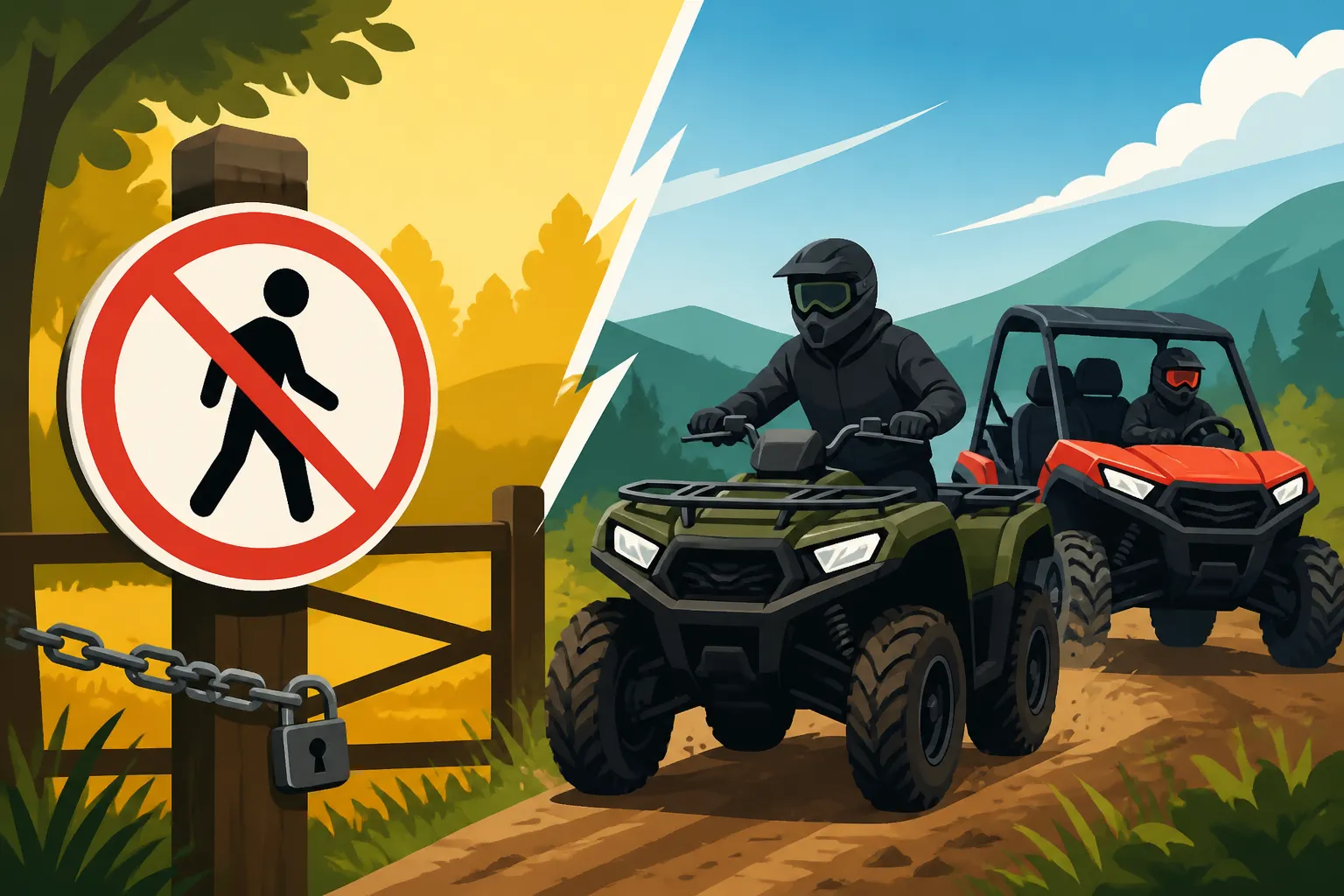
When you see a "No Trespassing" sign, it's a clear signal: stay out. Virginia law states that if land is clearly posted with signs or purple paint marks on trees or posts, it serves as legal notice that you do not have permission to enter. These markers are the landowner's way of explicitly withdrawing any implied consent for public access. Ignoring them isn't just rude; it's a direct violation of the law.
Even without physical signs, if the property is fenced or otherwise enclosed, it can often be considered "posted" by implication. But let's be realistic: not all property in our rural areas is perfectly fenced and signed. That's where it gets tricky for riders. You might think you're on public land, or a right-of-way, when in reality, you've veered onto someone's private acreage. The burden of proof often falls on the rider to ensure they are on legal ground. This is why tools like good GPS systems are indispensable, especially when exploring new areas or riding near potential private boundaries. Companies like SuperATV offer robust mounts for GPS devices, ensuring your navigation tools are secure and visible when you need them most, helping you avoid those "Oops, I didn't see a sign" moments.
Implied Consent vs. Explicit Permission: A Critical Distinction
Here's where many riders get into trouble. "Implied consent" is a tricky thing. Some might assume that if there's no fence or "No Trespassing" sign, it's okay to ride there. However, Virginia law is quite clear: you need permission to be on private property. Just because a gate is open, or a trail looks well-used, doesn't mean you have the legal right to be there.
Explicit permission, on the other hand, is the gold standard. This means you've directly spoken with the landowner, and they have given you clear consent to ride on their property. Even better, that permission should be in writing. [Written Consent From a Landowner] is your best friend here. It eliminates any doubt, protects both you and the landowner, and can save you a lot of grief if questions arise. Without that explicit "yes," you're risking a trespass charge. Always err on the side of caution: if you don't know for sure, don't go.
Common Scenarios Leading to Trespass for Off-Roaders
It's easy to think, "I'd never intentionally trespass!" But the reality of off-road riding, especially in Virginia's diverse terrain, presents many situations where even the most well-meaning rider can accidentally cross a line. Understanding these common pitfalls is the first step toward avoiding them entirely.
Accidental Crossings and Unmarked Property Lines
One of the biggest headaches for ATV and UTV riders in Virginia is the challenge of unmarked or poorly marked property lines. Imagine you're deep in the woods, following a narrow trail that seems to go on forever. You're focused on the ride, the terrain, and your buddies. Suddenly, that trail you thought was on public land or a long-forgotten logging path actually cuts across a private parcel. Maybe the owner just bought it, or they haven't gotten around to posting it yet, or the signs have simply fallen down over time. It happens more often than you'd think.
These accidental crossings can lead to tense encounters with landowners, who might not be in a forgiving mood after previous bad experiences with riders. Even if you truly didn't know, ignorance of a property line isn't a legal defense against trespassing. This is where pre-ride planning, good maps, and GPS technology become absolutely essential. Checking parcel maps before you head out, and using a reliable GPS on the trail – perhaps with a durable mount from a brand like SuperATV – can help keep you on designated routes and off private land.
The Temptation of "Just a Quick Spin" on Private Land
We've all been there: you see an inviting field, a seemingly abandoned logging road, or a clear path that looks perfect for a quick burst of speed or a scenic detour. The thought, "What's the harm? I'll just be a minute," creeps in. This is the temptation of "just a quick spin" – and it's a direct path to trespassing.
Whether it's a farmer's field, a timber company's property, or just someone's backyard that backs up to the woods, riding there without permission is illegal. Landowners have every right to expect privacy and security on their property. Your "quick spin" could damage crops, disrupt livestock, or simply be perceived as a blatant disregard for their rights. Even if the land appears unkempt or unused, it's still someone's private property. Remember, [Virginia Rules for Riding Private Land] are stringent for a reason. Always seek explicit permission, even for what seems like an innocent shortcut.
Consequences of Trespassing on an ATV or UTV in Virginia
Nobody wants to face legal trouble, especially when you're just trying to enjoy a recreational activity. But trespassing on an ATV or UTV in Virginia can lead to very real and unpleasant consequences, ranging from civil penalties to serious criminal charges. It's crucial to understand what you might be up against if you're caught riding where you shouldn't be.
Civil Penalties and Potential Legal Fees
At a minimum, if you're caught trespassing, you could face civil penalties. This means the landowner could sue you for damages. Imagine you've inadvertently torn up a field, damaged a fence, or disturbed livestock. They can seek financial compensation for any harm caused to their property. This isn't just about property damage; it can also include costs associated with cleaning up, repairing, or restoring the land.
Beyond that, you might incur legal fees if the landowner decides to pursue the matter in court, even if it's just to establish a clear boundary or send a message to other potential trespassers. While Virginia's off-road statutes often focus on civil penalties for riding violations, trespassing itself can open a whole new legal can of worms. It’s a costly lesson to learn, far more expensive than any trail permit. [Virginia Penalties for Illegal Riding] can reach up to $500 for ATV violations, but civil damages for trespassing can potentially go much higher depending on the harm caused.
Here's a quick look at how intent and damage can affect the outcome:
| Scenario | Rider's Intent | Property Damage | Legal Outcome |
|---|---|---|---|
| Accidental Crossing | Unintentional | Minor / None | Likely civil penalty, warning, or request to leave. Potential for landowner to pursue civil damages if they feel strongly, especially if repeated. |
| Intentional Short-Cut | Intentional | Minor / Moderate | Higher likelihood of civil charges. Landowner may demand restitution for any damage. Could escalate to criminal charges depending on circumstances. |
| Reckless Riding / Vandalism | Malicious | Significant | Almost certainly criminal charges (misdemeanor or felony depending on damage), substantial fines, civil lawsuit for full damages, potential impoundment of machine. |
| Riding on Posted Land | Disregard for signs | Minor / None | Stronger case for criminal trespassing, even with no damage, due to explicit disregard of "No Trespassing" signs or purple paint. |
Criminal Charges: Misdemeanor vs. Felony Trespass
Trespassing in Virginia isn't always just a civil matter; it can absolutely lead to criminal charges. Most often, simple trespass (entering land after being forbidden or after signs are posted) is a Class 1 misdemeanor. This is serious business. A Class 1 misdemeanor conviction can carry penalties of up to 12 months in jail, a fine of up to $2,500, or both. Imagine losing your freedom, paying a hefty fine, and having a criminal record, all because you took your ATV where you shouldn't have.
In some cases, trespassing can even be elevated to a felony. This might happen if there's significant property damage, if the intent was malicious, or if the trespass occurred in specific protected areas. While less common for casual off-road riding, it's a risk to be aware of. The thought of losing your vehicle or facing a felony charge should be enough to make any rider double-check their route and permission. This is why understanding [Virginia Trespass Law for Riders] isn't just a recommendation, it's a necessity for responsible riding.
How to Stay Legal and Ride Responsibly in Virginia
The goal is always to have a fantastic time riding, not to worry about legal repercussions. Thankfully, staying on the right side of Virginia's trespass laws isn't rocket science; it just requires a bit of planning, respect, and proactive communication. Being a responsible rider benefits everyone, ensuring access to trails and maintaining good relationships with landowners and the wider community.
Obtaining Written Permission: Your Best Defense
When it comes to riding on private land, verbal permission is good, but written permission is king. A simple note from the landowner, stating that you (and maybe your riding buddies) have permission to be on their property for a specific period, can save you immense trouble. This document should ideally include:
- The landowner's name and contact information.
- Your name and contact information.
- A clear description of the property you're allowed to ride on (e.g., specific fields, trails, or boundaries).
- The dates or duration for which the permission is valid.
- Any specific conditions or restrictions (e.g., no riding after dark, stay on marked trails).
- Both parties' signatures.
Keep this written permission with you whenever you're riding on that property. It's an absolute game-changer if you're ever questioned by a landowner, law enforcement, or a curious neighbor. Think of it as your official pass. This is especially important if you're visiting private land for hunting or other activities, where you might also be carrying [Virginia Hunting License and Land Access] documents.
Utilizing Public Trails and Designated Riding Areas
The simplest and safest way to avoid trespassing is to stick to designated public trails and private riding parks that explicitly welcome ATVs and UTVs. Virginia has some fantastic options, like the Spearhead Trails system in the southwestern part of the state. These trails are specifically designed, maintained, and legally open for off-road enthusiasts. When you purchase a [Virginia Spearhead Trail Permit], you're not only getting access to miles of incredible riding, but you're also riding with full legal confidence.
There are also national forest lands with specific OHV trail systems, such as Peters Mill Run and Taskers Gap. These require a [Virginia National Forest OHV Permits] and have their own set of rules, but again, they are legally sanctioned places to ride. By choosing these options, you eliminate the guesswork and can focus purely on the joy of the ride. Furthermore, sticking to these trails often means better mapping and signage, which, combined with quality accessories like a GPS unit securely mounted by SuperATV hardware, significantly reduces the chance of accidental boundary crossings. Always check for [Virginia Trail Closures and Seasons] before you head out, as conditions can change.
Remember, responsible riding isn't just about following the law; it's about respecting the land, the landowners, and your fellow riders. It helps maintain the good standing of the entire off-roading community.
Disclaimer
This article is for general informational purposes only and does not constitute professional advice. Laws, prices and regulations vary by location and change over time. Consult a qualified professional for guidance on your specific situation.