Virginia’s Civil Penalty for Illegal Riding
We've all been there: you're out enjoying the beautiful Virginia landscape on your ATV or UTV, the sun is shining, the trails are calling, and then suddenly, a knot forms in your stomach. Maybe you're on a stretch of gravel road you thought was open, or you're riding a piece of land that's a little ambiguous. The fear of getting caught, of facing a penalty for simply trying to enjoy your machine, is a very real and understandable concern for many riders in the Commonwealth. This guide is here to untangle the confusion and shine a bright light on Virginia's civil penalty for illegal riding, helping you understand the rules so you can ride confidently and legally.
Understanding Virginia's ATV Regulations
Riding an ATV or UTV in Virginia offers incredible freedom and access to breathtaking scenery, from the rugged mountains of Appalachia to the rolling hills of the Piedmont. But that freedom comes with a responsibility to understand and respect the state's laws. It's not just about avoiding a ticket; it's about staying safe, protecting the land, and ensuring the continued enjoyment of these machines for everyone. Many riders feel frustrated because the rules aren't always crystal clear, often varying slightly from one county to the next, or having nuances that aren't immediately obvious. We hear you; it can be a lot to keep straight.
The Core Prohibitions: What the Law Actually Says You Can't Do
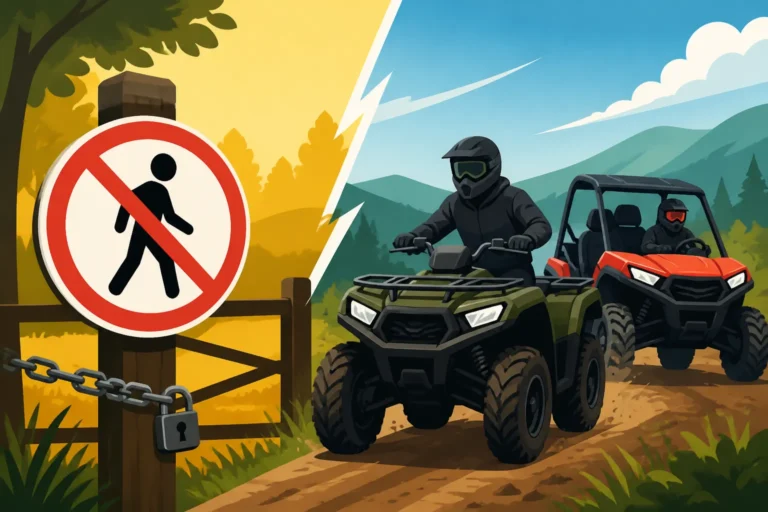
Virginia's ATV laws are primarily designed to keep off-road vehicles off public roads and private property where they're not explicitly allowed. The biggest rule, the one that causes the most headaches, is the general prohibition against operating an ATV or UTV on any public highway. This isn't just paved roads; it includes dirt roads, gravel roads, and even the shoulders of these roads if they're considered part of the public highway system. It's a common misconception that if a road isn't paved, it's fair game. Unfortunately, that's often not the case. The intent behind this is safety; ATVs simply aren't designed for road use and can be incredibly dangerous when mixed with cars, trucks, and other road vehicles. You’ll find more details on this in [Virginia Bans ATVs on Public Highways].
Beyond public roads, the law also strictly prohibits riding on private property without express permission from the landowner. This might seem obvious, but it's a rule that's often broken by accident or by riders who think a quick cut-through won't hurt. Even if a property looks abandoned or unused, you still need permission. The legal system in Virginia takes property rights seriously, and unauthorized riding can quickly lead to an uncomfortable conversation with law enforcement, or worse, a summons. It’s a common frustration to see tempting logging roads or fields and not know if they are legal to ride, which is why written permission is always key.
Where You Can Ride Legally: Contrast with Illegal Areas
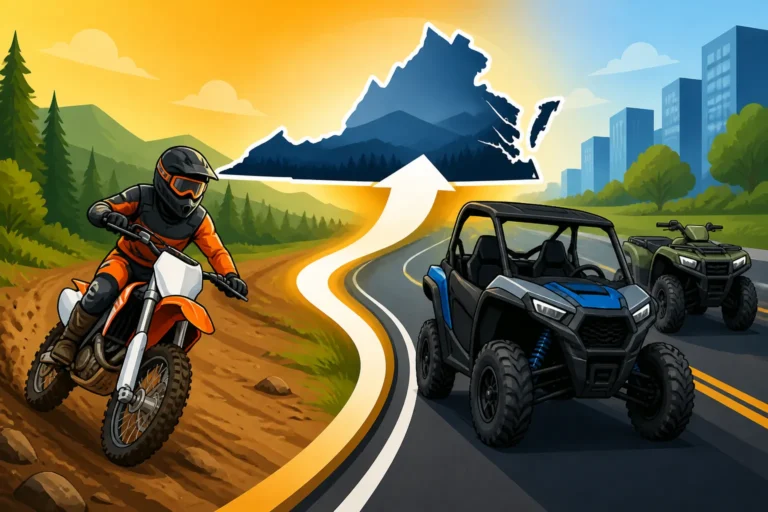
So, if you can't ride on public roads and need permission for private land, where can you legally kick up some dust? Thankfully, Virginia has dedicated off-road trail systems that are specifically designed and managed for ATV and UTV use. The most prominent of these are the Spearhead Trails systems in Southwest Virginia, offering hundreds of miles of diverse terrain across multiple counties. These systems are a fantastic resource for riders, providing a safe, legal, and often incredibly scenic place to enjoy your machine. They typically require a permit, but that permit grants you access to vast networks of trails without the constant worry of breaking the law. [Virginia Spearhead Trail Permits] provides a good starting point for exploring these options.
In addition to Spearhead, you'll find federally managed trails in national forests, such as the Peters Mill Run/Taskers Gap system near Edinburg. These trails also require permits and have their own specific rules regarding machine size, sound limits, and seasonal closures. Then there are private riding parks, which operate similarly to a business, charging an entry fee for access to their groomed trails and facilities. These parks often have their own waivers and rules, but they provide another excellent avenue for legal riding. The key takeaway here is that legal riding almost always involves a designated, managed trail system or private land where you have explicit, documented consent. Don't assume; always verify. For more about these options, check out [Virginia Private Off-Road Parks].
Why Penalties Exist: The State's Rationale
It's easy to feel like the state is just trying to make it hard for you to have fun, but there's a clear rationale behind these penalties. First and foremost is public safety. ATVs and UTVs are powerful machines, and when operated improperly, especially on public roads or crowded areas, they pose a significant risk to riders, passengers, pedestrians, and other motorists. The speed, maneuverability, and lack of standard road safety features (like turn signals or brake lights on many older models) make them ill-suited for coexisting with regular traffic.
Secondly, environmental protection plays a role. Uncontrolled off-road riding can lead to trail degradation, erosion, damage to sensitive ecosystems, and disruption of wildlife habitats. Designated trail systems are designed with these concerns in mind, often using sustainable practices to minimize impact. Thirdly, property rights are fundamental in Virginia. Penalties for trespassing protect landowners from damage, liability, and disturbance. Finally, there's the issue of noise and nuisance. While part of the fun of an ATV is the roar of the engine, excessive noise can be a major disturbance to residents, particularly in rural areas. The penalties serve as a deterrent, encouraging responsible riding that respects both people and the environment.
The Nature of Virginia's Civil Penalty for Illegal Riding
When you hear "penalty," your mind might jump to jail time or a criminal record. But Virginia handles many ATV infractions differently. The term "civil penalty" is key here, and understanding what it means can alleviate some fears, though it certainly doesn't mean you can ignore it. It's a significant financial consequence aimed at deterring illegal activity, without necessarily branding you as a criminal.
Civil vs. Criminal: What Does "Civil" Truly Mean for a Rider?
The distinction between a civil and a criminal penalty is incredibly important. A criminal offense involves a violation of public law, such as theft, assault, or DUI. If convicted of a criminal offense, it often results in a criminal record, potential jail time, significant fines, and can impact your future employment, housing, and even voting rights. These are serious matters.
A civil penalty, on the other hand, is a monetary fine imposed for violating a statute or regulation, but it's not considered a criminal act. Think of it more like a traffic ticket for a parking violation or exceeding the speed limit (though ATV violations are often treated more seriously than a typical parking ticket). When you receive a summons for a civil penalty related to illegal ATV riding in Virginia, you are not being accused of a crime. You won't face jail time, and it won't appear on your criminal record. However, it will result in a financial obligation, and failing to address it in court can lead to further, more serious legal issues, like a judgment against you or even issues with your driving privileges if the court decides it's warranted for non-payment. The goal is punitive, but not incarcerative. For more information, see [Why Virginia's $500 ATV Penalty Is Civil, Not Criminal].
The Maximum Penalty Amount: Discuss the $500 Figure
Virginia's law states that any person who violates the provisions regarding the operation of ATVs may be subject to a civil penalty of up to $500 for each violation. Let that sink in: up to $500, for each violation. This means if you're found riding illegally and also without a helmet, you could potentially face separate penalties for each offense, though often an officer may choose to issue one summons for the primary infraction. The actual amount levied by the court can vary depending on the specifics of your case, your past record, and the discretion of the judge. It’s not an automatic $500, but it’s the ceiling, and it's a substantial amount that can definitely put a dent in your wallet.
This isn't a minor slap on the wrist. A $500 penalty could easily cover the cost of an annual trail permit, new tires, or even a good chunk of money towards an upgrade from a brand like SuperATV. It’s designed to be a significant disincentive, making riders think twice before venturing onto prohibited routes or private land without permission. When you add court costs, which can tack on another significant amount, that $500 can quickly swell, making an illegal ride a very expensive mistake.
How a Civil Penalty Differs from a Traffic Ticket
While a civil penalty shares some characteristics with a traffic ticket (both involve a summons and a monetary fine), there are distinct differences beyond the criminal aspect. Traffic tickets, especially for moving violations, often result in demerit points on your driving record, which can lead to increased insurance premiums or even license suspension if you accumulate too many points. Civil penalties for illegal ATV riding in Virginia, because they are not traffic offenses in the traditional sense, typically do not result in demerit points on your driving record. This is a common point of confusion, and it’s a relief for many riders to know their car insurance or driver’s license won't be immediately impacted by an ATV trespass fine.
However, don't mistake this for a free pass. While your driver's license might not accrue points, neglecting to pay a civil penalty can have serious repercussions. Unpaid fines can be sent to collections, result in a civil judgment against you, or in some cases, lead to a hold on your vehicle registration renewals until the debt is satisfied. The court system has ways to ensure these penalties are paid, even if they don't involve your driving privilege in the same way a speeding ticket does. It's crucial to treat any summons seriously and follow through with the required court appearance or payment. [How to Dispute an ATV Citation in Virginia] offers some practical advice if you find yourself in this situation.
Common Scenarios Leading to a Civil Penalty
It's one thing to know the law; it's another to understand how those laws are applied in real-world situations. Many riders find themselves facing a civil penalty not out of malicious intent, but often due to ignorance, a moment of poor judgment, or simply misunderstanding the specific regulations. Let's look at the scenarios that most frequently land riders in hot water.
Riding on Public Roads and Highways: The Most Frequent Offense
This is, without a doubt, the most common reason riders receive a civil penalty. Virginia law is very clear: ATVs and UTVs are not motor vehicles for the purpose of highway use and are generally prohibited on public roads. This includes state highways, secondary roads, and even unpaved county roads that are maintained by the state or local government. The only exceptions are very specific and narrow, often involving direct crossings by the most expedient route, or designated multi-use trails that cross public roads in specific counties like Buchanan and Tazewell, or when used for bona fide farming or emergency purposes.
Picture this: you're riding with friends, and the trail unexpectedly dead-ends, or you need to get from one section of private land to another that's just a quarter-mile down a quiet gravel road. It seems harmless, right? You tell yourself it's just for a minute, you'll be careful, no one's around. But that's exactly where an officer might be waiting, or a concerned citizen might call in a report. Even a short trip on a public right-of-way can result in a summons. The lack of proper lighting, turn signals, and the general unpredictability of an ATV in traffic are all factors an officer considers. Sometimes, people will even try to make their UTV "street legal" with aftermarket parts, but it's important to remember that Virginia has no legal path to make an ATV or UTV street legal for general highway use.
Trespassing on Private Land: When "Just a Quick Cut-Through" Costs You
Another major source of civil penalties is trespassing. This happens in various ways: riding on land that looks abandoned, following old logging roads onto private timber company property, or simply cutting across a neighbor's field without asking. It can also happen when riders lose their way and inadvertently stray onto private property. Landowners in Virginia are serious about their property rights, and "No Trespassing" signs are common for a reason. Ignoring these signs, or assuming that unposted land is open for riding, is a risky gamble.
The consequences for trespassing extend beyond the civil penalty. A landowner can also pursue civil action against you for any damages caused to their property. This could include damage to crops, fences, or erosion from your tire tracks. It’s always best to get [Virginia Written Consent on Private Land] before you ride, and ideally, that consent should be in writing. Even if you've been riding on a piece of land for years, if ownership changes, or if the original agreement was informal, you could suddenly find yourself in violation. A casual verbal agreement can easily be forgotten or misinterpreted, making a written note a critical safeguard. For an example of what this might look like, check out [What a Landowner's Written Permission Note Should Say].
Age and Supervision Violations: For the Younger Riders and Their Guardians
Virginia has specific age and engine size restrictions for ATV operation that are often overlooked, especially by parents or guardians eager for their kids to enjoy the sport. These rules are in place for the safety of young riders, as ATVs require a certain level of physical ability, judgment, and experience to operate safely. For instance, riders under 12 are generally restricted to machines 70cc or less, while those 12-16 years old have a cap of 90cc. Over 16, there's no engine size restriction.
The important thing to remember is that there's no "supervised exception" in Virginia law that allows a younger child to ride a larger machine simply because an adult is present. If an officer encounters a child on a machine that exceeds their legal engine size limit, or if an underage rider is operating without the required supervision from someone 16 or older, both the rider (if of legal age to be cited) and the adult responsible for their supervision could face a civil penalty. This can be a tough pill to swallow for families who just want to share their passion for riding, but the law is strict on this point. Familiarize yourself with [Virginia Age Limits by Engine Size] to ensure everyone in your family is riding within the legal boundaries.
Helmet Law Non-Compliance: A Safety Rule with a Financial Sting
Virginia has a mandatory helmet law for all ATV operators and passengers, regardless of age or whether you're on private property or a designated trail system. This isn't just a suggestion; it's a legal requirement designed to protect riders from serious head injuries, which are tragically common in ATV accidents. The helmet must meet specific safety standards, such as those set by the Department of Transportation (DOT). A bicycle helmet or a construction hard hat simply won't cut it.
While it's a safety measure, failure to wear an approved helmet can also result in a civil penalty. So, if you're stopped for another violation, like riding on a public road, and you're also not wearing a helmet, that's potentially another penalty stacked on top. The law is designed to prevent injuries, and the penalty reinforces the importance of this life-saving equipment. It can be easy to forget a helmet for a quick spin around the yard, but even on your own land, the law applies. Always wear your helmet – it’s not just about avoiding a fine; it’s about protecting your brain. Read [Virginia Helmet Law Applies to Every Rider] for the full scope of the law.
The Enforcement Process: From Stop to Summons
No one wants to see blue lights in their rearview mirror when they're out on their quad. Understanding how enforcement works can help you react appropriately if you ever find yourself in this situation. It's a stressful moment, but knowing what to expect can make it a little less daunting.
Who Can Issue a Summons: Local Police, State Troopers, Game Wardens
In Virginia, several different types of law enforcement officers have the authority to issue a summons for illegal ATV riding. This isn't just the Virginia State Police; it also includes county sheriff's deputies, city police officers, and even Virginia Department of Wildlife Resources (DWR) conservation police officers (game wardens). If you're on a public road, a local or state police officer is most likely to make the stop. If you're on private land, especially in rural areas or near hunting grounds, a game warden might be the one to approach you.
The important thing to remember is that an officer from any of these agencies can enforce the ATV laws. They are all trained in the relevant statutes and have the authority to issue citations. So, even if you're deep in the woods, a DWR officer patrolling for hunting or fishing violations can still stop you for illegal ATV operation. They're often very familiar with local land use and common problem areas, so don't assume that just because you don't see a patrol car, you're in the clear.
What an Officer Looks For: Common Checks and Observations
When an officer approaches you on an ATV, they'll typically be looking for several key things to determine if a violation has occurred. First, and most obviously, is your location. Are you on a public road, posted private land, or a designated trail? They'll observe your manner of operation: Are you riding recklessly? Are you operating safely for the conditions? They'll also check for proper safety gear, specifically a DOT-approved helmet.
Beyond that, they'll likely ask for your identification. While you don't need a driver's license to operate an ATV on private land or a designated trail, you do need to be able to identify yourself. If you're riding a UTV, they might inquire about seatbelt use, as many UTVs have factory-installed seatbelts that are required to be worn. They may also check the machine's engine size if they suspect an age restriction violation. It's always best to be polite and cooperative, as being confrontational can escalate the situation unnecessarily. Knowing what an officer can ask for, as detailed in [What an Officer Can Ask For at a Trailhead], can help you understand the encounter.
The Summons and Court Appearance: What to Expect After Being Stopped
If an officer determines you've committed a violation, they will issue you a summons. This document isn't a "ticket" in the traffic sense; it's a formal order to appear in a specific Virginia General District Court on a specific date and time. It will list the alleged violation (e.g., "Operating ATV on Public Highway") and the code section you are accused of violating. The summons is not an admission of guilt; it's simply an instruction to appear before a judge.
It's absolutely crucial to take this summons seriously. Failing to appear in court on the designated date can lead to additional charges, such as a "failure to appear," which can result in a warrant for your arrest. If you have a legitimate reason why you cannot make your court date, contact the court clerk immediately to inquire about a continuance. When you receive a summons, mark your calendar, and begin gathering any information or evidence you might need to present your side of the story. Don’t just put it in the glovebox and hope it goes away.
Facing the Court: What Happens Next
Getting a summons is nerve-wracking, but the process doesn't end there. The court appearance is where you have the opportunity to present your case, and where the judge will ultimately decide whether a civil penalty is assessed. Being prepared and understanding the possibilities can make a significant difference.
Preparing Your Case: Gathering Evidence and Understanding Your Options
If you receive a summons, your first step should be to understand the exact charge. Look at the code section cited on the summons and research it. The internet has made this much easier, and you can usually find the relevant Virginia code online. Once you know what you're accused of, think about your defense. Do you have written permission from a landowner? Do you have photos or GPS data showing you were on a legal trail? Were there confusing or missing signs? Any evidence that supports your claim of legal operation, or mitigates your culpability, should be gathered.
For example, if you were cited for trespassing, but you have a signed, dated letter from the landowner granting you permission, that's crucial evidence. If you were cited for riding on a public road, but you believe it was a designated multi-use trail, bring maps, trail permits, or any official documentation you have. If you believe the officer made a mistake or misunderstood the situation, politely explain your perspective to the judge. You also have the right to request a lawyer, and for more complex cases, consulting with an attorney experienced in Virginia traffic or civil law can be a wise investment.
Potential Outcomes: Fines, Court Costs, and Other Consequences
When you appear in court, there are a few possible outcomes. If the judge agrees with your defense, or if the officer doesn't appear (which can sometimes happen, though you should never count on it), the charge might be dismissed. This is the best-case scenario. However, if the judge finds that a violation occurred, they will assess a civil penalty. As mentioned, this can be up to $500 per violation. In addition to the penalty itself, you will almost certainly be responsible for court costs. These are administrative fees that fund the court system and can add another significant amount to your total bill.
The judge may also issue an order regarding the future use of your machine if there are ongoing issues, though this is less common for a first offense. The payment of the civil penalty and court costs is typically due within a certain timeframe, often 30-90 days. If you're unable to pay immediately, you can usually speak to the clerk about setting up a payment plan. However, failure to pay as ordered can lead to the civil judgment being entered against you, which can affect your credit and lead to further collection actions.
Dealing with an Impoundment: The Added Headache and Cost
In certain circumstances, an officer has the authority to impound your ATV or UTV. This typically happens if the machine is being operated illegally in a particularly egregious manner, such as on a city sidewalk, or if the operator is arrested for a separate criminal offense (like DUI) while riding. [Cities Can Impound an ATV Ridden on a Sidewalk] highlights this power specifically for municipal authorities. An impoundment adds a whole new layer of frustration and expense to your situation.
If your machine is impounded, you'll need to pay towing fees, storage fees (which accrue daily), and potentially administrative release fees to get it back. These costs can quickly add up to hundreds of dollars, sometimes even exceeding the civil penalty itself. You'll typically need to provide proof of ownership and identification to reclaim your machine. In some cases, if the machine was involved in a serious incident or if there are questions about its legality, it might be held longer or even forfeited. Avoiding impoundment is another strong reason to adhere strictly to all ATV laws and ride responsibly.
Beyond the Fine: Other Consequences of Illegal Riding
While the immediate financial hit of a civil penalty is the most obvious consequence, illegal ATV riding can lead to a ripple effect of other problems that extend far beyond the courtroom. These indirect costs and impacts are often overlooked but can be just as significant.
Insurance Implications: How a Civil Penalty Might Affect Your Policy
As we discussed, a civil penalty for illegal ATV riding in Virginia typically does not result in demerit points on your driving record, and therefore might not directly impact your car insurance rates. However, this doesn't mean there are no insurance implications for your ATV or UTV. If you were involved in an accident while riding illegally (e.g., on a public highway or trespassing), your insurance company might deny coverage for damages to your machine or for liability claims from other parties. Most off-road policies have exclusions for illegal activity.
Imagine crashing your brand-new UTV, outfitted with all the latest gear from SuperATV, while tearing down a county road. Your policy might state that it only covers off-road use on designated trails or private property with permission. If your claim is denied, you're on the hook for the full cost of repairs or replacement, which could be thousands of dollars. Even if you don't file a claim, simply having a civil penalty on your record for illegal operation could potentially be flagged by an insurer during renewal, leading to higher premiums or even non-renewal, as it indicates a higher risk profile. Always review your specific policy documents carefully to understand these limitations.
Impact on Future Riding Opportunities: Park Bans or Community Perception
Getting caught riding illegally can also impact your ability to enjoy legal riding in the future. Many private riding parks and even some public trail systems have policies that allow them to ban individuals who have been cited for illegal activity, especially trespassing or reckless operation. If you've shown a disregard for rules on public lands, you might find yourself unwelcome at places like Spearhead Trails or Peters Mill Run, even if you try to purchase a permit.
Beyond formal bans, there's the issue of community perception. In rural areas, the ATV community is often close-knit, and word travels fast. If you get a reputation for riding illegally or disrespecting private property, it can strain relationships with neighbors, landowners, and other riders. This can lead to decreased access to informal riding spots, increased scrutiny from law enforcement, and a general negative perception of ATV riders as a whole, which can make it harder for clubs and advocates to work towards expanding legal riding opportunities.
Equipment Seizure and Recovery Costs: The Hidden Expenses
We touched on impoundment earlier, but it's worth emphasizing the financial burden it places on a rider. Beyond the civil penalty itself, if your ATV is seized, you're looking at a cascade of additional expenses. Towing companies charge by the mile and by the type of vehicle. Storage lots charge a daily rate, and these rates can climb quickly. If your machine is held for an extended period, these fees can easily become more expensive than the actual civil penalty, sometimes even more than the value of the ATV itself, especially for older or less expensive models.
Think of it: a tow could be $100-$300, and storage could be $25-$50 a day. If your machine sits for two weeks while you sort out the court case and gather funds, you're already looking at $350-$700 in impound fees alone, on top of your civil penalty. And you still have to figure out how to transport the machine home once it's released. These hidden costs are a major deterrent and a powerful reason to always ride within the bounds of the law.
Legal Fees and Time Commitment: The Indirect Costs
While a civil penalty doesn't always necessitate a lawyer, if you choose to dispute the charge or if the situation is complex (e.g., questions of property lines, multiple violations), you might decide to hire legal counsel. Attorney fees, even for a simple court appearance, can easily run into hundreds or even thousands of dollars. This is another significant indirect cost that piles onto the initial penalty.
Beyond the financial aspect, there's the time commitment. Researching the law, gathering evidence, communicating with court clerks, and physically appearing in court all take time away from work, family, or other responsibilities. It's not just a single morning; there might be multiple trips to the courthouse, phone calls, and the stress of dealing with the legal system. That time has value, and it's a cost many riders don't initially factor in when considering the risks of illegal riding.
Avoiding Penalties: Riding Smart and Legal in Virginia
The best way to deal with a civil penalty is to avoid getting one in the first place. With a little planning, knowledge, and responsible riding habits, you can enjoy your ATV or UTV in Virginia without the fear of legal repercussions. It’s all about making informed choices and respecting the rules designed to keep everyone safe and preserve riding opportunities.
Knowing the Local Ordinances: Beyond State Law, What Counties and Towns Say
While Virginia state law provides the overarching framework for ATV operation, it's crucial to remember that local governments—counties, cities, and towns—can also enact their own ordinances that further restrict or regulate ATV use within their specific jurisdictions. What might be legal in one rural county could be strictly prohibited in a neighboring municipality. For example, some counties might have specific rules about noise levels, hours of operation, or even stricter bans on unpaved county roads that aren't addressed in broad state statutes.
It's always a good idea to check with the local sheriff's office or county administrator's office if you plan to ride in an unfamiliar area, especially if you're not on a designated trail system. Don't rely solely on what you think you know or what you've heard from a friend. A quick phone call or a search of local government websites can save you a lot of grief and prevent an unexpected run-in with law enforcement.
Utilizing Designated Trail Systems: The Safe and Legal Options
Hands down, the safest and most enjoyable way to ride your ATV or UTV in Virginia is on designated trail systems. Places like the Spearhead Trails network in Southwest Virginia, with systems like Coal Canyon near Grundy or Mountain View near Haysi, offer hundreds of miles of diverse, challenging, and scenic trails specifically built for off-road vehicles. Similarly, the Peters Mill Run/Taskers Gap system in the George Washington National Forest provides a different kind of experience.
These systems are clearly marked, regularly maintained, and offer a sense of community among riders. Yes, they usually require a permit ([Virginia Spearhead Permit Cost] breaks down the fees), but that permit grants you legal access and peace of mind. Investing in a permit is a fraction of the cost of a civil penalty and offers infinitely more enjoyment. Riding on these trails means you're operating within the law, contributing to the upkeep of the trails, and supporting the future of legal off-road recreation in the Commonwealth. You can even upgrade your machine with parts from SuperATV to enhance your trail experience, knowing you're investing in legal fun.
The Importance of Landowner Permission: Getting It in Writing
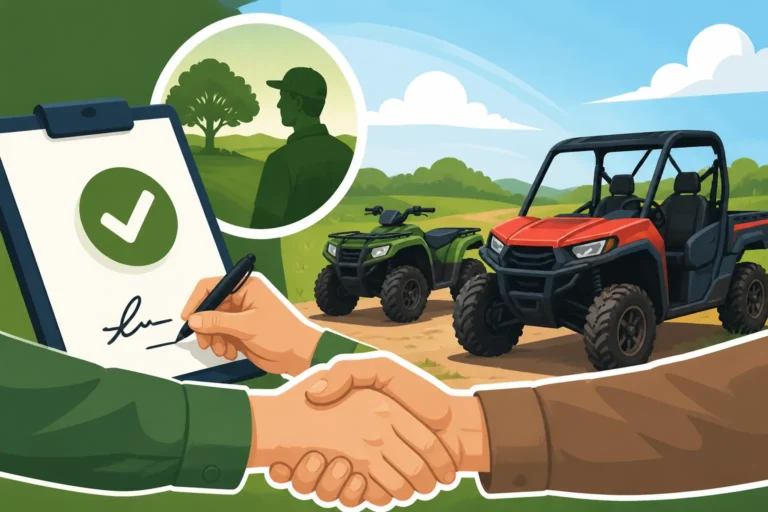
If you plan to ride on private land that isn't part of a formal trail system, obtaining explicit, written permission from the landowner is paramount. A handshake agreement might seem sufficient among friends or family, but memories fade, and circumstances change. A simple written note, signed and dated by the landowner, clearly stating that you have permission to ride your ATV on their property, can be your best defense against a trespassing charge.
This note should include the landowner's name, your name, a description of the property, and the dates for which permission is granted. It doesn't have to be a legal novel, just a clear, unambiguous statement. Carry this document with you when you ride. If an officer stops you, being able to immediately present clear proof of permission can often resolve the situation on the spot and prevent a summons. This simple step is one of the most effective ways to avoid the dreaded "unauthorized use" penalty. Again, [What a Landowner's Written Permission Note Should Say] has more details.
Gearing Up Properly: Helmets and Protective Equipment
Virginia's helmet law is non-negotiable for all ATV riders and passengers, regardless of age or location. Always wear a DOT-approved helmet. This isn't just about avoiding a penalty; it's about protecting your life and preventing catastrophic injuries. Beyond the helmet, consider other protective gear: eye protection (goggles or a face shield), long pants, long-sleeved shirts, gloves, and sturdy over-the-ankle boots. While not legally mandated in the same way as helmets, this gear provides crucial protection against scrapes, bruises, branches, and impacts.
Making sure your machine is in good working order is also part of gearing up properly. Check your tires, brakes, and lights before every ride. If you're riding a UTV, ensure all passengers are wearing their seatbelts if the machine is equipped with them. Responsible riding starts with responsible preparation, and ensuring your equipment, and yourself, are ready for the trail is a key component of staying legal and safe.
Understanding Your Machine's Limitations: Engine Size and Age Restrictions
Finally, always be mindful of the age and engine size restrictions that apply to youth riders. If you have children or teenagers riding, ensure they are on a machine appropriate for their age and experience level according to Virginia law. This means paying attention to the manufacturer's recommended age for the machine, as well as the state's specific guidelines of engine size based on age (e.g., [Virginia Riders Under 12 and 70cc]).
There's no substitute for proper training and supervision for young riders. Even if the machine is legally sized, proper instruction on safe riding techniques is essential. Never allow an underage or inexperienced rider to operate an ATV or UTV without appropriate adult supervision, even if the law doesn't explicitly require it for all age groups. Adhering to these safety guidelines not only helps prevent accidents but also ensures you're not inadvertently opening yourself up to a civil penalty for violating youth riding laws. Staying within these limits protects everyone and keeps the fun going for years to come.
Disclaimer
This article is for general informational purposes only and does not constitute professional advice. Laws, prices and regulations vary by location and change over time. Consult a qualified professional for guidance on your specific situation.