Written Consent From a Landowner
There's a unique thrill that comes with riding your ATV or UTV across Virginia's diverse terrain, from the rolling hills of the Piedmont to the rugged mountains of Appalachia. But that thrill can quickly turn into a headache if you're not absolutely sure where you're allowed to ride. Many riders mistakenly believe that if land isn't explicitly marked with "No Trespassing" signs, it's fair game. This common misunderstanding can lead to serious legal troubles and strained relationships with property owners. This comprehensive guide will walk you through the critical importance of obtaining written consent before you ever set a tire on private land in Virginia, outlining what the law requires, how to get it, and what happens if you don't.
Why Written Consent Is Non-Negotiable in Virginia
It's easy to get caught up in the excitement of a new trail or an open field, especially when you're exploring the vast expanses of rural Virginia. However, the law around private property is very clear, and ignorance is rarely an excuse that holds up in court. Failing to secure proper permission can lead to more than just a stern talking-to; it can result in significant legal and financial consequences.
The Law's Clear Stance on Private Property
Virginia Code § 18.2-132 is the cornerstone of how the state handles trespass, and it doesn't mince words. While there are various subsections, the general principle is that going onto someone else's property without their express consent is a trespass. For ATV and UTV riders, this means any land that isn't publicly designated for off-road vehicle use, or isn't your own property, is off-limits unless you have the landowner's permission. This isn't just a suggestion; it's a legal requirement designed to protect property owners and prevent disputes. The expectation isn't just to avoid "No Trespassing" signs, but to actively seek out and confirm permission.
Think of it this way: you wouldn't walk into someone's house without an invitation, right? The same principle applies to their land. Just because you don't see a fence or a sign doesn't mean you have an open invitation. In fact, relying on the absence of such warnings is a risky gamble. Law enforcement officers, especially in rural areas, are well-versed in these statutes and often respond promptly to landowner complaints. They don't just ask if you saw a sign; they ask if you had permission.
Understanding Virginia's Trespass Laws
Virginia's trespass laws can be particularly stringent, carrying both civil and, in some cases, criminal penalties. While many initial violations might be civil infractions, repeated offenses or damage to property can escalate quickly. A civil penalty for illegal riding can be substantial, reaching up to $500 in some instances. Beyond the financial hit, a trespass charge can create a legal record that follows you. It's not just about the immediate fine; it's about the broader implications for your future.
Consider a scenario where you're enjoying a ride in a seemingly remote area near a friend's property. You assume it's abandoned land or part of a larger, unrestricted tract. Suddenly, a county sheriff pulls up. Without written consent, even if you explain your good intentions, you're on shaky legal ground. The officer's job is to enforce the law, and if the landowner presses charges, you'll be facing a citation. This isn't just a theoretical problem; it's a real-world headache that many riders encounter. It underscores why having [Virginia Written Consent on Private Land] isn't just good practice—it's essential for avoiding a run-in with the law. You can read more about what's at stake in [Virginia Penalties for Illegal Riding].
What Constitutes "Private Land" for ATV/UTV Use
The distinction between public and private land isn't always as clear as a paved road versus a dirt path. Many riders find themselves confused by the nuances, especially when dealing with large tracts of undeveloped land, working farms, or timber operations. Understanding these classifications is crucial for responsible riding.
Distinguishing Between Public and Private Holdings
In Virginia, public lands designated for off-road vehicle use are relatively few and far between. The most prominent are the Spearhead Trails systems in Southwest Virginia and the Peters Mill Run/Taskers Gap system in the George Washington National Forest. These are clearly marked, require permits, and have specific rules. [Spearhead Trails in Virginia Explained] provides a good overview of one major public system. Beyond these areas, nearly every other piece of land is considered private property. This includes vast stretches of forest, open fields, undeveloped parcels, and even land that looks like it's never been touched by human hands.
It's a common mistake to assume that if a path isn't fenced or signed, it's public. This is rarely the case. Landowners are not legally required to fence their property or post "No Trespassing" signs to establish their ownership rights. Many private roads that appear to be public access points are actually just that—private. Relying on visual cues alone is a recipe for trouble. If you're not on a clearly marked, permitted public trail, assume it's private and seek permission.
Farm Land and Timber Company Properties
Virginia is rich with agricultural land and commercial timber operations, especially in the western and southern regions. These properties often encompass thousands of acres and might have existing trail networks used for farming equipment or logging operations. While these paths might look ideal for ATV or UTV riding, they are unequivocally private. Farmers depend on their land for their livelihood, and unauthorized vehicles can damage crops, disrupt livestock, and even pose safety risks. Timber companies also manage their land carefully, with specific plans for harvesting and reforestation. An unauthorized rider can interfere with these operations, damage valuable timber, or even endanger themselves with heavy machinery.
Gaining access to these types of properties requires direct contact with the owner or manager. For farm land, a personal conversation and a clear understanding of your intentions can go a long way. For larger timber companies, you might need to contact their land management department. In both cases, [What a Landowner's Written Permission Note Should Say] is vital. It should outline exactly where you can ride, for how long, and under what conditions. Some landowners might even specify routes, speed limits, or times of day when riding is permitted.
Leased Land and Hunting Clubs
Another common scenario involves land that is leased for hunting, farming, or other recreational activities. Even if you know the person leasing the land, their permission alone might not be sufficient. The primary landowner's consent is almost always required. Leases typically outline who has what rights on the property, and often, the right to grant ATV access rests solely with the owner. [Virginia Hunting Club Riding Rules] often include strict provisions about ATV use to protect wildlife and prevent disruption during hunting season.
If you're part of a hunting club or have a friend with a lease, always verify who has the authority to grant permission for ATV riding. Requesting written consent from the actual landowner, even if facilitated by the lessee, is the safest approach. This avoids any confusion or potential disputes down the line, ensuring that both the lessee and the landowner are aware and in agreement with your presence.
Components of a Legally Sound Written Consent
So, you've made contact with a landowner, and they're open to the idea of you riding on their property. That's a great start! But a verbal "sure, go ahead" isn't enough. For your protection and theirs, you need that permission in writing. This isn't about being overly formal; it's about clarity and protection for everyone involved.
Essential Information to Include
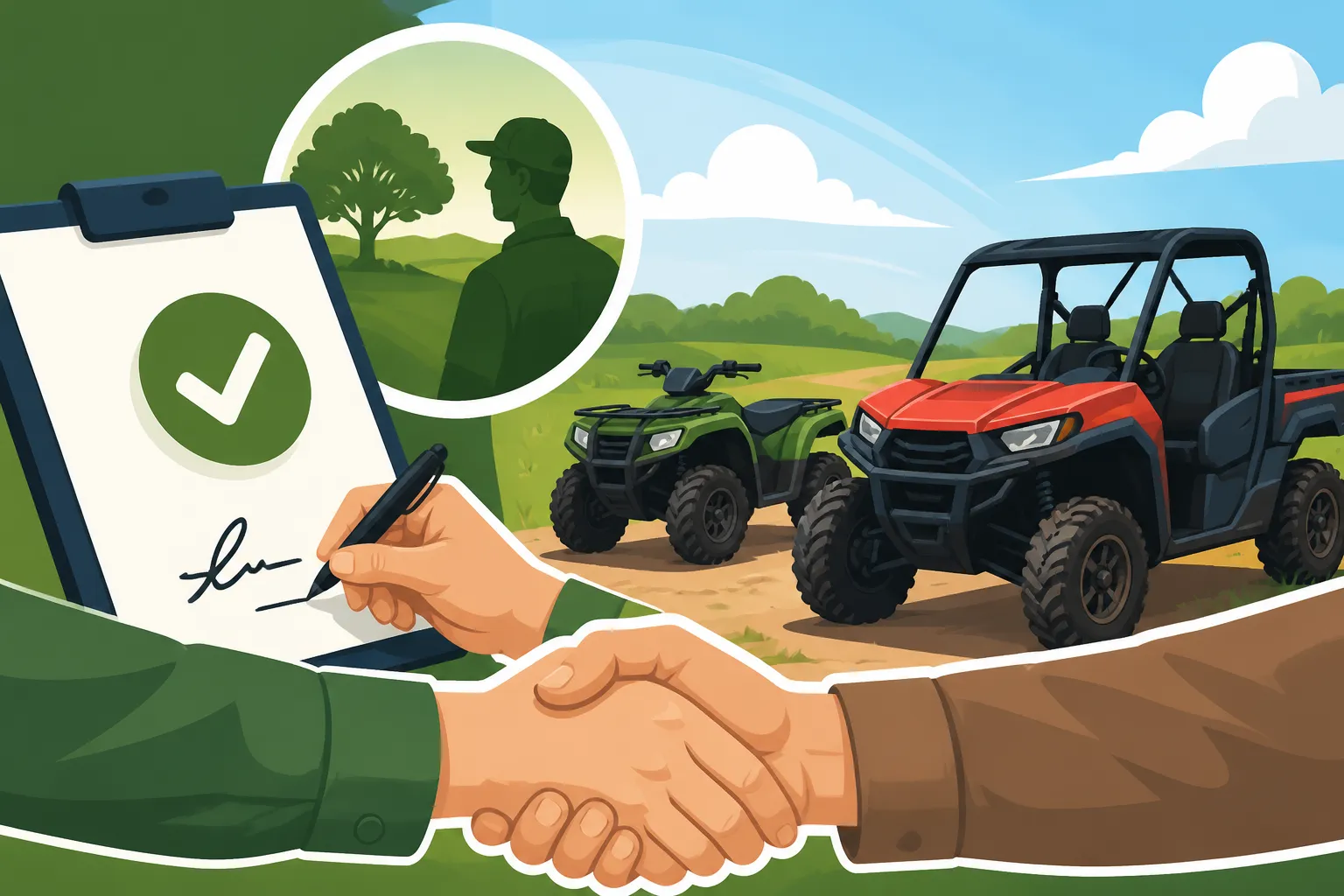
A valid written consent document doesn't need to be a complex legal contract, but it should contain specific, clear information. Think of it as a brief, friendly agreement that covers the basics. Here’s what it should typically include:
- Landowner's Full Name and Contact Information: This verifies who is granting the permission.
- Rider's Full Name and Contact Information: This identifies who is receiving the permission.
- Clear Identification of the Property: Include the address, parcel number, or a description sufficient to identify the land. "My land down by the river" isn't specific enough. A map with marked riding areas can also be incredibly helpful.
- Scope of Permission: Explicitly state what activities are allowed (ATV/UTV riding), which specific machines (e.g., "my Honda TRX 450R," or "any ATVs owned by [Your Name]"), and the duration of the permission (e.g., "one day only," "for the month of October 2024," or "until revoked").
- Any Specific Restrictions or Conditions: This is crucial. Does the landowner have rules about speed limits, areas to avoid, times of day, noise levels (a good reason to ensure your exhaust is well-maintained, perhaps with quality parts from SuperATV), or the number of riders? These should be noted.
- Waiver of Liability (Optional but Recommended): While not strictly part of consent, many landowners will want you to sign a release stating you understand the risks and won't hold them liable for injuries. This protects them significantly.
Having all these details in one place prevents misunderstandings and provides concrete proof should any questions arise.
The Importance of Signatures and Dates
Once all the essential information is included, signatures are paramount. Both the landowner (or an authorized representative) and the rider(s) should sign and date the document. This signifies mutual agreement to the terms outlined. A dated signature proves when the permission was granted and for what period.
Consider getting the document notarized. While not always legally required for a simple permission slip, notarization adds an extra layer of authenticity and can be extremely useful in the event of a dispute. A notary public verifies the identities of the signers, ensuring that both parties genuinely consented. This small step can make a big difference in the credibility of the document if it ever needs to be presented to law enforcement or in a civil court. Remember to carry this document with you when you ride on private land, alongside your [Virginia Proof of Ownership on the Trail].
Oral Permission Versus Written Documentation
This is perhaps one of the most common pitfalls for ATV riders. A casual conversation at the fence line where a neighbor says, "Yeah, sure, go ahead and ride," feels friendly and sufficient at the moment. However, oral permission is incredibly difficult to prove if there's ever a misunderstanding, a change of heart, or if the landowner denies ever granting it. Memories fade, interpretations differ, and without a tangible record, it becomes a "he said, she said" situation.
Imagine this: You've been riding on a neighbor's property for months based on a verbal agreement. Then, the neighbor sells the land, or a new family member takes over, and they are unaware of or don't honor the previous verbal arrangement. You could suddenly find yourself trespassing, even if you had no intention of doing so. Or worse, what if a different family member or an employee calls the sheriff? Without that piece of paper, you have no proof. Always, always opt for written consent. It's not about distrust; it's about clarity and protection for everyone involved.
Navigating the Conversation with Landowners
Asking for permission to ride on someone's private land can feel a bit daunting, but it doesn't have to be. Approaching the conversation with respect, understanding, and a willingness to address concerns can pave the way for successful access and positive relationships.
Approaching the Request Respectfully
The first step is simply to be polite and respectful. Remember, you are asking for a favor, not demanding a right. Introduce yourself, explain why you're interested in riding on their land (e.g., "I'm looking for a safe place to ride my ATV away from roads," or "I enjoy the trails in this area"), and clearly state your understanding that it's their private property. Don't just show up on their property unannounced with your machine. Make an appointment or catch them at a convenient time.
Offer to meet in person. A face-to-face conversation can build rapport far better than a phone call or email. Be prepared for a "no" and accept it gracefully if that's their answer. A positive attitude, even in the face of rejection, can leave a good impression and might open doors in the future, or with other landowners in the community.
Addressing Landowner Concerns
Landowners often have valid concerns about allowing ATVs and UTVs on their property. Be prepared to address these head-on:
- Damage to Property: Reassure them you'll stick to designated paths, avoid wet or sensitive areas, and won't cause erosion. If you're using a utility vehicle for tasks like hauling firewood, mention that.
- Noise Disturbances: Explain that your machine is properly muffled and you'll ride during reasonable hours. [Virginia Noise Complaints About Quads] can be a real issue for rural residents.
- Liability: This is a big one. Many landowners fear being sued if a rider gets injured on their property. Be ready to discuss signing a liability waiver. You might even mention that you carry your own off-road insurance, even though [Virginia Requires No ATV Insurance]. This shows a proactive approach to safety and responsibility.
- Safety of Others (Livestock, Children): Promise to be vigilant, ride slowly in certain areas, and be aware of any animals or people on the property.
- Trespass by Others: Landowners worry that if they let you ride, it will open the floodgates for others. Assure them you will be discreet and never share access with others without their explicit permission.
- Fire Risk: If you're using a machine with a spark arrester, mention it. This is particularly relevant in dry months.
Being transparent and having thoughtful answers to these concerns can significantly increase your chances of getting that coveted written permission. Installing proper skid plates from a company like SuperATV, for instance, shows you're taking steps to protect your machine and, by extension, the land from potential oil leaks or other damage.
Building Trust and Long-Term Access
A one-time permission slip is great, but building a lasting relationship with a landowner can secure long-term access. This involves consistently proving yourself to be a responsible and respectful rider.
- Follow the Rules, Always: If the landowner sets conditions (e.g., no riding after dark, stick to a specific trail, stay out of the back forty), adhere to them without exception. Breaking even a small rule can quickly erode trust.
- Offer to Help: If you have a UTV, offer to help with light tasks around the property, like hauling brush, moving supplies, or even mending a fence. This reciprocal gesture can be invaluable.
- Keep Them Updated: If your plans change, or if you notice something amiss on their property (like a fallen tree across a path, or evidence of unauthorized dumping), let them know. This demonstrates you're looking out for their interests.
- Express Gratitude: A simple "thank you" goes a long way. Occasionally, a small gesture of appreciation, like a gift card or a homemade treat, can reinforce your appreciation for their generosity.
By consistently demonstrating respect and responsibility, you're not just securing access for yourself, but you're also building a positive reputation for the entire ATV/UTV riding community.
Consequences of Riding Without Proper Permission
While the thrill of the ride can be exhilarating, the consequences of riding on private land without proper written consent can quickly turn that excitement into a serious and costly ordeal. It's not just a hypothetical risk; it's a very real scenario that many riders in Virginia have faced.
Civil Penalties and Trespassing Charges
In Virginia, riding an ATV or UTV on private land without the owner's permission falls under trespass laws. As mentioned, Virginia Code § 18.2-132 defines trespassing, and violations can result in a civil penalty up to $500. This isn't a parking ticket; it's a substantial fine that can hit your wallet hard. More than just the monetary cost, a trespassing charge can also lead to a summons to court, which means lost time from work and the stress of dealing with the legal system.
Imagine being pulled over by a county deputy on a remote trail. You might have been there a dozen times before, but this time, the landowner called. Without that piece of paper, you're looking at a fine and a likely court appearance. This experience can be intimidating and costly, and it certainly puts a damper on any future riding plans. Plus, a record of trespassing, even if civil, can affect various aspects of your life, from future employment to public perception in your community. Remember that [Virginia Penalties for Illegal Riding] are not to be taken lightly.
Machine Impoundment and Legal Fees
Beyond the direct fines, an unauthorized ride can lead to your machine being impounded. If law enforcement determines you are trespassing, they have the authority to seize your ATV or UTV. Getting it back is rarely a simple process. You might face impound fees, storage charges, and administrative hurdles that add up quickly. These costs can often exceed the initial trespassing fine itself.
For example, if your machine is impounded by a city or county, you might have to pay daily storage fees for every day it sits in their lot, plus a towing fee. These charges can accumulate rapidly, turning a $500 fine into a multi-thousand dollar headache. On top of that, if the landowner decides to pursue further civil action for damages to their property or a more serious criminal trespass charge, you could be on the hook for legal fees as well. These costs are a stark reminder that preparing for a ride should include securing permission, just as much as equipping your machine with a high-performance SuperATV winch for recovery on challenging trails. [Virginia City Impoundment Powers] are real, and they can be exercised for ATV offenses.
Damage to Your Reputation and Riding Privileges
The repercussions of riding without permission extend beyond legal and financial penalties. Your reputation within the local riding community and with landowners can suffer significantly. Word travels fast in rural areas. If you're known as someone who rides wherever they please, it can damage the perception of all ATV riders and make it harder for anyone to gain permission in the future. Landowners are often hesitant to grant access if they've had bad experiences with irresponsible riders.
Furthermore, repeated offenses could lead to a loss of privileges on any land you do have permission to ride. A landowner who hears about your trespassing issues elsewhere might revoke their consent, fearing similar problems on their own property. This not only limits your riding options but can also harm relationships with friends or family members who might have facilitated previous access. Protecting your good standing is just as important as protecting your machine.
Best Practices for Responsible Riding on Private Land
Once you've secured that all-important written consent, the job isn't over. Responsible riding on private land involves more than just having a piece of paper; it's about adhering to a code of conduct that respects the landowner, the environment, and the community.
Respecting the Land and Its Boundaries
The golden rule of private land riding is simple: respect the property. This means strictly adhering to any designated trails or areas specified by the landowner. Don't venture off-trail, even if it looks tempting. Going off-path can cause erosion, damage sensitive ecosystems, or disturb wildlife. If the landowner has marked certain areas as off-limits, those boundaries are non-negotiable.
Always be mindful of your impact. Avoid riding in overly wet conditions that can rut up trails or compact soil, especially in agricultural fields. If you encounter livestock, give them a wide berth and reduce your speed to avoid startling them. Clean up any trash you generate and, ideally, pick up any litter you find. Leaving the land in better condition than you found it is a sure way to build goodwill and ensure future access. This ethos of respect is fundamental to [Virginia Rules for Riding Private Land].
Machine Maintenance and Safety Gear
Beyond respecting the land, responsible riding includes taking care of your machine and yourself. A well-maintained ATV or UTV is less likely to cause problems for the landowner or yourself. Ensure your exhaust system is in good repair to minimize noise, which is a common complaint from landowners. Check for fluid leaks that could contaminate the soil. Your tires should be appropriate for the terrain to prevent excessive damage to trails.
Just as importantly, always wear appropriate safety gear, including a helmet, eye protection, gloves, and sturdy footwear. [Virginia Helmet Law Applies to Every Rider] regardless of age or where they are riding. Even on private property, accidents can happen, and protecting yourself is paramount. An accident on private land can create a difficult situation for the landowner, even if they're not legally liable. Showing that you take your own safety seriously demonstrates responsibility. If you're riding with children, ensure they understand [Virginia Age Limits by Engine Size] and wear all necessary protective gear.
Considering Liability and Insurance
Even with a signed waiver, the issue of liability can be a concern for landowners. While Virginia law provides some protections for landowners who allow recreational use of their property without charging a fee, it's not an absolute shield. This is why having your own [Virginia ATV Insurance Is Optional] policy, even if not legally required, is a smart move.
An off-road insurance policy can provide coverage for bodily injury or property damage you might cause, as well as medical payments for your own injuries. This demonstrates a high level of responsibility and foresight to the landowner. If an accident occurs and you have appropriate insurance, it significantly reduces the potential burden or hassle for the property owner. You're showing them that you've taken proactive steps to mitigate risks, which can strengthen their trust in allowing you continued access. Always be prepared to discuss these points, especially if the landowner expresses concerns about the "what ifs."
| Aspect | Oral Permission | Written Consent |
|---|---|---|
| Proof | Difficult to prove; "he said, she said" | Tangible document; clear evidence |
| Clarity | Prone to misunderstanding or misremembering | Clearly outlines terms, conditions, and boundaries |
| Legality | Risk of trespass if denied or forgotten | Legal protection against trespass accusations |
| Duration | Often implied, easily revoked | Specifies start/end dates, conditions for revocation |
| Protection | Minimal for rider and landowner | Protects both parties by defining agreement |
| Trust | Based on memory and relationship | Builds stronger trust through formal agreement and respect |
Disclaimer
This article is for general informational purposes only and does not constitute professional advice. Laws, prices and regulations vary by location and change over time. Consult a qualified professional for guidance on your specific situation.