The Street-Legal Path Open to Dirt Bikes Alone
It’s a dream many off-road enthusiasts share: cruising down a public road on your beloved ATV or side-by-side, heading straight to the trails, or just running a quick errand. But if you’re riding in Virginia, that dream quickly collides with a harsh reality. This guide is here to clear up the confusion and frankly, the frustration, surrounding why your ATV or UTV cannot become street-legal in the Commonwealth, while offering a nuanced look at the one type of off-road machine that can make the leap.
Understanding Virginia's Core ATV & UTV Road Laws
Let's cut right to the chase because this is where a lot of riders hit a brick wall of disappointment. In Virginia, your ATV (All-Terrain Vehicle) or UTV (Utility Terrain Vehicle) is considered an off-road machine, period. The state's legal framework for these vehicles is designed to keep them off paved public roads, with only a handful of very specific, highly restricted exceptions. It's a source of constant bewilderment for many, especially when they see riders in other states seemingly doing what's forbidden here.
The Fundamental Ban: Public Highways and Property
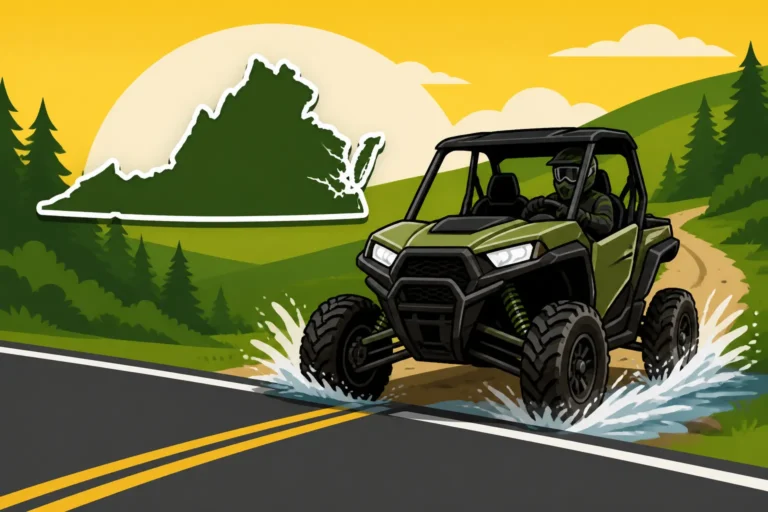
Virginia law is quite explicit: ATVs and UTVs are generally prohibited from being operated on any public highway, street, road, or even private roads that are open to public use. This isn't just a suggestion; it's a hard and fast rule embedded in the state code. Imagine pulling out of your driveway onto a state-maintained road – that's often where the problem begins. The law treats these machines as distinct from traditional motor vehicles, primarily due to their design, safety features (or lack thereof for on-road use), and intended purpose. You might have added turn signals, a horn, and mirrors, maybe even a windshield from a company like SuperATV, but from the state's perspective, those additions don't magically reclassify your machine. The core designation remains "off-road."
This ban extends beyond just highways. It also includes public property, like parks, sidewalks, or other areas not specifically designated for off-road use. Think about it: an ATV is built for uneven terrain, mud, and climbing, not for sharing asphalt with cars and trucks at highway speeds. The stability, braking distance, and visibility are simply not engineered for that environment. The frustration is understandable, especially for those who live in rural areas where the nearest trail might involve a short hop on a public road. However, Virginia has made its stance clear on [Virginia Bans ATVs on Public Highways].
Why the Law Treats ATVs Differently Than Other Vehicles
It boils down to safety and classification. Virginia, like many states, defines "motor vehicle" in a way that typically includes cars, trucks, and motorcycles – vehicles designed, manufactured, and equipped for highway travel. ATVs and UTVs, by their very nature and original design, do not meet these criteria. They lack many of the federally mandated safety features found on street-legal vehicles, such as crashworthiness standards, specific lighting requirements, proper braking systems for high-speed road use, and emissions controls suited for public roads.
Consider the inherent differences: an ATV has a high center of gravity, knobby tires not meant for pavement, and no enclosed cab or standard seatbelt system (though many UTVs now have roll cages and seatbelts, they still don't meet automotive crash standards). When you look at [Virginia ATV and Utility Vehicle Definitions], you'll see how the state categorizes these machines, emphasizing their off-road nature. The legal framework isn't designed to be punitive; it's a reflection of manufacturers' original intent and safety recommendations. This distinction is crucial because it's the root cause of why your favorite machine, even after significant modification with parts from providers like SuperATV, simply won't pass muster for street legality in Virginia.
The Street-Legal Exception: Dirt Bikes and Conversions
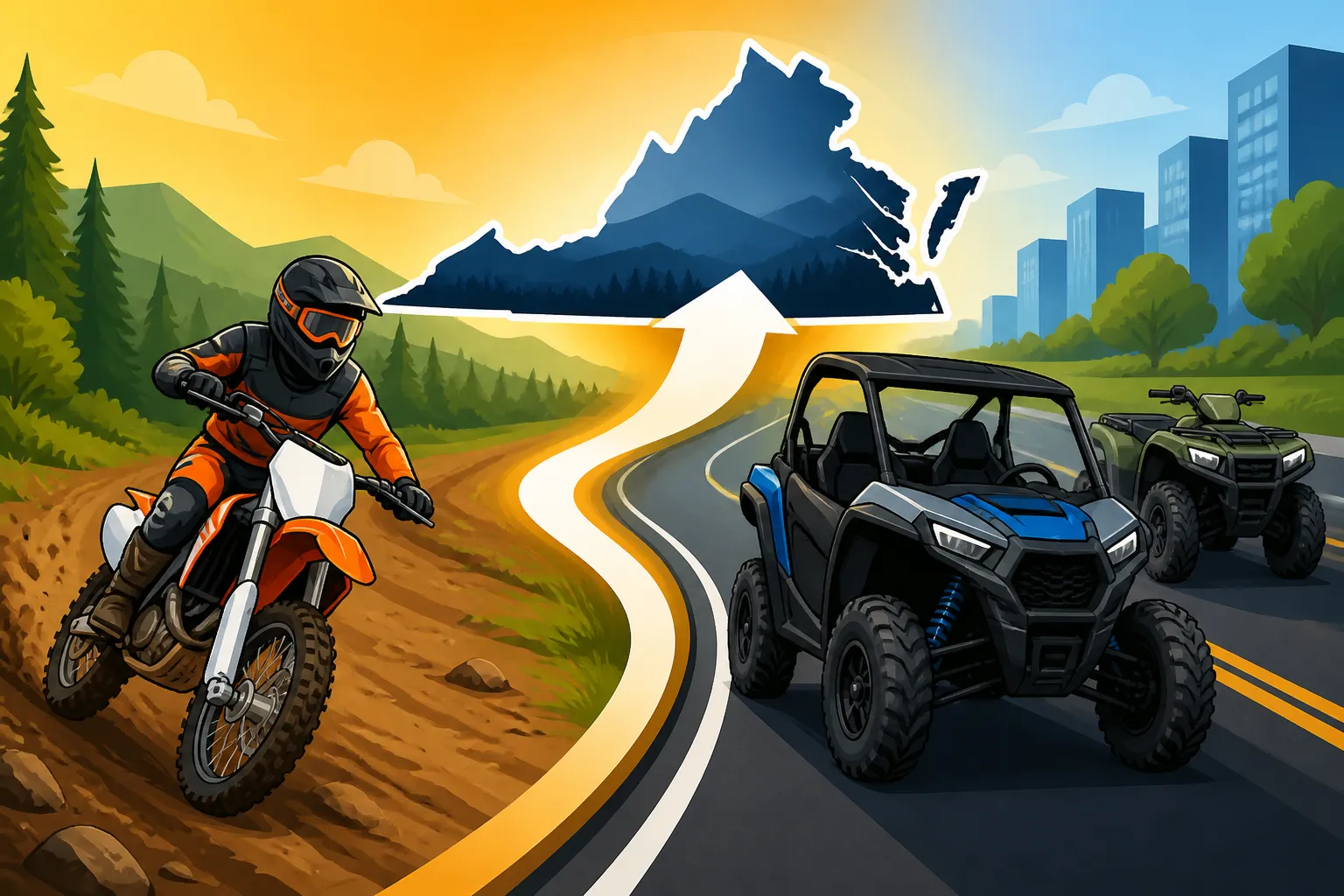
Now, here's where things get a little more interesting and often, a lot more confusing for riders. While ATVs and UTVs face a hard "no" for street legality, certain off-road motorcycles, commonly known as dirt bikes, can be converted and legally titled for street use in Virginia. It's a specific, often painstaking process, but it is indeed a path that exists.
What Makes a Dirt Bike Different in Virginia's Eyes
The key distinction lies in the foundational classification and the potential for a dirt bike to meet federal motor vehicle safety standards (FMVSS) when properly equipped. A dirt bike, at its core, is still a motorcycle – a two-wheeled vehicle that can be outfitted with the necessary components to make it roadworthy. Virginia's law recognizes that some off-road motorcycles can be modified to comply with the same safety standards required of street motorcycles, whereas ATVs and UTVs generally cannot. This isn't to say it's easy, or that every dirt bike is a candidate, but the framework is there.
For example, a dirt bike, unlike an ATV, can be equipped with DOT-approved tires, mirrors, a horn, proper headlamps and taillamps, turn signals, and a speedometer, all while maintaining a form factor that is already inherently closer to a street-legal motorcycle. [Virginia Off-Road Motorcycle Definitions] helps draw this line. The path exists for what's known as an "off-road motorcycle conversion," allowing a machine initially sold for dirt-only use to be re-certified for the pavement.
The VSA 130 Form and the Conversion Process
So, how does one actually make a dirt bike street legal in Virginia? The process primarily involves Form VSA 130, titled "Application for Reconstructed or Specially Constructed Vehicle." This isn't something you take lightly; it's a serious undertaking. First, you need to ensure your dirt bike is equipped with all the necessary street-legal components. This includes:
- DOT-approved tires: Designed for road use, not just mud or dirt.
- Headlight and taillight: That meet specific brightness and visibility standards.
- Brake light: Activated by both front and rear brakes.
- Turn signals: Front and rear.
- Horn: Audible from a certain distance.
- Mirrors: Providing a clear view to the rear.
- Speedometer: A working one is essential.
- Proper exhaust system: Often requiring modifications to meet noise and emissions standards.
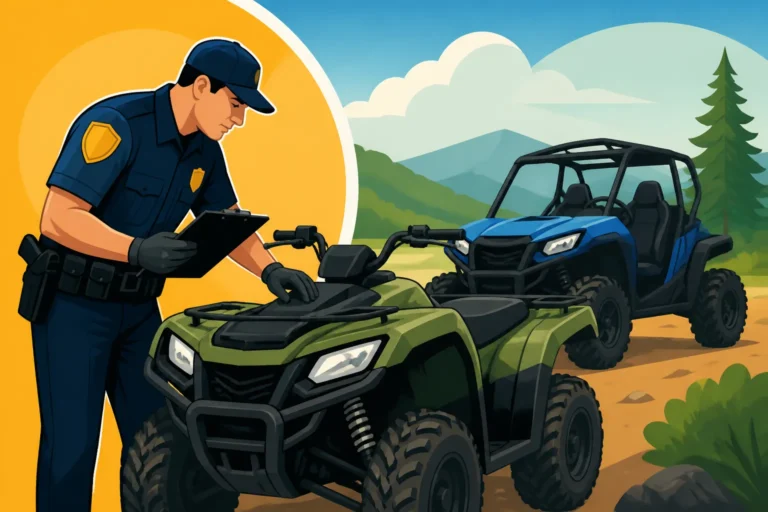
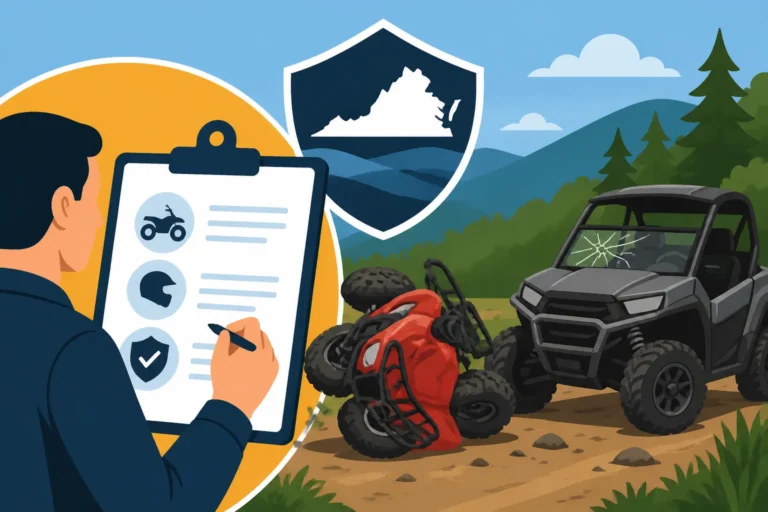
Once your dirt bike is outfitted, you'll need to complete the VSA 130 form. This form essentially tells the DMV that you've converted an off-road vehicle into one that meets street-legal requirements. Crucially, your converted dirt bike must then be inspected by an authorized Virginia State Police safety inspection station. This inspection is rigorous; they're looking to ensure that every single component meets the state's stringent requirements for highway use. It's not a quick once-over; it's a detailed check to certify that your machine is truly safe for public roads.
After passing the state police inspection, you'll submit the VSA 130, along with the inspection certificate, your original title or MSO (Manufacturer's Statement of Origin), and any other required documentation to the DMV. They will review everything, and if approved, issue a new title designating your dirt bike as street legal. This is the only legitimate pathway for an off-road machine to gain street-legal status in Virginia. For more details on the conversion process, you might look into [Virginia Dirt Bike Conversion Rules]. It’s a complex journey, but for dedicated dirt bike riders, it offers a real solution.
Common Misconceptions and Risky Workarounds
Given Virginia's strict stance on ATVs and UTVs on public roads, it's no surprise that riders often look for loopholes or misinterpret the law. Unfortunately, many of these "solutions" lead to more trouble than they're worth, often resulting in hefty fines, impoundment, or worse, dangerous situations.
Out-of-State Plates and LLC Schemes
One common misconception or attempted workaround is the idea that if you title and register your ATV or UTV in another state – particularly states known for more relaxed off-road vehicle laws, like Montana or South Dakota – you can legally ride it on Virginia roads. This usually involves setting up an LLC in that state to "own" the vehicle. However, this is a very risky gamble in Virginia. The law generally dictates that if a vehicle is primarily garaged or operated in Virginia, it must comply with Virginia's titling, registration, and operating laws, regardless of where it was originally purchased or titled.
Virginia law enforcement is well aware of these schemes. While an out-of-state plate might seem like a quick fix, it rarely holds up if you're stopped and it's clear your machine is based in Virginia. You could face charges for improper registration, lack of a valid title, and illegal operation of an off-road vehicle on a public highway. The penalties for [Virginia Penalties for Illegal Riding] can be substantial, including fines and having your expensive machine impounded. It's simply not worth the legal and financial headache to try and skirt the law this way.
Modifications That Don't Change Virginia Law
Many ATV and UTV owners invest significant time and money into modifying their machines to make them seem street-legal. They might add a windshield, turn signals, mirrors, a horn, and even DOT-approved tires – perhaps even a full lighting kit from SuperATV. While these modifications certainly enhance safety for off-road riding and might make your machine more visible, they fundamentally do not change its legal classification in Virginia.
As mentioned before, an ATV or UTV is designed for off-road use, and simply bolting on street-legal accessories does not magically transform it into a motor vehicle compliant with federal and state highway standards. The underlying structure, chassis, suspension, braking, and crashworthiness are still those of an off-road vehicle. A Virginia law enforcement officer isn't going to be swayed by your new turn signals; they'll look at the core identity of the machine. [Virginia Has No Street-Legal UTV Path] is a clear statement on this. While it's great to make your machine safer and more capable for the trails, don't confuse off-road enhancements with street-legal compliance in Virginia.
Limited Road Access: Specific Exceptions for ATVs/UTVs
While being fully street-legal is out of reach for ATVs and UTVs in Virginia, it’s important to acknowledge that there are very narrow, highly specific circumstances where these machines are permitted on public roads. These aren't blanket permissions but rather carefully defined exceptions designed for specific purposes or in specific geographical areas. Understanding these exceptions is key to avoiding legal trouble and utilizing your machine responsibly.
Farm and Emergency Use Exceptions
Virginia law does make provisions for the limited use of ATVs and UTVs on public highways for agricultural and emergency purposes. This isn't about joyriding; it's about practical necessity. For example, a farmer might need to cross a public road to get from one section of their land to another, or to access fields for planting, harvesting, or tending to livestock. In these cases, the use is typically restricted to the most direct route across or along the highway, often with specific requirements for lighting or flags to ensure visibility. It's a pragmatic exception for those whose livelihood depends on these machines for work.
Similarly, emergency responders – such as volunteer rescue squads or fire departments – may use ATVs and UTVs on public roads when responding to an emergency. These vehicles are invaluable for accessing remote areas, navigating difficult terrain during search and rescue operations, or transporting equipment where traditional vehicles cannot go. These are highly specific, utilitarian exceptions, not an invitation for general public road use. You won't find a casual rider using these exceptions as a loophole, and trying to do so would likely result in a citation.
Designated Coalfield Road Systems
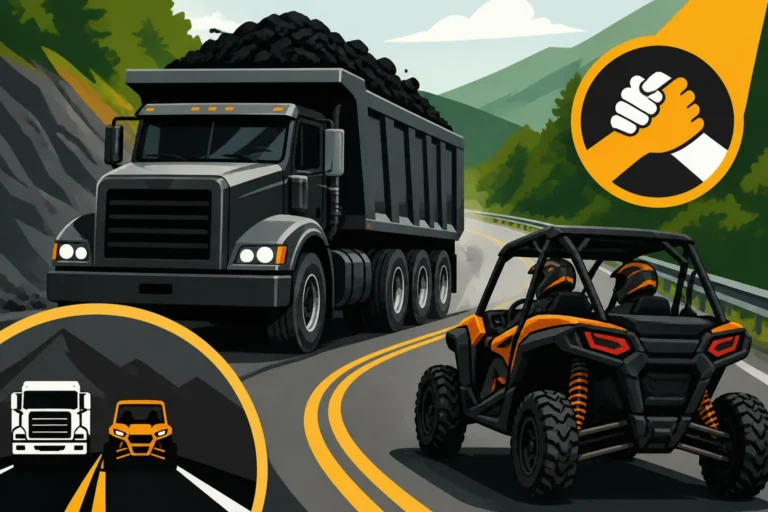
Perhaps the most significant and often misunderstood exception for ATVs and UTVs involves specific designated road systems in Virginia's coalfield counties. In areas like Buchanan and Tazewell counties, local governments have, under specific state statutes, opened certain secondary highways and unpaved roads to ATV and UTV traffic. These are usually clearly marked routes, part of larger trail systems like Spearhead Trails, and are intended to connect segments of off-road trails or provide access to trailheads.
These designated routes are not a pathway to street legality. They come with strict rules: speed limits (often 25 mph), daylight-only operation, helmet requirements (which apply to all ATV riders in Virginia anyway), and often require a valid trail permit. You can't just ride your ATV on any road in these counties; it must be a specifically designated route. This limited access is an economic development initiative to support tourism around the off-road trail systems in these regions. For more context, see [Virginia Buchanan and Tazewell County Road Access]. It's a unique situation for a specific geographic area, not a general allowance for ATVs on Virginia's vast network of public roads.
To summarize the situation with different off-road vehicles in Virginia:
| Vehicle Type | Street-Legal in Virginia? | Process / Requirements | Primary Use Case | Key Distinction |
|---|---|---|---|---|
| ATV | No | Not possible to convert to street-legal status. Limited exceptions for farm/emergency use or designated coalfield routes exist under strict conditions. Modifications (e.g., from SuperATV) do not change classification. | Off-road recreation, farm work, utility tasks | Designed for off-road; does not meet federal motor vehicle safety standards for roads. |
| UTV (Side-by-Side) | No | Not possible to convert to street-legal status. Limited exceptions for farm/emergency use or designated coalfield routes exist under strict conditions. Even with roll cages and seatbelts, they do not meet street-legal vehicle requirements. | Off-road recreation, utility, hunting, farm work | Designed for off-road; does not meet federal motor vehicle safety standards for roads. |
| Dirt Bike | Yes (with conversion) | Can be converted by adding DOT-approved components (lights, horn, mirrors, speedometer, etc.), completing Form VSA 130, passing a Virginia State Police safety inspection, and submitting to DMV for a new title. Refer to [Who Signs Form VSA 130 for a Converted Dirt Bike]. | Off-road recreation, can be street-legal for commuting/trail access after conversion. | Fundamentally a motorcycle; can be modified to meet FMVSS for street motorcycles. |
Ultimately, while the dream of easily cruising your ATV or UTV on Virginia's public roads remains just that – a dream – there's a clear, albeit challenging, path for dirt bike riders to achieve street legality. For everyone else, embracing the vast network of dedicated off-road trails and understanding the limited exceptions is the safest and most legal way to enjoy your machine in the Commonwealth.
Disclaimer
This article is for general informational purposes only and does not constitute professional advice. Laws, prices and regulations vary by location and change over time. Consult a qualified professional for guidance on your specific situation.