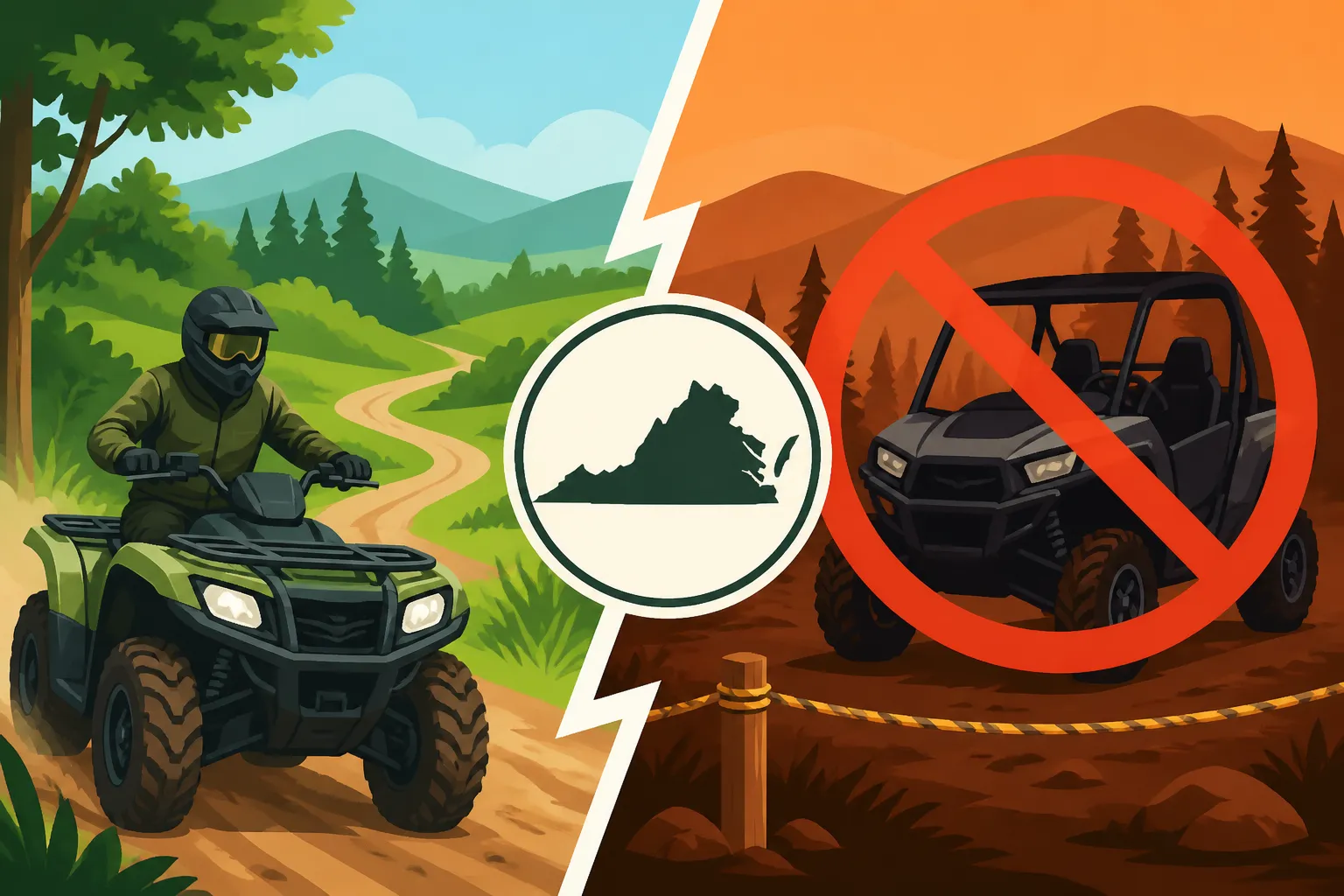
What Posted Land Means for a Virginia Rider
It’s a scenario many Virginia ATV and UTV riders have faced: you're out exploring, maybe on a familiar path, when suddenly you come across a new "No Trespassing" sign or a line of purple paint marking a property boundary. That feeling of uncertainty, or worse, the sinking realization you might have just crossed onto private land without permission, is something no rider wants. This guide is here to help you understand precisely what "posted land" means for off-road enthusiasts in Virginia, how to navigate those boundaries legally and respectfully, and why getting permission isn't just a courtesy—it's the law.
Understanding "Posted Land" and Trespass in Virginia
When we talk about "posted land" in Virginia, we're not just talking about a vague concept; we're referring to specific legal protections landowners have to keep their property private. For ATV and UTV riders, this is incredibly important because most of our riding takes place on either private land or designated public trails. Unlike the roads where you might drive a car, there's no inherent right to access private property with an off-road vehicle just because it looks like a good place to ride.
What Makes Land "Posted" Under Virginia Law?
Virginia law is pretty clear about what constitutes proper notice that land is private and off-limits. Most commonly, you'll see signs. These "No Trespassing" signs need to be reasonably visible at the property lines, especially where trails or roads enter the land. It's not just about one sign slapped on a tree in the middle of nowhere; it's about clear communication to anyone who might approach. But signs aren't the only method. Virginia also recognizes purple paint marks on trees or posts as a legal way to signify "No Trespassing." These purple marks need to be consistently applied, generally at eye level, and spaced appropriately to give clear notice. Think of it like a visual fence, even if there isn't a physical one. If you see those signs or that distinctive purple paint, consider the land posted.
The Legal Ramifications of Ignoring Posted Land
Trespassing, whether you're on foot or on an ATV, is a serious matter. In Virginia, riding an ATV or UTV on someone else's property without permission, especially if that property is clearly marked as posted, falls under trespassing laws. This isn't just a slap on the wrist. You could face legal penalties, including fines, and even have your machine impounded. Beyond the legal troubles, there's the damage to your reputation, particularly in rural communities where landowners often know their neighbors and are quick to report unauthorized activity. It causes a ripple effect, making it harder for all riders to gain access, even those who try to do things the right way. This is why understanding [Virginia Penalties for Illegal Riding] is so crucial.
Why Landowners Post Their Property
Landowners don't usually post their property just to be difficult. There are often very legitimate reasons. Privacy is a huge one—they might not want unknown individuals riding through their backyard or near their home. Safety is another major concern. Landowners are often worried about liability if someone gets hurt on their property, even if that person was trespassing. It's a complex legal area, and posting their land helps them manage that risk. You also have to consider damage to property, littering, noise complaints, and the disturbance of wildlife or livestock. Many landowners have worked hard for their land, and they want to protect it from unwanted intrusion and potential damage. Respecting these boundaries helps foster better relationships between riders and property owners.
The Critical Role of Landowner Consent for ATV Access
When it comes to riding ATVs and UTVs on private property in Virginia, there’s one golden rule: you need permission. This isn't just common courtesy; it's explicitly laid out in state law. Virginia Code § 46.2-915.1, which governs ATV and UTV use, clearly states that a person operating an ATV on private property must have the consent of the landowner. This makes consent the absolute cornerstone of legal off-road riding on private land.
Verbal vs. Written Consent: Why Written is King
You might be thinking, "My cousin told me it's okay to ride on his back forty," and that verbal agreement feels solid. However, relying on verbal consent can put you in a very precarious position. Memories fade, people move, and sometimes a new owner or family member might not be aware of old agreements. If an officer stops you or a neighbor complains, proving you have permission with only a verbal agreement can be incredibly difficult, if not impossible. The best practice, and what the law really leans towards, is written consent. Written consent leaves no room for doubt. It protects both you and the landowner by providing a clear, undeniable record. This is why we always stress the importance of [Virginia Written Consent on Private Land].
What a Proper Written Consent Note Should Contain
So, what should this magical piece of paper include? A good written consent form doesn't need to be a legal novel, but it should contain key pieces of information to make it effective and clear. Here's a rundown:
- Landowner's Full Name and Contact Information: This verifies who is giving permission.
- Rider's Full Name and Contact Information: Identifies who has permission.
- Description of the Property: Include the address, parcel number, or a clear description of the land where riding is permitted. You don't want any ambiguity about which land you can ride on.
- Dates of Permission: Is it a one-time thing, for a specific season, or ongoing? Be clear about the duration.
- Any Specific Restrictions: The landowner might allow riding but have rules, such as "daylight hours only," "stay on designated trails," "no passengers," or "helmets required." Make sure these are noted.
- Signatures: Both the landowner and the rider should sign and date the document.
- Witness/Notary (Optional but Recommended): While not strictly required for a simple permission note, having a witness or even getting it notarized adds an extra layer of authenticity, especially for long-term or complex arrangements.
Think of a situation where you're riding, and an unfamiliar deputy stops you. Having a crisp, signed note that clearly states you have permission to be there will quickly de-escalate the situation and prove you're riding responsibly.
Hypothetical Scenario: The Conflicted Family
Imagine your buddy, let's call him Mark, owns a large parcel of wooded land. He tells you over a campfire, "Yeah, ride my trails anytime, man!" You've ridden there for years. Then, Mark's son, who recently moved back home, starts seeing tracks near his garden. He doesn't know about the verbal agreement and, feeling protective, puts up "No Trespassing" signs and calls the sheriff. Suddenly, you're the one facing a potential trespass charge, despite Mark's earlier verbal OK. This is where written consent saves the day. If you had a signed document from Mark, you could show it to his son and the deputy, clearing up the misunderstanding immediately.
The Burden of Proof: It's on the Rider
When you're stopped on private property, the burden of proving you have permission falls squarely on your shoulders. It’s not up to the law enforcement officer to figure out if you're allowed to be there. This is why having that written consent document with you, whether a physical copy or a digital image on your phone, is so vital. Without it, you could be cited for trespassing, and your ride could be cut short, leading to unnecessary hassle and expense. Always carry your proof of permission!
Navigating Access: Tips for Respectful Riding on Private Land
Gaining access to private land for ATV or UTV riding can feel like trying to crack a secret code. Many riders dream of expansive private trails, but approaching landowners correctly and maintaining those relationships is key. It’s not just about getting permission once; it’s about building trust that lasts.
How to Approach Landowners for Riding Permission
Cold-calling a landowner or just showing up at their doorstep revving your engine is probably the quickest way to get a "no." Instead, think about making a good first impression.
- Do Your Homework: Try to find out a little about the landowner first. Are they active in the community? Do they have animals? Understanding their perspective can help tailor your approach.
- Be Respectful and Polite: Dress neatly, speak clearly, and introduce yourself. Explain why you're interested in riding on their land and what kind of machine you have. Be prepared to talk about how you'll ensure safety and respect their property.
- Offer Something in Return: This isn't always about money. Maybe you can help with chores, fix a fence, or clear some brush. Many landowners appreciate help around their property. Offering to help maintain trails or clean up after your ride also shows you're serious about being a good steward.
- Start Small: Don't ask for unlimited access to their entire property. Perhaps ask to ride a specific section or for a trial period. Build trust gradually.
- Provide Proof of Insurance: Even though Virginia doesn't mandate ATV insurance, having liability coverage is a massive advantage when asking for private land access. It shows you're responsible and provides peace of mind for the landowner regarding potential accidents. Many aftermarket parts, like those from SuperATV, are designed to make your machine safer and more capable on trails, but insurance offers protection against unforeseen events.
Building Relationships, Not Just Asking for Access
The best access often comes from long-term relationships. If you prove yourself to be a responsible rider, respectful of their land and their rules, landowners are much more likely to continue granting permission and even vouch for you to their neighbors. Be mindful of noise, especially near homes or livestock. Clean up any trash you generate—or even pick up existing litter. If you notice a broken gate or something amiss, let the landowner know. These small gestures build goodwill and show you truly care about the property.
Understanding Different Types of Private Land
Not all private land is the same, and your approach might need to adapt.
- Residential Properties: This is often the trickiest. People live here, and their primary concern is usually privacy, peace, and quiet. Access might be limited to very specific, designated paths away from homes.
- Farmland: Farmers often use ATVs and UTVs themselves for work, so they understand the machines. However, they need to protect crops, livestock, and expensive equipment. Be prepared for strict rules about staying out of fields, closing gates, and avoiding animal disturbance. The [Virginia Farm Tax Exemption for a Quad] sometimes applies to these working machines, highlighting their functional use.
- Timber Company/Large Acreage: These properties might have extensive trail networks, but they also have active operations. They'll be concerned about liability, fire risk, and interfering with logging activities. They might have designated periods or specific areas where riding is allowed, or they might prefer to lease access to ATV clubs rather than individuals.
What to Do If You Inadvertently Encounter Posted Signs
It happens. You're following a faint trail, enjoying the ride, and suddenly you see a "No Trespassing" sign or purple paint you hadn't noticed before.
- Stop Immediately: Do not proceed further.
- Turn Around Safely: The safest and most respectful action is to turn your machine around and exit the property the way you came in, or the most direct route to public access, without causing any further disturbance.
- Do Not Argue: If you encounter a landowner or official, be polite, apologize for the mistake, and explain that you are leaving. Do not get defensive or argue.
- Mark Your Map: Make a mental note, or even better, mark your GPS or paper map, so you don't make the same mistake again.
The Consequences of Ignoring Posted Land
The temptation to just "chance it" when you see a posted sign can be strong, especially if you think no one is around. But the consequences far outweigh any perceived fun. Beyond the legal penalties for trespassing, you risk damaging the entire off-road community's reputation. Every incident of illegal riding makes it harder for legitimate trails to open and for landowners to trust riders. It fuels the narrative that all ATV riders are reckless, which simply isn't true for the vast majority of us who love the sport and respect the rules.
Common Misconceptions and Realities About Private Land Access
When it comes to off-road riding, especially on private land, there are a lot of myths and misunderstandings circulating. It's easy to get caught up in hearsay or what "everyone else does," but for responsible riders in Virginia, knowing the truth is essential.
"My Buddy Rides Here All the Time" – Not a Defense
This is one of the oldest excuses in the book, and it holds absolutely no weight in the eyes of the law. Just because your friend, neighbor, or cousin rides somewhere without permission doesn't make it legal for you, or for them. If the land is posted or you don't have explicit consent from the actual landowner, you are trespassing. Law enforcement officers aren't interested in your buddy's habits; they're interested in whether you have the right to be there. Always verify access yourself, and don't rely on secondhand accounts.
"It's Just an Old Logging Road" – Still Private
Many riders are drawn to old logging roads, power line cuts, or neglected tracks, assuming they're abandoned or public access. The reality is, if it's on private property, it's private. An old road doesn't magically become public just because it's no longer actively maintained or seems disused. Landowners often leave these roads in place for their own access, for hunting, or simply because removing them isn't practical. Treat any road or trail that isn't clearly marked as a public thoroughfare or designated trail system (like the [Spearhead Trails in Virginia Explained]) as private until proven otherwise. Even if it looks like a perfect place to test out your new SuperATV lift kit, resist the urge if you don't have permission.
"I'm Only Cutting Through" – Still Trespassing
The idea that a quick "cut-through" doesn't count as trespassing is a dangerous misconception. Whether you're on someone's property for five minutes or five hours, with an ATV or on foot, without permission, you are trespassing. There's no minimum time limit or distance that makes it okay. A landowner has the right to control access to their entire property, from boundary to boundary. Even a short detour across a corner of private land can lead to a citation and the frustration of dealing with legal trouble.
The Difference Between Posted Land and Public Trails
It's vital to distinguish between genuinely public off-road trail systems and private land. Public trails, such as those within the [Peters Mill Run OHV Trails in Virginia] or the Spearhead Trails network, are specifically designated for off-road vehicle use, often requiring permits and adhering to specific rules. These are clearly marked and maintained for public enjoyment. Posted private land, on the other hand, is just that—private. There is no public right of way unless it's a dedicated public road or an easement specifically granted for public access, which is rare for ATV/UTV use. Don't confuse the two; one welcomes you, the other explicitly forbids you without permission.
Using Aftermarket Parts for Authorized Riding, Not Illegal Access
Many of us love to customize our ATVs and UTVs with performance parts, accessories, and upgrades. Brands like SuperATV offer fantastic products, from winch systems to suspension upgrades, that make our machines more capable and enjoyable. These modifications are meant to enhance your experience on authorized trails and private property where you have permission. A powerful winch from SuperATV is fantastic for self-recovery on a challenging trail, not for pulling down fences on posted land. Upgraded tires are for conquering mud and rocks on legal routes, not for tearing up someone's lawn. Always remember that your modifications should support responsible riding, not enable illegal activity.
Here's a quick summary of land access scenarios:
| Scenario | Legal Status | Recommended Action |
|---|---|---|
| Land Clearly Marked "No Trespassing" | Private, No Access | DO NOT ENTER. Turn around and find an alternative route. |
| Land Marked with Purple Paint | Private, No Access | DO NOT ENTER. Purple paint is a legal "No Trespassing" sign in Virginia. |
| Unmarked Land, Appears Disused | Treat as Private | Seek landowner permission before entering. "Appears abandoned" is not a defense. |
| Verbal Permission from Landowner | Risky, Difficult to Prove | Request written consent. Always carry proof of permission. |
| Written Consent from Landowner | Legal Access | Keep the written consent with you (physical or digital). Adhere to all specified restrictions. |
| Designated Public OHV Trail | Legal Access (with permit/rules) | Follow all trail rules, permit requirements, and posted regulations. Check Virginia Spearhead Trail Permits. |
| Old Logging Road on Private Property | Private, No Access | Seek landowner permission. Old roads are still part of private property. |
| Cutting Across a Corner of Private Land | Trespassing | Avoid at all costs. Any entry without permission is trespassing. |
Conclusion: Respecting Boundaries for a Better Riding Future
Riding ATVs and UTVs in Virginia offers incredible opportunities for adventure and enjoyment, especially in our beautiful rural and mountainous areas. However, with that freedom comes a significant responsibility: respecting private property. Understanding what "posted land" means, the legal implications of trespassing, and the critical importance of obtaining clear, preferably written, landowner consent is not just about avoiding trouble. It's about being a good steward of the land, a responsible member of the off-road community, and building the kind of trust that can lead to more riding opportunities for everyone. Let's make sure our passion for riding doesn't come at the expense of someone else's property rights. Always ask, always respect, and always ride legally.
Disclaimer
This article is for general informational purposes only and does not constitute professional advice. Laws, prices and regulations vary by location and change over time. Consult a qualified professional for guidance on your specific situation.