Do Adults Need a Helmet on Their Own Land?
It's a question that echoes across riding camps, farm fields, and backyard trails throughout the Commonwealth: "If I'm just out on my own property, do I really need to wear a helmet on my ATV or UTV?" It’s a common misconception, often fueled by the feeling that your private land is your domain, free from the prying eyes or regulations of the state. But here in Virginia, the law has a surprisingly clear and unwavering stance on helmet use, regardless of where your wheels might be turning. This guide will cut through the confusion, explaining Virginia's helmet law in detail, why it applies even on your own acreage, and what that means for every rider.
Virginia's Helmet Law: The Unwavering Mandate
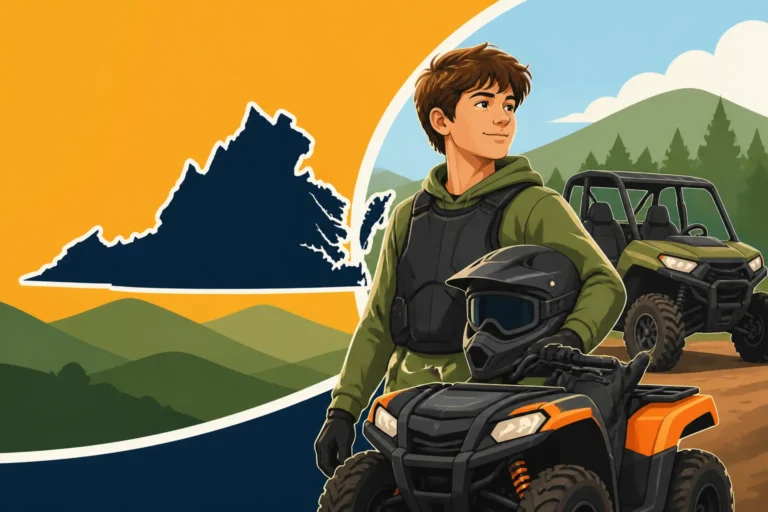
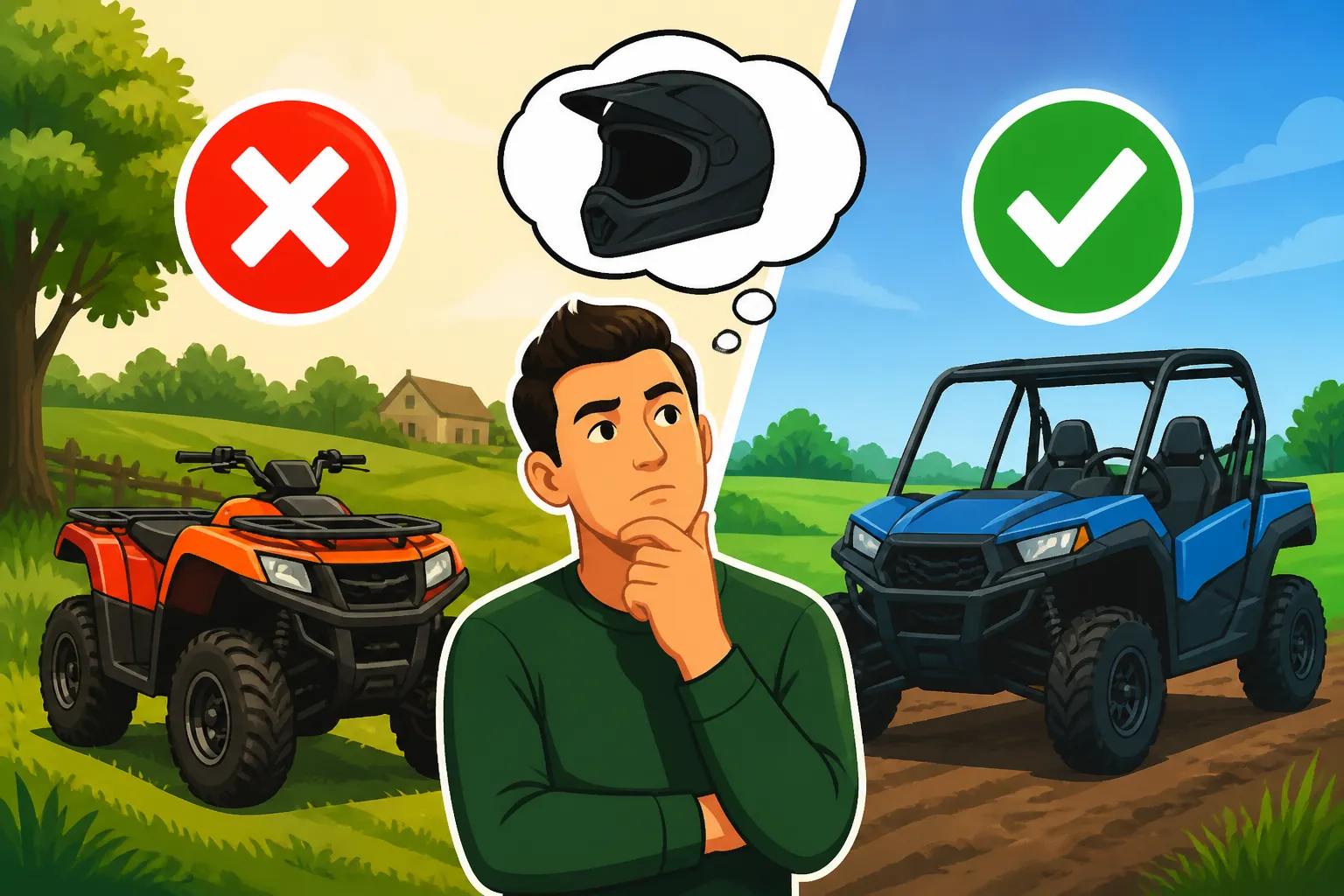
Let's dive straight into the heart of the matter. Virginia's Code, specifically § 46.2-915.1, is quite explicit when it comes to helmet use for off-road vehicles. It mandates that any person operating or riding as a passenger on an all-terrain vehicle (ATV) must wear an approved helmet. The key here is "any person" and "all-terrain vehicle." There's no carve-out for adults, no exception for riding skill, and crucially, no exemption for private property.
The Broad Reach of Virginia's Code
When a law uses broad language like "any person" and defines ATVs in a way that includes most common utility vehicles (UTVs) as well, it leaves very little room for interpretation. Virginia’s definition of an ATV covers any motorized off-road vehicle designed to travel on four low-pressure tires, 50 inches or less in width, with a seat designed to be straddled by the operator and handlebars for steering, or a non-straddle seat and a steering wheel. This means whether you're on a traditional sport quad or a side-by-side that technically falls under the ATV definition, the helmet rule applies.
Think of it this way: the state isn't just concerned with public roads and trails. The legislative intent behind such a broad helmet law is to protect the rider from severe injury, regardless of the environment. Head injuries are devastating, and they don't discriminate between public asphalt and private gravel. This is why you'll find that [Why Virginia Adults Must Wear a Helmet, Not Just Kids] is a reality, not just a suggestion. The helmet requirement is foundational to ATV safety across the board in the Commonwealth.
Dispelling the "Private Land Exemption" Myth
This is where the rubber meets the road, so to speak, for many landowners. It's a deeply ingrained belief that "my land, my rules" extends to every single activity performed on it. And while that's true for many things, personal safety equipment on an ATV in Virginia isn't one of them. The law simply doesn't differentiate between riding on a designated public trail, crossing a county road where permitted, or tearing up the back forty. The helmet requirement stands.
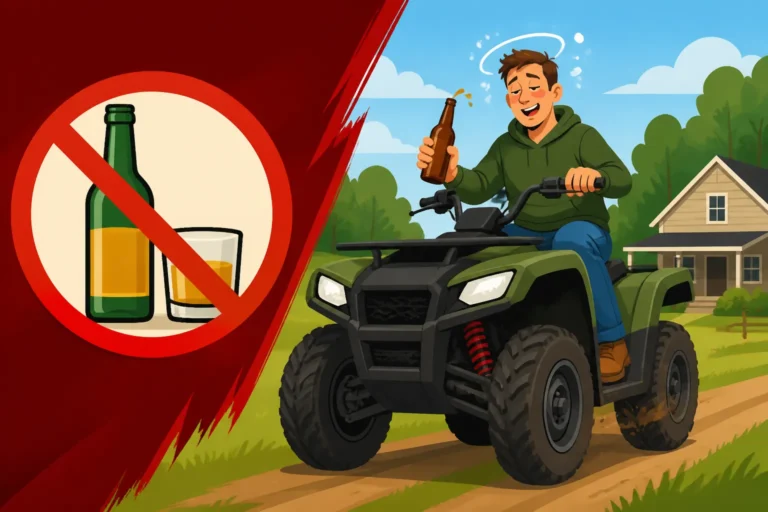
Hypothetically, imagine you're out on your sprawling 100-acre property in rural Virginia, enjoying a leisurely ride on your UTV to check fences. You've owned this land for decades, know every bump and dip, and feel completely safe. You decide to forgo the helmet, thinking you're far from any law enforcement. Suddenly, you hit an unexpected washout, the machine tips, and your head strikes a rock. While an officer might not have been present to issue a citation, the fact remains that you were operating an ATV without a helmet, in direct violation of Virginia law. The law's reach, in this case, is about the act of riding an ATV itself, not the specific piece of ground it's on.
Why the Law Matters, Even on Your Own Property
While the legal aspect is clear, it's equally important to understand the practical reasons behind this statewide helmet mandate. It’s not just about compliance; it's about protecting yourself and those you care about.
Safety First: The Unseen Dangers of Familiar Ground
Even the most seasoned rider on the most familiar terrain can encounter an unexpected hazard. A hidden root, a patch of slick mud, a deer darting out, or simply a momentary lapse in judgment can lead to an accident. The truth is, familiarity can sometimes breed complacency. We tend to feel safest where we are most comfortable, but that doesn't eliminate risk.
Companies like SuperATV, which engineer robust aftermarket parts for off-road machines, also implicitly understand the need for safety. They build products designed to enhance performance and durability, but they'd be the first to tell you that no amount of heavy-duty components can protect your skull like a well-fitted, approved helmet. A low-speed tip-over can be just as dangerous as a high-speed crash if your head isn't protected. Head injuries can range from concussions to permanent brain damage or even be fatal. It’s not just about large, dramatic accidents; it’s often the seemingly minor incidents that cause significant trauma when a helmet isn't worn.
Insurance, Liability, and the Aftermath
While Virginia does not mandate ATV insurance for all riders – [Virginia Requires No ATV Insurance] – many riders choose to carry policies for theft, damage, or liability. If you're involved in an accident on your own property and sustain a head injury while not wearing a helmet, your insurance company could potentially use your non-compliance with state law as a factor in adjusting or even denying your claim. While this is not a universal outcome, it's a risk.
Beyond personal injury, consider liability. If a friend or family member is riding an ATV on your property, even with your permission, and they get hurt while not wearing a helmet, your potential liability exposure could be significant. As the landowner and host, you could be seen as contributing to their unsafe activity by allowing them to ride in violation of state law on your property. This is why understanding [Virginia Penalties for Illegal Riding] extends beyond just a potential fine; it touches on personal responsibility and legal repercussions that can impact your finances and well-being.
Enforcement Realities and Practical Considerations
Now, let's talk about the practical side of enforcement. While the law is clear, how often does a Virginia State Trooper or local sheriff's deputy patrol private land looking for helmet violations? The answer is: not often, unless specific circumstances dictate.
When Can Law Enforcement Intervene on Private Land?
Generally, law enforcement needs probable cause or an invitation to enter private property. This means they're unlikely to randomly pull onto your land to check if you're wearing a helmet while puttering around your barn. However, there are several scenarios where intervention becomes possible:
- Visibility from a Public Road: If you're riding without a helmet on your property and are clearly visible from a public road or highway, an officer could, in theory, observe the violation and potentially take action.
- Emergency Services Called: If an accident occurs on your property and emergency services (EMS, fire department, police) are called, they are legally on your property to render aid. In such a situation, if a helmet violation contributed to an injury, it would certainly be noted and could lead to a citation.
- Complaints: Neighbors, even if on their own land, could potentially lodge a complaint about unsafe ATV operation or other disturbances, which might lead to law enforcement investigating.
- Invited Entry: If an officer is invited onto your property for any reason (e.g., a report of theft, a separate incident), and they observe an ATV being operated without a helmet, they could address the violation.
While the odds of a direct "helmet check" on your private land might be low, the possibility exists, especially if your riding habits become visible or result in an incident requiring external intervention. The law doesn't just apply when an officer is watching; it applies all the time.
Making the Smart Choice for Yourself and Your Family
Ultimately, adherence to the helmet law, even on private land, boils down to making a responsible and smart choice. The law is in place to minimize severe injury, and frankly, it works. Modern helmets are not the bulky, uncomfortable monstrosities of yesteryear. Today's helmets offer excellent ventilation, comfort, and protection, often with features like integrated visors or goggle straps. When choosing a helmet, always look for DOT (Department of Transportation) certification, and for even greater protection, consider Snell-approved helmets. These standards ensure the helmet has met rigorous testing requirements. You can learn more about specific requirements by looking into [Virginia Helmet Standards From the State Police].
By wearing a helmet every time you ride, whether you're just moving a hay bale across the field or hitting a challenging trail, you're not only complying with the law but also setting a crucial example for younger riders and guests. If you have youth riding on your property, remember that [Virginia Age Limits by Engine Size] also factors into safe operation, but the helmet rule is universal for everyone on the machine.
Common Misconceptions and Clarifications
Let's address a few more points that often come up when discussing ATV laws in Virginia.
Age, Engine Size, and Helmet Rules
It's common for people to conflate age restrictions with helmet laws. Virginia does have specific age limits for operating ATVs based on engine size (e.g., riders under 12 are generally limited to machines 70cc or less, and 12-16 year olds to 90cc or less). However, the helmet law applies to all riders, regardless of their age or the engine size of the machine they are operating. An adult on a 1000cc side-by-side must wear a helmet just as much as a 12-year-old on a 90cc youth quad. There is no "adult escape clause" from the helmet rule in Virginia.
The Distinction Between Titling and Helmet Laws
Another area of confusion can be the difference between titling requirements and safety equipment laws. Virginia has specific rules about titling ATVs. For example, [Virginia Titles ATVs but Does Not Register Them], meaning you get a title of ownership, but no license plate or yearly registration sticker like a car. New machines bought after July 1, 2006, generally require a title ([Virginia Title Requirements for a New Machine]), while titles for used machines are optional unless required by a lender ([Virginia Title Rules for a Used Machine]).
These titling regulations are entirely separate from the helmet law. Whether your ATV is brand new and titled, or an old machine that never received one, the helmet requirement remains constant when that machine is being operated. The act of owning or titling the machine doesn't affect the safety gear mandate.
What to Remember for Your Next Ride
The takeaway is straightforward: if you're riding an ATV or UTV in Virginia, a helmet is legally required for everyone on board, even on your own private land. This isn't just about avoiding a potential citation, but about protecting yourself and those you ride with from serious injury.
Consider the following table to summarize key aspects of Virginia's ATV helmet law:
| Aspect | Requirement in Virginia | Applies on Private Land? | Rationale |
|---|---|---|---|
| Helmet Use | Required for all operators and passengers on an ATV/UTV | YES | Injury prevention, regardless of location. |
| Helmet Standard | Approved by DOT (and preferably Snell-certified) | YES | Ensures minimum safety standards are met. |
| Age Limitations | Specific limits based on engine size for youth | YES | Rider safety and control, but does not negate helmet rule for any age. |
| Vehicle Titling | Required for new machines (post-2006), optional for used | YES | Ownership record; distinct from safety equipment laws. |
| Insurance | Not required by state law (but recommended) | YES | Financial protection against damage/liability; compliance can impact claims. |
| Enforcement | Generally in public view or during incidents | Potentially | Officers act on observable violations or when called to an incident. |
So, the next time you swing a leg over your quad or buckle into your side-by-side, even if you’re just cruising to the back forty, remember to grab your helmet. It's a simple step that could quite literally save your life and keep you within the bounds of Virginia law. Ride smart, ride safe, and enjoy those trails responsibly!
Disclaimer
This article is for general informational purposes only and does not constitute professional advice. Laws, prices and regulations vary by location and change over time. Consult a qualified professional for guidance on your specific situation.