No Lighting Requirement on That Stretch
Navigating the rules for riding ATVs in Virginia can feel like trying to solve a puzzle, especially when you encounter a stretch of road where common sense about vehicle lights seems to go out the window. Many riders are left scratching their heads, wondering why some roads require full lighting while others seemingly don't, leading to confusion and, frankly, a bit of anxiety about staying legal. This guide is here to untangle that specific conundrum, clarifying precisely where and under what conditions Virginia's ATV lighting requirements take a unique turn, and what every rider needs to know to stay safe and compliant.
General Principles of ATV Lighting on Virginia Roads
Before we dive into the specific exceptions, it's crucial to understand the baseline. In Virginia, ATVs are generally not considered street-legal vehicles. The vast majority of public highways and roads are off-limits for ATV operation. This core rule exists for safety reasons, as ATVs are designed for off-road use, lack many safety features of street-legal vehicles, and their operation on paved roads can pose significant risks to both the rider and other motorists. When exceptions do permit an ATV to briefly operate on a public road, the expectation is that it will operate as safely as possible, which usually includes proper lighting.
Why Most Road Riding Requires Lights for Safety
Think about why regular cars, trucks, and motorcycles have headlights, taillights, and turn signals. It's all about visibility – seeing and being seen. When an ATV, which is already a smaller and less conspicuous vehicle than a full-sized car, operates on a road, that need for visibility only intensifies. Other drivers might not expect an ATV, especially one without proper lighting, and this can lead to dangerous situations. Imagine cresting a hill or coming around a blind curve only to encounter an unlit ATV during dusk or dawn; the potential for a serious accident is incredibly high.
Even for very short crossings, such as crossing a numbered state route by the most direct route (which is one of the few general allowances), proper lighting is a no-brainer for safety. It alerts oncoming traffic to your presence and helps you identify potential hazards. Without clear illumination, you're essentially gambling with your safety and the safety of others. While the law is often about minimum requirements, personal safety frequently dictates going above and beyond those bare minimums, especially when mixing with road traffic.
Standard Lighting for Off-Road Use and Casual Crossings
Even when you're far from any public road, navigating trails and open land, having reliable lighting on your ATV or UTV is paramount. Stock machines come with basic headlights and taillights, but anyone who's spent time riding in dense woods, during inclement weather, or when the sun starts to dip below the horizon knows that sometimes, the factory setup just isn't enough. Dust clouds can obscure vision, sudden rain can turn a bright day dim, and the encroaching shadows of a deep valley can make even familiar terrain treacherous.
This is where aftermarket lighting really shines. Many riders choose to upgrade their setups with light bars, auxiliary pod lights, or enhanced LED headlights. Reputable brands like SuperATV offer a wide range of lighting solutions designed specifically for the rugged demands of off-road riding, providing superior illumination that can make a huge difference in your ability to see obstacles and react in time. Whether it's a casual crossing of a private farm road or an intense night ride on a dedicated trail system, ensuring your machine has robust lighting is a critical safety measure that can prevent accidents and enhance your overall riding experience. It’s about not just seeing where you're going, but also being visible to other riders in your group or to anyone else who might be sharing the trail.
The Specifics: No Lighting Requirement on Designated Coalfield Road Stretches
Now, let's get to the heart of the matter – those specific instances where Virginia makes an exception to the usual lighting rules. This isn't a free-for-all across the state; it's a very targeted allowance designed to support the significant off-road trail systems found in Virginia's coalfield regions. If you ride in these areas, understanding this distinction is crucial.
Where This Unique Exception Applies
Virginia Code provides a very specific carve-out for certain road segments located within Buchanan and Tazewell counties. These aren't just any roads; they are identified as specific named routes that the local boards of supervisors in those counties have designated to connect segments of larger, public off-road trail systems. The intent is to allow riders to move their machines from one trail section to another without having to load them onto a trailer, which would be impractical for short distances. You might ride [Virginia's Named Route in Buchanan County] or [Virginia's Named Route in Tazewell County] under these special provisions. This exception acknowledges the unique economic and recreational landscape of these regions, where ATV and UTV tourism plays a vital role.
It's important to stress that this allowance is highly localized and conditional. You cannot take your ATV onto just any public road in these counties and expect to be exempt from general traffic laws or lighting requirements. The designation of these specific routes is a formal process, and they are typically well-marked by the local authorities or trail system operators to inform riders and other motorists of their special status. Always look for official signage and consult current trail maps provided by the Spearhead Trails authority to ensure you are on a legally designated connector route. Straying from these approved paths, even by a short distance, can quickly put you back into violation of general ATV road laws.
Conditions for the "Daylight Only" Exemption
The reason there's "No Lighting Requirement on That Stretch" boils down to one critical condition: these specific road segments are only allowed for ATV use during "daylight hours." This is explicitly stated as one of the [Seven Conditions in One Subsection] of Virginia law that permits this special access. When you're operating an ATV on these designated coalfield road stretches, you must strictly adhere to several rules, including the one that restricts operation to [Daylight Only on a Road Trail].
Here's a breakdown of the key conditions that permit ATV use on these special connector roads, and specifically why lighting isn't required:
- Daylight Hours Only: This is the primary reason the lighting requirement is lifted. Since ATVs are only permitted to operate on these stretches between sunrise and sunset, the need for artificial illumination to see or be seen by other drivers is significantly reduced. This is a critical point: if you find yourself on one of these routes after sunset or before sunrise, even if your machine has lights, you are technically in violation because operation is not permitted during those hours.
- Connecting Trail Segments: The roads must be part of an approved trail system and used solely to connect two sections of that system. This isn't for joyriding on the road itself.
- Maximum One Mile: The length of any single road segment used for connection cannot exceed one mile. This keeps the road exposure to a minimum.
- 25 mph Speed Limit: A strict speed limit of [Virginia's 25 mph Coalfield Road Limit] is enforced on these sections, which helps reduce the risk of accidents given the mixed traffic.
- Designated by Board of Supervisors: The specific routes must be formally designated by the board of supervisors in Buchanan or Tazewell County.
- Proper Signage: These routes must be clearly marked with signs approved by the Virginia Department of Transportation (VDOT), indicating their use by ATVs.
- No Crossing of Numbered State Routes (with specific exceptions): While the general rule for ATVs is to cross numbered state routes by the most direct route, these specific coalfield routes might involve specific, pre-approved crossings necessary for the trail connection.
Given these strict conditions, especially the daylight-only rule, the state has determined that mandatory lighting is not necessary solely for these specific stretches. However, this does not negate the importance of having functional lights on your ATV for all other riding conditions.
Why This Exception Exists
The creation of these specific exceptions in the law is a testament to the unique role that off-road recreation plays in the economies of certain regions in Virginia, particularly the coalfields. Areas like Buchanan and Tazewell counties have invested heavily in developing extensive trail systems, such as the Spearhead Trails network, which draw thousands of visitors and inject significant revenue into local communities. These trails are often sprawling and complex, winding through mountainous terrain where public roads might be the only practical way to link one segment of the trail to another.
Without these connecting road stretches, riders would be forced to trailer their ATVs for relatively short distances, adding considerable logistical hassle and expense, which could deter visitors. The legal allowance to use these specific road sections, even without lighting during daylight hours, serves as a pragmatic solution to keep the trail systems cohesive and accessible. It’s a deliberate effort by the state and local governments to balance public safety with economic development, recognizing that a blanket ban on all road use would significantly undermine the success of these recreational initiatives. This legislative nuance allows riders to experience the vastness of the trail systems uninterrupted, fostering a more enjoyable and continuous off-road adventure while adhering to tightly controlled safety parameters.
Practical Safety Beyond Legal Requirements
Even though the law explicitly states there's [No Lighting Requirement on That Stretch] of designated coalfield roads during daylight hours, a smart rider knows that legal minimums aren't always synonymous with maximum safety. The mountain environment can be unpredictable, and other drivers, even locals, might not always be expecting an ATV. Taking proactive steps to enhance your visibility and preparedness is always a good idea, no matter what the letter of the law dictates.
Enhancing Visibility Even When Not Required
You might be legally compliant operating on those designated road sections during daylight without your lights on, but common sense and a commitment to safety suggest you should still make yourself as visible as possible. Imagine a dusty day on a gravel road, or a moment when the sun dips behind a ridge casting long shadows – these are times when even daylight can feel dim. Other vehicles, particularly larger trucks that frequent these areas, might have reduced visibility, and anything you can do to stand out can be a lifesaver.
Consider incorporating high-visibility elements into your riding gear and on your machine. Brightly colored helmets, jackets, or vests are excellent choices. Reflective tape, strategically placed on your ATV's fenders or frame, can catch light from other vehicles, providing an extra layer of visibility. Many riders also choose to fly safety flags, especially if they are part of a group, making their presence known from a distance. While the law might not require you to flick on your headlights or taillights on these specific stretches during the day, having them on can only improve your chances of being seen. Aftermarket lighting options, perhaps a robust LED light bar from a company like SuperATV, can provide a powerful daytime running light effect, even if not explicitly mandated. This proactive approach ensures you're doing everything possible to protect yourself and others on the road.
Preparing for Varied Conditions and Unexpected Deviations
Riding in the mountains means being ready for anything. What starts as a bright, clear day can quickly turn into an overcast, misty, or even rainy afternoon. A planned short loop can unexpectedly extend due to a wrong turn, a breakdown, or simply getting lost in the enjoyment of the ride. In such scenarios, that "daylight only" restriction for the road connectors becomes a crucial consideration, and the absence of a lighting requirement quickly flips to a desperate need for working lights.
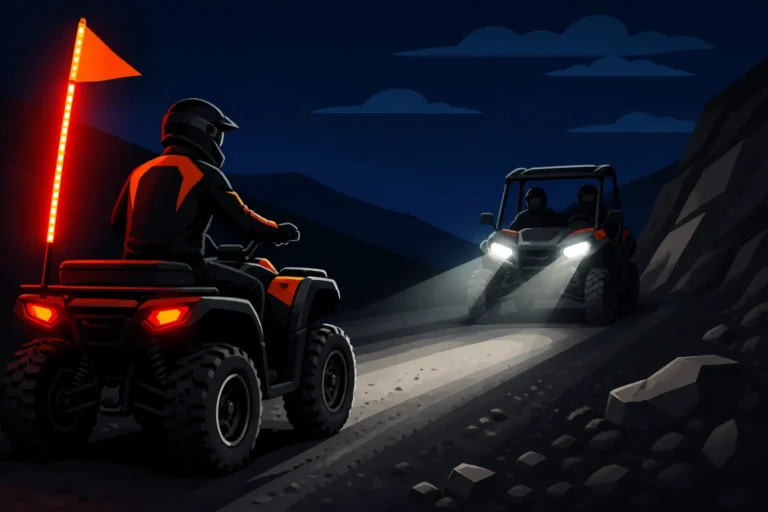
It's paramount to ensure that your ATV or UTV always has fully functional headlights, taillights, and brake lights, regardless of whether you anticipate needing them on a particular stretch of road. Even if you're riding a legally approved connector in the middle of the day, what if you need to perform an emergency crossing of a major highway, which is governed by [Virginia Lighting Rules on a Road Trail] that require full illumination? Or what if you're delayed and find yourself on that connecting road as the sun begins to set? Having your lights in good working order means you're prepared for any eventuality, allowing you to transition safely from the "no lighting required" zone to areas or times where lighting is absolutely essential. Always perform a quick pre-ride check of all your lights and carry any necessary spares or tools for minor repairs, especially when venturing into remote areas.
| Condition | General Virginia ATV Road Rules | Designated Coalfield Road Sections (Buchanan/Tazewell) |
|---|---|---|
| Public Road Access | Generally prohibited on public highways and streets. Limited crossings allowed. | Limited, specific named routes allowed for connecting trail segments. |
| Lighting Requirement | Required for all crossings and any permitted road use, especially in low light. | No, during daylight hours only. Operation outside daylight hours is prohibited on these sections. |
| Speed Limit | Adhere to posted traffic laws when crossing; no specified ATV speed for general road use. | 25 mph maximum speed limit. |
| Time of Day | Any time for brief, direct crossings. | Strictly daylight hours only (sunrise to sunset). |
| Purpose of Road Use | Limited to direct crossings or emergency access. | Solely for connecting approved off-road trail segments. |
| Duration of Road Use | Brief as possible for crossings. | Maximum of one mile per designated road segment. |
| Regulatory Authority | State traffic laws and local ordinances. | Designated by County Board of Supervisors under specific Virginia Code sections. |
| Required Signage | No specific signage for general crossings. | Must be clearly marked with VDOT-approved signs indicating ATV use. |
Disclaimer
This article is for general informational purposes only and does not constitute professional advice. Laws, prices and regulations vary by location and change over time. Consult a qualified professional for guidance on your specific situation.