Virginia Passenger Rules on an ATV
It's a classic situation: you've geared up your all-terrain vehicle for an adventure in Virginia, maybe heading to a scenic trail or just navigating your own private land, and a friend or family member asks, "Can I ride along?" The impulse to share the fun is strong, but when it comes to carrying passengers on an ATV in Virginia, the rules are more nuanced than many riders realize. Ignoring these specific regulations isn't just a matter of risking a civil penalty; it can also put you and your passenger in harm's way. This comprehensive guide will dissect Virginia's ATV passenger laws, offering clarity on what's allowed, what's strictly prohibited, and how to prioritize safety above all else.
Understanding Virginia's General ATV Passenger Laws
Virginia law is pretty clear on the default setting for ATVs: they're generally designed for a single operator. This fundamental principle underpins most of the state's regulations regarding passengers. It's not just a suggestion; it's a legal framework designed to minimize accidents and injuries. For many riders, especially those new to the sport or those who primarily ride on private property, this rule can come as a surprise, leading to misunderstandings and unintentional violations.
The Single Rider Mandate
When you look at most ATVs, particularly the sportier models or even many utility quads, their design screams "one person." The narrow, straddle-style seat, the placement of the handlebars, and the footpegs are all ergonomically configured for a single operator to control the machine effectively and safely. Virginia law, specifically the Code of Virginia, reflects this manufacturer's intent. Unless the ATV is specifically designed by the manufacturer to carry more than one person, it is considered a single-rider vehicle. This means that if you have a traditional four-wheeler that only has one long seat, even if it looks like there's enough room for a second person to squeeze on, legally, it's just for you, the operator. The state's position is rooted in safety; adding an extra person to a machine not designed for it significantly alters its balance, handling, and braking capabilities, increasing the risk of a rollover or loss of control, especially on varied terrain.
The Exception: Manufacturer-Designed Seats
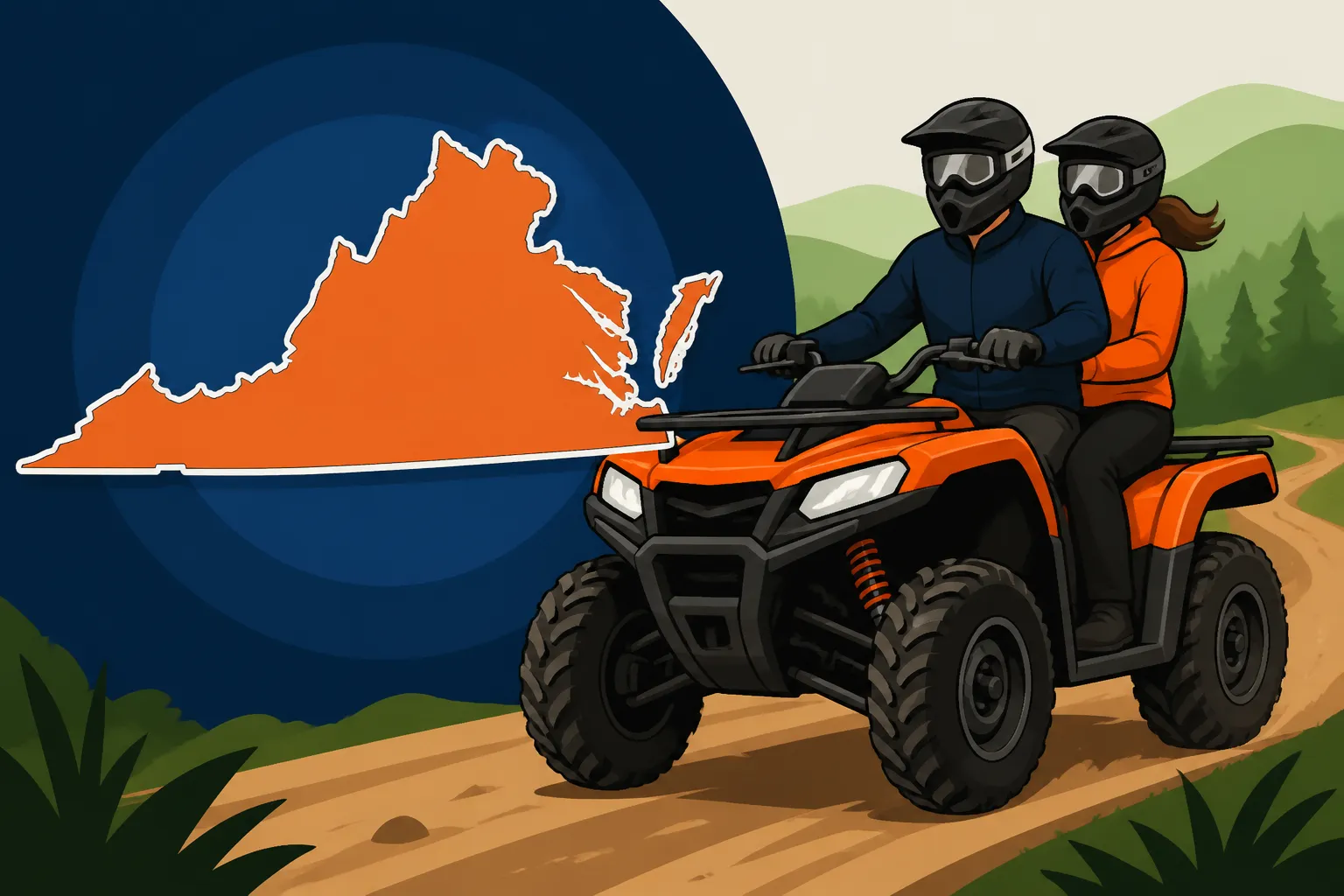
Now, here's where the nuance comes in. While the single-rider rule is the default, Virginia law does acknowledge that some ATVs are indeed built from the factory to accommodate a passenger. This is the crucial exception. For an ATV to legally carry a passenger in Virginia, it must have a seat designed and provided by the manufacturer specifically for a passenger. This isn't about simply having a longer seat; it's about the machine's entire engineering and safety certification for carrying two people. These multi-passenger ATVs are less common than their single-rider counterparts, but they do exist. They typically feature a longer, often stepped seat, dedicated handholds for the passenger, and separate footrests positioned appropriately for a second rider. Without these explicit design features from the factory, your ATV falls under the single-rider mandate, regardless of how much space you think there might be.
Specific Rules for Manufacturer-Designed Passenger Seats
The distinction between a standard ATV seat and one "designed by the manufacturer" for a passenger is critical for Virginia riders. This isn't just legal jargon; it's a safety standard meant to ensure the machine can handle the additional weight and dynamics of two riders. Simply modifying a single-rider ATV won't cut it under Virginia law, and for good reason.
Distinguishing Factory Seats from Aftermarket Add-ons
This is often where riders run into trouble. Many people see a long seat on their ATV and assume it's okay for a passenger, or they might buy an aftermarket "buddy seat" or a storage box with a padded top, thinking it solves the problem. However, Virginia law focuses on the manufacturer's original design. A factory-designed passenger seat is an integral part of the ATV's certified structure. It will have specific mounting points, integrated handholds, and distinct, separate footrests for the passenger. These are not general purpose accessories; they are part of the vehicle's original engineering specification.
Consider a popular utility ATV. Most models come with a single, long seat. While it might look like you could squeeze another person on behind you, if the manufacturer didn't build it with dedicated passenger handholds, separate footpegs, and certify it for two riders, it's still a single-operator machine in Virginia's eyes. Aftermarket accessories, even those sold by reputable companies, do not change the legal classification of the ATV's passenger capacity if the original machine was designed for a single rider. While aftermarket accessories from companies like SuperATV can enhance your machine's utility or performance with winches, lift kits, or protective gear, they generally do not transform a single-rider ATV into a legal multi-passenger vehicle under state law concerning the original design intent.
Why Design Matters for Safety and Legality
The manufacturer's design isn't just about aesthetics; it's about engineering for safety. An ATV designed for two riders will have a different center of gravity, a more robust suspension system, and often a longer wheelbase to accommodate the extra weight and maintain stability. When you add a passenger to a single-rider ATV, you drastically alter its dynamics. The machine becomes top-heavy, making it harder to steer, especially on uneven terrain or during sharp turns. Braking distances increase, and the risk of the ATV flipping over (front, back, or sideways) skyrockets.
From a legal standpoint, if you're involved in an accident while carrying an unauthorized passenger, you could face significant liability. Your insurance might deny coverage, and you could be held responsible for any injuries sustained by your passenger. The law isn't just being difficult; it's trying to prevent serious accidents that often result in devastating injuries. So, before you offer a ride, take a critical look at your machine: does it really have a manufacturer-designed passenger seat with all the associated safety features? Or are you just hoping for the best? The difference could be life-changing.
The "Single Rider" Design and Why It Matters
The vast majority of ATVs sold are designed for a single rider, and this fact has profound implications for how they can be legally and safely operated in Virginia. It's not merely a guideline; it's a foundational element of ATV safety and regulation in the state. Ignoring this core design principle can lead to legal penalties, increased insurance woes, and, most importantly, a heightened risk of injury.
Consequences of Carrying an Illegal Passenger
Let's not sugarcoat it: carrying a passenger on an ATV not designed for it is a violation of Virginia law, and it carries a real penalty. Virginia's Code states that any person who operates an all-terrain vehicle in violation of certain provisions, including those related to passengers, is subject to a civil penalty of not more than $500. [Virginia's Civil Penalty for Illegal Riding] Imagine you're out enjoying a ride on a picturesque trail, perhaps on Spearhead Trails, and an officer stops you. That friendly ride you offered could quickly turn into a costly citation.
Beyond the immediate financial hit, the consequences can extend much further. If an accident occurs while you're carrying an illegal passenger, you could face significant legal and financial liability. Your insurance company might deny your claim, leaving you personally responsible for medical bills, property damage, and potential lawsuits. This is especially true if the passenger sustains serious injuries. The legal system views these situations very seriously because the operator knowingly put another person at risk on a machine not built for that purpose. It's a risk that most riders would certainly want to avoid, emphasizing the importance of understanding and adhering to Virginia Passenger Rules on an ATV.
When an ATV is Truly a "One-Person" Machine
How do you know if your ATV is truly a one-person machine? The clearest indicator is the manufacturer's intent as reflected in its design and owner's manual. A one-person ATV will typically have a single, elongated seat designed for the operator to shift their weight for control. There are no separate handholds for a passenger, and any footpegs present are solely for the operator. The vehicle's Gross Vehicle Weight Rating (GVWR) is calculated for a single rider and their gear, not an additional person.
Think about a typical sport quad or even many utility models like a Honda Foreman or a Kawasaki Brute Force. While the seat might be long, it’s designed to allow the operator to slide forward and backward, lean into turns, and use body English to maneuver the machine. A passenger sitting behind them restricts this crucial operator movement, compromising control. This is the core reason why the law exists. It's not about being restrictive for the sake of it; it's about recognizing the inherent limitations and design purpose of these vehicles. If you're ever in doubt, consult your ATV's owner's manual or look for official badging on the machine itself that indicates multi-passenger capability. When in Virginia, err on the side of caution and assume your ATV is a one-person machine unless proven otherwise by specific manufacturer design.
Virginia's Age Restrictions and Passenger Safety
Virginia's ATV laws weave together various factors, and age is a significant one that indirectly impacts passenger rules. While the state doesn't have a specific minimum age for passengers on an ATV, the age and experience of the operator are crucial, especially when considering the added responsibility of carrying another person. It's not just about what the machine is designed for, but who is operating it and whether they possess the maturity and skill to handle the complexities of a two-person ride.
Minimum Age for Operators and Its Indirect Impact on Passengers
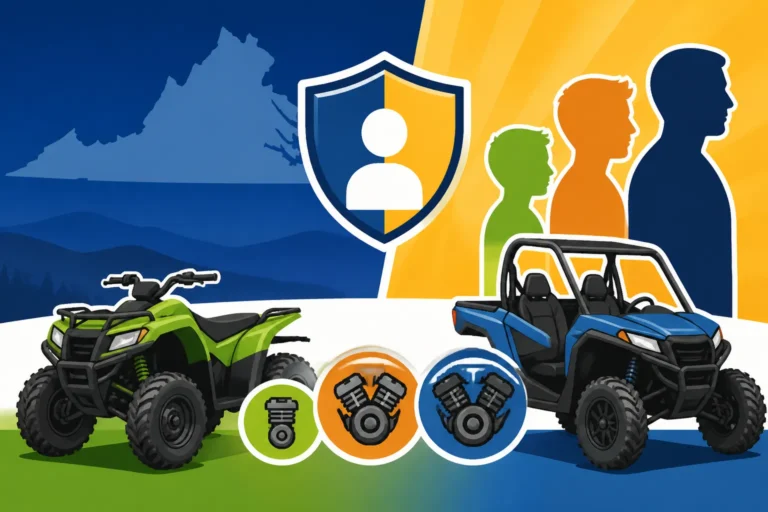
Virginia has specific age limits for ATV operators based on engine size. For instance, riders under 12 years old can only operate ATVs with an engine size of 70cc or less. Those between 12 and 16 years old are limited to machines 90cc or less. It's only once a rider turns 16 that they can operate an ATV of any engine size. [Virginia Age Limits by Engine Size] How does this affect passengers? Well, if an operator is restricted to a smaller machine due to their age, it's highly unlikely that machine would ever be a manufacturer-designed multi-passenger ATV. Smaller youth quads are almost universally single-rider vehicles.
Therefore, for all practical purposes, if a rider is under 16, they are almost certainly operating a single-rider ATV and legally cannot carry a passenger in Virginia. Even for operators 16 and older, the primary rule about manufacturer-designed passenger seats still applies. An adult operator, no matter how experienced, cannot legally carry a passenger on an ATV that wasn't designed for it. The indirect impact is clear: the younger the operator, the less likely they are to be on a machine legally capable of carrying a passenger, even if the machine itself could physically accommodate another person. The law prioritizes the safe operation of the ATV by a single, appropriately aged and skilled rider.
Youth Quads and the Passenger Dilemma
Youth ATVs, by their very nature, are designed for young, developing riders and are almost exclusively single-rider machines. These smaller vehicles are built to be lightweight and responsive to the movements of a child or teenager. Adding a passenger, even another child, would be incredibly dangerous and illegal. The machine's stability, braking, and suspension are simply not engineered for the additional weight and shifting dynamics of two people.
Imagine a situation where a parent allows a younger child to ride as a passenger on a youth quad operated by an older sibling. Not only is this illegal if the youth quad is not designed for a passenger, but it exponentially increases the risk of an accident. The sibling operator, still developing their own riding skills, would be severely hampered by the extra weight, making it incredibly difficult to navigate obstacles, corners, or sudden changes in terrain. This could lead to a loss of control, a rollover, or a collision, with potentially severe consequences for both children. The rule about manufacturer-designed passenger seats is particularly pertinent to youth quads, as it reinforces the critical need for one-child-one-machine for safety on these smaller models. For specific advice regarding children on ATVs, it's always good to refer to [Virginia Rules for a Child Passenger].
Practical Considerations for Riding with Passengers
Even when you're on a multi-passenger ATV that's legally designed to carry two people in Virginia, safety doesn't stop at merely following the law. There are crucial practical considerations that every operator must address to ensure a safe and enjoyable ride for both themselves and their passenger. Carrying a second person profoundly changes the way an ATV handles, and understanding these changes is paramount.
Equipment and Gear for Two Riders
Just as the operator needs appropriate safety gear, so too does the passenger. In Virginia, the helmet law for ATVs is unequivocal: every person riding an ATV, regardless of age or where they are riding (even on private land), must wear an approved helmet. [Virginia Helmet Law Applies to Every Rider] This isn't just a suggestion; it's a mandatory requirement. Beyond the helmet, eye protection (goggles or a face shield), long-sleeved shirts, long pants, gloves, and sturdy over-the-ankle boots are essential for both riders to protect against abrasions, debris, and impacts.
It's common to see riders neglect these basics, especially passengers who might be joining for a spontaneous ride. However, a passenger is just as exposed to the elements and potential hazards as the operator. Imagine hitting a low-hanging branch without eye protection, or tumbling off the machine without proper boots and pants. The potential for serious injury increases dramatically. Therefore, before embarking on any ride with a passenger, ensure both individuals are fully equipped with all necessary safety gear, and that all gear fits properly. Don't compromise on protection for yourself or your guest.
Riding Techniques with an Extra Load
Operating an ATV with a passenger requires a complete recalibration of your riding technique. The machine's weight distribution shifts significantly, especially during acceleration, braking, and turning. What was once intuitive for a single rider becomes a much more deliberate and cautious process with two. The added weight means the ATV will accelerate more slowly, and, more critically, it will take longer to stop. Your braking distances will be extended, and you'll need to start braking earlier than you would alone.
Turning also demands a different approach. The passenger's weight, especially if they are not actively leaning with the operator, can make the ATV feel top-heavy and more prone to rolling over. It's crucial for the operator to communicate with the passenger, instructing them to lean with the machine and keep their feet firmly on the designated passenger footrests. Avoid sharp, aggressive turns and sudden changes in direction. Go slower than you normally would. Consider practicing in a safe, open area before tackling challenging trails. If your passenger is inexperienced, take extra time to explain how they should move with the machine. Remember, the goal is not just to get from point A to point B, but to do so safely and without incident. Even machines built for two, like certain utility vehicles that might incorporate accessories from SuperATV for cargo, still require careful consideration of their dynamics with human weight.
Distinguishing ATVs from UTVs for Passenger Rules
One of the biggest areas of confusion for off-road enthusiasts in Virginia revolves around the difference between ATVs (All-Terrain Vehicles) and UTVs (Utility Terrain Vehicles, often called side-by-sides) when it comes to carrying passengers. While both are off-road machines, their fundamental design philosophies regarding passengers are vastly different, and Virginia law recognizes these distinctions.
Side-by-Sides and Their Multi-Passenger Design
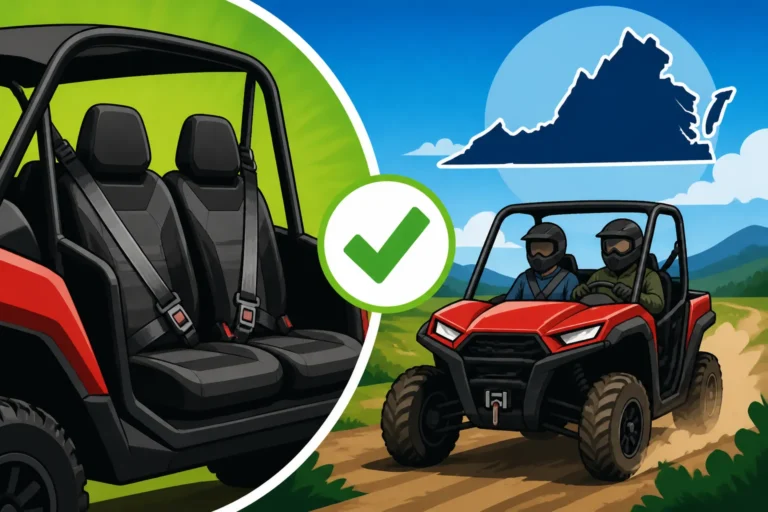
UTVs, or side-by-sides, are inherently designed with multiple occupants in mind. Unlike ATVs where the rider straddles a seat, UTVs feature bucket seats or bench seating, often with a steering wheel instead of handlebars, and automotive-style controls. Crucially, they come equipped from the factory with roll-over protection structures (ROPS) and seatbelts for all designated seating positions. These design elements make UTVs fundamentally different from ATVs when it comes to passenger capacity.
A two-seat side-by-side, for example, is clearly designed to carry two people seated side-by-side. Larger UTVs might accommodate four, five, or even six passengers, each with their own seatbelt and a secure position within the ROPS. This is why you can legally carry multiple passengers in a UTV in Virginia, provided they occupy a manufacturer-designed and equipped seating position, are wearing their seatbelt, and the total weight does not exceed the vehicle's capacity. The critical difference is the built-in safety features and the manufacturer's explicit intent for multiple riders. Companies like SuperATV also provide extensive aftermarket parts specifically for UTVs, including upgraded roll cages and safety enhancements, which reflects the multi-passenger nature of these vehicles.
The "Utility Vehicle" Definition in Virginia Law
Virginia law often groups ATVs and UTVs under broader definitions for off-road vehicles, but it also makes crucial distinctions that impact passenger rules. The Code of Virginia defines an "all-terrain vehicle" as a three-wheeled or four-wheeled vehicle powered by a gasoline or diesel engine and designed for off-road use, not for use on highways. Critically, these definitions do not explicitly preclude multi-passenger ATVs if they meet the design criteria. However, UTVs are often separately referenced or, by their very nature, meet the criteria for carrying multiple occupants due to their design.
The important takeaway here is that while a traditional, straddle-seat ATV is largely restricted to a single rider unless it has a specific manufacturer-designed passenger seat, a UTV's design inherently allows for multiple passengers. So, if you're planning a group ride, a side-by-side is generally the more appropriate and legally compliant choice for carrying friends and family. Understanding these definitions is key to navigating Virginia's off-road landscape legally and safely. For a deeper dive into the legal definitions, check out [Virginia ATV and Utility Vehicle Definitions].
| Feature | All-Terrain Vehicle (ATV) | Utility Terrain Vehicle (UTV) / Side-by-Side |
|---|---|---|
| Seating Arrangement | Straddle seat (like a motorcycle) | Bucket seats or bench seating (side-by-side) |
| Steering Control | Handlebars | Steering wheel (like a car) |
| Passenger Capacity | Single rider (unless factory-designed passenger seat) | Multiple passengers (2-6, depending on model), each with a seat |
| Safety Structure | Generally open, no integrated roll cage | Roll-Over Protection Structure (ROPS) and seatbelts standard |
| Foot Rests | Footpegs for operator (and passenger if designed) | Floorboards for all occupants |
| Primary Design Intent | Sport, recreation, light utility (single rider) | Utility, recreation, work (multi-passenger capable) |
| Virginia Law Focus | Strict "manufacturer-designed seat" rule for passengers | Design inherently allows multiple passengers with safety features |
Common Misconceptions About ATV Passengers in Virginia
Despite the relatively clear language in Virginia's laws, many riders still hold onto common misconceptions about carrying passengers on ATVs. These misunderstandings can lead to unexpected penalties, jeopardized safety, and a lot of frustration. It's crucial to address these myths directly to ensure everyone is operating within the bounds of the law and, more importantly, common sense safety.
Misunderstanding the 'Private Land' Loophole
One of the most persistent myths is that Virginia's ATV laws, particularly those concerning passengers, don't apply when you're riding on private property. This is a dangerous misconception. While some states might have specific carve-outs for private land, Virginia's ATV statutes, including those dictating passenger capacity, generally apply regardless of where you're riding. The law is focused on the safe operation of the vehicle itself. [Virginia Written Consent on Private Land] outlines rules for access, but it doesn't waive safety regulations.
Think about it this way: if an ATV is inherently unsafe to operate with two people on public trails because of its design, it doesn't suddenly become safe on private land. The physics of the machine don't change just because you're behind a gate. If an accident occurs on your private property while you're carrying an illegal passenger, you could still face legal repercussions and significant liability, especially if the injured party isn't a family member or if negligence is proven. Law enforcement might not be patrolling your back forty, but if there's an incident requiring emergency services, the circumstances surrounding the accident, including illegal passenger carriage, will certainly come under scrutiny.
The 'Farm Use' Exception and Its Limits for Passengers
Another area of confusion revolves around the "farm use" exception. Virginia law does offer certain exemptions for ATVs and UTVs used exclusively for agricultural or horticultural purposes, allowing them to cross highways or operate on private roads when moving between fields. [Virginia Farming and Household Exceptions] However, this exception is very specific to operational purposes and does not generally override fundamental safety regulations, such as those pertaining to passenger capacity.
While a utility ATV or UTV might be vital for farm tasks, the "farm use" exception typically doesn't grant you a free pass to carry extra, unauthorized passengers. If your utility ATV is designed for one person, it remains a one-person machine, even when hauling feed or checking fences. The intent of the farm-use exception is to facilitate agricultural operations, not to relax universal safety standards that prevent injuries. If you're using a side-by-side for farm work and it's designed for multiple passengers with seatbelts and ROPS, then carrying passengers for work-related tasks within the vehicle's design limits is generally permissible. But don't conflate the operational flexibility of farm use with a waiver of passenger safety rules for single-rider ATVs. Always prioritize the manufacturer's design and the safety of all occupants, regardless of the land use.
Ensuring Safety Beyond the Law
While Virginia's laws provide a legal framework for ATV passenger rules, true safety extends far beyond simply adhering to the letter of the law. It's about cultivating a mindset of responsibility, taking proactive steps, and constantly evaluating risks. Even on a machine legally designed for two riders, the dynamic between operator and passenger adds layers of complexity that demand careful attention.
Pre-Ride Checks and Passenger Briefings
Before every ride with a passenger, a thorough pre-ride check of your ATV or UTV is absolutely essential. This isn't just a quick glance; it's a systematic inspection to ensure the machine is in top operating condition. Check tire pressure, fluid levels (oil, coolant, brake fluid), brake function, headlight and taillight operation, and the security of all fasteners. Pay particular attention to suspension components, as they'll be carrying extra weight. If you've got a UTV, inspect seatbelts for fraying or damage and ensure the ROPS is intact.
Equally important is a comprehensive passenger briefing. Many passengers, especially those new to off-road riding, have no idea what to expect. Explain how to properly sit on the machine, where to place their feet (on dedicated footrests), and how to hold on (to designated handholds). Emphasize the importance of leaning with the operator during turns and over bumps, rather than resisting the movement. Instruct them to keep their arms and legs inside the vehicle at all times and to never interfere with the operator's controls. Discuss hand signals if you'll be riding in a group or where communication might be difficult. A well-briefed passenger is a safer passenger, as they can anticipate movements and react appropriately, becoming an active participant in their own safety.
Understanding the Risks and Mitigating Them
Every time you take an ATV or UTV off-road, you're accepting a certain level of risk. When you add a passenger, those risks multiply. Understanding these increased risks is the first step in mitigating them. The machine's handling changes, visibility might be slightly altered, and the potential for a minor incident to become more severe increases. For example, a sharp turn that you might easily navigate alone could lead to an upset with an unexpecting passenger.
To mitigate these risks, always err on the side of caution. Ride at a slower speed than you would alone, especially on unfamiliar or challenging terrain. Avoid steep hills, deep mud, or aggressive maneuvers that could destabilize the machine. Maintain extra space between your vehicle and others if you're riding in a group. If you're riding with children, ensure they are appropriately supervised and understand all safety instructions, even if they are just passengers on a UTV. Consider taking an ATV safety course, even if Virginia doesn't require one, as these courses often cover scenarios involving passengers and provide valuable insights into safe riding practices. The goal is to make informed decisions that minimize hazards, ensuring that your off-road adventures with passengers are filled with fun memories, not regrets. Even for machines equipped with substantial aftermarket parts from companies like SuperATV that increase capability, the fundamental laws of physics and safety apply even more strictly with an extra person on board.
Disclaimer
This article is for general informational purposes only and does not constitute professional advice. Laws, prices and regulations vary by location and change over time. Consult a qualified professional for guidance on your specific situation.