Virginia Ticket Costs for Riders
Many Virginia ATV and UTV riders feel a thrill out on the trails or even just crossing a country road, but that excitement can quickly turn to dread when you see blue lights in your rearview mirror. The frustration of not fully understanding the rules, or just making an honest mistake, can lead to unexpected and costly tickets. This guide is here to break down exactly what those Virginia ticket costs for riders look like and what other consequences you might face, so you can ride smart and avoid those unwelcome surprises that can put a serious dent in your wallet and your riding enjoyment.
The Harsh Reality of Riding Illegally in Virginia: What You Risk
It's a common scenario: you're out enjoying a beautiful Virginia day on your ATV or UTV, maybe on private land, maybe trying to get from one section of trail to another, and suddenly, you encounter law enforcement. For many riders, there's a real misunderstanding about where they can and cannot legally operate these machines, especially when it comes to public roads or property. This confusion often leads directly to citations and significant financial penalties. It's not just about getting caught; it's about the very real risk of turning a fun outing into a stressful, expensive ordeal. The laws are designed to keep everyone safe, but they can feel incredibly restrictive for those who just want to enjoy their machines.
The Core Offense: Riding Where You Shouldn't Be
The most frequent reason riders receive a ticket in Virginia isn't for speeding or reckless operation, though those can certainly happen. More often, it's simply for operating an ATV or UTV in an unauthorized area. Think about it: you might see a short stretch of gravel road connecting two trails, or a paved county road that seems deserted, and figure it's harmless to quickly cross or ride a short distance. Unfortunately, Virginia law sees things very differently. Generally, ATVs and UTVs are banned from public highways, streets, and even many public properties unless specifically designated for off-road use. This includes shoulders, ditches, and even sidewalks.
Many riders feel this is an unfair restriction, especially in rural areas where such machines are a part of daily life for work or recreation. You might assume that if a road isn't busy, or if you're just going a hundred yards, it's not a big deal. However, an officer doesn't make that distinction. They enforce the letter of the law, which is quite clear on where these machines are prohibited. This is why it's so critical to understand [The Five ATV Bans Written Into Virginia Law] before you ever put a wheel on unfamiliar territory. A quick shortcut might save you a minute, but it could cost you hundreds of dollars and a whole lot of headache.
Why Virginia's Laws Are So Strict for ATVs on Roads
Virginia's approach to ATVs and UTVs on public roads is rooted in safety and the fundamental design of these vehicles. Unlike cars or motorcycles, ATVs are not designed for road use. They lack many safety features required for highway travel, like turn signals, rearview mirrors, and often have higher centers of gravity, making them prone to rollovers on paved surfaces. Their tires are also designed for off-road traction, not for smooth pavement, which can compromise handling and braking. This is why the state draws such a hard line.
It's a common point of frustration for riders who feel capable of handling their machines safely on any surface. "I've been riding for years!" or "I'm only going five miles an hour!" are sentiments often echoed, but the law doesn't make exceptions for perceived skill or low speeds. The intent behind the strict rules is to prevent accidents involving vehicles that aren't equipped for road conditions and to ensure public safety on shared roadways. You might recall stories of bad accidents involving ATVs on roads, and it’s these incidents that often shape the legislative landscape. Understanding [Can You Ride an ATV on the Road in Virginia?] is paramount to avoiding these strict penalties.
Breaking Down the Civil Penalties: What That $500 Fine Really Means
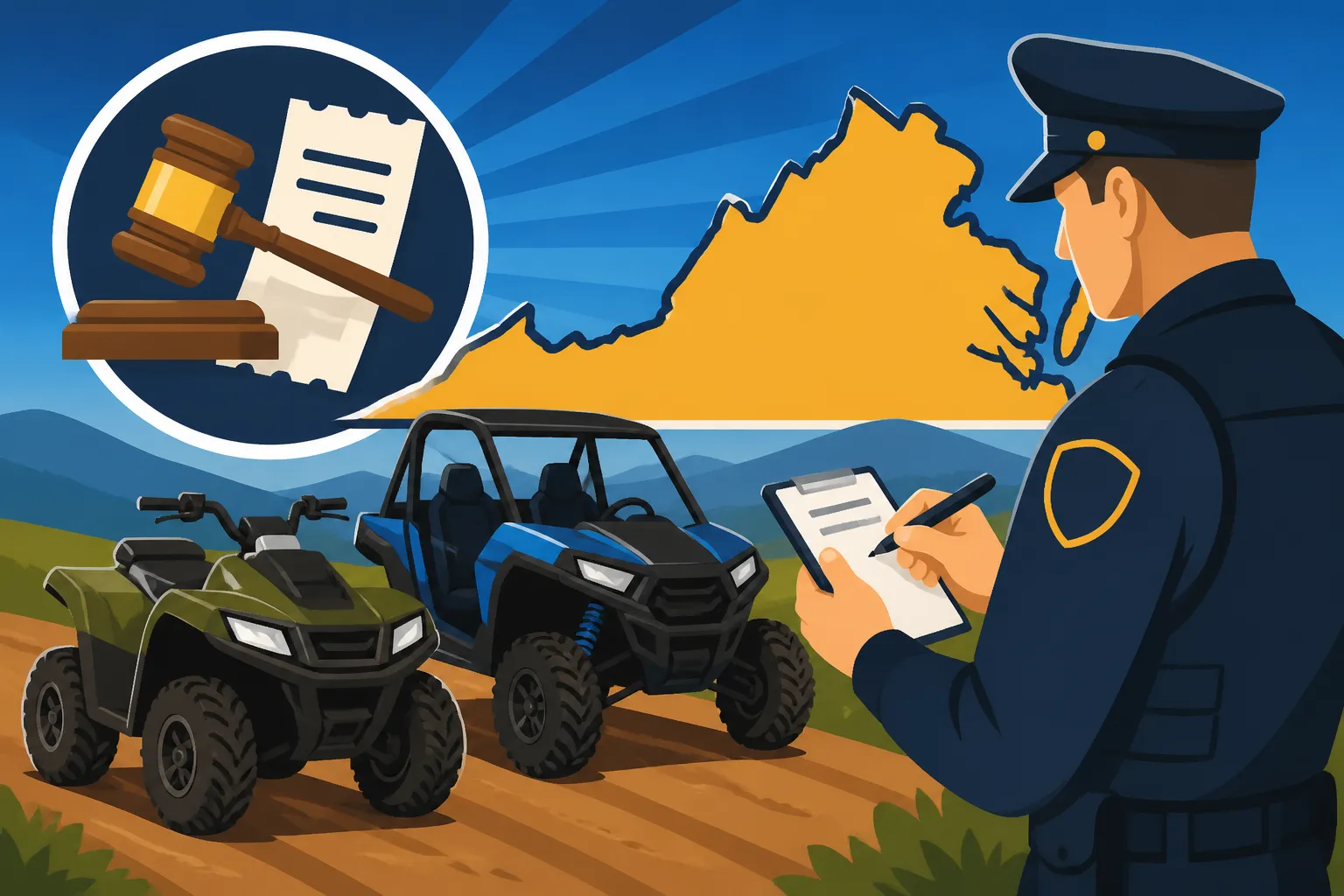
When you get pulled over for an ATV or UTV violation in Virginia, the most common monetary penalty you'll face is a civil fine. This isn't a criminal charge, but don't let the "civil" part fool you into thinking it's minor. These penalties can still be quite substantial and have immediate financial implications. It's a system designed to deter illegal riding by making the consequences financially painful, which for many, they certainly are.
Understanding the "Civil Penalty" Distinction
In Virginia, most ATV and UTV violations fall under a civil penalty, rather than a criminal one. This distinction is important because it means you won't typically face jail time or a criminal record for simply riding where you shouldn't be. However, "civil" does not mean "free pass." The code explicitly states that riding illegally [Riding Illegally Costs Up to $500 in Virginia]. This can feel like a punch to the gut for many riders, especially if they weren't aware they were breaking the law.
A civil penalty is essentially a monetary fine imposed by the state or locality for violating a regulation. It's similar to a parking ticket in that it's a financial obligation, but the amount can be significantly higher. While it doesn't carry the weight of a criminal conviction, it still requires payment and, if unpaid, can lead to further legal action. It's designed to be a strong deterrent, aiming to make the cost of breaking the rule outweigh any perceived convenience or thrill. For a comparison, consider [Virginia Moped Fines Stop at $50 While ATV Penalties Reach $500], which really puts into perspective the state's view on ATV violations.
How the $500 Penalty Compares to Other Traffic Fines
The maximum $500 civil penalty for ATV violations is notably steep when compared to many common traffic infractions. For instance, a typical speeding ticket might start much lower, escalating with speed. A $500 fine for simply being in the wrong place at the wrong time with your ATV can feel disproportionate to riders who are otherwise law-abiding citizens. This isn't a parking ticket that you can easily shrug off; it's a significant sum that can strain a household budget.
Imagine you're stopped for crossing a short stretch of road in an unauthorized area. That quick moment of convenience, perhaps to get to [Virginia Rules for Riding Private Land] you have permission for, could now cost you a full $500 before any court costs are even factored in. This is a stark reminder that Virginia takes its off-road vehicle laws very seriously, intending for these penalties to be a genuine disincentive. It’s a cost that could easily buy you a new set of tires or even put a big dent in the cost of a high-quality aftermarket accessory from a brand like SuperATV, emphasizing how much you stand to lose.
Beyond the Fine: Other Costs and Consequences You Might Face
While the initial civil penalty is a major hit, the financial pain doesn't always stop there. Getting a ticket for an ATV or UTV violation can cascade into a series of additional expenses and complications that many riders simply don't anticipate. It's like a domino effect where one bad decision leads to several unwelcome outcomes, making the experience far more costly than just the fine itself.
The Headache and Expense of Impoundment
One of the most immediate and distressing consequences beyond the fine is the potential impoundment of your ATV or UTV. If law enforcement deems the operation illegal, they have the authority to seize your machine. This isn't just an inconvenience; it's a significant financial burden. First, there's the towing fee, which can be substantial depending on the distance and the towing company. Then, your machine will be stored at an impound lot, incurring daily storage fees that quickly add up.
For example, if you're riding your ATV on a city sidewalk – a clear violation – law enforcement has the power to impound it. [Cities Can Impound an ATV Ridden on a Sidewalk] highlights this exact scenario. Imagine getting a $500 civil penalty, then having to pay $150 for the tow and another $50 per day for storage while you sort things out. If it takes you a week to retrieve your machine, you're suddenly looking at an additional $500 in impoundment fees on top of your civil penalty. This can quickly turn an already expensive ticket into a financial nightmare, all while you're without your machine.
Court Costs and Administrative Fees
Even if you decide to pay the fine without contesting it, you might still be responsible for court costs and administrative fees. These are additional charges tacked onto the fine itself, designed to cover the expenses of processing your case through the legal system. If you choose to contest the ticket in court, these fees can potentially increase, especially if you lose your case.
When you receive a citation, it often comes with a specific amount listed for the fine, but it might not always clearly delineate the court costs. These can vary significantly by jurisdiction within Virginia, but it's not uncommon for them to add another $50 to $100 or even more to your total bill. It's a hidden cost that many riders overlook until they go to pay, adding another layer of frustration. These are just the basic fees; if you choose to hire an attorney to represent you, that's an entirely separate and much larger expense.
Potential Impact on Insurance and Future Riding Opportunities
While Virginia does not mandate insurance for ATVs or UTVs, getting a ticket can still impact any voluntary insurance policy you might have. Although these are civil penalties and not typically tied to your driving record, some insurance providers might view repeated violations as an increased risk, potentially leading to higher premiums or even non-renewal of your policy. It's always best to check with your specific insurer about their policies regarding off-road vehicle citations.
Beyond insurance, a history of violations could affect your ability to ride at certain private parks or organized events. Many trail systems and riding clubs require members to adhere to all state and local laws. While one minor infraction might not disqualify you, a pattern of illegal riding could lead to being banned from specific areas or groups. This effectively limits your legitimate riding opportunities, leaving you with fewer places to enjoy your machine legally. It’s a good reminder that safe and legal riding isn't just about avoiding a single ticket; it's about preserving your access to the broader riding community and its resources.
Avoiding the Ticket: Understanding and Following Virginia's ATV Laws
The best way to avoid all these headaches, fines, and impoundment costs is simple: know the rules and follow them. It sounds straightforward, but with the complexities of Virginia's off-road vehicle laws, it requires diligence and a proactive approach. Being informed is your first line of defense against costly mistakes and unwanted encounters with law enforcement. Many common violations stem from a lack of awareness, which is why taking the time to educate yourself is invaluable.
Knowing Where You Can Legally Ride
The cornerstone of avoiding an ATV ticket in Virginia is understanding precisely where you are permitted to operate your machine. Generally, public roads and highways are off-limits, with very few, highly specific exceptions. These exceptions are typically limited to certain designated coalfield routes in counties like Buchanan and Tazewell, or specific circumstances like [Virginia Emergency Responder Exceptions]. It's crucial not to assume that just because a road is gravel or lightly traveled, it's open to ATVs. Always verify.
Instead of public roads, focus your riding on designated trail systems. Virginia boasts fantastic options like the Spearhead Trails, which offer hundreds of miles of legal riding. Getting a [Virginia Spearhead Trail Permits] is your golden ticket to legal, sanctioned fun. Similarly, you can find opportunities on private land with the landowner's express [Virginia Written Consent on Private Land], or within certain National Forest OHV trails. These are the places where you can ride freely, knowing you're on the right side of the law. Planning your routes in advance and sticking to approved areas will save you a world of trouble.
Essential Equipment and Rider Requirements
Beyond just where you ride, how you ride and what equipment your machine has are also critical to staying legal and safe. Virginia has clear requirements for riders, regardless of where they are operating their ATV or UTV. For instance, the [Virginia ATV Helmet Law Explained] requires all riders, of any age, to wear an approved helmet. This isn't just a suggestion; it's a mandatory safety requirement that can result in a citation if ignored. Eye protection is also highly recommended, even if not explicitly mandated in every scenario, to prevent debris injuries.
Furthermore, there are age restrictions tied to engine size. Understanding [Virginia Age Limits by Engine Size] is crucial, especially for parents riding with children. A child under 12, for example, is restricted to machines 70cc or less. Beyond rider requirements, officers performing [Virginia Equipment Checks by Officers] might also look for essential machine features like working brakes, a muffler, and a spark arrester, especially on federally managed trails like those in the George Washington National Forest. Ensuring your ATV or UTV has proper lighting, especially if you plan to utilize designated road crossings or permitted road sections, is crucial. High-quality lighting, perhaps from a brand like SuperATV, can make you more visible and reduce the risk of an infraction.
Smart Riding Practices to Stay Out of Trouble
Beyond the letter of the law, adopting smart riding practices can significantly reduce your chances of encountering law enforcement or facing a citation. This means riding defensively, being aware of your surroundings, and showing respect for both private property and other trail users. Always assume that if you're unsure about the legality of a route, it's probably best to avoid it until you can confirm.
Carrying relevant documentation, such as proof of ownership or your trail permit, can also expedite any interaction with authorities. If you're riding on private land, having a copy of the [What a Landowner's Written Permission Note Should Say] with you is a smart move. Being polite and cooperative if you are stopped by an officer can also make a difference. Ultimately, a responsible rider is an informed rider. Research your routes, invest in necessary safety gear—and perhaps some robust protective accessories from SuperATV to keep your machine in top shape—and prioritize legal and ethical riding. This approach not only keeps you safe but also helps preserve access for all riders.
| Item | Description | Potential Cost/Consequence |
|---|---|---|
| Civil Penalty | Base fine for most ATV violations (e.g., riding on public roads) | Up to $500 |
| Court Costs | Administrative fees if your case goes to court, even if you just pay the fine | Varies by jurisdiction (e.g., $50-$100+) |
| Impoundment Fee | Initial charge for towing your ATV/UTV from the scene of the violation | Varies (e.g., $100-$250+) |
| Daily Storage Fees | Cost for each day your machine is held at an impound lot | Varies (e.g., $25-$75 per day), adds up quickly |
| Insurance Impact | Potential for higher premiums or non-renewal if you have voluntary coverage | Varies by provider and policy terms |
| Legal Fees | Cost if you hire an attorney to contest the ticket | Can be significant (hundreds to thousands) |
| Lost Time | Time spent dealing with legal proceedings, retrieving impounded machine | Valuable personal time and effort |
| Equipment Confiscation | In some extreme cases of repeat or severe violations, equipment might be seized | Loss of your machine |
Disclaimer
This article is for general informational purposes only and does not constitute professional advice. Laws, prices and regulations vary by location and change over time. Consult a qualified professional for guidance on your specific situation.