Virginia Rules for Riding in Richmond
It's an all too common scenario: you've got your ATV or side-by-side, maybe it's your workhorse on the farm or your weekend escape machine, and you find yourself wondering, "Can I just hop on this to run a quick errand in Richmond?" Or perhaps you're visiting the city and figure a ride down a quiet street won't hurt. The truth is, the rules for riding ATVs and UTVs in a city like Richmond are often misunderstood, leading to hefty fines and even impoundment. This guide will clarify exactly what Virginia law says about off-road vehicles on urban streets and public property, helping you avoid costly mistakes and understand where you can legally enjoy your machine.
The Harsh Reality: Why City Riding is Generally Banned
Let's cut right to the chase: if you're thinking about riding your ATV or UTV on the public streets or sidewalks of Richmond, or really any city in Virginia, you're going to hit a brick wall of legal restrictions. The Old Dominion has made it abundantly clear that these machines are intended for off-road use, and that doesn't include urban environments. This isn't just about local ordinances; it's rooted in state law, which most cities like Richmond then reinforce with their own specific rules.
Virginia's Broad Prohibition on Public Highways
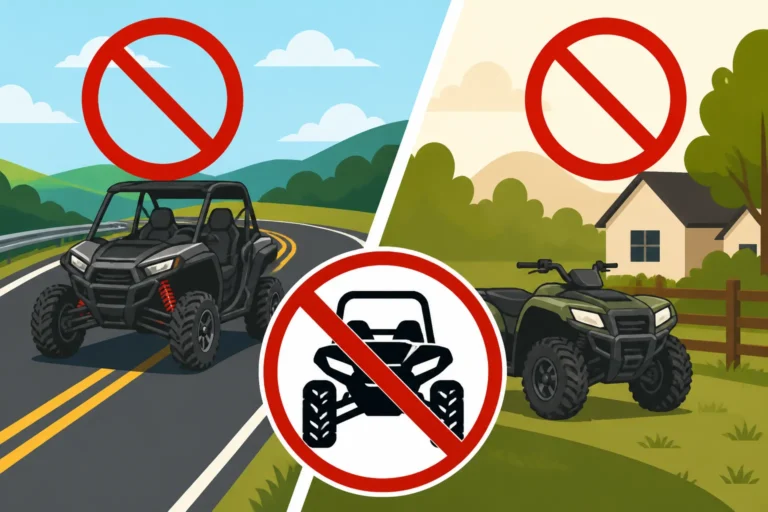
The core of the issue lies in Virginia Code § 46.2-915.1, which unequivocally states that ATVs and UTVs are generally prohibited from operation on public highways. Now, when we talk about "public highways" in a city context, we're not just talking about interstates and major thoroughfares. This definition broadly includes nearly all public roads, streets, alleys, and even shoulders that are maintained by the state or city for public travel. So, that quiet residential street, the bustling downtown avenue, even the paved path you think might be a shortcut—all fall under this prohibition. It's a blanket ban designed to keep off-road vehicles off public thoroughfares, period. The state views these machines as inherently unsuitable for the shared environment of cars, pedestrians, and cyclists. For a deeper dive, check out [Virginia ATV Road Rules Under 46.2-915.1].
Richmond's Specific Ordinances and Enforcement
While state law sets the baseline, individual cities and counties in Virginia have the power to enact their own ordinances, often making the rules even stricter or detailing specific penalties. Richmond, being a major urban center, has a vested interest in maintaining public safety and order, which includes regulating vehicle traffic. Operating an ATV or UTV on a public street, sidewalk, or park in Richmond is not only against state law but also likely a violation of specific city ordinances. Enforcement in urban areas tends to be much more vigilant than in rural settings, simply due to population density and the increased risk of accidents involving other vehicles or pedestrians. Police officers in Richmond are generally well-aware of these prohibitions and are equipped to issue citations and even impound machines. The consequences can be swift and severe, often involving fines, court costs, and the hassle and expense of retrieving an impounded vehicle. Understanding [Virginia City Impoundment Powers] can give you an idea of what can happen if your machine is seized.
What "Street Legal" Means for ATVs in Virginia
A common misconception among ATV and UTV owners is that they can make their machine "street legal" by adding certain accessories like turn signals, mirrors, or even a horn. While these modifications might be required in other states or for other types of vehicles, they simply do not grant street-legal status to an ATV or UTV in Virginia. The state's legal framework for what constitutes a "motor vehicle" eligible for road registration and use is very specific, and ATVs and UTVs do not fit that definition. Unlike dirt bikes, which can sometimes be converted and titled for street use under very specific conditions (often requiring a rigorous inspection and an MCO conversion process), there is no such pathway for ATVs or UTVs in Virginia. Adding a light bar from a company like SuperATV or other accessories might make your machine more capable off-road, but it won't make it legal for the streets of Richmond. The law [Virginia Bans ATVs on Public Highways] is quite explicit on this.
Exceptions, Not Entitlements: Where ATVs Might Be Allowed (Hint: Not Richmond Streets)
While the general rule is a resounding "no" for ATVs and UTVs on Richmond's public roads, Virginia law does carve out extremely narrow exceptions. It's crucial to understand that these exceptions are highly specific and almost universally do not apply to general recreational riding within city limits. They are designed for very particular circumstances, usually related to specific work functions or emergency services, and never for simply getting around town.
Farm and Household Use Exceptions
Virginia law does provide some limited exceptions for the use of ATVs and UTVs for agricultural and household purposes. For example, a farmer might be able to use an ATV on a public highway for short distances between fields, or for farming tasks, provided certain conditions are met, such as having a warning flag and operating during daylight hours. Similarly, there might be provisions for using a utility vehicle for legitimate household tasks on private property, which could involve crossing a very short section of a public road if there's no other practical access and it's done directly and safely.
However, these exceptions are incredibly narrow and almost never apply to urban or suburban settings like Richmond. A homeowner in a residential neighborhood cannot claim "household use" to ride their UTV to the grocery store or to visit a neighbor down the street, even if they're just hauling some lawn tools. The intent of these exceptions is strictly practical and work-related, not for general transportation. In a city, the likelihood of an ATV or UTV truly qualifying for these farm or household exemptions on a public street is virtually nonexistent.
Emergency and Government Operations
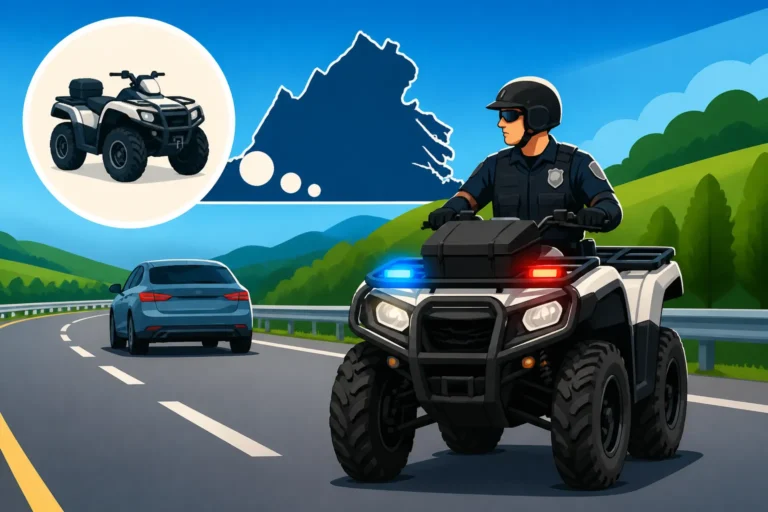
You might occasionally see a police officer, fire department personnel, or rescue squad member operating an ATV or UTV on a public street in Richmond. This isn't because they've found a loophole; it's because emergency responders and government employees are specifically exempted from these prohibitions when performing official duties. For instance, a rescue squad might use a specialized UTV to navigate difficult terrain during an emergency, or law enforcement might use an ATV for patrol in specific areas not accessible by traditional patrol cars, such as large parks or event venues. These are critical tools for public safety and disaster response, and their use is governed by different statutes and protocols. This exemption does not, in any way, extend to the general public. [Virginia Emergency Responder Exceptions] details some of these specific scenarios.
Private Land and Permission
The safest and most common legal place to ride an ATV or UTV is on private land with the explicit permission of the landowner. This is key: explicit permission. However, finding such private land within the city limits of Richmond that is suitable or legally permissible for ATV/UTV riding is exceptionally rare. Most properties in a dense urban environment are too small, too developed, or subject to noise ordinances and other regulations that would make off-road vehicle use problematic.
Even if you own a large tract of undeveloped land within Richmond, you would still need to consider local noise ordinances, potential dust issues, and the sheer impracticality of entering and exiting the property without using public roads illegally. The core principle remains: if you're not on dedicated trails or private land where such activity is explicitly permitted and managed, you're likely breaking the law. For the vast majority of Richmond residents, legal off-road riding means trailering your machine to a designated off-road area outside the city.
Legal Alternatives for Off-Road Enthusiasts Near Richmond
Since riding your ATV or UTV on the streets of Richmond is a definite no-go, you're probably wondering where you can legally and safely enjoy your machine in Virginia. The good news is that the Commonwealth offers some fantastic opportunities for off-road enthusiasts, though they typically require a bit of travel from the capital city. These dedicated riding areas are not only legal but also provide a much safer and more enjoyable experience than attempting to skirt city laws.
Dedicated Off-Road Trail Systems
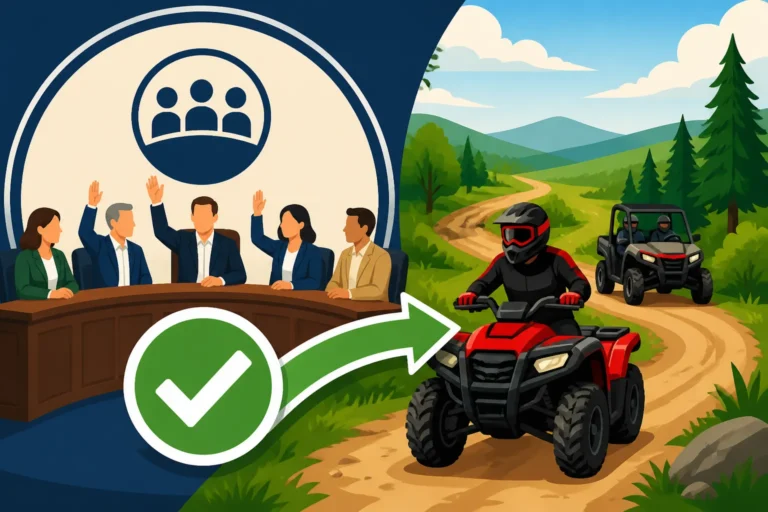
Virginia is home to several excellent trail systems specifically designed for ATVs and UTVs. These are your primary and best options for legal off-road fun.
- Spearhead Trails: Located in Southwest Virginia, the Spearhead Trails system is a network of multi-use trails that crisscross the beautiful Appalachian Mountains. With various trail systems like Coal Canyon, Mountain View, and Original Pocahontas, Spearhead offers hundreds of miles of diverse terrain, from beginner-friendly paths to challenging black diamond routes. This is a regional authority, not a state park system, and they require specific permits. You'll definitely want to check out [Spearhead Trails in Virginia Explained] for all the details on permits, rules, and specific trail systems. It's a drive from Richmond, but well worth it for the extensive, legal riding.
- National Forest OHV Areas: The George Washington and Jefferson National Forests also offer designated Off-Highway Vehicle (OHV) trails, such as Peters Mill Run and Taskers Gap near Edinburg. These trails typically have different permit requirements and rules than Spearhead, so it's essential to research them beforehand. These are usually seasonal and might have width restrictions or other equipment requirements. While further west than Richmond, these provide another regulated and legal environment for riding. You can learn more about specific rules at places like [Peters Mill Run OHV Trails in Virginia].
When you head to these trails, you'll see why serious riders choose quality gear. You might spot machines equipped with heavy-duty A-arms or lift kits from a brand like SuperATV, designed to handle the rugged terrain these systems offer.
Private Riding Parks
Beyond the large-scale public trail systems, Virginia also has a scattering of privately owned and operated off-road parks. These parks provide a controlled environment where riders can enjoy various types of terrain, often including mud pits, rock crawling sections, and wooded trails. Each private park will have its own specific rules, entry fees, and waiver requirements. Some might offer camping or other amenities. Finding these parks usually involves a bit of online searching, but they can be a great option, especially if you're looking for something a bit closer to Richmond than the Southwest Virginia trails, or if you prefer a more managed riding experience. Always call ahead or check their website for current operating hours, rules, and any machine restrictions.
Transporting Your Machine Legally
Since you can't just ride your ATV or UTV out of Richmond to a trail system, you'll need a way to transport it legally. This means trailering your machine.
- Secure Trailering: Investing in a reliable trailer and proper tie-downs is crucial. Ensure your trailer is road-worthy, with working lights, good tires, and appropriate registration. Always secure your ATV or UTV firmly to prevent shifting during transit. Using strong, durable straps and knowing the correct tie-down points on your machine is vital for safety on the highway.
- Vehicle Capacity: Make sure your tow vehicle is rated to safely handle the weight of your trailer and machine. Overloading can be dangerous and illegal.
- Plan Your Route: Even when trailering, be mindful of any local ordinances regarding vehicle size or parking at your destination.
- Maintenance for the Long Haul: Before you load up for a trip to the trails, ensure your ATV or UTV is in top condition. This might involve checking fluids, tire pressure, and making sure all components are secure. Reliable parts and accessories, perhaps even an aftermarket winch or protection parts from SuperATV, can make a huge difference in your confidence on and off the trail.
Remember, the travel to these legal riding spots is part of the adventure. It ensures you're riding responsibly and within the bounds of Virginia law.
Common Misconceptions and Consequences
Despite the clear legal framework, many riders, especially those new to ATVs and UTVs or new to Virginia, often harbor misconceptions about where and how they can operate their machines. These misunderstandings can lead to significant legal and financial headaches, particularly in an urban environment like Richmond.
The "Quick Hop" or "Just Around the Block" Fallacy
One of the most dangerous and common misconceptions is that a "quick hop" down the street or "just around the block" won't cause any trouble. People might think, "It's a quiet street," or "I'll only be on it for a minute." This mindset completely overlooks the legal reality and the very real risks involved. Even a short distance on a public road in Richmond is a violation of state law and city ordinances. It only takes a single pass by a patrol car, a concerned neighbor's call, or a moment of inattention that leads to an accident, to turn that "quick hop" into a very expensive and frustrating experience. The law doesn't differentiate based on distance or intent; if you're on a public road, you're breaking the rules.
Penalties and Impoundment
The consequences of operating an ATV or UTV illegally on Richmond's streets are not trivial. Virginia law classifies these violations as civil penalties, which means they aren't criminal charges, but they still come with significant fines. The maximum civil penalty can reach up to $500 for a single violation, plus court costs. This adds up quickly, especially if you receive multiple citations.
Beyond the monetary fines, perhaps the most immediate and inconvenient consequence is the impoundment of your machine. Law enforcement in Richmond has the authority to seize and tow an illegally operated ATV or UTV. Getting your machine back from impound can be a bureaucratic nightmare, involving towing fees, storage fees that accrue daily, and potentially proving ownership and paying all fines before release. It can easily cost hundreds, if not thousands, of dollars, far outweighing any perceived convenience of a short ride. For more details, consider [Virginia's Civil Penalty for Illegal Riding].
Insurance and Liability Issues
Another critical aspect often overlooked is the impact on your insurance and personal liability. Most standard ATV/UTV insurance policies are written with the understanding that the machine will be operated legally, meaning off-road on private property or designated trails. If you operate your ATV or UTV illegally on a public street in Richmond and are involved in an accident, your insurance company may deny coverage. This means you could be personally liable for all damages, including medical bills for injuries to yourself or others, property damage, and legal fees. Imagine being responsible for the repair costs of a car you hit, or even worse, the medical expenses of an injured pedestrian, all because of an illegal joyride. Even if you've got your machine decked out with heavy-duty protection or a a winch from SuperATV, the law is clear: public roads in Richmond are off-limits for these vehicles, and the financial risk you take by ignoring that fact is immense.
| Factor | Legal Status in Richmond (Public Roads) | Typical Location for Legal Riding | Potential Consequences (Richmond) |
|---|---|---|---|
| ATV/UTV Operation | Prohibited | Designated OHV trails, private land | Fines, impoundment, liability |
| "Street Legal" Status | Not possible | N/A (for ATVs/UTVs) | False sense of security, legal issues |
| Farm/Household Use | Extremely limited, unlikely to apply | Rural private property | Misinterpretation leads to violations |
| Emergency Use | Permitted for official duties only | N/A (for public) | Non-emergency use is prohibited |
| Insurance Coverage | Likely voided if operating illegally | Valid if operating legally | Personal financial risk |
This article is for general informational purposes only and does not constitute professional advice. Laws, prices and regulations vary by location and change over time. Consult a qualified professional for guidance on your specific situation.