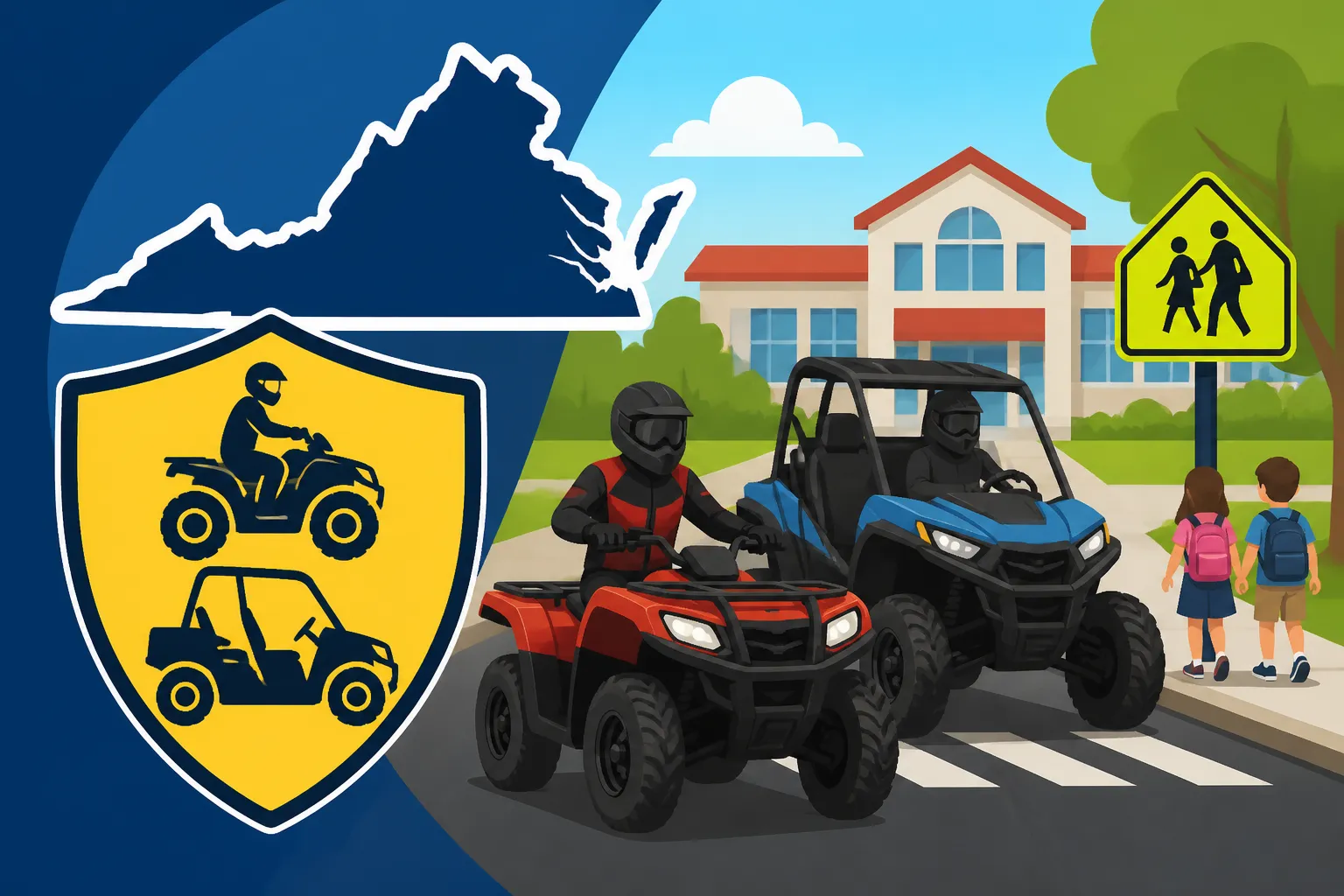
Virginia Rules for Riding Near a School
Riding an ATV or UTV in Virginia offers incredible freedom and access to beautiful trails, but it also comes with a significant responsibility, especially when it comes to navigating sensitive areas. One of the biggest headaches and potential legal pitfalls for riders is understanding the rules around schools. It’s easy to get confused, or worse, accidentally stray onto prohibited land, thinking you're just cutting through a quiet area. This guide is here to clear up that confusion, lay out the specific Virginia laws regarding ATVs and UTVs near school properties, and help you avoid common mistakes that can lead to hefty fines and a bad rap for our riding community.
The Core Rule: Public Property and ATVs in Virginia
Let's cut right to the chase: Virginia has very specific laws about where ATVs and UTVs can and cannot be operated. And when it comes to schools, the rules lean heavily towards "no-go." It's not just about a school building; it's about the entire property, which is almost universally considered public land.
Understanding Virginia's Broad Prohibition
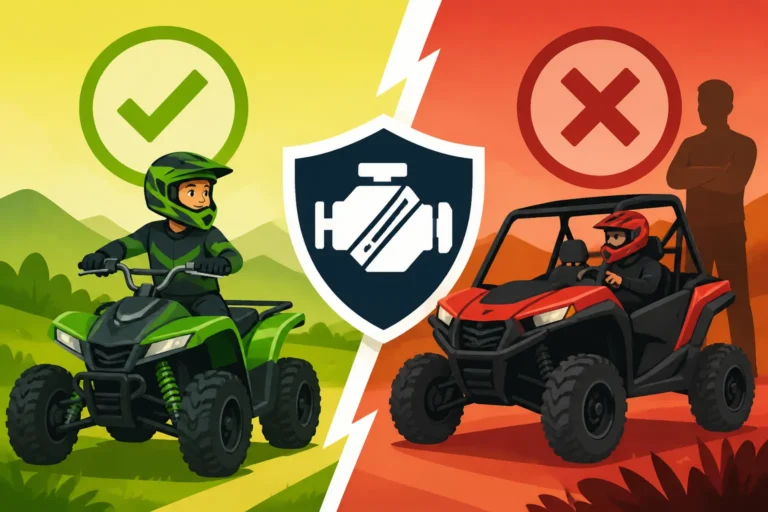
The Virginia Code, specifically § 46.2-915.1, paints a pretty clear picture: ATVs and UTVs are generally prohibited from operating on public highways and, by extension, most public property. School grounds, whether it's the playground, the sports fields, the parking lot, or the driveways, fall squarely under this umbrella of public property. This means that, for the most part, you simply cannot ride your ATV or UTV on any part of a school's property in Virginia.
The reasoning behind this isn't hard to grasp. Schools are places where children gather, often unpredictably, and where vehicle traffic, even cars, needs to be highly regulated for safety. An off-road vehicle, designed for rugged terrain and often lacking the same visibility and safety features as a street-legal car, poses an even greater risk in such an environment. Imagine a child darting out from behind a parked bus while an ATV is trying to cut through a corner of the school lot – it's a recipe for disaster. This isn't just a Virginia thing; it's a common-sense approach to public safety that nearly every state shares. So, if you're ever wondering, "Can I just zip across the back forty of the high school to get to the trails?" The answer, almost without exception, is a resounding "no."
Distinguishing Between Public and Private Land
Now, things can get a little bit nuanced when you consider property lines. Many schools, especially those in more rural areas, might border private land. Perhaps your own property or a friend's property backs right up to the school's athletic fields. It’s tempting to think that if you're on your side of the fence, you're fine. And you would be, strictly speaking, if you are absolutely certain you are on private land and have explicit permission.
However, the moment your tires touch school property – even just a foot over the line, or onto an access road that serves the school – you're in violation. It’s crucial to know exactly where property lines lie. A fence might not always be the true boundary, and sometimes, public easements or school-owned buffer zones extend further than you realize. If you're riding on private land that borders a school, you still need to exercise extreme caution and be aware of your surroundings. Any noise or visible activity could easily be perceived as a nuisance or a threat, leading to calls to the authorities. The best practice, if you find yourself in this situation, is to have ironclad [Virginia Written Consent on Private Land] from the private landowner and to stay well away from the school's actual boundaries. Even then, consider the optics: do you want to be the reason neighbors complain about off-road vehicles in proximity to a school? It's often better to plan your route to entirely avoid any ambiguity or close calls with school zones.
Navigating School Zones and Roadways
Beyond the school's immediate property, there's the broader issue of roads that lead to or pass by schools. These areas are often bustling with pedestrians, school buses, and parent vehicles, making them particularly hazardous for off-road machines.
Public Highways and School Access Roads
Virginia law is very clear: [Virginia Bans ATVs on Public Highways]. This blanket prohibition means you cannot ride your ATV or UTV on any street, road, or highway maintained by the Commonwealth or a local municipality. This, of course, includes all the roads that lead directly to a school, form its perimeter, or are used by students, parents, and buses for daily operations. School access roads, even if they seem like private drives, are typically considered public access points or are otherwise managed in a way that aligns with public highway restrictions. The same goes for school parking lots. While not a "highway," they are public-use areas with high traffic and pedestrian volumes, especially during school hours.
Think about the chaos of school drop-off and pick-up times. Buses, cars, kids walking, kids on bikes – it's a dynamic and unpredictable environment. Introducing an ATV or UTV, which isn't designed for road use and often lacks turn signals, mirrors, or proper lighting, creates an unacceptable risk. Even outside of peak hours, school access roads can be used by faculty, maintenance crews, or community members for events. It's simply not a place where off-road vehicles belong. The consequences of even a minor incident in such a high-stakes location can be severe, both legally and ethically.
The Limited Exceptions and Why They Don't Apply Here
You might have heard whispers about certain exceptions to Virginia's ATV laws, and while some do exist, it's crucial to understand why they almost never apply to riding near schools. For instance, there are exceptions for farm use or emergency responders. If you're a farmer using a utility ATV to tend fields that border a school, you might have a legitimate reason to be near the property line, but even then, you're expected to stay strictly on your own land and avoid any interaction with school operations. Likewise, rescue squads or law enforcement might use ATVs for specific emergency situations on or near school grounds, but this is under official capacity, not for recreational riding.
Another common point of confusion comes from the very specific exceptions for [Virginia Road Access in the Coalfields]. Certain roads in Buchanan and Tazewell counties have been designated for ATV use under very strict conditions, including speed limits and daylight-only operation. However, even these designated routes are carefully chosen to avoid population centers, businesses, and critically, schools. You're simply not going to find a designated ATV route that runs through a school zone or even directly past a school's main entrance. Moreover, the allowance to [Virginia Crossings by the Most Direct Route] for public roads is a very narrow exception, meant for crossing a road to get from one legal riding area to another, not for traveling on the road or anywhere near a school. These crossings must be done quickly, safely, and without impeding traffic, which is virtually impossible and incredibly dangerous near an active school. So, while a few exceptions exist for specialized circumstances, none of them open the door for recreational ATV or UTV riding near schools.
Potential Consequences and Community Impact
Ignoring these rules isn't just a minor infraction; it can lead to serious legal trouble and, perhaps just as importantly, damage the reputation of the entire ATV/UTV riding community.
Legal Penalties for Violations
Virginia takes illegal ATV operation seriously, especially in sensitive areas like school zones. If you're caught riding an ATV or UTV where it's not permitted, you're looking at a civil penalty that can reach up to $500. This isn't a parking ticket; it's a significant financial hit. But it doesn't stop there. Local municipalities, particularly cities and counties, often have the power to impound your machine if it's ridden illegally, especially on public property such as a school's grounds. Imagine the headache and cost of getting your machine out of impound, on top of the fine. These are expenses no rider wants to face. Understanding [Virginia Penalties for Illegal Riding] is vital to avoid these costly mistakes.
Beyond the immediate financial and logistical burden, such incidents can lead to other legal issues, particularly if there's any perceived threat or actual damage. If you're found to be riding recklessly, or if you cause property damage or endanger anyone, the penalties can escalate rapidly, potentially involving criminal charges depending on the severity of the situation. It’s simply not worth the risk to cut a corner or assume a school area is "safe" for a quick ride.
Community Relations and Perceptions
Every time an ATV or UTV is spotted riding illegally, especially near a school, it fuels negative perceptions of our sport. When residents, parents, and school officials see off-road vehicles where they shouldn't be, their immediate reaction is often fear, annoyance, and a desire to restrict ATV access even further. This isn't just about one rider's mistake; it impacts all of us. Incidents near schools can become front-page news in local papers, leading to community outcry and increased pressure on local governments to crack down on all off-road riding, even in legal areas.
As a community of riders, we have a collective responsibility to advocate for our sport through responsible behavior. When we ignore rules, particularly those designed for safety around children, we undermine efforts to expand trail systems or gain acceptance for organized rides. Promoting [Virginia Trail Etiquette Locals Expect] isn't just for the trails; it's for how we represent ourselves everywhere. Let's not give anyone a reason to fight against our access. By meticulously planning our routes and strictly adhering to the law, we help build trust and support for the future of ATV and UTV riding in Virginia.
Best Practices for Responsible Riding
Given the strict rules and serious consequences, planning and awareness are your best tools for responsible riding in Virginia, especially when school zones are a consideration.
Planning Routes Away from Schools
The absolute best practice is to proactively plan your rides to ensure you are nowhere near schools or other prohibited areas. Before you even load your machine onto the trailer, pull out maps – whether they're paper, GPS, or smartphone apps – and identify any schools in your intended riding area. Mark them as no-go zones. This might sound overly cautious, but it’s the safest and most compliant approach. You want to focus on enjoying your ride, not constantly worrying if you're about to accidentally trespass.
Digital maps often clearly show school buildings and property lines. You can use resources like [Virginia ATV Trail Map Downloads] to find designated legal riding areas, such as the Spearhead Trails or Peters Mill Run, which are far removed from residential and school zones. If you're exploring new areas, always err on the side of caution. If there's any doubt about property ownership or access, stay off it. Remember, ignorance of the law is not an excuse. A little bit of planning upfront can save you a lot of grief and expense later on.
Enhancing Visibility and Safety If You Must Be Nearby (e.g., crossing)
While the goal is to avoid schools entirely, there might be very rare, legally permissible situations where you are near a school, such as when making a lawful [Virginia Crossings by the Most Direct Route] of a public road that happens to pass by a school property. In such an instance, safety and visibility become paramount. Even though it's a brief legal crossing, the presence of children or parents can be unpredictable. This is where enhancing your machine's visibility can make a critical difference.
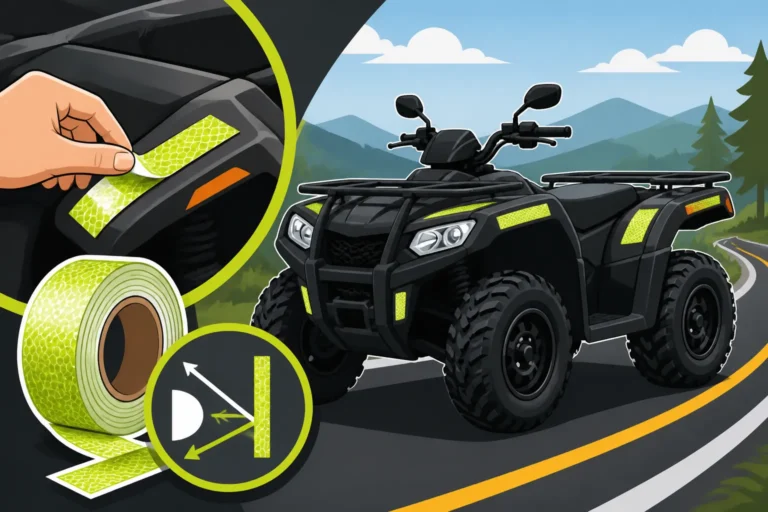
Consider adding highly visible accessories to your ATV or UTV. Aftermarket companies like SuperATV offer a range of products designed to make you more noticeable. Bright, tall whip flags can significantly increase your vertical visibility, helping drivers and pedestrians see you over other vehicles. Upgraded mirrors, perhaps a wide-angle rearview mirror, can give you a better field of vision, crucial when scanning for sudden movements from children or unexpected vehicle traffic. While Virginia's off-road laws don't mandate specific lighting for trail riding beyond basic head/taillights, adding auxiliary LED lights, especially amber or white running lights, can boost your presence during daylight hours. Reflective tape on your machine or helmet can also catch attention. And, of course, always wear your approved helmet and eye protection – [Virginia Helmet Law Applies to Every Rider] applies to adults and kids alike on ATVs and UTVs. These aren't just for your safety; they contribute to making you a more responsible and visible rider in any environment, especially when you find yourself briefly in a sensitive area.
| Area Type | ATV/UTV Riding Status | Key Considerations |
|---|---|---|
| School Property (Buildings, Fields, Parking) | Prohibited | Public property, high pedestrian traffic, legal penalties. |
| Public Highways/Roads Near Schools | Prohibited | Virginia law bans ATVs on public roads, especially dangerous near schools. |
| Private Land Bordering Schools | Requires Written Consent | Strictly on private land, avoid boundary lines, consider community impact. |
| Designated Public Trails | Permitted | Legal riding areas, typically away from schools and residential areas. |
| Farm Property | Exceptions for Farm Use | Must be legitimate farm work, strictly on private land, not recreational. |
Disclaimer
This article is for general informational purposes only and does not constitute professional advice. Laws, prices and regulations vary by location and change over time. Consult a qualified professional for guidance on your specific situation.