Virginia Equipment Checks by Officers
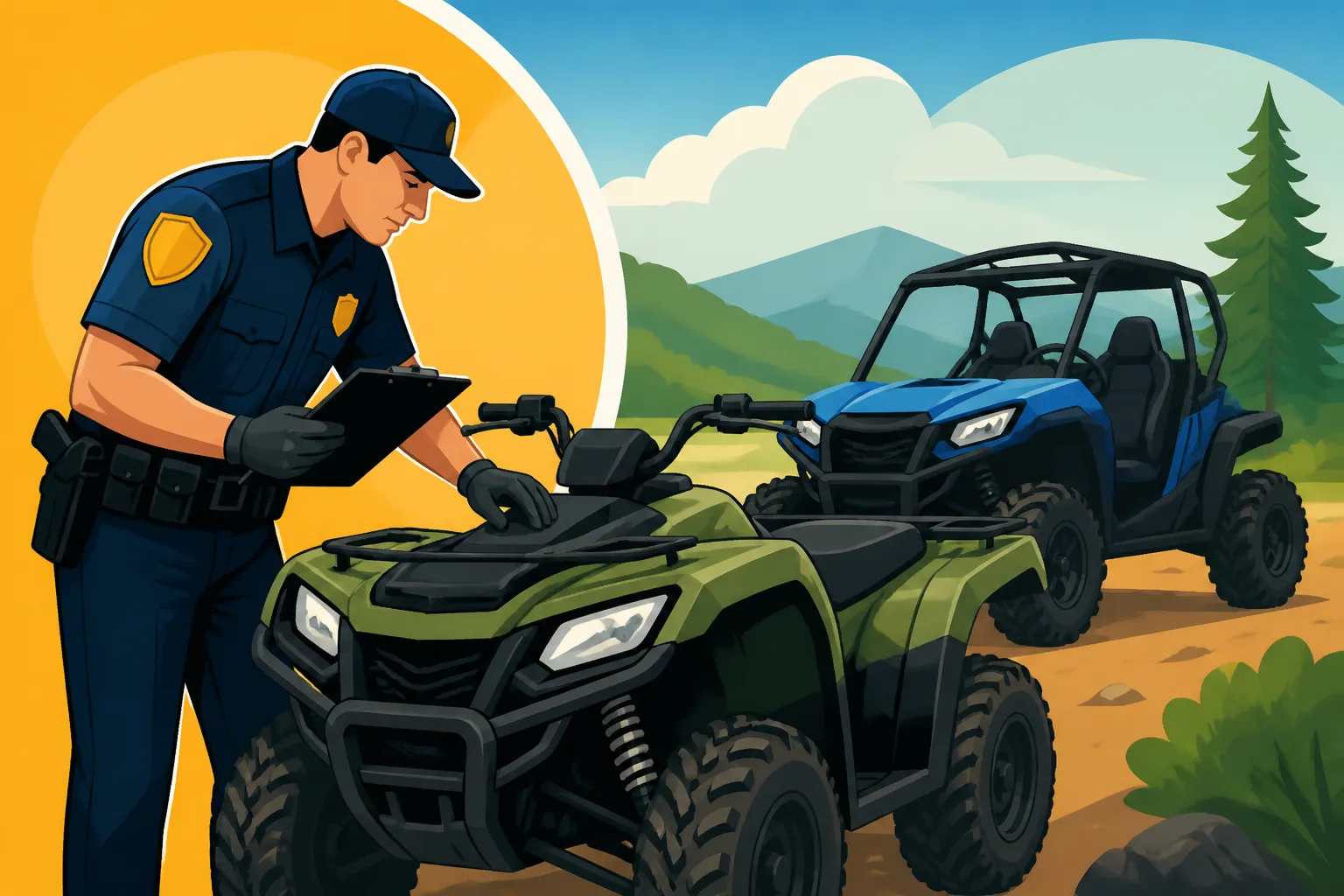
Few things can ruin a perfect day of riding in Virginia's beautiful mountains or along its designated trails faster than seeing flashing blue lights in your rearview mirror – or, more accurately, behind your helmet. Many off-road enthusiasts worry constantly about what an officer might ask for or check on their ATV or UTV, especially when they're simply trying to enjoy their machine on what they think is legal terrain. This guide is here to cut through the confusion and help you understand exactly what law enforcement officers in Virginia are looking for during equipment checks, so you can ride with confidence and minimize the stress of an unexpected stop.
The Foundation: What an Officer Can Always Ask For
Let's be real, the thought of being pulled over, even on an ATV, can make your heart pound. There's a lot of misinformation out there, and it's easy to feel like you're navigating a minefield of rules. The truth is, even if your machine isn't considered "street legal" in the traditional sense, law enforcement officers still have a very legitimate role in ensuring public safety and enforcing the state's off-road vehicle laws. They're not just looking for trouble; they're looking to keep everyone safe and preserve access to riding areas.
Situations that might lead to an encounter with an officer can vary widely. Maybe you inadvertently crossed a prohibited road section, perhaps a concerned citizen reported some unsafe riding, or an officer simply spotted an obvious violation while on patrol near a trail system or rural road. Regardless of the reason, it's crucial to understand the basics of what they're entitled to check.
Your Identification and Proof of Ownership
First and foremost, just like in any interaction with law enforcement, an officer will want to confirm who you are. Even though Virginia doesn't require a driver's license to operate an ATV on private property or designated trails, you absolutely need to have some form of valid identification on you. Think of it this way: if you're involved in an incident or just stopped for a routine check, the officer needs to know your identity. Keep your driver's license, state ID, or another government-issued photo ID easily accessible, preferably in a waterproof pouch along with your other documents.
Beyond your personal ID, they'll also likely ask for proof that you actually own the machine you're riding. This is where your ATV's title comes into play, or if you bought it used and Virginia law doesn't require a title transfer for older machines, a bill of sale can suffice. In some unique situations, if you don't have a title, you might need a notarized affidavit. Having these documents helps an officer quickly confirm that the machine isn't stolen and that you have a legal right to possess it. Imagine the hassle if you're riding your beloved quad and can't prove it's yours! It's a simple step that saves a lot of headaches later.
Finally, if you're riding on private land that isn't your own, especially a hunting lease or timber company property, an officer might ask for [Virginia Written Consent on Private Land]. This is a big one, as trespassing can lead to significant penalties, and officers are often called to investigate unauthorized riding. A clear, written permission slip from the landowner, detailing who can ride and where, can quickly resolve any doubts.
Visible Safety Gear and Machine Condition
When an officer approaches, their eyes are immediately scanning for obvious safety indicators. Virginia takes rider safety seriously, and that means certain equipment is non-negotiable.
The most critical item is the helmet. Virginia law is very clear: [Virginia Helmet Law Applies to Every Rider] on an ATV, regardless of age or whether you're on public or private land. This isn't just a suggestion; it's the law. An officer will absolutely be looking to ensure every rider, from the youngest passenger to the most seasoned adult, is wearing a properly fitted, approved helmet. Pair that with adequate eye protection – goggles or a face shield – to keep debris out of your eyes and maintain clear vision. It's not just about avoiding a ticket; it's about protecting yourself from serious injury.
Beyond personal gear, the officer will also take a quick look at the general condition of your machine. While ATVs and UTVs aren't subject to annual safety inspections like cars, an officer can spot obvious defects that pose a safety hazard. Are your brakes working properly? Are your tires in decent shape, not bald or dangerously worn? Are your headlights and taillights operational, especially if it's getting dim or you're on a trail system with specific lighting rules? These aren't just nitpicks; they're fundamental to safe operation. For example, if you're on federal land, you'll almost certainly need to ensure your machine has a functioning spark arrestor to prevent wildfires. [Why Your Quad Needs a Spark Arrester at Peters Mill Run] can be easily checked.
Specific Equipment Checks on Virginia Trails and Roads
Now, let's get into the specifics, because where you're riding in Virginia makes a huge difference in what an officer might check. The rules aren't uniform across the state, which can be a real source of frustration for riders trying to do things by the book.
On Designated Coalfield Trails (Spearhead, etc.)
Virginia's designated trail systems, like the fantastic Spearhead Trails network, are a gem for off-road enthusiasts. However, these systems often have their own specific set of rules and regulations that officers (including park rangers or trail patrol) are there to enforce. When you're on these trails, you can expect a few additional checks beyond the basics.
First, and perhaps most importantly, is your trail permit. Systems like Spearhead require permits for access. An officer will often ask to see your [Virginia Spearhead Trail Permits] or [Virginia National Forest OHV Permits], depending on the specific trail system. These aren't just for revenue; they're essential for maintaining the trails and proving you have legal access. Often, these permits are digital now, so make sure you can access them on your phone, even in areas with spotty cell service, or have a printed copy.
Noise is another big one on public lands and designated trail systems. Loud exhausts can disturb wildlife, other trail users, and nearby residents. Many trail systems, especially federal lands, have strict decibel limits. For instance, on the George Washington National Forest trails like Peters Mill Run, there's a [99 Decibels at 20 Feet] rule. An officer might use a sound meter to check if your exhaust system is within legal limits. If you've modified your exhaust with aftermarket parts, make sure they're compliant.
Width limits are also common, particularly on some trails designed for narrower machines. While many trails accommodate side-by-sides, some sections or specific trails might have restrictions. For example, [Virginia's Taskers Gap Width Limit] specifies that machines must be 50 inches or less to ride certain loops. If your UTV is wider, an officer might direct you to different trails or issue a citation. Companies like SuperATV offer specialized parts, such as narrower A-arms or suspension kits, which can sometimes help bring a wider machine within compliance for specific trail restrictions, though it's always best to check with the trail system directly.
For UTVs, an officer on a designated trail system will also be looking at passenger capacity, seatbelts, and roll cages. The law is clear that passengers can only be carried on machines specifically designed for them. [Virginia Passenger Rules on an ATV] are specific, generally limiting passengers to machines with factory-installed seating for more than one. Furthermore, if your UTV has a roll cage, which most do, you'll need to ensure that everyone is wearing their seatbelts. The Spearhead system explicitly states that [Spearhead Requires a Factory Cage and Working Seatbelts] for UTVs. This isn't just a rule; it's about preventing severe injury in the event of a rollover.
On Permitted Road Crossings or Designated Routes (Buchanan/Tazewell)
Most of Virginia bans ATVs and UTVs from public roads. Period. However, there are very specific, limited exceptions, primarily in Buchanan and Tazewell counties, where certain routes have been opened to off-road vehicles. If you're lucky enough to be riding in these areas, the equipment checks can get a little different because you're momentarily sharing the asphalt (or gravel) with traditional vehicles.
Even on these permitted road sections, the rules are tight. You're typically limited to daylight hours, so proper lighting becomes paramount. An officer will expect working headlights and taillights. [Virginia Lighting Rules on a Road Trail] stipulate what's needed during these brief road sections. While you might not need turn signals or brake lights as you would on a street-legal vehicle, functioning primary lights are essential for visibility.
Speed limits are also strictly enforced. In the coalfields, where these routes exist, there's often a [Virginia's 25 mph Coalfield Road Limit]. An officer might be using radar or pacing you to ensure you're not exceeding this limit. It’s a road, not a race track, and these limits are set for safety due to blind curves and other traffic.
Visibility on these road sections is critical. While not always mandated by law, adding reflective tape or decals to your machine can make a huge difference, especially on dusty, winding mountain roads. SuperATV also makes various lighting accessories, from additional LED light bars to enhanced headlights, which can significantly improve your visibility to other drivers, even during daylight hours. This is about being proactive for safety, not just meeting minimum requirements.
Finally, a lesser-known but important detail: some road sections, particularly those under federal or state jurisdiction, may prohibit metal-studded tires. These can damage road surfaces, so if your machine is equipped with them for icy conditions, be aware of where you're riding. These specific road provisions are highly localized and are generally only for crossing by the most direct route, not for extended travel. [Virginia Crossings by the Most Direct Route] highlights the temporary nature of these permissions.
Consequences of Failing an Equipment Check
Let's not sugarcoat it: failing an equipment check or being caught violating Virginia's ATV and UTV laws can lead to some significant downsides. No one wants to end a fun ride with a ticket or, worse, an impounded machine.
Citations and Penalties
The most immediate consequence of an equipment violation or illegal riding is a citation. In Virginia, many ATV-related violations result in civil penalties, not criminal charges, which is a key distinction. However, "civil" doesn't mean "cheap." [Virginia's Civil Penalty for Illegal Riding] can be substantial, with fines reaching up to [Riding Illegally Costs Up to $500 in Virginia] for a single violation. And remember, that's often just the fine. You'll also likely incur [Virginia Court Costs for a Citation], which can add a significant amount to the bill, even for minor infractions.
Beyond the fines, there's the inconvenience and potential for your machine to be impounded. Cities and counties have the power to seize and impound ATVs ridden illegally, particularly if you're caught on prohibited public property like sidewalks or parks. [Virginia City Impoundment Powers] are real, and getting your machine back from an impound lot can be a costly, time-consuming nightmare involving towing fees, storage fees, and administrative charges.
How to Be Prepared and What to Do if Stopped
The best defense is always preparation. Before every ride, especially if you're heading to a new area or a designated trail system, take a few minutes for a pre-ride check. This quick once-over can prevent common issues that might catch an officer's attention.
Your Pre-Ride Checklist:
- Documentation: Is your ID, title/bill of sale, and any necessary land access permission (like a hunting lease agreement or written consent) readily available in a waterproof bag?
- Permits: If on a trail system, do you have your valid trail permit, and can you access it?
- Helmet & Eye Protection: Is everyone in your group wearing proper head and eye protection? Are helmets securely fastened?
- Lights & Brakes: Are all lights (headlights, taillights) working? Do your brakes feel responsive and strong?
- Tires: Are your tires properly inflated and free of excessive wear or damage?
- Exhaust/Spark Arrestor: Is your exhaust system intact and relatively quiet? Does it have a spark arrestor?
- UTV Specifics: Are seatbelts and roll cages present and in good repair for UTVs? [Spearhead Requires a Factory Cage and Working Seatbelts] and this is a common check.
- Machine Condition: Is there any obvious damage or fluid leaks that could pose a safety or environmental hazard?
If, despite your best efforts, you are stopped by an officer, remember to remain polite and cooperative. Pull over safely, turn off your engine, and keep your hands visible. Answer questions truthfully but avoid volunteering extra information. Hand over your requested documents when asked. Knowing what they're looking for can help reduce your anxiety and ensure the interaction goes smoothly.
Investing in quality aftermarket accessories from reputable brands like SuperATV can also play a role in preparation. From DOT-approved windshields and mirrors (if you're riding in an area with special provisions or want enhanced visibility) to robust skid plates that protect critical components, and even specialized lighting solutions, these additions can contribute to both safety and compliance. Just remember to always check local regulations and trail rules to ensure any modifications you make are in line with what's expected.
| Inspection Area | Designated Trail Systems (e.g., Spearhead) | Permitted Road Crossings (e.g., Buchanan/Tazewell) | General Virginia Law (Any Location) |
|---|---|---|---|
| Personal ID | Required | Required | Required |
| Proof of Ownership | Recommended (Title/Bill of Sale) | Recommended (Title/Bill of Sale) | Recommended (Title/Bill of Sale) |
| Land Permission | Required (Trail Permit) | N/A (Applies to private land access) | Required (For private land not your own) |
| Helmet | Required for all riders | Required for all riders | Required for all riders |
| Eye Protection | Recommended/Implied for safety | Recommended/Implied for safety | Recommended/Implied for safety |
| Spark Arrestor | Often required | Often required | Recommended (Especially on public lands) |
| Sound Limits | Common (e.g., 99 dB) | Less common, but general noise ordinances apply | General noise ordinances may apply |
| Width Limits | Specific trails may have limits (e.g., 50 inches) | Less common, but machine must safely fit | N/A |
| Passenger Rules | Only on machines designed for it | Only on machines designed for it | Only on machines designed for it |
| Seatbelts/Roll Cage | Required for UTVs with factory cage | Required for UTVs with factory cage | Required for UTVs with factory cage |
| Headlights | Recommended, sometimes required for specific trails/conditions | Required (For daylight-only road crossings) | Recommended, good working order |
| Taillights | Recommended, sometimes required for specific trails/conditions | Required (For daylight-only road crossings) | Recommended, good working order |
| Brakes | Good working order expected | Good working order expected | Good working order expected |
| Speed Limits | Trail-specific limits, often 25 mph or less | Strict limits (e.g., [Virginia's 25 mph Coalfield Road Limit]) | N/A (Not on public roads) |
| Metal Studded Tires | Check specific trail rules | Often prohibited | N/A |
Understanding what Virginia law enforcement officers are looking for during equipment checks is an essential part of being a responsible and prepared ATV or UTV rider. While it can feel overwhelming to keep track of all the rules, taking the time to educate yourself and properly equip your machine can make all the difference. By having your documentation in order, ensuring your safety gear is up to par, and understanding the specific requirements of the trails and limited road sections you plan to ride, you can significantly reduce the stress of an encounter with an officer and focus on enjoying the incredible off-road opportunities Virginia has to offer. Ride safe, ride smart, and enjoy the trails!
Disclaimer
This article is for general informational purposes only and does not constitute professional advice. Laws, prices and regulations vary by location and change over time. Consult a qualified professional for guidance on your specific situation.