Virginia Bills That Would Have Required Titles
It can be incredibly frustrating to try and understand the ever-shifting landscape of laws surrounding off-road vehicles, especially when you hear whispers or even see headlines about proposed changes that never quite make it across the finish line. Many Virginia ATV and UTV owners have likely wondered about those legislative attempts to make titling mandatory, perhaps after hearing a rumor or seeing an old news report. This guide is here to shed light on those past efforts, explore why they happened, what they proposed, and what it all means for you, the rider, today.
The Historical Context of ATV Titling in Virginia
To truly grasp why there have been pushes for mandatory ATV and UTV titling in Virginia, we need to take a quick trip back in time and understand the state's unique approach to these machines. It hasn't always been this way, and the rules have definitely evolved over the decades, leading to a lot of the confusion and, frankly, annoyance, that riders face today.
Early Days: When Titles Weren't Even a Thought
Believe it or not, there was a time when all-terrain vehicles were much simpler in the eyes of the law. Back in the early days of ATV popularity, the focus was more on their recreational use and less on formal government tracking. For many years, if you bought an ATV in Virginia, it was treated much like a lawnmower or a piece of farm equipment. You got a bill of sale, shook the seller's hand, and off you went. There was no requirement to visit the Department of Motor Vehicles (DMV) at all. This made buying and selling incredibly straightforward, which was great for riders but, as we'll see, created some challenges down the line. Ownership was often proven through a simple receipt or a handwritten agreement, which, while practical for some, left many open to potential disputes or lack of official recognition.
The lack of a centralized titling system also meant that there wasn't a consistent record of ATV ownership across the state. This wasn't a major issue when ATVs were less common or primarily used on private land. However, as their popularity exploded and machines became more powerful and valuable, the absence of a clear ownership trail started to create headaches, particularly when it came to things like theft or disputes over sales. People often relied on informal arrangements, which worked until they didn't, leaving many riders in a bind when they needed official documentation.
The Turning Point: The 2006 Titling Cutoff
The game changed significantly in Virginia on July 1, 2006. That date marked a major turning point, as the state enacted legislation requiring titles for new ATVs and UTVs sold by dealers from that point forward. This wasn't a mandate for all ATVs, mind you, but it was a crucial shift. If you bought a brand-new quad from a dealership after the 2006 cutoff, you were required to title it with the DMV. This meant receiving an official document of ownership, much like a car title, albeit without the registration or license plates that go with street-legal vehicles. [Virginia's July 2006 Titling Cutoff] really set the stage for all future discussions and legislative attempts.
For machines bought before that date, or for any used machines, titling remained completely optional. This created a dual system where some machines had titles, and others didn't, leading to a lot of confusion among riders, law enforcement, and even DMV clerks. The intent behind the 2006 change was largely to bring some order to the burgeoning ATV market and to provide a clearer path for proving ownership for newly purchased machines. It was a step towards greater accountability and record-keeping, but it still left a significant portion of the ATV population without official titles. This optional nature for used machines is why [Virginia Titles Are Optional on Used Machines] continues to be a point of confusion.
The Ongoing Debate: Why Titling Becomes a Talking Point
Even with the 2006 changes, the discussion around mandatory ATV and UTV titling didn't stop. In fact, it often heated up. Why? Several factors keep this issue on the legislative radar. One primary concern is theft. ATVs are relatively easy to steal and transport, and without a mandatory titling system for all machines, tracing stolen property becomes significantly harder for law enforcement. If there's no official record of ownership, how do you prove a machine is yours if it's recovered? This issue alone often sparks renewed calls for universal titling.
Another driving force behind legislative proposals is safety and accountability. While Virginia has specific laws regarding ATV operation, the lack of universal titling can make it harder to identify owners in cases of illegal riding or accidents. Proponents often argue that mandatory titling would encourage more responsible ownership and operation, as owners would be more easily identifiable. There's also the element of revenue generation, though this is often framed as a secondary benefit rather than the primary driver. A titling fee, even a small one like the [Virginia Title Fee of $15], multiplied by tens of thousands of machines, could generate significant funds, which some argue could be used for trail development or enforcement.
Finally, the sheer volume of off-road machines in Virginia, coupled with the desire for consistent rules, keeps this debate alive. Many other states have mandatory titling for all ATVs, and some legislators and advocacy groups look to those models as a blueprint for Virginia. The piecemeal approach—mandatory for new, optional for used—creates a complex situation that many believe could be simplified and made more effective through a universal titling requirement.
Exploring Key Legislative Attempts for Mandatory Titling
Over the years, several bills have made their way through the Virginia General Assembly, each aiming to shift the state's approach to ATV and UTV titling. While none of these have successfully passed into law to date, understanding their common themes and legislative journeys can illuminate the recurring challenges and desires within the off-road community and among lawmakers.
What Prompted These Bills? Underlying Concerns
The motivation behind these proposed bills typically stems from a confluence of concerns that impact various stakeholders, from individual riders to law enforcement and state agencies. One of the most frequently cited issues, as mentioned earlier, is the persistent problem of ATV and UTV theft. These machines are high-value targets, and without a universal titling system, thieves find it easier to resell them across state lines or even within Virginia without leaving a clear paper trail. Law enforcement agencies often champion mandatory titling as a vital tool in combating this specific type of property crime, making it easier to track and recover stolen machines and prosecute offenders.
Another significant concern is public safety and accountability. When an ATV is involved in an accident or is ridden illegally on public roads or private property without permission, identifying the owner can be incredibly difficult if no official title exists. This can lead to frustration for property owners, victims of accidents, and officers trying to enforce existing ATV laws. Legislation often proposes mandatory titling as a way to ensure that every machine has an identifiable owner on record, thereby increasing accountability for its operation.
Finally, there's the administrative desire for consistency and revenue. The current system, with its 2006 cutoff and optional titling for used machines, is undeniably complex and can be confusing for both citizens and DMV staff. A universal mandate would streamline the process and remove ambiguity. While not always stated as the primary reason, the potential for increased revenue through titling fees is often a consideration for state budgets. This revenue could theoretically be earmarked for off-road trail maintenance, safety programs, or other initiatives beneficial to the riding community, though this link isn't always explicitly made in the initial legislative push.
Common Provisions in Proposed Legislation
When these bills pop up, they often share similar characteristics and propose specific changes designed to achieve their goals. A consistent feature is the elimination of the optional titling status for used machines. Instead of having the choice, owners of all ATVs and UTVs, regardless of when they were purchased or if they've changed hands multiple times, would be required to obtain a Virginia title. This would effectively close the loophole created by the 2006 cutoff, making titling universal.
Many proposed bills also include provisions for a grace period to allow current owners of untitled machines time to come into compliance. This is a crucial element, as lawmakers recognize that suddenly mandating titles for potentially hundreds of thousands of existing machines without a transition period would create an enormous burden and backlash. These grace periods usually involve a simplified process for establishing ownership, perhaps through a notarized bill of sale or an affidavit, similar to how [Virginia Notarized Affidavits in Lieu of Title] can sometimes be used. Platforms like LawDepot can be helpful for generating these types of official documents to ensure they meet legal standards.
Another common theme is addressing the proof of ownership requirements for machines that have never had a title. For example, a bill might stipulate that for an older, untitled machine, a seller would need to provide a notarized bill of sale, or the buyer would have to submit a [Virginia Form VSA 12M Affidavit] attesting to ownership and how they acquired the machine. These provisions are designed to create a clear chain of custody for machines that pre-date any titling requirements, ensuring that legitimate owners can still obtain a title without undue hardship.
The Legislative Journey: From Committee to Collapse
The path for any bill through the Virginia General Assembly is often a long and winding one, and bills related to ATV titling are no exception. Typically, a bill starts when a delegate or senator introduces it. From there, it's assigned to a committee, usually one related to transportation or public safety. This is where the real work (and often, the real fight) begins.
Committees hold hearings where proponents and opponents can testify. Riders, ATV clubs, law enforcement officials, and even manufacturers might come forward to share their perspectives. For instance, an officer might explain how difficult it is to trace a stolen quad without a title, while a long-time rider might express concerns about increased costs and bureaucracy. It's during these committee hearings that a bill can be debated, amended, or, most commonly, "killed." Many bills never even make it out of committee for a full vote by the House or Senate. They simply don't garner enough support to advance.
Even if a bill successfully navigates its way out of committee in one chamber, it then has to go through a similar process in the other chamber (e.g., if it passes the House, it goes to the Senate). Differences between the House and Senate versions would need to be reconciled before it could be sent to the Governor for signature. The complexity of this process, combined with strong lobbying from various groups and sometimes a lack of broad political will, is often why these bills ultimately fail. The specific concerns raised by constituents, the perceived burden on off-road enthusiasts, and the administrative challenges of implementing such a widespread change often contribute to their downfall.
The Arguments For and Against Mandatory Titling
Any significant change in state law, especially one affecting a popular recreational activity like ATV riding, is bound to spark passionate debate. Proposals for mandatory ATV and UTV titling in Virginia have consistently brought out strong arguments from both sides, highlighting the diverse perspectives within the state.
Proponents' Perspectives: Safety, Theft, and Revenue
Those who advocate for mandatory titling often build their case around several core pillars: safety, theft prevention, and potential revenue generation. From a safety standpoint, proponents argue that a universal titling system would enhance accountability. If every ATV and UTV has a registered owner, it might encourage more responsible operation. In the event of an accident, particularly those involving injuries or property damage, identifying the responsible party becomes much more straightforward. This could, in turn, lead to better enforcement of existing safety regulations, such as age restrictions or helmet laws. [Virginia Helmet Law Applies to Every Rider] and [Virginia Age Limits by Engine Size] are already on the books, but some argue titles would make them easier to enforce.
The argument for theft prevention is perhaps the most compelling for many. As discussed, ATVs and UTVs are unfortunately prime targets for thieves due to their value and portability. Without a clear chain of title for every machine, tracking stolen vehicles and proving ownership can be a monumental challenge for victims and law enforcement alike. A mandatory titling system would create a central database, making it far more difficult for criminals to sell stolen machines and providing victims with a vital piece of documentation for recovery. When police recover a machine, having a title on file makes returning it to its rightful owner much simpler.
Finally, while often presented as a secondary benefit, the potential for revenue generation is also a point for consideration. A small titling fee, applied to every ATV and UTV in the state, could accumulate into a significant fund. Proponents suggest these funds could be directed towards various beneficial initiatives, such as expanding and maintaining public ATV trails, funding safety education programs, or supporting law enforcement efforts specifically targeting illegal off-road vehicle use. This revenue could help alleviate some of the financial burden on state agencies responsible for managing recreational lands and ensuring public safety.
Opponents' Objections: Burdens, Costs, and Overreach
On the other side of the fence, many riders, landowners, and off-road advocacy groups staunchly oppose mandatory titling, primarily citing concerns about administrative burdens, financial costs, and perceived government overreach. The idea of a new administrative burden is a major sticking point. For individuals who have owned their ATVs for years or decades without a title, the process of suddenly having to prove ownership to the DMV can seem daunting, confusing, and unnecessary. Many fear long lines, complex paperwork, and the potential for bureaucratic nightmares, especially for older machines where original bills of sale might be long lost. Having to generate a new proof of ownership document, perhaps through a service like LawDepot, can feel like an extra hurdle for folks who just want to ride.
The financial costs associated with mandatory titling are another significant objection. Beyond the actual titling fee, there could be costs associated with obtaining necessary documents, such as notarized bills of sale or affidavits. For multi-machine households or individuals on a tight budget, these added expenses, even if seemingly small, can add up and be viewed as an unfair tax on their recreational activity. Furthermore, many landowners who use ATVs strictly on their private property for farming or land management see no reason why they should be subject to state titling requirements, viewing it as an unnecessary intrusion into their private affairs. [Virginia Machines Used Only on a Farm] are often exempt from many road rules, and opponents argue titling should be similar.
Then there's the philosophical objection of government overreach. Many riders feel that if their ATV is never ridden on public roads and is used exclusively on private property, the state has no legitimate reason to mandate its titling. They see it as an encroachment on personal liberty and an unnecessary expansion of government bureaucracy. For those who already feel like off-road activities are under increasing scrutiny, mandatory titling can feel like another step towards regulating a pastime they believe should remain relatively free from government entanglement. These arguments often resonate strongly within the tight-knit off-road community, fueling opposition to any proposed changes.
The Role of Off-Road Enthusiast Groups
Off-road enthusiast groups and clubs play a pivotal role in the debate surrounding mandatory ATV and UTV titling. These organizations, often comprising dedicated riders and advocates, serve as crucial conduits for the collective voice of the off-road community. When bills proposing mandatory titling emerge, these groups are typically at the forefront of organizing opposition or, in some cases, negotiating amendments that might make a bill more palatable.
They engage in various activities to influence the legislative process. This includes lobbying efforts, where representatives from these groups meet directly with legislators, committee members, and their staff to explain the concerns of their members. They provide real-world examples of how proposed legislation might negatively impact riders, focusing on the administrative burdens, costs, and practical difficulties. They might also propose alternative solutions to issues like theft, suggesting increased enforcement or public awareness campaigns instead of broad titling mandates.
Furthermore, these groups are instrumental in mobilizing their membership. They utilize email lists, social media, and forums to inform riders about pending legislation, explain its implications, and encourage members to contact their own elected officials. This grassroots advocacy can be incredibly powerful, as legislators often pay close attention to the volume and sentiment of communications from their constituents. By presenting a united front and clearly articulating their objections, off-road enthusiast groups have historically been effective in influencing the outcome of these legislative proposals, often contributing to their eventual failure to pass. Their sustained efforts demonstrate the strength of organized advocacy within the Virginia off-road community.
The Current Landscape: What Virginia Riders Face Today
Despite the various legislative attempts over the years, the current reality for Virginia ATV and UTV owners remains largely unchanged from the framework established in 2006. Understanding this current landscape is crucial for any rider in the Commonwealth, whether you're buying, selling, or just trying to stay compliant.
Optional Titling: The Status Quo Since 2006
As it stands, Virginia maintains its unique dual system for ATV and UTV titling. If you purchased a brand-new ATV or UTV from a dealer in Virginia on or after July 1, 2006, you were required to title that machine with the DMV. This means you should have an official Virginia Certificate of Title for it. This applies to most modern machines bought new. [Virginia Titles Machines Bought New Since 2006] is a key point here.
However, for any ATV or UTV purchased used, regardless of its age, and for any new machine purchased before July 1, 2006, titling remains entirely optional. This is a critical distinction and often the source of much confusion. You are not legally required to get a title for these machines from the Virginia DMV. This means that a significant number of ATVs and UTVs currently operating in Virginia do not have official titles, and their owners are perfectly within their rights not to obtain one. This optional status allows for simpler private sales and reduces the bureaucratic hurdles for many long-time owners. It does, however, mean that proving ownership for these machines relies heavily on other forms of documentation, like a well-drafted bill of sale.
Why Titling Still Matters, Even If It's Not Mandatory
Even though titling is optional for many, it doesn't mean it's unimportant or without benefits. In fact, for many owners, obtaining a title—even if not legally required—offers significant advantages and peace of mind.
- Proof of Ownership: The most obvious benefit of a title is irrefutable proof of ownership. If your ATV is ever stolen and recovered, a title makes it much easier to claim it as yours. Without a title, you might have to rely on less official documents like a bill of sale, photographs, or witness statements, which can be more challenging to verify. This is particularly relevant given the high rates of ATV theft.
- Facilitating Sales: When you go to sell your ATV, having a Virginia title can make the process smoother and often fetch a better price. Many buyers, especially those who are new to the off-road world or are particularly cautious, prefer to purchase a machine with a clean title. It provides them with confidence in the machine's provenance and simplifies their own ownership documentation. A buyer might be hesitant to purchase a machine with [Virginia Machines With No Paperwork].
- Financing and Insurance: If you need to finance the purchase of a used ATV or UTV, most lenders will require you to obtain a title as part of the loan agreement. They need a lien to be recorded on the official title to protect their investment. Similarly, while ATV insurance isn't mandatory in Virginia, if you choose to get comprehensive coverage (which is a very good idea for such a valuable asset), your insurer may prefer or even require a title for better record-keeping and claims processing. [Why a Lender Wants a Virginia ATV Titled] is a common question.
- Estate Planning: In unfortunate circumstances, if an ATV owner passes away, a clear title simplifies the process of transferring ownership to heirs or beneficiaries, preventing potential disputes or complications during estate settlement. [Virginia Titles for an Inherited Machine] are much easier with an existing title.
For these reasons, even with the optional status, many riders choose to title their machines. It's a proactive step that can save a lot of headaches down the road.
What If Another Bill Surfaces? Staying Informed
The legislative landscape is always in flux, and it's highly probable that bills attempting to mandate universal ATV and UTV titling will surface again in future sessions of the Virginia General Assembly. These issues tend to be cyclical, driven by recurring concerns about theft, safety, and administrative efficiency.
As an ATV or UTV owner in Virginia, staying informed is your best defense against unexpected changes. Here's how you can keep abreast of potential new legislation:
- Monitor the Virginia General Assembly Website: This is the official source for all legislative activity. You can search for bills by topic, track their progress, and even sign up for alerts. Look for terms like "all-terrain vehicle," "utility vehicle," "titling," and "registration."
- Join Off-Road Advocacy Groups: Organizations like the Virginia Off-Road Council or local ATV clubs are usually very well-connected and stay on top of legislative developments. They often send out alerts to their members and provide guidance on how to contact legislators.
- Follow Local News: Sometimes, proposed legislation gets covered in local news outlets, especially if it's a hot-button issue in specific regions.
- Contact Your Legislators: If you hear about a bill, don't hesitate to reach out to your local Delegate or Senator. Express your informed opinion, whether you support or oppose the proposed changes. Your voice as a constituent matters, and a high volume of constituent feedback can significantly influence a legislator's stance.
By staying engaged and informed, you can be prepared for any future legislative pushes and ensure that your voice is heard in the ongoing discussion about ATV and UTV titling in the Commonwealth.
Practical Steps for Virginia ATV/UTV Owners (Regardless of Titling Mandates)
Whether Virginia ever mandates universal titling or not, there are proactive steps every ATV and UTV owner can take to protect their investment, ease future transactions, and avoid potential headaches. These practices go beyond basic riding rules and delve into the crucial world of documentation and preparedness.
Documenting Ownership for Peace of Mind
Even if your ATV or UTV isn't legally required to have a title, having robust documentation of your ownership is paramount. This can save you a world of trouble if your machine is ever stolen, if you get into a dispute with a buyer or seller, or if you simply need to prove that the machine is yours for insurance purposes.
Here's what you should always have:
- A Detailed Bill of Sale: This is your primary document for untitled machines. It should include:
- The full names and addresses of both the buyer and seller.
- The date of sale.
- A clear description of the ATV/UTV, including make, model, year, and crucially, the Vehicle Identification Number (VIN). [Checking the Serial Number Before Cash Changes Hands] is vital.
- The purchase price.
- A statement that the machine is sold "as-is" (unless a warranty is offered, which is rare for private sales).
- Signatures of both buyer and seller.
- It's highly recommended to have the bill of sale notarized. This adds a layer of official verification that can be invaluable in proving legitimacy.
- Photographs of the Machine and VIN: Take clear photos of your ATV or UTV from multiple angles, including close-ups of the VIN plate. Store these digitally and perhaps print a copy to keep with your physical paperwork.
- Service Records and Purchase Receipts: Keep all receipts for major parts, accessories, and maintenance work. These not only show a history of care for the machine but also further establish your long-term ownership.
- Insurance Policy (if applicable): If you've opted for insurance, keep a copy of your policy documents. This also serves as official recognition of your ownership by a third party.
Keeping all these documents organized, perhaps in a dedicated folder or a secure digital file, is one of the smartest things you can do as an ATV owner. Platforms like LawDepot can assist in creating legally sound bills of sale and other documents, giving you a professional edge in documenting your ownership.
Understanding Virginia's Current Titling Process
For those who choose to title their optional machines, or for new machines bought after 2006, understanding the Virginia titling process is straightforward but requires attention to detail.
1. Gather Your Documents:
* Manufacturer's Certificate of Origin (MCO): For new machines, this is essential. [The MSO You Need to Title a New Quad] is the equivalent of a birth certificate for your machine.
* Previous Title: If you're buying a used machine that already has a title, the seller must sign it over to you. [Getting the Seller to Sign the Old Title Over] is key.
* Bill of Sale: Even if there's a title, a bill of sale is still a good idea, especially for establishing the purchase price for sales tax calculations.
* [Virginia Form VSA 17A Explained]: This is the application for certificate of title.
* [Virginia Form VSA 12M Affidavit]: If you don't have an MCO or previous title, this notarized affidavit might be required to establish ownership. [Where to Find a Notary for a VSA 12M] is a common question.
* Proof of Virginia Address: The DMV needs to confirm you're a Virginia resident.
2. Visit the DMV or Mail Your Application:
* You can apply for an ATV title in person at a DMV customer service center. This is often the quickest way to address any questions and ensure all paperwork is correct.
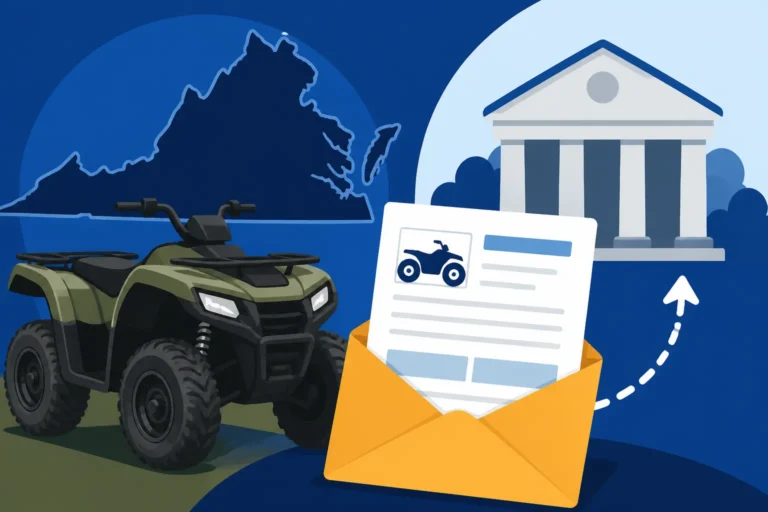
* Alternatively, you can mail your completed application and supporting documents to the DMV. Ensure you make copies of everything before sending it off. [Mailing an ATV Title Application to the DMV] is an option.
3. Pay Fees and Taxes:
* You'll pay the [Virginia Title Fee of $15].
* You'll also pay Virginia sales tax on the purchase price of the machine. This is typically 5.3% in most of Virginia, though some regions have slightly higher rates. [Virginia Sales Tax at Titling] is mandatory.
Once processed, the DMV will mail you your official Virginia Certificate of Title for your ATV or UTV. Remember, even with a title, your ATV will not receive license plates or registration as it is not street-legal for general public road use. [Virginia Titles ATVs but Never Registers Them].
Beyond Titling: Other Important ATV/UTV Paperwork
While titling is a significant piece of the puzzle, there are other types of paperwork and considerations every Virginia ATV and UTV owner should be aware of, regardless of current or future titling mandates.
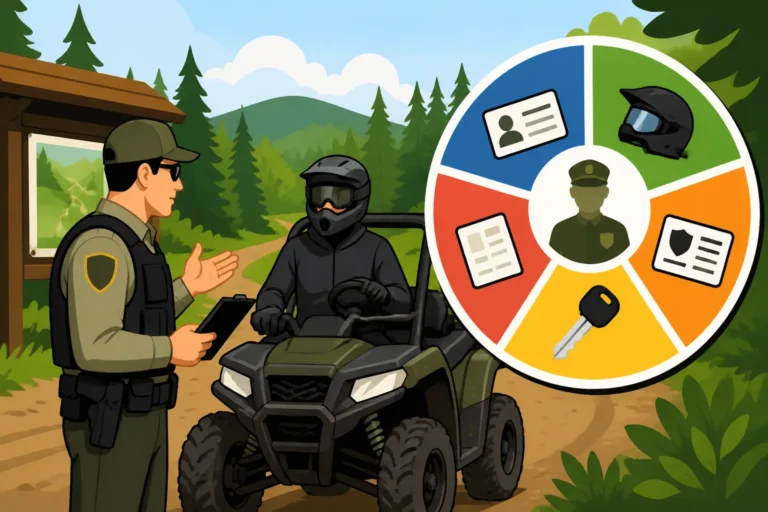
1. Trail Permits: If you plan to ride on designated trail systems like Spearhead Trails or within the National Forests, you'll need the appropriate permits. [Virginia Spearhead Trail Permits] and [Virginia National Forest OHV Permits] are separate and crucial for legal access. Keep these permits, whether digital or physical, readily accessible when you ride. [Virginia Trail Rangers and Permit Checks] are common.
2. Landowner Permission: For riding on private land that isn't your own, always obtain written permission from the landowner. This protects you from trespass charges and clarifies the terms of your access. A simple, dated note signed by the landowner, indicating permission to ride their property on specific dates or for a specific period, is incredibly valuable. LawDepot could be used to draft a formal [What a Landowner's Written Permission Note Should Say].
3. Safety Course Certificates (Voluntary): While Virginia does not require an ATV safety course, completing one is highly recommended, especially for new or younger riders. Keep the certificate of completion. It demonstrates your commitment to safe riding practices and can be valuable if you ever need to show proficiency. [Virginia Has No Safety Course Requirement] but it's a good idea.
4. Manufacturer's Manuals: Keep your ATV/UTV owner's manual accessible. It contains vital information on safe operation, maintenance schedules, and technical specifications, which can be important for repairs or understanding your machine's limitations.
By staying on top of all these aspects of ATV and UTV ownership, you'll be well-prepared for any situation, whether it's navigating a private sale, addressing a legal query, or simply enjoying a worry-free day on the trails.
| Document Type | Required (New, Post-2006) | Optional (Used/Pre-2006) | Primary Purpose | Where to Obtain/Keep |
|---|---|---|---|---|
| Virginia Title | Yes | Yes (Recommended) | Proof of Ownership, Theft Recovery, Sales | Virginia DMV |
| Bill of Sale | Yes (for sale) | Yes (Crucial) | Proof of Purchase, Sale Terms, Tax Basis | Seller/Buyer, LawDepot |
| MCO (New Machine) | Yes | N/A | Initial Title Application | Dealer at Purchase |
| VSA 17A | Yes | Yes | Application for Title | Virginia DMV Website/Office |
| VSA 12M Affidavit | No (usually) | Yes (if no MCO/Title) | Proof of Ownership (no other docs) | Virginia DMV Website/Office, Notary Public |
| Trail Permits | N/A | Yes (for designated trails) | Legal Trail Access | Spearhead Trails, National Forest Ranger Offices |
| Landowner Permission | N/A | Yes (for private land) | Legal Access to Private Property, Avoid Trespass | Landowner, Drafted via LawDepot |
| Insurance Policy | No (optional) | No (optional) | Financial Protection, Theft Coverage | Insurance Provider |
Disclaimer
This article is for general informational purposes only and does not constitute professional advice. Laws, prices and regulations vary by location and change over time. Consult a qualified professional for guidance on your specific situation.