Fixing a Title the Seller Forgot to Sign
You’ve just made an exciting purchase, perhaps a rugged side-by-side ready for the [Coal Canyon Trail System in Virginia] or a nimble ATV for tackling farm chores. You bring the paperwork home, envisioning adventures, only to discover a critical piece missing: the seller's signature on the title. It’s a gut-wrenching moment, leaving you wondering if your new-to-you machine is truly yours and how on earth you're going to get it titled in Virginia. This guide is here to walk you through exactly what to do when you find yourself in this frustrating predicament, ensuring you can legally claim your off-road vehicle.
The Headache of a Missing Signature on Your Virginia ATV Title
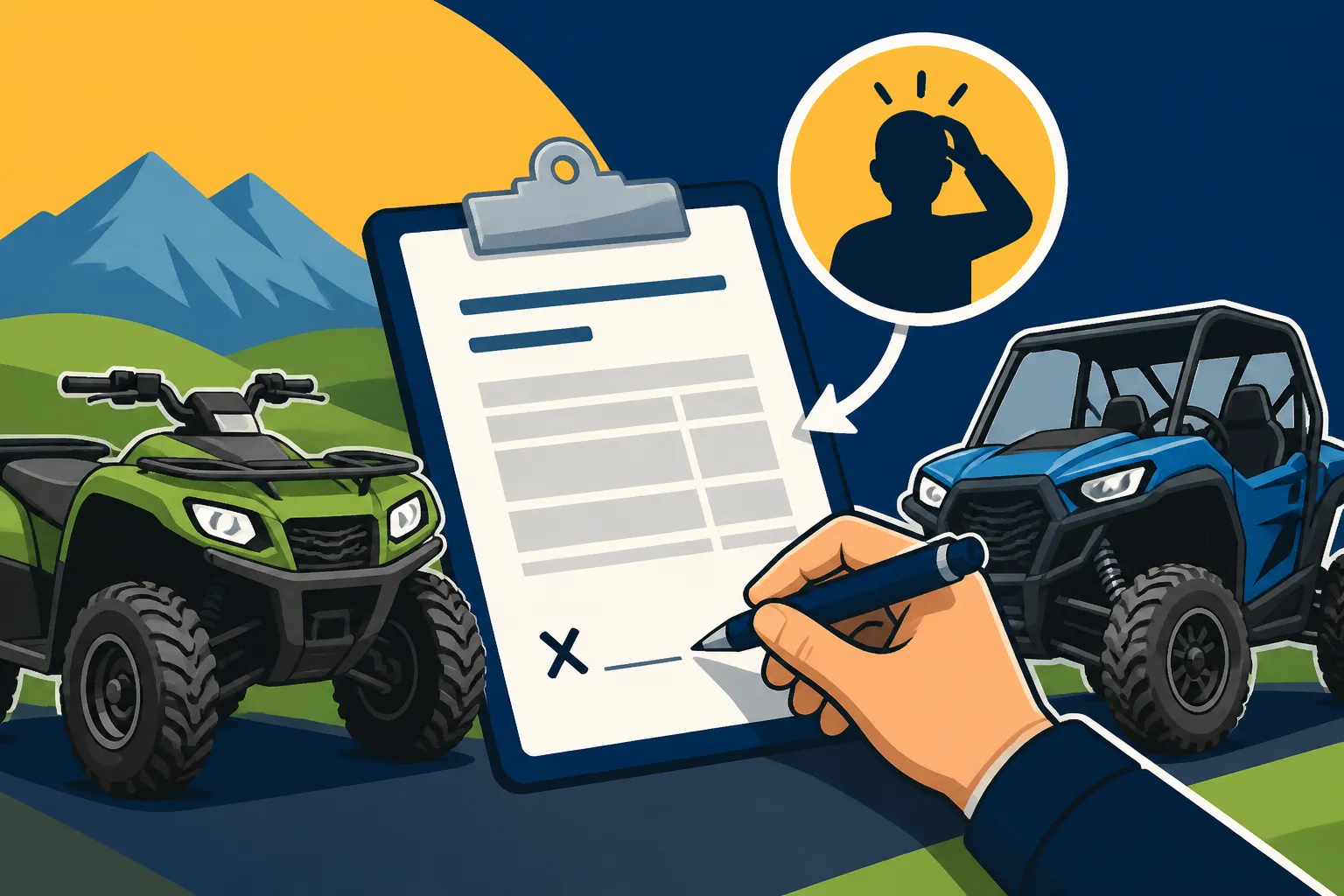
Realizing the seller forgot to sign your ATV or UTV title feels like hitting a brick wall. All your plans for hitting the trails or getting that chore list done suddenly halt. It’s more than just an oversight; it's a significant roadblock that can keep your machine from being legally transferred into your name at the Virginia Department of Motor Vehicles (DMV). This isn't just a minor paperwork hiccup; it directly impacts your ability to prove ownership and legally operate your off-road vehicle.
Why a Missing Signature Is a Problem
Think of an ATV title as the deed to your house. Just like you wouldn't expect to own a property without the previous owner's signature on the transfer document, the DMV views an unsigned title as an incomplete transaction. The seller's signature is the legal acknowledgement that they are surrendering their ownership rights to you. Without it, from the DMV's perspective, the machine still belongs to the person whose name is printed on that title. This means you can't simply walk into a DMV office and get the title transferred into your name. They'll reject your application, sending you back to square one, often with a feeling of dread.
This lack of clear ownership can cause a cascade of issues. Imagine trying to sell the machine down the line, only to discover you don't have a properly executed title to transfer to the next buyer. Or, worse, if the ATV is ever stolen or involved in an accident, proving it's actually yours without a properly signed title can become an uphill battle. It leaves you in a legal limbo, which is exactly why [Titling an Old Quad to Prove You Own It] is so important, even if it feels like a hassle. The signature is the linchpin of that proof.
Common Scenarios Leading to Unsigned Titles
It's easy to point fingers, but often, a missing signature is simply an honest mistake. In the thrill of a private sale, especially when dealing with cash and the excitement of a new machine, details can get overlooked. Both buyer and seller might be eager to complete the transaction, shake hands, and move on. The seller might assume they signed all necessary spots, or perhaps they're not familiar with Virginia's specific titling requirements, especially if they've only titled street-legal vehicles before.
Sometimes, the oversight happens when buying from an out-of-state seller, who might be accustomed to different procedures in their home state. They sign where they think they should and miss a Virginia-specific spot. While less common, even dealerships can make errors, though they usually have robust processes in place. The bottom line is, these situations are frustratingly common, and you're certainly not alone if you've found yourself in this position after buying a machine, whether it was from a small-town seller near [Grundy] or someone passing through the [Shenandoah Valley].
Steps to Rectify an Unsigned Virginia ATV Title
When you discover that missing signature, don't panic. There are clear steps you can take to resolve the issue. The approach you'll need to take depends largely on your ability to reconnect with the original seller. In most cases, it's far easier if you can reach them, but Virginia does have a pathway for those unfortunate situations where the seller has seemingly vanished.
Best Case Scenario: Contacting the Original Seller
The absolute best and easiest way to fix this problem is to get back in touch with the seller. This should always be your first course of action. Reach out immediately by phone, text, or email – however you've been communicating. Explain the situation calmly and clearly, letting them know that the DMV requires their signature for the title transfer to be completed. Most private sellers are honest individuals who simply made an oversight and will be happy to help you correct it.
Ideally, you can arrange to meet the seller in person again. A great option is to suggest meeting at a DMV Customer Service Center or a notary public's office. If you meet at the DMV, a clerk can guide the seller to the correct signature line and answer any questions on the spot. If you meet at a notary, they can witness the signature, which adds an extra layer of legal verification. This personal meeting allows you to immediately verify the signature and ensure all necessary fields are completed correctly. Remember, [Meeting a Seller at a DMV Customer Service Center] can make this process seamless for both parties, as a DMV representative can usually confirm the signature is correct on the spot.
If meeting in person isn't feasible because the seller has moved or lives far away, they might be able to mail the signed title back to you. However, this method comes with risks. The title is a valuable document, and trusting it to postal services or relying on the seller to return it promptly can be stressful. If this is the only option, consider using a tracked and insured shipping method. You might also ask the seller to have their signature notarized on the title before mailing it, providing an additional layer of security and proof of signature, even if it's not strictly required by the DMV in all cases.
When the Seller is Unavailable: The Notarized Affidavit Form VSA 12M
Unfortunately, sometimes the seller is genuinely unreachable. Maybe they moved without leaving a forwarding address, their phone number is disconnected, or they simply refuse to cooperate. This is where Virginia's specific solution, Virginia Form VSA 12M Affidavit, comes into play. This form is officially titled "Affidavit in Lieu of Title Certificate," and it's designed for situations where a title can't be obtained or perfected through conventional means, such as when the seller's signature is missing and they cannot be found.
The VSA 12M form is essentially your sworn statement, made under penalty of perjury, explaining the circumstances of the purchase and why you cannot get the original seller's signature. You'll need to fill out details about the ATV, the purchase date, the amount paid, and most importantly, why you're unable to get the seller's signature. This could be due to the seller being unreachable, deceased, or uncooperative. The crucial part is that your signature on this affidavit must be notarized. This means you'll sign the form in front of a notary public, who verifies your identity and witnesses your signature. While online resources like LawDepot can help you locate notary services or draft other general legal documents, for this specific situation, the VSA 12M is the official form provided by the Virginia DMV. It replaces the missing signature and allows the DMV to proceed with titling the ATV in your name. [The Notarized Affidavit That Replaces a Missing ATV Title] is a critical piece of paperwork in these scenarios, so treating it with care and accuracy is paramount.
You must be completely honest and accurate when filling out Form VSA 12M. Providing false information on a legal affidavit can lead to serious consequences. The DMV relies on this document to establish a clear chain of ownership, so any inconsistencies or falsehoods can jeopardize your ability to title the machine. If you've exhausted all reasonable efforts to contact the seller and are confident they are truly unavailable or unwilling to sign, then the VSA 12M is your official path forward. It's a testament to Virginia's realistic approach to vehicle transactions, understanding that not every sale goes perfectly according to plan.
Gathering Supporting Documentation
Even with the VSA 12M, you can't just show up with a blank form and expect success. The DMV will want to see as much supporting evidence as possible to corroborate your story and the legitimacy of the transaction. The more documentation you can provide, the smoother the process will be. The most vital document here is a bill of sale. Even if the title itself is flawed, a detailed bill of sale proves the transaction took place, listing the buyer, seller, purchase date, price, and the ATV's identifying information (make, model, VIN). If you don't have a bill of sale, or only a rudimentary one, the situation becomes much more challenging, as explained in [Virginia Title Without a Bill of Sale].
Beyond a bill of sale, gather any proof of payment you have. This could include bank statements showing a withdrawal or transfer matching the purchase price, a copy of a cancelled check, or even transaction records from payment apps like PayPal or Venmo if they were used. Any communication you had with the seller – emails, text messages, or even a log of phone calls – can also serve as evidence of your attempts to reach them and get the title perfected. Photos of the ATV with its VIN clearly visible can also be helpful, especially if you need to verify the machine's identity, a critical step before [Checking the Serial Number Before Cash Changes Hands] in any purchase. All these pieces of documentation help paint a complete picture for the DMV, demonstrating that you are indeed the rightful owner and have made a good-faith effort to secure the proper title.
Preventing Future Title Signature Issues
Dealing with an unsigned title is a major hassle, and once you've gone through it, you'll want to do everything you can to avoid a repeat experience. The key is vigilance and a thorough process, especially when engaging in private sales. A little extra care on the front end can save you a world of trouble down the line.
The Importance of a Thorough Private Sale Process
When buying an ATV or UTV from a private seller, it's easy to get caught up in the excitement and overlook crucial steps. However, a little diligence can save you a lot of future headaches. Always treat a private sale with the same level of seriousness you would a purchase from a dealership. Before you even agree to meet, ask for photos of the title itself. See if there are any obvious issues or if it looks suspicious. When you meet the seller, make a careful inspection of the machine, but dedicate equal time to the paperwork.
The most important advice is this: never exchange money until you have physically inspected the title and confirmed it is properly signed and ready for transfer. This means checking all the relevant fields for the seller's signature, your name, and any other required information. It's also a good idea to confirm the seller's identity by asking to see a driver's license and ensuring the name on their ID matches the name on the title. A solid bill of sale, even if the title is present and perfect, is always a smart move. It provides a legal record of the transaction separate from the title itself. These steps, combined with general good practices for [Buying From a Private Seller in Virginia], can significantly reduce your risk.
What to Do at the Point of Sale
The moment of truth in any private ATV sale is when the title changes hands. This is your prime opportunity to prevent future problems. First and foremost, have the seller sign the title in your presence. Watch them sign each required line. Don't be shy about pointing out if they've missed a spot or if the signature isn't legible. Immediately after they sign, you should fill in your own information as the buyer, including your name and address, as completely and accurately as possible. This ensures that all necessary fields are completed before either party leaves.
It's also a good practice to remind the seller (and yourself) about the implications of the sale for [Virginia Sales Tax at Titling]. While the tax is ultimately your responsibility as the buyer when you title the machine, being aware of all the costs upfront helps everyone. If possible, consider meeting the seller at a notary's office. A notary can witness the seller's signature, officially verifying it. This adds an undeniable layer of authenticity to the title transfer, making it incredibly difficult for anyone to dispute the validity of the signature later on.
Dealer Sales and Their Paperwork
While title signature issues are far less common with dealer purchases, it's not impossible. Reputable Virginia dealerships usually have streamlined processes to handle all title and registration paperwork on your behalf. They often submit the necessary documents directly to the DMV, ensuring everything is filled out correctly. However, even with professionals, human error can occur.
When you purchase a new ATV or UTV from a dealer, you should still carefully review all the paperwork they provide you at the time of sale. This includes the buyer's order, sales contract, and any copies of the title application or Manufacturer's Statement of Origin (MSO) they give you. Confirm that all your personal information is correct and that the vehicle's details (VIN, make, model) match your new machine. While the dealer is responsible for filing the official documents, understanding [Virginia Dealer Paperwork at Delivery] and ensuring your copies are accurate can catch any potential errors before they become major problems. Don't hesitate to ask questions if something doesn't look right or if you're unsure about any part of the process.
| Scenario for Unsigned Title | Best Approach | Key Documents Needed | Potential Challenges |
|---|---|---|---|
| Seller is Contactable | Re-engage seller for signature | Original title, Bill of Sale | Seller willingness, geographic distance, scheduling conflicts |
| Seller is Unreachable | Use Virginia Form VSA 12M Affidavit | Notarized VSA 12M, Bill of Sale, Proof of Payment, VIN verification, communication attempts | Proving seller's unavailability, detailed affidavit completion, DMV discretion |
Disclaimer
This article is for general informational purposes only and does not constitute professional advice. Laws, prices and regulations vary by location and change over time. Consult a qualified professional for guidance on your specific situation.