Virginia Title for a Youth Quad
Navigating the world of ATV titles in Virginia can feel like trying to solve a puzzle, especially when you're looking to get a quad for a younger rider. Many parents get confused about whether that smaller engine size means less paperwork, or if the rules are the same for every machine. It's a valid concern, as you want to make sure you're doing everything by the book to protect your investment and ensure your child can legally use their new ride. This guide will walk you through the specifics of titling a youth quad in Virginia, clearing up the confusion so you can focus on the fun.
Deciphering Virginia's ATV Titling Laws: The Youth Quad Angle
Virginia's approach to ATV titling can seem a little bit like a choose-your-own-adventure book, especially when you're looking at machines designed for younger riders. The biggest mistake many folks make is assuming all ATVs fall under the same blanket rules. For youth quads, a couple of key factors really steer the ship: the engine's cubic centimeter (cc) displacement and whether the machine is brand new or previously owned.
The Critical 50cc Engine Size Threshold
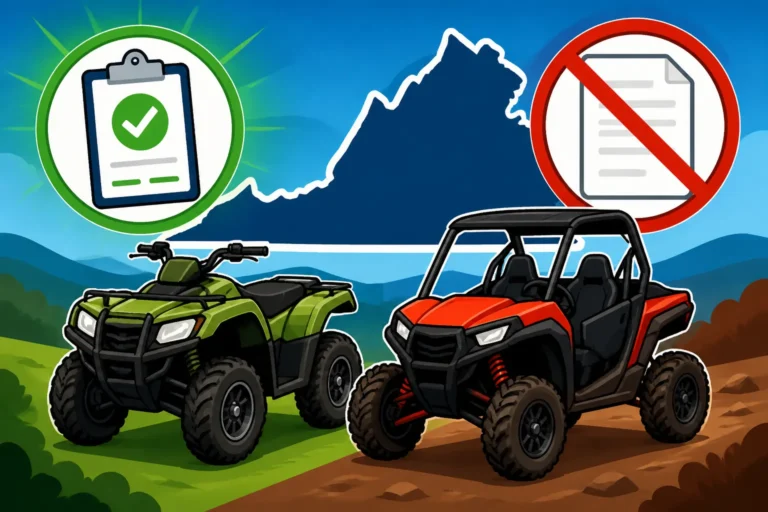
The engine size of your child's quad is probably the single most important factor in determining if a title is even necessary in Virginia. It’s a pretty clear line in the sand, actually. If that youth quad sports an engine that is 49cc or smaller, you typically won't need to worry about getting a title for it in Virginia. These smaller machines are often treated differently under the state's motor vehicle code, largely because they don't quite meet the definition of what the DMV considers a registrable vehicle. So, if your little one is zipping around on a 50cc or less machine, you can breathe a sigh of relief on the title front. This is explicitly covered by [ATVs Under 50cc Do Not Need a Title].
However, the moment that engine capacity crosses the 50cc mark, the conversation changes entirely. For any ATV with an engine size of 50cc or greater, the requirement for a Virginia title kicks in – at least for new machines purchased after a certain date, which we'll dive into next. This is where many youth quads that are a bit more robust, perhaps a 90cc or 125cc, will absolutely fall into the titling requirements. It's not about the rider's age, but the machine's capabilities. [ATVs Over 50cc Bought New Since 2006 Need Titles] provides more detail on this important distinction.
New vs. Used Machines and the 2006 Cutoff
Beyond engine size, the next big question is when and how you acquired the youth quad. Virginia draws a significant line in the sand with a specific date: July 1, 2006. This date is crucial for new ATV purchases. If you bought a brand new ATV with an engine over 50cc on or after July 1, 2006, then yes, a Virginia title is absolutely required. This rule was put in place to create a clearer ownership trail for new machines. So, if you just walked out of a dealership with a new 90cc youth quad last weekend, you're definitely looking at getting it titled. [Virginia Titles Machines Bought New Since 2006] and [Virginia's July 2006 Titling Cutoff] both highlight this important aspect.
Now, what if you're buying a used youth quad? This is where things get a bit more flexible. For used ATVs, regardless of their engine size or original purchase date, getting a Virginia title is actually optional. That's right, completely optional! Many riders choose to title their used quads anyway, simply to have that official proof of ownership and to make future selling easier. It also provides a clear paper trail if you ever need to prove ownership for insurance purposes or in a dispute. However, if you bought a used youth quad from a private seller, and there's no title to sign over, you're not legally mandated to get one yourself. You can explore this further in [Why Titling a Used Quad Is Optional in Virginia]. The one major exception here is if you're financing the purchase through a bank or credit union. Lenders almost always require a title to be issued with their lien noted, protecting their investment.
Essential Paperwork for Your Child's Quad Title
Alright, so you’ve figured out whether your youth quad needs a title based on its engine size and purchase history. Now comes the nitty-gritty: gathering all the necessary paperwork. This part can feel like a scavenger hunt, but having everything in order before you head to the DMV will save you a world of frustration and a potential second trip.
For a Brand New Youth Quad
If you're bringing home a sparkling new youth quad from a dealership, the process is usually a bit more straightforward, thanks to standardized dealer paperwork. The most critical document you'll receive is the Manufacturer's Statement of Origin (MSO), sometimes called a Manufacturer's Certificate of Origin (MCO). This is essentially the birth certificate for your ATV, proving it's new and has never been titled before. [The MSO You Need to Title a New Quad] explains its importance in detail. Without this MSO, the DMV simply cannot issue a first-time title for a new machine. It's the dealer's responsibility to provide this to you, and you should ensure it's in your hands before you leave the lot. [Virginia Requires an MSO for a New Machine] clarifies why this document is non-negotiable.
Alongside the MSO, you'll also need a Bill of Sale from the dealership. While the MSO proves the machine's origin, the bill of sale confirms the transaction, showing who bought it, from whom, the date of purchase, and the sales price. This is crucial for calculating Virginia's sales tax. Make sure both your name (or your name as the parent/guardian if you're titling it in your name for a minor's use) and the quad's Vehicle Identification Number (VIN) are accurately listed on both documents. It’s always a good practice to double-check these details right then and there.
For a Used Youth Quad (When You Choose to Title It)
Titling a used youth quad, especially if you’ve decided to do so even though it might be optional, requires a different set of documents. The ideal scenario is when the previous owner can provide you with a properly signed-over Virginia title. This is the easiest path, as the title itself acts as proof of prior ownership and contains all the necessary vehicle information. Just make sure the seller signs in the correct spot, usually on the back, transferring ownership to you. [Getting the Seller to Sign the Old Title Over] is a helpful resource if you're unsure about this step.
However, what if the used youth quad you bought never had a title, or the previous owner lost it and can't provide one? This is a common situation, especially with older or smaller machines where titling might have been optional initially. In this case, you'll need a Bill of Sale from the seller. Even for a private sale, it's incredibly important to have a clear, written record of the transaction. You can find customizable templates for a bill of sale through services like LawDepot, ensuring all the critical information is included: seller's and buyer's names and addresses, the date of sale, the purchase price, and a full description of the ATV (make, model, year, VIN). This document proves you lawfully acquired the machine.
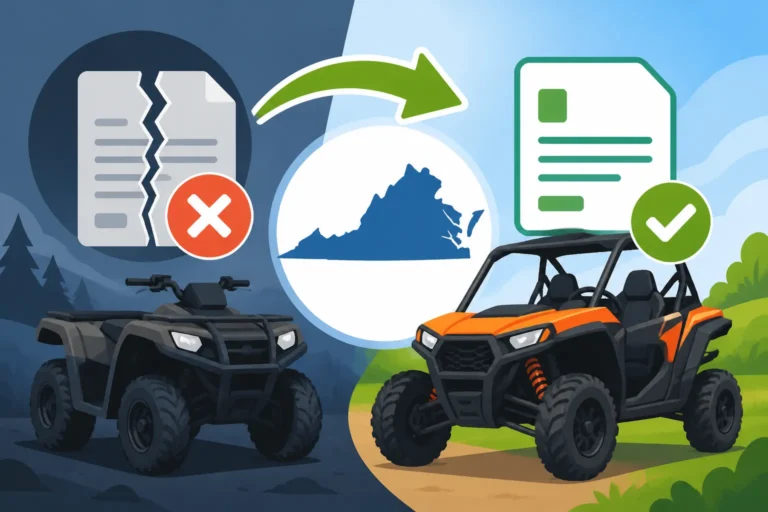
If there's no previous title and you want to establish clear ownership for a used quad, you'll likely need to complete a Virginia Form VSA 12M, which is an Affidavit in Lieu of Title. This notarized document essentially declares that you are the lawful owner and explains why you don't have a traditional title. You can usually download this form from the Virginia DMV website. Filling it out accurately and having it properly notarized is key. Again, if you're looking for guidance on creating legal documents or need templates, resources like LawDepot can be quite helpful in ensuring you have all your bases covered when drafting affidavits or other legal forms related to ownership. [The Notarized Affidavit That Replaces a Missing ATV Title] goes into more detail about how to use this form. Finally, you’ll need proof of the purchase price for sales tax calculation, which the bill of sale should provide.
The Titling Process: From Application to Title in Hand
Once you’ve collected all your documents, it’s time to actually get that title! The process is fairly straightforward in Virginia, whether you choose to do it in person or by mail. However, knowing exactly what to expect can ease any anxieties and help you avoid common pitfalls.
What to Bring to the DMV
If you're planning a trip to a Virginia DMV Customer Service Center, a little preparation goes a long way. Make sure you have all your original documents with you, not just copies. Here’s a checklist of what you should typically bring to title a youth quad:
- Your Valid Photo ID: This confirms your identity.
- Proof of Virginia Address: Things like a utility bill, voter registration card, or a lease agreement work well. This is important because [Virginia Proof of Address at Titling] is a requirement.
- The Manufacturer’s Statement of Origin (MSO): If it's a new quad.
- The Previous Title, Signed Over: If it's a used quad with an existing title.
- A Bill of Sale: For both new and used machines. For used machines, even if you are using an affidavit, a clear bill of sale strengthens your case. Remember, for any forms like a comprehensive bill of sale, checking a platform like LawDepot can ensure you cover all necessary legal points.
- Form VSA 12M, Affidavit in Lieu of Title: If it's a used quad without a prior title, and you've decided to title it. Make sure it's properly notarized.
- Payment for Fees and Taxes: You'll need to cover the title fee and sales tax.
Having all these documents organized will make your visit much smoother. [What to Bring to the DMV to Title a Quad] provides a comprehensive list that applies to all ATV types.
Completing the Application and Payment
At the DMV, you'll need to fill out a Virginia Application for Certificate of Title and Registration (Form VSA 17A). Don't let the "Registration" part in the form title throw you off; ATVs aren't registered for road use in Virginia, but this form is used for titling off-road vehicles as well. This form is fairly self-explanatory, but if you have any questions, the DMV clerk will be able to assist you. [Virginia Form VSA 17A Explained] provides a breakdown of this key document.
You will also be required to pay the necessary fees. The title fee itself is generally quite modest, often a flat fee, so don’t expect it to break the bank. You can find current figures directly from the Virginia DMV. However, the larger cost will likely be the Virginia sales and use tax. This is typically calculated as a percentage of the purchase price (or the ATV’s book value if the purchase price seems unusually low or is not provided). Be prepared for this, as it can be a substantial amount depending on the cost of the quad. You can pay with various methods, usually including cash, check, or credit/debit card, but always confirm payment options with your local DMV. [Virginia Title Fee of $15] and [Virginia Sales Tax at Titling] offer more specifics on these costs. If you are financing the youth quad, the lender will require their lien to be recorded on the title. Your lender might even handle the titling paperwork for you, or provide you with specific instructions and forms. For any specific financing agreements or lien documentation, platforms like LawDepot can offer useful templates for securing your financial interests.
What You Get and What You Don't
Once all the paperwork is processed and fees are paid, you'll eventually receive your official Virginia ATV title in the mail. This document serves as undeniable proof of ownership for your youth quad. [What You Get for the $15 ATV Title Fee] details exactly what this document represents.
It's extremely important to remember what you don't get when you title an ATV in Virginia:
- No Registration: Unlike cars or motorcycles, ATVs in Virginia are not registered for road use. The title is purely for ownership purposes. [Virginia Titles ATVs but Never Registers Them] covers this in detail.
- No License Plates: Because ATVs aren't registered for road use, they don't get license plates. [Virginia Issues No Plates for ATVs] clarifies this.
- No Decals: You won't receive any annual decals to affix to your youth quad. [Virginia Issues No Decals for ATVs] explains this further.
Your title simply confirms ownership and provides a traceable record for the machine. This distinction is crucial for understanding why your titled youth quad still cannot be ridden on public roads or highways in Virginia, regardless of its titled status.
Here's a quick summary table to help clarify the titling requirements for youth quads:
| Scenario | Engine Size | Purchase Date (New) | Is a Virginia Title Required? | Key Documents Needed |
|---|---|---|---|---|
| New Youth Quad | Under 50cc | Any | No | – |
| New Youth Quad | 50cc or greater | July 1, 2006, or after | Yes | MSO, Bill of Sale, Photo ID, Proof of Address |
| Used Youth Quad | Under 50cc | Any | Optional | (If titling: previous title or VSA 12M, Bill of Sale) |
| Used Youth Quad | 50cc or greater | Any | Optional | (If titling: previous title or VSA 12M, Bill of Sale) |
Remember, while the process might seem detailed, taking the time to understand Virginia's specific requirements ensures you're a responsible owner and helps protect your investment in your child's quad.
Disclaimer
This article is for general informational purposes only and does not constitute professional advice. Laws, prices and regulations vary by location and change over time. Consult a qualified professional for guidance on your specific situation.