Virginia Title Payment Methods
Figuring out the proper payment methods when you're trying to title an ATV or UTV in Virginia can feel like navigating a maze, adding an extra layer of stress to an already bureaucratic process. No one wants to get to the front of the line at the DMV, only to discover their chosen payment method isn't accepted, leading to wasted time and frustration. This comprehensive guide is designed to clarify all your Virginia ATV title payment options, whether you're visiting a customer service center or sending your application through the mail.
Accepted Payment Methods at Virginia DMV Customer Service Centers
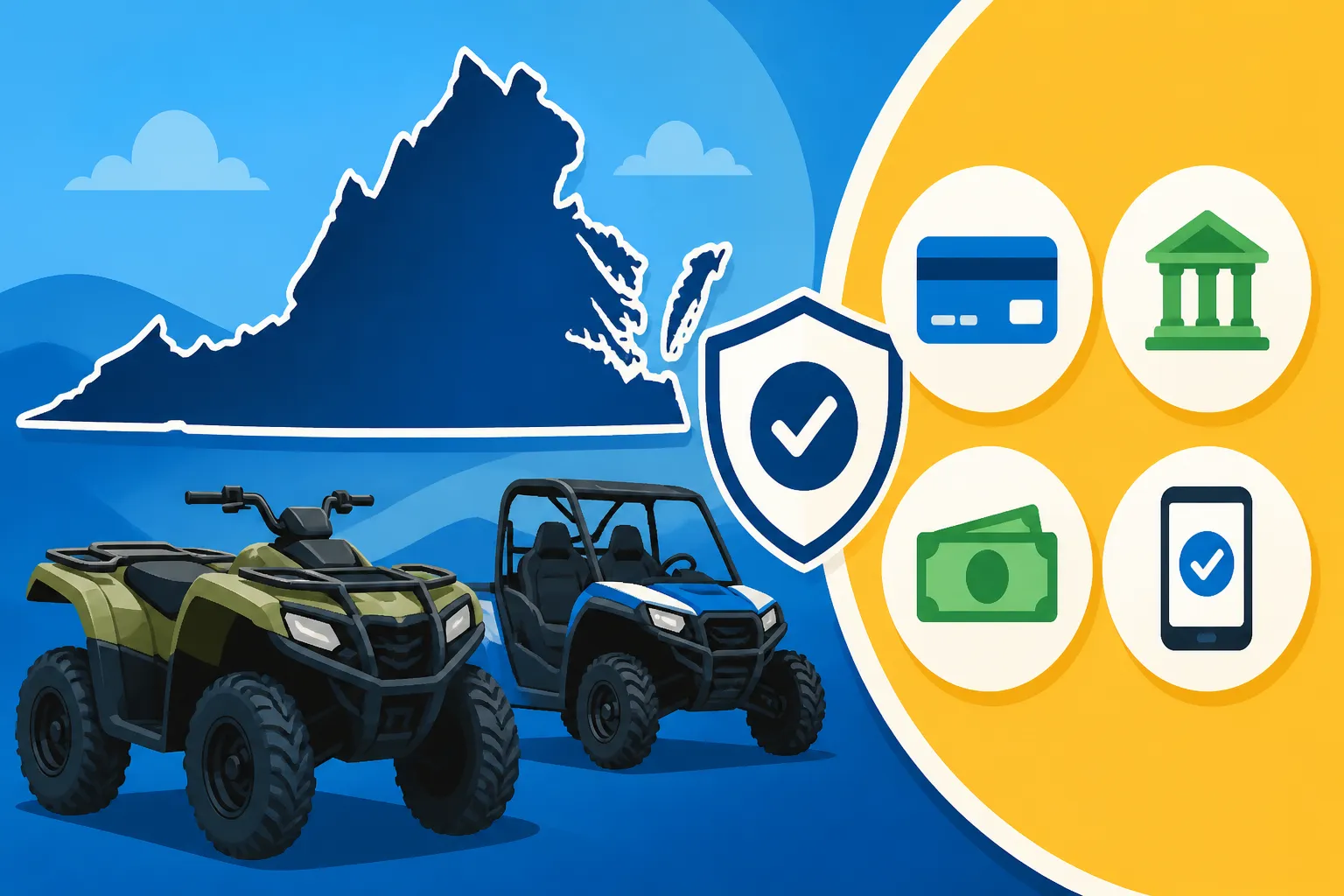
When you're taking care of your ATV or UTV titling in person at one of Virginia's Department of Motor Vehicles (DMV) Customer Service Centers, you have a few convenient options for payment. It's always a good idea to arrive prepared, not just with your paperwork, but with your payment method squared away, to ensure a smooth transaction. These centers are equipped to handle various forms of payment to make the process as straightforward as possible for the public. Understanding what's accepted upfront can save you a significant headache and a return trip.
Cash Transactions for Your ATV Title
Yes, the Virginia DMV does accept cash for your ATV title fees and any associated sales tax. This can be a straightforward option if you prefer to deal in physical currency. However, it's wise to bring the exact amount if possible, or at least be prepared for them to make change for reasonable denominations. While DMV offices handle cash regularly, they might not always have large amounts of change on hand, especially for very large bills or at the end of the day.
For example, if you're titling a new quad and owe the [Virginia Title Fee of $15] plus several hundred dollars in sales tax, having a mix of smaller bills rather than just a hundred-dollar bill can be helpful. Imagine you've just bought a shiny new utility vehicle and you're ready to get it titled. You've got all your [What to Bring to the DMV to Title a Quad] documents in order, including the Manufacturer's Statement of Origin (MSO) and your proof of address. When you calculate the sales tax on your purchase, it might come out to an odd number. Having cash in smaller denominations ensures you can pay the exact amount without any issues.
Credit and Debit Cards for Titling Fees
Credit and debit cards are a widely accepted and often preferred method of payment at Virginia DMV customer service centers. This offers convenience, security, and the ability to earn rewards points if your card has such a program. Most major credit card networks, like Visa, MasterCard, Discover, and American Express, are typically accepted. When using a debit card, it functions similarly to a credit card for these transactions.
It's important to remember that some financial institutions or even the DMV itself might apply a small convenience fee for credit or debit card transactions. This fee is usually a percentage of the total transaction amount or a flat fee, and it's intended to cover the processing costs. Always check with the DMV or your card provider beforehand if you're concerned about potential additional charges. For instance, if you're titling a high-value side-by-side that incurs a substantial sales tax, a percentage-based convenience fee could add a few extra dollars to your total, so it's good to factor that into your budget. This method is particularly popular for those who prefer not to carry large sums of cash.
Checks and Money Orders for Your Paperwork
Personal checks, certified checks, cashier's checks, and money orders are generally accepted at Virginia DMV customer service centers. When paying by personal check, make sure it's drawn on a valid U.S. financial institution, dated correctly, and signed. The check should also have your current address and phone number pre-printed or clearly written on it. You'll need to make the check payable to "Department of Motor Vehicles" or "DMV."
If you're unsure about using a personal check or if the amount is particularly large, a certified check, cashier's check, or money order offers an added layer of security. These are typically purchased from your bank or a postal service, and they guarantee funds, which the DMV appreciates. This is especially useful if you're handling a [Virginia Titles After a Private Sale] and want to make sure all financial transactions are transparent and secure. A word of caution: if a personal check is returned due to insufficient funds, you will face additional fees and your title application could be delayed or rejected, potentially requiring you to start the process over or face further penalties.
Payment for Mailed-In Title Applications
While visiting a DMV office in person is the most common way to title your ATV or UTV, Virginia also allows you to mail in certain title applications. This can be a convenient option if you live far from a customer service center or prefer to handle bureaucracy from the comfort of your home. However, the accepted payment methods for mailed applications are much more restricted than for in-person transactions, primarily due to security and processing limitations. Understanding these rules is crucial to ensure your application isn't returned for improper payment.
Acceptable Payment Types by Mail
For title applications sent through the mail to the Virginia DMV, you generally must pay by check or money order. Cash is absolutely not accepted for mailed applications. Sending cash through the mail is inherently risky, as it can easily be lost or stolen, and the DMV simply cannot be responsible for such occurrences. This policy is in place to protect both your funds and the DMV's processing integrity.
When preparing your payment for [Mailing an ATV Title Application to the DMV], always opt for a check or money order. Make sure it's made out to the "Department of Motor Vehicles" or "DMV" for the exact amount. If you're submitting a [Virginia Form VSA 12M Affidavit] or similar documentation, ensure all forms are completed accurately before mailing, as an incorrect total on your payment will also cause delays. Services like LawDepot can assist with generating professional and accurate forms, ensuring your paperwork is in order before you even get to the payment step. This kind of preparation significantly reduces the chances of your application being held up or returned, which can be particularly frustrating when you're dealing with mail.
Preparing Your Payment for Mail
Accuracy is paramount when preparing your payment for a mailed-in title application. The amount of your check or money order must exactly match the total fees due, including the title fee, sales tax, and any other applicable charges. If the payment is short, your application will be rejected and returned. If you overpay, it will take time for the DMV to process a refund, causing unnecessary delays. Calculating the correct [Virginia ATV Sales Tax Rate] and the standard [Virginia Title Fee of $15] is critical.
Double-check your calculations before writing out the check or purchasing the money order. It’s a good practice to keep a copy of the check or money order, along with your application, for your records. Place your check or money order securely in an envelope with your completed application and any supporting documents, such as your MSO or bill of sale. Using certified mail with a return receipt can provide peace of mind, confirming that your important documents and payment have reached the DMV's processing center. This proactive approach helps prevent many of the common [Virginia Title Questions Clerks Hear] related to missing payments or incorrect amounts.
Understanding Sales Tax and Other Fees When Titling Your ATV
When you're titling an ATV or UTV in Virginia, it's rarely just a simple title fee. Most transactions involve additional costs, with sales tax being the most significant for new purchases or certain used sales. These fees are collected at the same time as your title application, meaning your payment method needs to cover the entire sum. Understanding what makes up this total helps you prepare financially and avoids any last-minute surprises at the DMV counter or when mailing in your forms.
Sales Tax Calculation and Payment
Virginia levies a sales tax on the purchase of ATVs and UTVs, and this tax is collected when you apply for your title. The specific [Virginia Sales Tax at Titling] is calculated based on the purchase price of your machine. It's important to differentiate this from the vehicle sales and use tax rate, as ATVs fall under the general retail sales tax rate, which can vary slightly by region. For instance, while the statewide rate applies in most areas, certain jurisdictions may have an additional local sales tax that slightly increases the total.
If you purchase your ATV from a dealer, they will typically calculate the sales tax for you and include it in your overall purchase price, then remit it to the state. However, if you're buying a used machine through a [Virginia Titles After a Private Sale], you are responsible for calculating and paying the sales tax directly to the DMV when you submit your title application. This is where many private buyers can get tripped up, either underestimating the amount or forgetting about it entirely. Platforms like LawDepot can provide customizable bill of sale templates that help clearly document the sales price, which is essential for accurate tax calculation. It's not uncommon for the DMV to assess the tax based on the vehicle's book value if the declared sales price is unusually low, so be prepared for that possibility.
Other Potential Fees and Charges
Beyond the sales tax and the standard [Virginia Title Fee of $15], there might be other minor fees depending on your specific situation. For example, if you are obtaining a lien on your ATV because you financed its purchase, there will be a small fee to record that lien on the title. This ensures that the lender's interest in the machine is legally documented. Similarly, if you ever need to replace a lost or damaged title, there's a replacement title fee.
Another common scenario involves specific forms that might require notarization, like the [Virginia Form VSA 12M Affidavit] when the original title is missing. While the DMV doesn't charge for notarization, the notary public you visit outside the DMV will typically charge a fee for their service. It's crucial to factor in all these potential costs when preparing your payment. Getting all your documents, like an affidavit, prepared correctly through resources such as LawDepot, can help ensure you only pay for what's necessary and avoid needing multiple notary visits. Being aware of these various charges helps you budget accurately and arrive prepared with the total funds needed for a seamless titling experience.
Avoiding Payment Pitfalls and Ensuring a Smooth Transaction
Even with all the accepted payment methods and a clear understanding of the fees, it's easy to make small mistakes that can derail your ATV titling process. These pitfalls often lead to frustrating delays, extra trips to the DMV, or the need to resubmit applications, especially if you're mailing them in. Being proactive about verification and documentation can save you a lot of time and hassle. The goal is to walk out, or receive your title in the mail, with the confidence that everything is handled correctly the first time.
Double-Checking Your Total Payment Amount
The most common reason for delays in ATV titling, especially for mailed applications, is an incorrect payment amount. It sounds simple, but miscalculating sales tax, overlooking a small lien fee, or even just making a transcription error when writing a check can cause your application to be rejected. When you're dealing with a [Virginia Title for a New Resident], for example, you might not be familiar with Virginia's specific tax rates, making it even more important to verify.
Before you finalize your payment, meticulously go over every line item. Add the [Virginia Title Fee of $15], the calculated [Virginia Sales Tax at Titling], any lien recording fees, and any other minor charges. If you're unsure about the total, many DMV forms have instructions or calculation worksheets, or you can often call a DMV customer service center for clarification before you visit or mail anything. Some buyers even prefer to use a service like LawDepot to create a detailed bill of sale for private transactions, which can help in accurately calculating the sales tax on a used machine. Having a confirmed total in mind, perhaps even written down, can significantly reduce the chance of presenting an incorrect payment.
Proof of Funds and Identity at the DMV
While not strictly a payment method, having proper identification and sometimes proof of funds can indirectly affect your payment process, particularly for larger transactions or if there are discrepancies. When you [Titling an ATV in Person at a DMV Office], you'll always need your valid photo ID. This verifies your identity as the purchaser or owner of the ATV and ensures that the title is issued to the correct person.
In some rare instances, especially if there's a question about the legitimacy of a large cash transaction or the source of funds, the DMV could ask for additional verification. This is more common in situations involving potential fraud or unusually high-value private sales. While not standard, it's a reminder of the importance of conducting all transactions transparently. Ensure the name on your check or credit card matches your identification to avoid any flags. For example, if you're helping a family member title their machine, ensure you have proper authorization if you're making the payment on their behalf. The more clearly your identity and payment are linked, the smoother your transaction will be, preventing any unnecessary questions or delays.
Disclaimer
This article is for general informational purposes only and does not constitute professional advice. Laws, prices and regulations vary by location and change over time. Consult a qualified professional for guidance on your specific situation.