Virginia Title Processing Time
There's nothing quite like the excitement of buying a new or new-to-you ATV or utility vehicle, but that rush can quickly turn into a frustrating waiting game when you realize you can't hit the trails until the paperwork is all sorted. Many Virginia riders find themselves in a limbo, wondering exactly how long it will take for their ATV or UTV title to arrive after they've done their part at the DMV. This comprehensive guide is here to shed light on the typical processing times for ATV titles in Virginia, what factors can cause delays, and what you can do to make the process as smooth and quick as possible.
The Standard Waiting Game for Virginia ATV Titles
Getting your ATV or UTV titled in Virginia is a crucial step for establishing legal ownership, even though these machines aren't registered for road use. It’s a process that often leaves folks tapping their fingers, but understanding the typical timeline and why it exists can help manage expectations and avoid unnecessary stress.
Typical Processing Times from the Virginia DMV
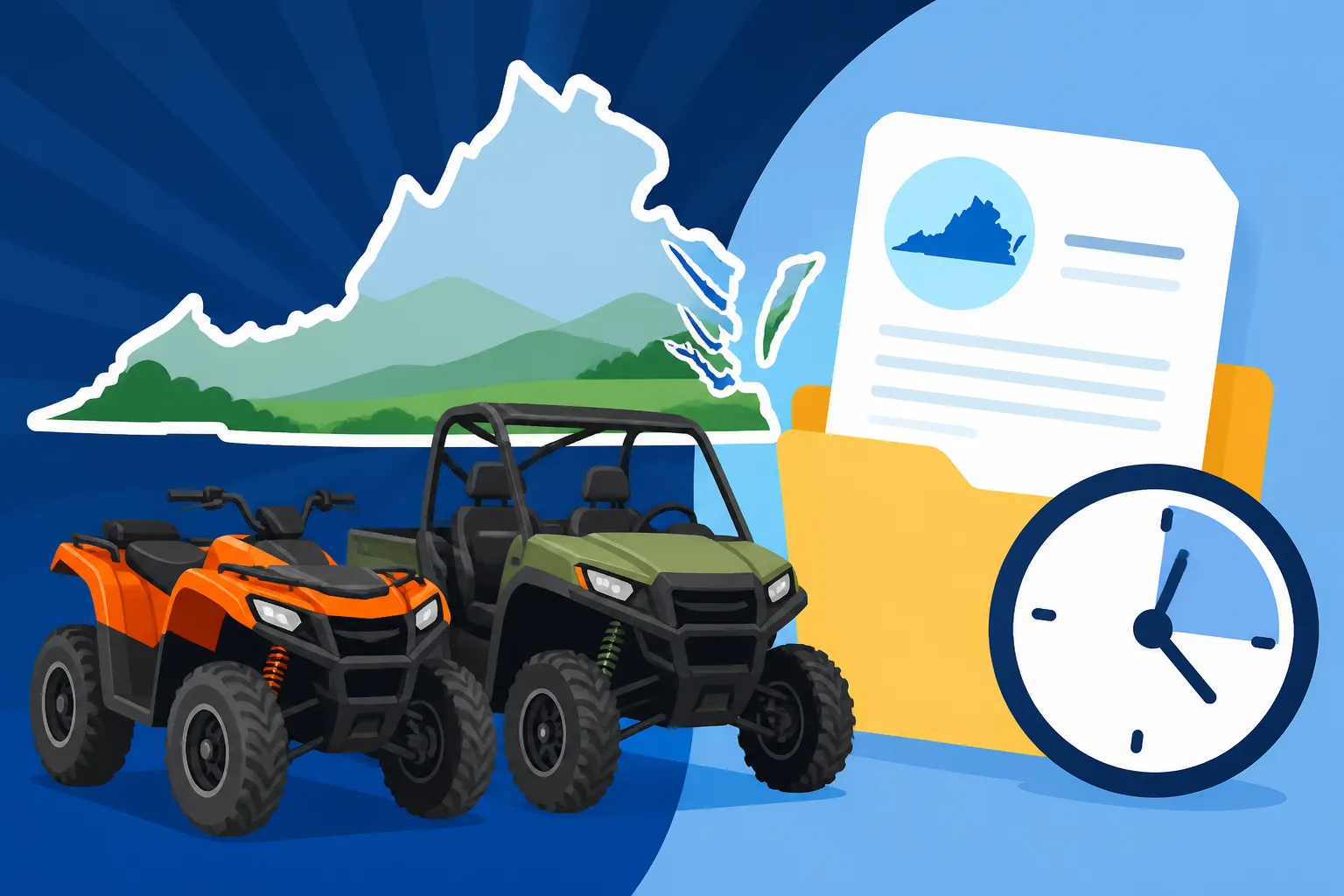
After you've submitted all your documents and fees, the Virginia Department of Motor Vehicles (DMV) generally advises a certain window for processing and mailing out your new title certificate. For most straightforward applications—meaning you've got all your ducks in a row with a complete submission—you can usually expect to receive your physical title in the mail within 7 to 14 business days. This includes the time it takes for the application to be reviewed, the title printed, and then sent through the postal service to your address. It might feel like an eternity when you're eager to ride, but compared to some other vehicle types or complex transactions, it's often a relatively efficient process.
However, it's important to remember that "business days" means Monday through Friday, excluding state and federal holidays. So, if you submit your application on a Friday, the clock effectively starts ticking the following Monday. Factor in a couple of weekends and standard mail delivery, and that two-week estimate can easily stretch to three calendar weeks before the title lands in your mailbox. Patience is definitely a virtue when dealing with official paperwork.
Why DMV Processing Times Vary
While the 7-14 business day window is a general guideline, actual processing times can fluctuate based on several factors beyond your control. One major influence is the sheer volume of applications the DMV is handling at any given moment. Peak seasons, like spring when everyone is gearing up for outdoor activities, or certain times of the month when people tend to complete transactions, can see a slight increase in wait times. The DMV processes thousands of titles daily, and a sudden surge in demand can create a backlog.
Another factor is the method of submission. If you've elected to handle [Mailing an ATV Title Application to the DMV], you'll need to add a few extra days for mail delivery to the DMV on the front end, and then back to you on the tail end. In contrast, if you're [Titling an ATV in Person at a DMV Office], the application often gets entered into the system sooner, potentially shaving a day or two off the initial processing time, though the mailing time for the physical title remains the same. The DMV is a large organization, and slight variations in workload and internal processes can subtly shift the timeline.
Factors That Can Slow Down Your Virginia ATV Title
No one wants to experience delays, especially when it comes to getting their new quad legally squared away. Unfortunately, several common pitfalls can turn that typical two-week wait into a much longer, more frustrating ordeal. Being aware of these potential hang-ups is the first step toward avoiding them.
Common Application Errors That Delay Processing
One of the most frequent reasons for a delay is a simple, yet costly, error on the application itself. The Virginia DMV uses specific forms, such as [Virginia Form VSA 17A Explained], for titling, and any blank fields, incorrect information, or illegible handwriting can cause your application to be flagged. For example, if you mistakenly write down the wrong Vehicle Identification Number (VIN) or forget to fill in your full legal name exactly as it appears on your identification, the DMV will likely send the application back to you for correction, or at the very least, halt processing until the discrepancy is resolved.
Even something as seemingly minor as using white-out or making too many cross-outs can raise a red flag. DMV clerks are trained to look for alterations that might suggest tampering. They want pristine, accurate forms to ensure everything is legitimate. It's always best to take your time, double-check every single entry, and if you make a mistake, it's often better to start with a fresh form rather than trying to salvage a messy one. This meticulous attention to detail at the outset can save you weeks of waiting and frustration.
Missing or Incorrect Supporting Documents
A complete title application isn't just about the form itself; it also requires specific supporting documents. If you're [How to Title an ATV in Virginia], you'll know that depending on whether your ATV is new or used, bought from a dealer or a private seller, and its engine size, you'll need things like a Manufacturer's Statement of Origin (MSO), a properly endorsed previous title, a bill of sale, and proof of address. Missing even one of these crucial pieces of paper can bring the entire process to a grinding halt.
Imagine you're buying a used quad from a private seller, and they forget to sign the back of the title in the designated "seller" section. Or perhaps the bill of sale doesn't include the full VIN or the purchase price. These are common oversights that will lead to the DMV requesting additional information or corrected documents. In some cases, if the original title is missing, you might even need to provide a notarized affidavit in lieu of title. Websites like LawDepot can provide templates for generic bills of sale or affidavits, but ensure any document you use meets Virginia's specific requirements. Always make sure you review [What to Bring to the DMV to Title a Quad] before you head out.
Special Circumstances and Their Impact on Timelines
Certain situations are inherently more complex and will naturally extend the processing time for your ATV title. For instance, if you're trying to get a [Virginia Title for an Inherited Machine], you'll need additional legal documentation like a copy of the death certificate, the will (if applicable), or probate court documents to prove your legal right to the machine. These extra layers of verification take time for the DMV to review and approve.
Another example is if there's a lien on the ATV from a previous owner that hasn't been properly released, or if you're dealing with a machine that has [Virginia Machines With No Paperwork] at all. These scenarios require deeper investigation by the DMV and potentially more documentation from your end, such as seeking out previous owners or presenting a notarized [Virginia Form VSA 12M Affidavit] to attest to ownership and how it was acquired. The DMV has to ensure clear chain of ownership before issuing a new title, and these more involved cases simply require more scrutiny and therefore, more time.
Expediting Your Virginia ATV Title Application
While you can't snap your fingers and magically make the DMV work faster, there are definitely proactive steps you can take to ensure your application sails through the process as quickly as possible. The key lies in preparation and understanding the system.
Submitting a Complete and Accurate Application
This cannot be stressed enough: the absolute best way to ensure your ATV title processes quickly is to submit a perfectly complete and accurate application the very first time. Before you even walk into the DMV or drop that envelope in the mail, spend ample time reviewing every single piece of required documentation. Cross-reference the VIN on the application with the VIN on the machine itself and on the MSO or previous title. Make sure all names are spelled correctly and signatures are in the right places.
If you're unsure about any part of the form, it's always better to ask. You can check the DMV's website for specific instructions or even call their customer service line for clarification. Don't guess. A quick call or a few extra minutes of review can save you weeks of delay. Remember that forms from sources like LawDepot can be helpful for auxiliary documents like bills of sale, but always ensure they are fully and accurately completed and comply with Virginia's requirements.
Dealer-Assisted Titling vs. DIY at the DMV
When you purchase a new ATV or UTV from a licensed Virginia dealer, they often offer to handle the titling paperwork for you. This can be a significant advantage in terms of speed and accuracy. Dealers are experienced with the process, know exactly which forms are needed, and are usually well-versed in avoiding common errors. They submit applications in bulk and often have direct communication channels with the DMV, which can streamline the initial review process. While they may charge a small processing fee for this service, it can be well worth it for the peace of mind and potentially faster turnaround.
However, if you're buying from a private seller, especially a used machine where [Virginia Titles Are Optional on Used Machines], you'll likely be handling the titling yourself. In this DIY scenario, being extra diligent is paramount. You'll be responsible for gathering all documents, completing the forms correctly, and understanding the nuances of [Virginia Sales Tax at Titling]. While it requires more effort on your part, doing it correctly ensures you maintain control and can directly address any issues that arise. Websites like LawDepot can be useful for creating a robust bill of sale that protects both buyer and seller in a private transaction, providing clear documentation of the sale.
Tracking Your Application's Progress
Once you've submitted your application, the waiting game begins. Unfortunately, the Virginia DMV generally doesn't offer a real-time online tracking system specifically for individual ATV title applications. For standard vehicle titles, there might be options, but ATVs often fall into a different category. This means you'll usually need to wait for the physical title to arrive in your mailbox.
If a significant amount of time has passed—say, three to four weeks—and you still haven't received your title, it's perfectly reasonable to reach out to the DMV. You can contact their customer service to inquire about the status of your application. Be prepared to provide specific details like your name, the ATV's VIN, and the date you submitted the application. While they may not be able to give you an exact delivery date, they can often confirm if the title has been processed and mailed, or if there were any issues that caused a delay. Don't be shy about asking [Virginia Title Questions the DMV Hears] or [Virginia Title Questions Clerks Hear] if you're truly concerned.
Here's a quick comparison of titling scenarios and potential impacts on processing:
| Scenario | Required Documents (Examples) | Potential Impact on Processing Time | Best Practice |
|---|---|---|---|
| New ATV from Dealer | MSO, Bill of Sale, VSA 17A | Typically Fastest (Dealer handles) | Verify dealer submits promptly |
| Used ATV from Private Seller | Signed Previous Title, Bill of Sale, VSA 17A | Standard 7-14 Business Days | Double-check all signatures and info with seller |
| Used ATV, Title Missing | Notarized VSA 12M, Bill of Sale, VSA 17A | Potentially Longer (Verification) | Use a reputable template for VSA 12M (e.g., LawDepot) |
| Inherited ATV | Death Cert., Probate Docs, VSA 17A | Longer (Legal Review) | Gather all legal documentation beforehand |
| Mailing Application | All forms and docs | Adds Mail Transit Time | Send certified mail for proof of delivery |
What to Do While You Wait for Your ATV Title
The anticipation of hitting the trails with your newly acquired ATV can be almost unbearable, and waiting for the official title can feel like it's holding you back. It's crucial to understand what you can and cannot do during this waiting period to stay on the right side of Virginia law.
Can You Ride Your ATV While Waiting for the Title?
This is a very common question, and the simple answer is: generally, yes, you can ride your ATV in Virginia even while waiting for the physical title certificate to arrive in the mail, provided you have legally completed the purchase and submitted your title application. Remember, [Virginia Titles ATVs but Does Not Register Them], so there's no "temporary registration" or plate you're waiting for. The critical part is that the ownership transfer process must be initiated and documented.
You should always carry proof that you've applied for the title, such as a copy of your completed application, the bill of sale, and any receipts from the DMV showing fees paid. This paperwork serves as your temporary proof of ownership. If you were ever stopped by an officer on an approved trail, having this documentation can help clarify your situation immediately. However, always ensure you are riding on legal trails and adhering to all other Virginia ATV laws, such as helmet requirements and age restrictions.
Essential Documents to Keep Handy
While you're waiting for your official title to arrive, you should create a small "ownership packet" to keep with you whenever you transport or ride your ATV. This packet should include:
- A copy of your submitted Virginia ATV title application (VSA 17A).
- Your bill of sale, especially if it's a private sale. This document is a critical piece of your ownership history.
- The receipt from the DMV confirming you paid the [Virginia Title Fee of $15] and any applicable sales tax.
- If you purchased it from a dealer, a copy of the buyer's order.
- Any notarized affidavits, such as the [Virginia Form VSA 12M Affidavit] if the original title was missing.
- Your photo identification.
These documents collectively prove that you are the rightful owner and that you've taken the necessary steps to title the machine. Having them readily accessible can prevent misunderstandings with law enforcement or in the event of an accident. It's smart to keep the originals in a safe place at home and carry clear, legible copies with you when you're out and about.
Planning Your First Ride After Titling
Once that official title arrives in your mailbox, it's a huge relief, and you're officially good to go on the ownership front! Now, you can really start planning those adventures. While the title confirms your legal ownership, remember that it doesn't grant you permission to ride just anywhere. Virginia has very specific laws about where ATVs can be operated, primarily restricting them to private land with owner permission or designated public trails.
Take some time to research [Virginia ATV Trails: Spearhead and the Forest] systems, or check out private riding parks in the state. Secure any necessary trail permits, like a [Virginia Spearhead Trail Permit] or a [Virginia National Forest OHV Permits], depending on where you plan to ride. Even with your title in hand, always be prepared with proper safety gear, and understand the local rules of your chosen riding area. Getting your title is a big step, but it's just one piece of the puzzle for responsible and legal ATV enjoyment in the Commonwealth.
Disclaimer
This article is for general informational purposes only and does not constitute professional advice. Laws, prices and regulations vary by location and change over time. Consult a qualified professional for guidance on your specific situation.