Virginia Title Rules for a Dealer Lot
For anyone running an ATV or UTV dealership in Virginia, navigating the world of titling can feel like you're trying to ride a sport quad through thick mud with a utility vehicle's tires. It's not always intuitive, especially since off-road machines have different rules than cars and trucks. This guide is here to help you understand the specific Virginia title rules that apply to your dealer lot, from how you manage inventory to what happens once a customer drives off with their new machine.
The Basics of Virginia ATV/UTV Titling for Dealers
When you’re in the business of selling off-road vehicles like ATVs and UTVs in Virginia, it’s crucial to understand how titles work, or more accurately, how they don't work for your inventory. Unlike cars, which are typically titled by the dealer before being sold to a customer, off-road machines operate under a different set of regulations. This distinction is designed to streamline the process for dealers and ultimately for the end-buyer.
Why Dealers Don't Title Their Own Inventory
One of the biggest differences for ATV and UTV dealers in Virginia compared to automotive dealerships is that you generally do not title your inventory in your dealership's name. Think about it: if every new ATV you brought onto your lot needed to be titled in your name first, that would be a mountain of paperwork, fees, and processing time, all before you even made a sale! The Virginia Department of Motor Vehicles (DMV) understands this and provides an exemption for dealers. Your role is primarily to act as an intermediary, collecting the necessary documentation and fees from the buyer and then submitting them to the DMV on their behalf. This process ensures that the machine goes directly from the manufacturer (or previous owner, in the case of a used machine) to the end-user with a single title transfer. This system prevents double-titling and reduces administrative burdens for dealerships across the Commonwealth.
Understanding "New" vs. "Used" for Dealer Stock
The type of ATV or UTV you're selling – whether it's brand new or a used machine – significantly impacts the documentation you'll handle. For a brand-new machine, one that has never been titled or registered by an end-user, the core document is the Manufacturer's Statement of Origin (MSO). This document is essentially the birth certificate of the vehicle, proving it's new from the factory. You'll receive this from the manufacturer or distributor when you acquire the vehicle for your inventory. For a used ATV or UTV, the situation is a bit different. If the machine was already titled in Virginia, you'll be dealing with a Virginia title that the previous owner signed over to your dealership. However, it's important to remember that [Virginia Titles Are Optional on Used Machines] for private owners if they were bought before the 2006 cutoff. If you take a used machine in on trade that was never titled by its previous owner, you might only have a bill of sale and will then use that, along with the buyer's application, to get a new title issued to the buyer. Ensuring you have the correct primary document for each machine in your inventory is the first step toward a smooth transaction.
The MSO's Role in a Dealer Transaction
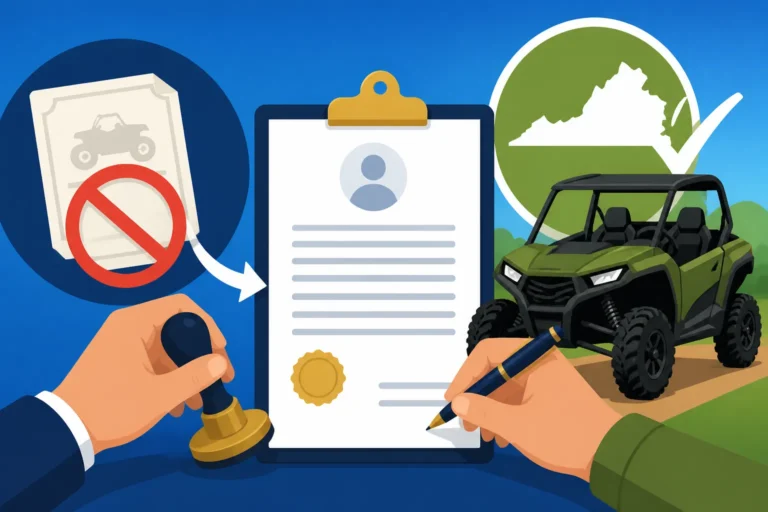
The Manufacturer's Statement of Origin (MSO) is truly the linchpin for new ATV and UTV sales in Virginia. When a customer buys a brand-new quad or side-by-side from your dealership, the MSO is the critical document that gets them their first Virginia title. The MSO verifies the vehicle's origin, its manufacturer, VIN, and other vital details. As a dealer, you'll endorse this MSO to the customer, essentially transferring ownership from the manufacturer to the buyer. This endorsed MSO, along with the buyer's application for title (Form VSA 17A), proof of address, and payment for fees and sales tax, is what you'll submit to the Virginia DMV. Without a properly executed MSO, a new machine simply cannot be titled in Virginia. It serves as proof that the vehicle is genuinely "new" and has not been previously titled, preventing any confusion or potential fraud in the titling process. This is why keeping MSOs secure and ensuring they are correctly completed is paramount for any dealership selling new off-road vehicles.
Dealer Responsibilities Before the Sale
Before you even shake hands on a deal, your dealership has several critical responsibilities related to documentation and disclosure. Getting these right is not just about good business practice; it's about staying compliant with Virginia law and ensuring a smooth experience for your customers, preventing headaches down the line. It really boils down to having your ducks in a row and being transparent.
Maintaining Proper Documentation for Inventory
For every ATV and UTV on your lot, whether it’s fresh off the truck from the factory or a trade-in, meticulous record-keeping is non-negotiable. For new machines, as we discussed, you'll need the original Manufacturer's Statement of Origin (MSO). This MSO is typically sent to you directly from the manufacturer or distributor and needs to be stored securely until the point of sale. For used machines, the documentation can vary. You might have a signed-over Virginia title from the previous owner, a bill of sale if the machine was never titled (especially common for older used quads, as [Virginia Titles Are Optional on Used Machines]), or even an out-of-state title if you acquired it from another state. It's vital to have a clear chain of ownership for every single unit. Using a system to track these documents – whether it's a physical file for each unit or a digital database – will save you immense hassle, especially if the DMV ever needs to audit your records. This practice ensures you can quickly produce the correct paperwork when a sale occurs and proves legitimate ownership of your inventory.
Dealer License Numbers and Manufacturer Statements
Your Virginia dealer license number plays a quiet but important role in the titling process, particularly when dealing with new machines. When you receive an MSO from the manufacturer, it will often include spaces or sections for dealer information, which can include your specific dealer license number. This helps the manufacturer track their products and ensures that MSOs are only being distributed to legitimate, licensed dealerships. It's a way for the system to maintain integrity. When you, as the dealer, endorse the MSO to your customer, this endorsement effectively transfers the manufacturer's statement of origin to the first retail purchaser. This entire process, including the presence of [The Motorcycle Dealer License Number on Your MSO], helps to connect the dots from the factory floor all the way to the customer's garage, ensuring every step is accountable and legitimate.
Displaying Required Information (Fees, Disclosures)
Transparency is key in retail, and the Virginia DMV has specific rules to ensure customers are fully informed, especially about any additional charges. One of the most common points of confusion for buyers can be "dealer processing fees" or "doc fees." If your dealership charges these, Virginia law mandates that you clearly disclose them. This usually means posting a prominent sign in your showroom that states the existence and exact amount of any processing fee. This isn't just a suggestion; it’s a legal requirement. Additionally, any other charges, like freight or setup fees for new machines, should be clearly itemized on the buyer's order. The goal is to avoid surprising customers with hidden costs at the very end of the purchasing process. This builds trust and helps prevent disputes. A good practice, and one that protects both you and the buyer, is to use clear, comprehensive sales agreements – you might even find templates on platforms like LawDepot for standard business contracts, though for specific DMV forms, you'll use official state documents. This upfront honesty ensures everyone is on the same page regarding the [Virginia Dealer Processing Fee Disclosure] and other costs associated with buying their new ATV or UTV.
Dealer Responsibilities After the Sale
Once the ink is dry on the purchase agreement and your customer is ready to take their new or new-to-them ATV or UTV home, your role as a dealer shifts from selling to facilitating the titling process. This is where you become the crucial link between the buyer and the Virginia Department of Motor Vehicles. Getting these steps right ensures your customer can legally enjoy their machine and avoids future complications.
Processing the Buyer's Title Application
After a customer purchases an ATV or UTV from your lot, you generally take on the responsibility of submitting their title application paperwork to the Virginia DMV. This is a significant service you provide, as it saves the customer a trip to the DMV and ensures the process is handled correctly. For a new machine, this means gathering the endorsed Manufacturer's Statement of Origin (MSO), the completed application for title (Virginia Form VSA 17A Explained), the bill of sale, and any other required forms. For a used machine, you'll need the previously issued Virginia title (if one exists and was transferred to you), or a bill of sale if the machine was previously untitled, along with the buyer's application. You'll ensure all sections are filled out accurately, including details like the VIN, make, model, and the new owner's information. It's your job to double-check everything for completeness and accuracy before mailing or electronically submitting the packet to the DMV. Remember, any errors could cause delays for your customer, making them wait longer for their official title. Many dealerships use electronic systems to transmit this information to the DMV, speeding up the process considerably.
Collecting Sales Tax and Fees
This is a critical part of the transaction for both your dealership and the state. As a Virginia dealer, you are responsible for collecting the applicable Virginia sales tax on the ATV or UTV sale, as well as the title fee, from your customer. Unlike many other vehicles, ATVs and UTVs in Virginia are generally subject to the state's retail sales and use tax rate, which can vary by region. It's not the same as the vehicle sales and use tax rate applied to cars and trucks. For example, [Virginia's 5.3 and 6 Percent Rates] might apply depending on your location. You must calculate the correct tax based on the purchase price and collect it at the time of sale. Additionally, you'll collect the state's title fee, which is a set amount – for ATVs, it's typically [Virginia Title Fee of $15]. These collected funds are then remitted to the DMV along with the buyer's title application. Accurately collecting and remitting these funds is essential for compliance and avoiding penalties for your dealership. Making sure your accounting system is set up to correctly handle these distinct taxes and fees will keep everything running smoothly.
Providing Temporary Documentation to Buyers
While the Virginia DMV processes the official title application, your customer needs something to prove their purchase and temporary ownership. Since Virginia does not issue plates or decals for ATVs and UTVs (Virginia Issues No Plates for ATVs and [Virginia Issues No Decals for ATVs]), the temporary documentation looks different than it would for a road-legal vehicle. Typically, the buyer will leave your dealership with a copy of their bill of sale and possibly a temporary buyer's order or receipt. This documentation serves as their proof of purchase while they wait for the official title to arrive in the mail from the DMV. It's important to explain to your customers that this temporary paperwork is for proof of ownership only and does not grant them permission to ride the ATV or UTV on public roads or in prohibited areas. Make sure they understand that their riding privileges are governed by Virginia's off-road vehicle laws, not by whether they have a temporary paper. It’s also a good idea to inform them of the typical [Virginia Title Processing Time] so they know when to expect their official title.
Avoiding Common Titling Pitfalls for Virginia Dealers
Even the most experienced dealerships can encounter challenges or make mistakes when it comes to ATV and UTV titling. The rules, while seemingly straightforward, have nuances that can trip up even the best. Being proactive and understanding where common errors occur can save your business a lot of time, money, and customer frustration.
Mistakes with Manufacturer Statements of Origin (MSOs)
The MSO is so crucial that any error here can grind the titling process to a halt. One common mistake is an incomplete MSO. Perhaps a section wasn't filled out, or the VIN was transcribed incorrectly. Another significant pitfall is failing to get the MSO properly endorsed by the dealership to the buyer, or having an endorsement that isn't legible. Remember, the MSO is legally transferring ownership, so clarity and accuracy are paramount. Some dealers might also mistakenly give the MSO directly to the customer without proper instructions, assuming the customer will handle the titling themselves – while permissible for used machines, it's generally best practice for new machine dealers to submit the paperwork. Always treat MSOs as valuable, irreplaceable documents. Store them securely, and have a clear, step-by-step process for handling them at the point of sale to ensure every detail is correct before it leaves your hands and heads to the DMV.
Handling Out-of-State Sales and Purchases
Selling to or buying from customers outside of Virginia introduces another layer of complexity. If you sell an ATV or UTV to a buyer from a neighboring state, their state's titling and registration rules will apply, and they may or may not need a Virginia title. Your dealership's responsibility usually ends with providing them with the properly endorsed MSO (for new) or title (for used) and the bill of sale. It's then up to the buyer to title their machine in their home state. Conversely, if you purchase a used ATV or UTV from an out-of-state seller, you'll need to ensure you receive a valid title or proof of ownership from that state. [Virginia Accepts an Out-of-State Title] as a valid document when bringing the machine into Virginia. However, be vigilant for potential fraud or incomplete paperwork, as dealing with another state's DMV can be time-consuming. Always verify the authenticity of out-of-state documents and ensure a clear chain of ownership to protect your dealership from acquiring a machine with a clouded title history. For creating any specific agreements for these types of cross-state transactions, a resource like LawDepot could provide templates for general bills of sale or purchase agreements that complement the official DMV documents.
Record Keeping Best Practices for Compliance
Thorough record keeping isn't just a suggestion; it's a legal safeguard and a business necessity. Beyond the MSO or title, your dealership should maintain comprehensive records for every ATV and UTV transaction. This includes:
- Buyer's Orders: Detailed outlines of the sale, including all costs, taxes, and fees.
- Bills of Sale: Signed by both the dealership and the buyer.
- Copies of Submitted Title Applications: Proof that you sent the paperwork to the DMV.
- Proof of Sales Tax Remittance: Confirmation that you paid the collected sales tax to the state.
- Trade-in Documentation: If applicable, records for any machines taken in trade.
- Customer Communication: Any significant correspondence regarding the sale or titling.
Maintaining these records for several years (check Virginia's specific requirements for how long) allows you to quickly address any discrepancies, respond to DMV inquiries, or resolve customer disputes. Digital copies are often a great supplement to physical files, offering redundancy and easier searchability. This robust approach to record keeping provides a strong defense in the event of an audit or legal challenge and helps your dealership maintain a reputation for integrity and compliance within the Virginia off-road vehicle community.
Virginia ATV/UTV Dealer Titling Overview
To help you keep track of the different scenarios and requirements, here's a quick reference table outlining key aspects of Virginia ATV/UTV titling for dealerships.
| Aspect | New Machine Sales | Used Machine Sales (Titled) | Used Machine Sales (Previously Untitled) |
|---|---|---|---|
| Primary Dealer Document | Manufacturer's Statement of Origin (MSO) | Prior Virginia Title (signed over to dealer) or Out-of-State Title | Bill of Sale from previous owner(s) |
| Dealer Titles Inventory? | No | No | No |
| Buyer's Application Needed | Yes (Form VSA 17A) | Yes (Form VSA 17A) | Yes (Form VSA 17A) |
| Dealer Submits to DMV? | Yes (Best practice) | Yes (Best practice) | Yes (Best practice) |
| Sales Tax Collection | Yes (Retail sales tax rate) | Yes (Retail sales tax rate) | Yes (Retail sales tax rate) |
| Title Fee Collection | Yes (Currently $15) | Yes (Currently $15) | Yes (Currently $15) |
| Temporary Proof for Buyer | Bill of Sale, temporary buyer's order, receipt | Bill of Sale, temporary buyer's order, receipt | Bill of Sale, temporary buyer's order, receipt |
| DMV Issued Plates/Decals? | No | No | No |
| Common Pitfalls | Incomplete MSO, incorrect VIN, improper endorsement | Missing previous owner signature, title alterations | Unclear chain of ownership, insufficient proof of prior sale |
| Relevant Internal Links | [Virginia Requires an MSO for a New Machine] | [Virginia Titles Are Optional on Used Machines] | [Virginia Machines With No Paperwork] |
This table serves as a handy guide, but always remember that the specifics can vary, and staying updated with the Virginia DMV's latest guidelines is crucial. For further details on specific forms, you can refer to resources like [Virginia Form VSA 17A Explained].
Disclaimer
This article is for general informational purposes only and does not constitute professional advice. Laws, prices and regulations vary by location and change over time. Consult a qualified professional for guidance on your specific situation.