Virginia Lighting Rules on a Road Trail
It's a common headache for riders in Virginia: you've finally found those precious stretches of road where your ATV or UTV is legally allowed, maybe connecting two amazing trail systems or just getting to a gas station. But then the questions start piling up. What about lights? Do I need turn signals? How bright do my headlights have to be? The regulations can feel like a tangled mess, leaving many of us scratching our heads and worried about getting a ticket. This guide aims to untangle Virginia's specific lighting rules for riding an ATV or UTV on designated road trails, helping you understand exactly what you need to be safe and legal.
Understanding Virginia's Road Trail Concept for ATVs
Before we dive into the nitty-gritty of lighting, it’s absolutely crucial to grasp Virginia’s unique stance on ATVs and public roads. Unlike some states, Virginia generally takes a very restrictive approach, flat out banning ATVs from public highways. This can be a huge source of frustration for riders who just want to get from one section of trail to another, or access a store in a nearby trail town. However, there are very specific, narrow exceptions that allow for limited road use, primarily in the southwestern coalfield counties.
The Legal Framework for Road Use
Virginia's legal framework for ATVs is found primarily in Title 46.2 of the Code of Virginia, specifically sections like 46.2-915.1, which details the exceptions for ATV operation. This isn't some broad "street legal" designation that many riders dream of; instead, it's a carefully carved-out permission for specific scenarios. Think of it less like an open invitation to the asphalt and more like a tightly regulated corridor. The law generally makes it clear: [Virginia Bans ATVs on Public Highways]. So, if you're not on a designated exception route, the default is no road riding. This distinction is vital because the lighting rules, while often mirroring general vehicle requirements, apply specifically to these sanctioned sections of road. If you're caught on an unauthorized road, lighting or not, you're likely facing a penalty.
These exceptions primarily focus on allowing ATVs and UTVs to operate on certain secondary highways or portions of highways that have been specifically designated for such use by the local board of supervisors. This designation is usually done in counties that are part of the larger Spearhead Trails system or similar regional initiatives, where ATVs are an integral part of the local economy and tourism. Without this local designation, even a well-lit machine is operating illegally on a public road. The whole idea is to foster responsible trail connectivity, not to open up every street to off-road vehicles.
Specific Routes and Their Limitations
Currently, the primary areas where these road trail exceptions exist are in Buchanan and Tazewell counties, specifically those areas integrated with the Spearhead Trails network. For example, [Virginia's Named Route in Buchanan County] and [Virginia's Named Route in Tazewell County] are critical pieces of this puzzle. These aren't just random stretches of road; they are typically marked routes designed to connect trailheads, amenities, or different trail systems. It's not uncommon for these routes to have specific speed limits—for example, [Virginia's 25 mph Coalfield Road Limit] is a common one—and other operational constraints.
Understanding these limitations is key. Riders often make the mistake of assuming that if one road is open, all roads in the area are, or that they can just hop on a state highway for a quick run. This is rarely the case. These designated routes often have specific signage, sometimes paid for and maintained by ATV clubs, indicating where off-road vehicle use is permitted. It's not a free-for-all; it's a very structured permission. Furthermore, while you might be allowed on these specific road sections, you're still generally limited to [Virginia Daylight Hours on a Road Trail], which has significant implications for your lighting needs. This means that while a full set of working lights is still required for safety, the expectation of navigating pitch-black roads at 2 AM simply isn't part of the legal framework.
Required Lighting for Any Road Trail Use
Even within the specific, limited scenarios where ATVs are allowed on road trails in Virginia, proper lighting is not just a good idea for safety – it's a legal requirement. These requirements are in place to ensure that your off-road machine, when sharing the road with other vehicles, is as visible and predictable as possible. It's about blending into the traffic flow safely, even if you're moving at a slower speed or only for a short distance. Skipping these basic requirements is a surefire way to attract unwanted attention from law enforcement and potentially incur penalties.
Headlights: More Than Just Seeing
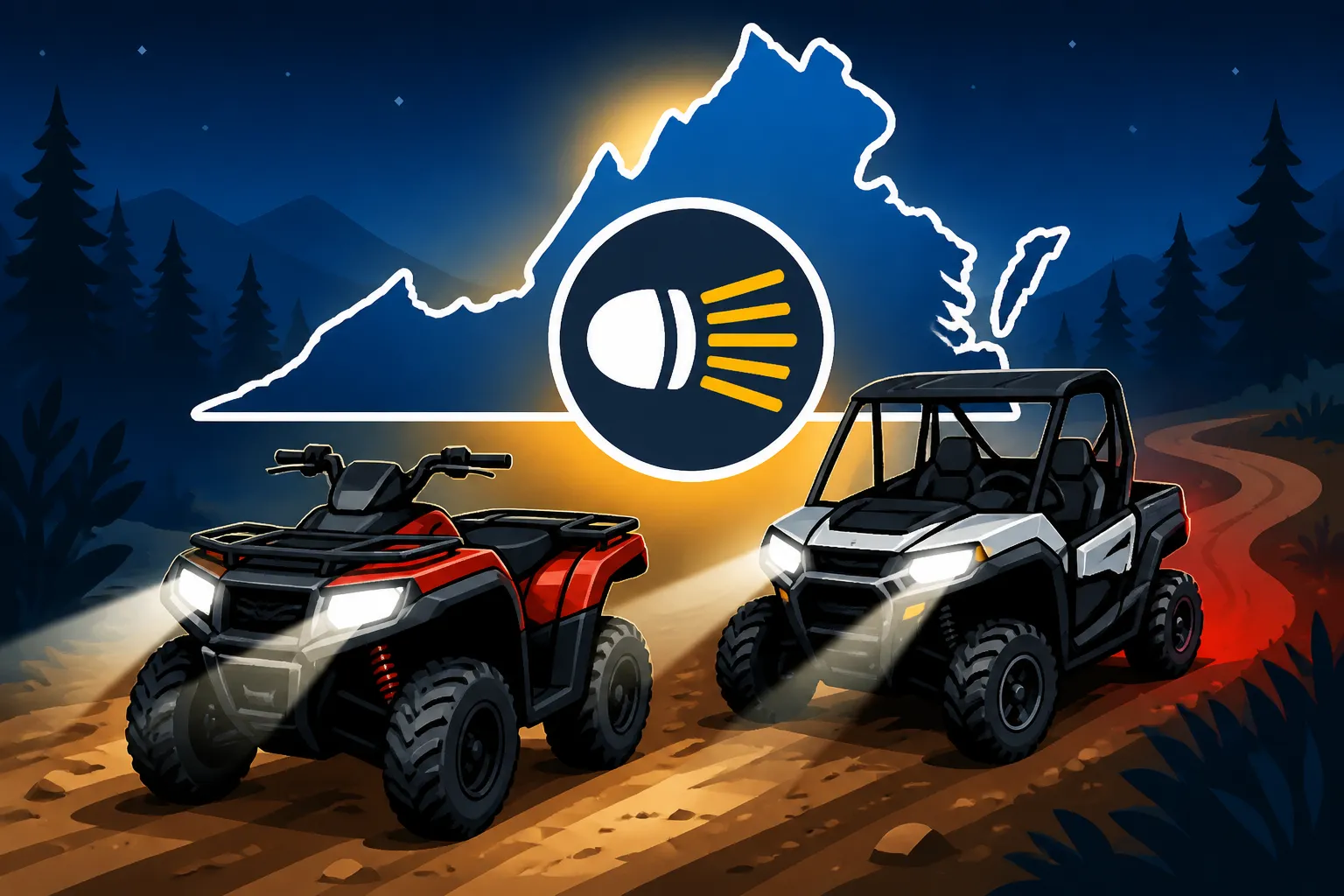
When you're riding on an approved road trail, your headlights serve a dual purpose: they illuminate the path ahead so you can see obstacles, potholes, or oncoming traffic, and just as importantly, they make you visible to others. Virginia law, even for these limited road trail exceptions, implicitly requires that any vehicle operating on a public highway during hours of darkness or reduced visibility be equipped with working headlights. While the specifics for ATVs aren't as granular as for cars, the general expectation is clear. You need at least one, and typically two, functioning headlights.
These headlights must be capable of projecting sufficient light to render clearly discernible persons and vehicles at a safe distance ahead. What does that mean in practical terms? It means your dim, dusty trail light might not cut it. If you're navigating a dark, gravel mountain road, your headlights need to effectively cut through that darkness and dust, giving you ample time to react. Many riders find that stock ATV headlights, while fine for dedicated trails, can feel inadequate on shared road sections, especially if there's any ambient light from buildings or other vehicles. Upgrading to brighter LED units or adding auxiliary light bars can drastically improve both your ability to see and be seen. Brands like SuperATV offer a range of powerful LED light bars and pod lights that can be crucial for enhancing visibility on these road-legal segments, ensuring you meet the spirit, if not the letter, of safe night operation (though remember, most road trail use is limited to daylight).
Taillights: Essential for Being Seen
Just as crucial as seeing what's ahead is being seen by those behind you. Working taillights are absolutely essential. When operating on an approved road trail, your ATV must have at least one red taillight, visible from a specific distance to the rear. This isn't just for night riding; it's vital even during the day in situations of reduced visibility, such as fog, rain, or when cresting a hill. Imagine another vehicle, perhaps a local resident in a pickup truck, coming up behind you on a dusty road trail. A bright, clear taillight gives them precious seconds to see you and adjust their speed.
Many stock ATV taillights are perfectly adequate, but it's important to keep them clean and free of mud and debris. A caked-on layer of dirt can reduce visibility dramatically. Some riders opt for brighter LED taillight replacements or add additional red lights to the rear for enhanced safety. This extra visibility can be a lifesaver, especially on winding, narrow road sections where sightlines might be limited. It helps prevent rear-end collisions and ensures that your presence is communicated clearly to anyone approaching from behind. Always check your taillights before embarking on any ride that includes road sections.
Brakelights: Communicating Your Intentions
Brakelights are another non-negotiable safety feature when your ATV or UTV is on any road trail. These bright red lights illuminate when you apply the brakes, instantly signaling your deceleration or stop to anyone following you. On a public road, even a designated road trail, this communication is paramount. Other vehicles, whether they're cars, trucks, or even other ATVs, rely on your brakelights to anticipate your movements and maintain a safe following distance.
Ensure your brakelights are working reliably. Test them regularly by applying the front and rear brakes (if separate) to make sure they both activate the light. Faulty wiring, a blown bulb, or a dirty lens can compromise this critical safety feature. On an off-road machine, brakelight switches can sometimes get clogged with mud or debris, leading to intermittent failure. It's a simple check that takes seconds but could prevent a serious accident. Just like with taillights, keeping the lenses clean is vital. If your machine is equipped with a hydraulic brake system, check for leaks that could affect switch operation, and consider replacing older, dimmer incandescent bulbs with brighter LEDs for better visibility in all conditions.
Additional Lighting Considerations and Best Practices
While Virginia's specific road trail exceptions outline minimum lighting requirements, there's always room to go above and beyond for safety and visibility. Think about these "extras" not as unnecessary add-ons, but as investments in your peace of mind and the well-being of those around you, especially when you're sharing the road. Even on sections of road where traffic is sparse, being as visible as possible is always the smartest approach.
Turn Signals: Are They Truly Needed?
This is a common question, and the answer is usually "no, not strictly legally required by the specific road trail statutes." However, that doesn't mean they aren't incredibly valuable. While the Virginia code regarding ATV road access doesn't explicitly mandate turn signals for these limited road sections, using clear hand signals is a standard expectation if you don't have them. The reality is that modern traffic, even on rural road trails, is accustomed to turn signals. Trying to execute a hand signal while operating an ATV can be awkward, especially if you're trying to maintain control on uneven surfaces or with passengers.
Adding aftermarket turn signals can significantly improve your safety and clarity of communication with other drivers. If you plan to use road trails regularly, investing in a proper turn signal kit is a wise decision. It makes your intentions unmistakable, reducing the risk of confusion or collision, particularly when making turns onto or off the designated routes. While not mandated, many riders consider them an essential upgrade for any machine that sees even occasional road use. They help you fit in with the expectations of other road users and make your journey smoother and safer.
Auxiliary Lighting and Aftermarket Upgrades
This is where you can really boost your visibility and safety beyond the bare minimum. While often thought of for purely off-road illumination, auxiliary lights can play a crucial role on designated road trails, especially for being seen. Think about bright LED light bars, pod lights, or even enhanced headlight bulbs. These can drastically increase your presence, making you stand out to oncoming traffic or vehicles approaching from behind. Brands like SuperATV are well-known for their robust and powerful auxiliary lighting solutions, from full-width light bars that can throw a beam hundreds of feet to smaller cube lights perfect for filling in blind spots or acting as ditch lights.
It's important to use auxiliary lighting responsibly on road trails. While extra light is great for visibility, blinding oncoming drivers is not. Many light bars are designed for off-road use and are too bright for public roads. If you add auxiliary lights, ensure they can be easily turned off when other vehicles are present, or consider "fog light" style auxiliary lights that have a more controlled beam pattern. Some riders even wire their auxiliary lights to a separate switch so they can use them when crossing private land or on trails, then switch to their standard, less intense headlights for the road portions. [Being Seen at Night on a Coalfield Road] is critical, and a well-planned auxiliary lighting setup can make all the difference, even if full-blast light bars are best reserved for true off-road adventures.
Reflectors and High-Visibility Gear
Beyond powered lighting, passive visibility aids are extremely important. Reflectors are often built into ATVs from the factory—typically red on the rear and amber on the sides—and they serve to bounce light back to its source, making you visible even if your active lights fail or are momentarily obscured. Ensure these reflectors are clean and undamaged. If your machine is missing some, they are cheap and easy to replace.
Complementing your machine's lighting, wearing high-visibility gear is another excellent best practice. A bright, fluorescent colored helmet, jacket, or vest can make a huge difference in how quickly other drivers spot you. This is especially true during daylight hours when your active lights might blend in with ambient light. Consider adding [Adding Reflective Tape to a Quad for Road Sections] to your helmet, machine, or gear as well. This tape is inexpensive and provides an extra layer of visibility, particularly at dawn, dusk, or in conditions like rain or fog. The more ways you can make yourself visible to others, the safer you'll be on those shared road sections. It's all about ensuring that other road users have every opportunity to see you, react to your presence, and share the road safely.
Navigating Enforcement and Compliance
Understanding the rules is one thing, but knowing what to expect from law enforcement and the potential consequences of non-compliance is another. Virginia's system for ATV road use is specific, and officers in areas where these exceptions exist are generally well-versed in the local ordinances and state statutes. It's easy to assume that because you're in an "ATV-friendly" county, anything goes, but that's a dangerous misconception. Compliance is key to maintaining these hard-won privileges.
What Officers Look For
When a Virginia State Trooper or local deputy encounters an ATV or UTV on a designated road trail, their primary concerns will be safety and compliance. They'll definitely be checking your lighting. Are your headlights on and bright enough? Are your taillights and brakelights functioning correctly and clearly visible? This isn't just about whether the bulb works; it's about whether the lights effectively communicate your presence and intentions. They will also verify that you are indeed on an approved route, not just a random county road. [Virginia Equipment Checks by Officers] might also extend to other safety gear, like helmets, as [Virginia Helmet Law Applies to Every Rider] on public land and, by extension, these specific road trails.
Beyond lighting, they'll likely assess your general operation: Are you adhering to the posted speed limits, such as [Virginia's 25 mph Coalfield Road Limit]? Are you carrying more passengers than your machine is designed for, or are they unbelted? Officers are looking for safe, responsible riding that respects the limited privileges granted for road trail use. Any deviation from these rules, especially related to visibility and safety, can quickly lead to a stop. Remember, these are public roads, and officers are tasked with ensuring the safety of all users, not just ATV riders.
Potential Penalties for Non-Compliance
Operating an ATV on a public road where it's not permitted, or operating it on an approved route without the required safety equipment, including proper lighting, can lead to serious penalties. Virginia law specifies a civil penalty for illegal ATV operation, which can be substantial. [Virginia Penalties for Illegal Riding] can reach up to $500 for each offense. This is a civil penalty, not a criminal charge, but it still means a costly fine that you'll have to pay. It’s not just a slap on the wrist.
Beyond monetary fines, there's the inconvenience and potential for further action. An officer could order you to immediately cease operation on the road, meaning you'd have to find a legal way to transport your machine off the public thoroughfare. Repeated offenses or particularly egregious violations could lead to other measures. The goal of these penalties isn't just punishment; it's to enforce safety and deter riders from abusing the limited road access that has been carefully negotiated in certain areas. It's a reminder that these privileges are not guaranteed and can be revoked if riders continuously fail to comply with the regulations.
Common Misconceptions About Lighting Laws
One of the biggest misconceptions riders have is that if a particular road trail doesn't see much traffic, then lighting requirements are less strict. This is false. The law applies regardless of traffic volume. Another common belief is that if your headlights are bright enough for the trail, they're good enough for the road. While intensity is important, the beam pattern matters too. Road-legal lights are often designed to project light without excessive glare to oncoming drivers, whereas some off-road light bars are floodlights, making them inappropriate for public roads.
Some riders also mistakenly believe that because ATVs don't require traditional vehicle registration plates or yearly inspections like cars, they are exempt from basic safety equipment checks. This is incorrect. While it's true that [Virginia Issues No Plates for ATVs] and [Virginia Issues No Decals for ATVs], and there's no annual DMV fee attached to your machine, these facts don't negate the need for proper lighting when you're on a public road, even a designated trail connection. The absence of a traditional vehicle inspection doesn't mean your machine's safety features are optional. It just means the responsibility for ensuring they work falls squarely on the owner and operator. Always default to maximum safety and compliance when in doubt.
Maintaining Your ATV's Lighting System
Just having the right lights isn't enough; you also need to ensure they're always in perfect working order. The harsh environment of off-road riding—mud, water, vibration, and impacts—can take a toll on electrical components and light fixtures. Neglecting your lighting system can lead to unexpected failures, leaving you in a tricky situation on a road trail, or worse, making you invisible to other vehicles. A proactive approach to maintenance is essential for safety and compliance.
Pre-Ride Checks for Lighting
Before every ride that might involve a road trail section, make a quick but thorough check of your ATV's lighting system. This should become a routine, just like checking your tire pressure or fuel level. Start the machine and activate all your lights: headlights (high and low beam, if applicable), taillights, and brakelights. Have a friend stand behind you to confirm the taillights and brakelights illuminate properly. If you've added turn signals, check those too. Look for any flickering, dimness, or complete outages. Also, visually inspect the lenses for cracks, excessive dirt, or mud buildup. A quick wipe with a rag can restore significant visibility.
Don't forget the wiring. While you might not conduct a full electrical inspection every time, give exposed wires a quick glance for any obvious fraying or damage. Loose connections are a common cause of intermittent lighting issues. This simple pre-ride ritual takes less than a minute but can save you from a potential ticket, or more importantly, a hazardous situation on a shared road. It’s much better to discover a problem in your driveway than when you’re miles down a dark mountain road connecting two trails.
Troubleshooting Common Lighting Issues
If you find a light isn't working during your pre-ride check, don't panic. Many common lighting issues are relatively easy to troubleshoot. Start with the basics: check the bulb. Bulbs can blow due to vibration or simply age. If replacing the bulb doesn't fix it, move on to the fuse box. A blown fuse can affect an entire circuit or specific lights. Always replace fuses with one of the correct amperage. Next, check the wiring. Look for loose connections, frayed wires, or corrosion, especially at connectors and ground points. Off-road environments are brutal on electrical systems, so corrosion is a frequent culprit.
For brakelights, check the brake switches. These small switches, often located at the brake levers or pedal, can get sticky or damaged, preventing the light from activating. Sometimes a quick cleaning or adjustment is all they need. If you're comfortable with a multimeter, you can check for voltage at various points in the circuit to pinpoint where the power is being lost. If you're not mechanically inclined, or the issue seems complex, it's always best to take your ATV to a qualified mechanic. Electrical problems can be tricky, and incorrect repairs can lead to further damage or even fire hazards.
Upgrading for Enhanced Safety and Performance
Once you've ensured your stock lighting is in perfect working order, you might consider upgrading for enhanced safety and performance, especially if you regularly use road trails. Many stock incandescent bulbs can be easily swapped for brighter, more energy-efficient LED bulbs. These draw less power, last longer, and provide a much clearer, brighter light. For taillights and brakelights, LED upgrades are also a fantastic idea, making your rear lights significantly more visible.
When it comes to auxiliary lighting, if you plan to add light bars or pods, consider reputable brands that offer durable, weather-resistant products. SuperATV, for instance, offers a wide range of LED lighting solutions designed to withstand the rigors of off-road use while providing exceptional illumination. When installing auxiliary lights, remember the advice about responsible use on road trails: ensure they can be easily switched off when other traffic is present. Properly installed and aimed, these upgrades not only enhance your ability to see but dramatically increase your visibility to other road users, adding a crucial layer of safety to your road trail adventures. Whether it’s brighter headlights for clearer vision or additional taillights for undeniable presence, upgrading your lighting system is a smart move for any Virginia rider utilizing designated road sections.
| Lighting Component | Virginia Road Trail Requirement | Best Practice/Upgrade | Importance |
|---|---|---|---|
| Headlights | At least one, sufficient for visibility/being seen | Brighter LED conversion, proper aim, auxiliary "driving" lights (switched) | High |
| Taillights | At least one red, visible from specific distance to rear | Brighter LED conversion, additional rear-facing red lights | High |
| Brakelights | Activates with brake application, visible from specific distance to rear | Brighter LED conversion, regular function check of switches | High |
| Turn Signals | Not explicitly mandated by road trail statute | Highly recommended for communication, aftermarket kits | Medium |
| Reflectors | Factory-installed on most machines (red rear, amber side) | Keep clean, replace if missing/damaged, add reflective tape to gear | Medium |
| Auxiliary Lights | Not explicitly mandated | Use off-road specific ones carefully, or "fog light" style for road | Low (for legality), High (for visibility) |
Disclaimer
This article is for general informational purposes only and does not constitute professional advice. Laws, prices and regulations vary by location and change over time. Consult a qualified professional for guidance on your specific situation.