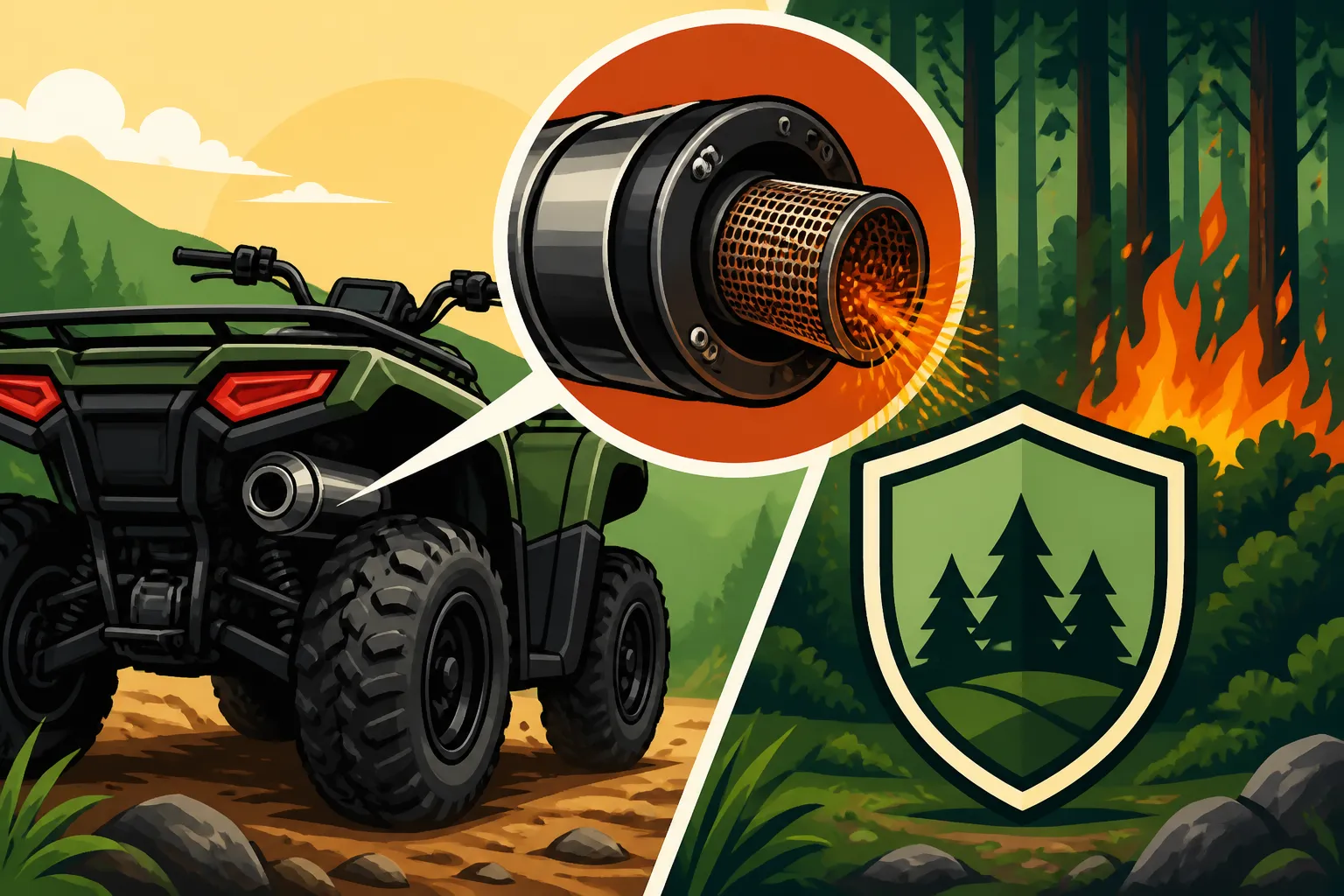
Why Your Quad Needs a Spark Arrester at Peters Mill Run
A spark arrester can look like a small piece of hardware, but it matters when you’re riding Peters Mill Run in George Washington National Forest. Riders often discover the requirement only while checking their machine before a trip—or at the trailhead. This guide explains what a spark arrester does, how to check yours, and what else to consider before hauling your quad to the forest.
Why Peters Mill Run requires a spark arrester
Peters Mill Run is a motorized trail system on national forest land near Edinburg, Virginia. A spark arrester helps reduce the chance that hot carbon particles or sparks will leave the exhaust and land in dry leaves, grass, or other combustible material. That risk can be easy to underestimate on a rocky trail, especially when the forest floor looks damp or shaded.
The requirement is not just a suggestion for riders who happen to be traveling during a dry spell. Forest land has equipment rules, and a machine may be turned away or cited if its exhaust setup does not meet them. Before heading out, check the current information from the managing forest office and review Virginia Forest Equipment Requirements alongside the system’s other riding rules.
What a spark arrester does
A spark arrester is a component designed to trap or cool glowing particles in engine exhaust before they can escape. Depending on the machine, it may be built into the muffler or installed as part of an approved exhaust assembly. The exact setup varies by make and model, so the best first step is to consult the owner’s manual or ask a qualified powersports mechanic what your machine was designed to use.
It is easy to confuse a spark arrester with a quiet muffler. They are related to the exhaust system, but they do different jobs. A muffler reduces noise; a spark arrester helps prevent hot particles from exiting the exhaust. Some systems include both functions in one assembly, but a quiet machine is not automatically proof that it has an effective spark arrester.
A screen or insert that has been removed, damaged, clogged, or altered may not do its job. A machine can sound normal and still have an exhaust component that is missing or unsuitable. If you are unsure, don’t guess based on appearance alone. Check the manufacturer’s documentation or have a dealer or mechanic inspect the exhaust.
Why the rule matters even when conditions look safe
Forest conditions change quickly. A shaded patch of trail may feel cool while dry leaves sit just beyond the tread. A hot, dry stretch can also follow a rainy week, and the risk is not always obvious from the trailhead. Spark arresters are one layer of prevention, not a guarantee that a fire cannot start.
The requirement also gives riders a consistent standard to follow across forest riding areas. You may be focused on steep grades, loose rock, or other machines around a blind corner; equipment checks are easy to overlook when you are eager to unload and ride. Sorting out the exhaust before you leave home avoids the frustrating possibility of arriving near Edinburg and finding you cannot ride as planned.
For a broader look at the rule, see [Virginia Spark Arrester Requirements]. If you are also checking whether your machine meets sound rules, read Virginia Forest Noise Limits. Passing a sound check does not replace the separate need for a working spark arrester.
How to check your quad before you haul it
A quick check at home is much easier than trying to troubleshoot an exhaust problem in a parking area. It also helps you catch other maintenance issues before you travel into the George Washington National Forest, where a repair may be inconvenient and your phone signal may be limited.
Identify the exhaust setup on your machine
Start with the owner’s manual and the manufacturer’s information for your specific year and model. Look for documentation identifying a spark arrester or an approved exhaust assembly. If the machine has an aftermarket exhaust, find the paperwork for that exact product and confirm that the required spark-arresting component is present and installed as intended.
Do not rely only on a seller’s description such as “forest legal” or “quiet exhaust.” If you bought the quad used, the previous owner may have changed the muffler, removed an insert, or installed parts without keeping the documentation. A visual inspection can help you spot obvious problems, but it may not tell you whether a component is approved or correctly configured.
If the exhaust is unfamiliar, call a powersports shop before you travel. Tell them the machine’s make, model, and year, and describe any aftermarket parts you can identify. A mechanic can often tell you what to look for or inspect it in person. This is particularly helpful with older quads, where parts may have been changed over several owners.
Inspect for missing or damaged components
With the engine cool, inspect the exhaust for signs of tampering, loose fittings, visible damage, or parts that appear to be missing. If your machine has a removable spark-arresting screen or insert, follow the manufacturer’s procedure for checking it. Do not remove an exhaust component just to see how the machine runs without it, and do not ride with a part that you suspect is damaged or incorrectly installed.
A screen can collect carbon and other residue over time. If the manufacturer provides cleaning instructions, follow those instructions carefully and use the recommended method. Avoid improvised changes such as drilling holes, cutting away screen material, or replacing a component with an unapproved part. Besides defeating the intended function, modifications can create heat, noise, or performance problems.
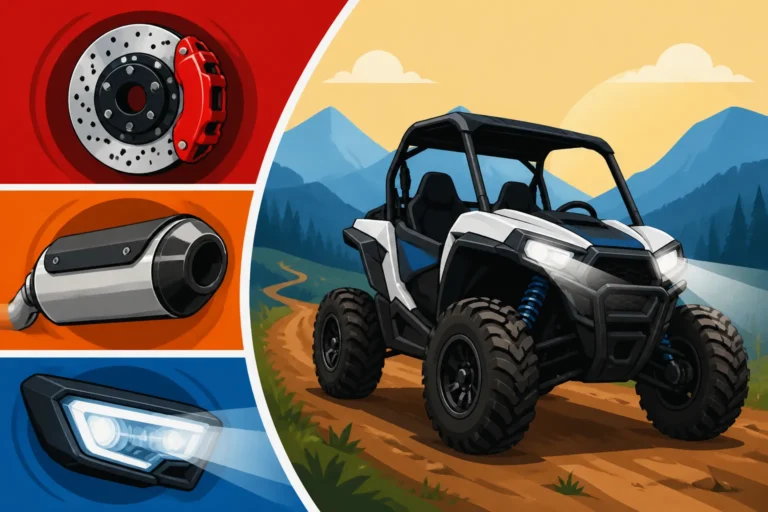
If anything looks questionable, take the conservative route: repair or replace the part before the trip. A rider who catches a loose or missing insert in the garage has options. A rider who discovers it after towing to the trailhead may have a long drive home and a wasted day. For a complete equipment checklist, see Brakes, a Muffler and Lights.
| Check | What to look for | If something is wrong |
|---|---|---|
| Owner’s manual | Instructions identifying the original exhaust and spark-arresting parts | Contact the manufacturer or a qualified dealer |
| Exhaust assembly | Loose fittings, visible damage, or signs of tampering | Have the system inspected before riding |
| Removable insert or screen | Missing, damaged, or heavily obstructed parts | Follow the manufacturer’s service instructions |
| Aftermarket exhaust | Documentation for the exact model and installed components | Confirm suitability with the manufacturer or a mechanic |
| Other required equipment | Brakes, muffler, and applicable lighting | Repair issues before hauling to the forest |
Planning a Peters Mill Run trip beyond the exhaust
A working spark arrester is one part of being ready to ride. Peters Mill Run is a forest trail, not a private backyard loop, so riders should plan for permits, access rules, machine requirements, and changing conditions. A little preparation can prevent the common disappointment of reaching the area only to find a missing document or an unsuitable setup.
Check permits and access requirements
Review the forest’s permit requirements before leaving home. Permit options and purchase methods can differ from those used at other Virginia riding systems, so don’t assume a permit from another trail network will cover Peters Mill Run. The details in Virginia National Forest OHV Permits and Virginia Forest Permit Purchase Options can help you understand the planning steps.
Also check the requirements that apply to the rider, not just the machine. Peters Mill Run has a driver’s-license requirement for riders, so make sure the person who plans to operate the quad meets it. The specific topic is covered in Peters Mill Run Requires a Valid Driver’s License. If more than one person in your group may ride, confirm each person’s eligibility rather than assuming the rule applies only to the person who drove the truck.
Maps can help with orientation, but a map app should not be treated as the final authority on trail access or closures. onX Offroad can be useful for reviewing terrain and planning a route, especially when you want to understand where a trail sits in relation to nearby roads. Before you go, compare any app information with the official forest information and posted signs.
Prepare for the trail and the drive
The forest route and surrounding roads can make the trip feel longer than the mileage suggests. Check trail conditions before loading the trailer, especially after heavy rain, storms, or seasonal closures. Trail Conditions Before You Haul is a useful planning topic if you are trying to avoid a long drive to a closed or unsuitable route.
A paper map is still helpful when your phone battery is low or service drops. You can use onX Offroad to help plan and understand your route, then keep a dependable backup for navigation. Tell someone where you are going, bring water and basic tools, and make sure your truck and trailer are ready for the drive back down the mountain.
Before unloading, take another look at the machine. Confirm that the exhaust is secure, the spark arrester is in place, and the brakes and other required components are working. If you hear an unusual exhaust noise or notice a part has come loose during transport, stop and inspect it before riding. A few minutes in the parking area are better than discovering an issue farther along the trail.
Common spark arrester mistakes riders can avoid
Most problems are not caused by riders deliberately ignoring safety. They happen because a used machine has an unfamiliar exhaust, a part was removed during maintenance, or someone assumes a standard muffler is enough. These are avoidable mistakes if you verify the setup before your trip.
Assuming every muffler includes a spark arrester
Some factory exhaust systems include a spark arrester, but that does not mean every muffler does—or that an older system remains complete. A used quad may have had its exhaust replaced, modified, or partly dismantled. Check the documentation for the exact assembly rather than relying on the machine’s age, sound, or brand name.
Aftermarket parts deserve the same careful check. A replacement muffler may fit the machine but not include the component needed for forest riding. If you cannot identify the part or find reliable documentation, ask a dealer or mechanic to verify it. It is better to resolve the question at home than to treat a guess as confirmation.
Treating a clean trail as proof that the risk is low
A trail can look wet or shaded while nearby vegetation is dry. Conditions may also vary across the ride, particularly when the route moves between sheltered forest and open sections. The point of an equipment rule is to reduce risk before conditions become obviously dangerous, not only after someone sees a fire warning.
That is why riders should treat the spark arrester as standard pre-ride equipment, not a seasonal accessory. Keep it installed and maintained whether you are riding after a rain or during a dry stretch. If forest officials post a closure or restriction, follow it; an approved component does not override a temporary closure.
Confusing an app or online trail description with official permission
Trail maps and rider reports can be useful for orientation, but they can lag behind closures or rule changes. Use onX Offroad as a planning aid, not as proof that a route is open or that your machine meets forest requirements. Confirm the current access information through the managing forest office and obey signs at the trailhead.
This same habit helps with permits and equipment. A friend’s account of what passed an inspection on a previous trip may not match your machine or the requirements that apply to your visit. Check your own setup, keep required documents accessible, and make sure every rider in the group understands the rules before the trip.
Disclaimer
This article is for general informational purposes only and does not constitute professional advice. Laws, prices and regulations vary by location and change over time. Consult a qualified professional for guidance on your specific situation.