No Metal Studded Tires
Metal-studded tires can seem like a sensible choice for icy Virginia trails, but they may get your machine turned away at a trailhead. On federal riding routes, the restriction matters even when conditions are slick. This guide explains where the rule applies, what counts as a studded tire, how to prepare your ATV or UTV, and what to check before you haul out.
Where Virginia’s no-studded-tire rule applies
Federal forest trails are not the same as every riding area
The no-metal-studded-tire restriction is relevant to Virginia’s National Forest riding routes, including Peters Mill Run and Taskers Gap in the George Washington National Forest. If your trip is headed there, treat the equipment rule as part of your pre-ride checklist, not as a detail to sort out at the gate. A machine may otherwise be trail-ready and still be unsuitable because of its tires.
That does not mean every private park, trail network, or piece of land in Virginia follows the same rule. Operators can set their own equipment requirements, and federal land rules should not be assumed to govern a privately operated riding area. Before you ride somewhere unfamiliar, confirm the current requirements for that specific property or trail system. The overview in Virginia Forest Equipment Requirements is useful for separating forest-specific rules from general riding assumptions.
Peters Mill Run and Taskers Gap are also distinct from Spearhead’s coalfield trail systems in Southwest Virginia. If you’re planning a trip around Grundy, Coeburn, or another trail town, check the rules for that destination rather than carrying over a requirement from a different network. Peters Mill Run OHV Trails in Virginia can help you orient your planning around the forest system.
What “metal-studded” means in practical terms
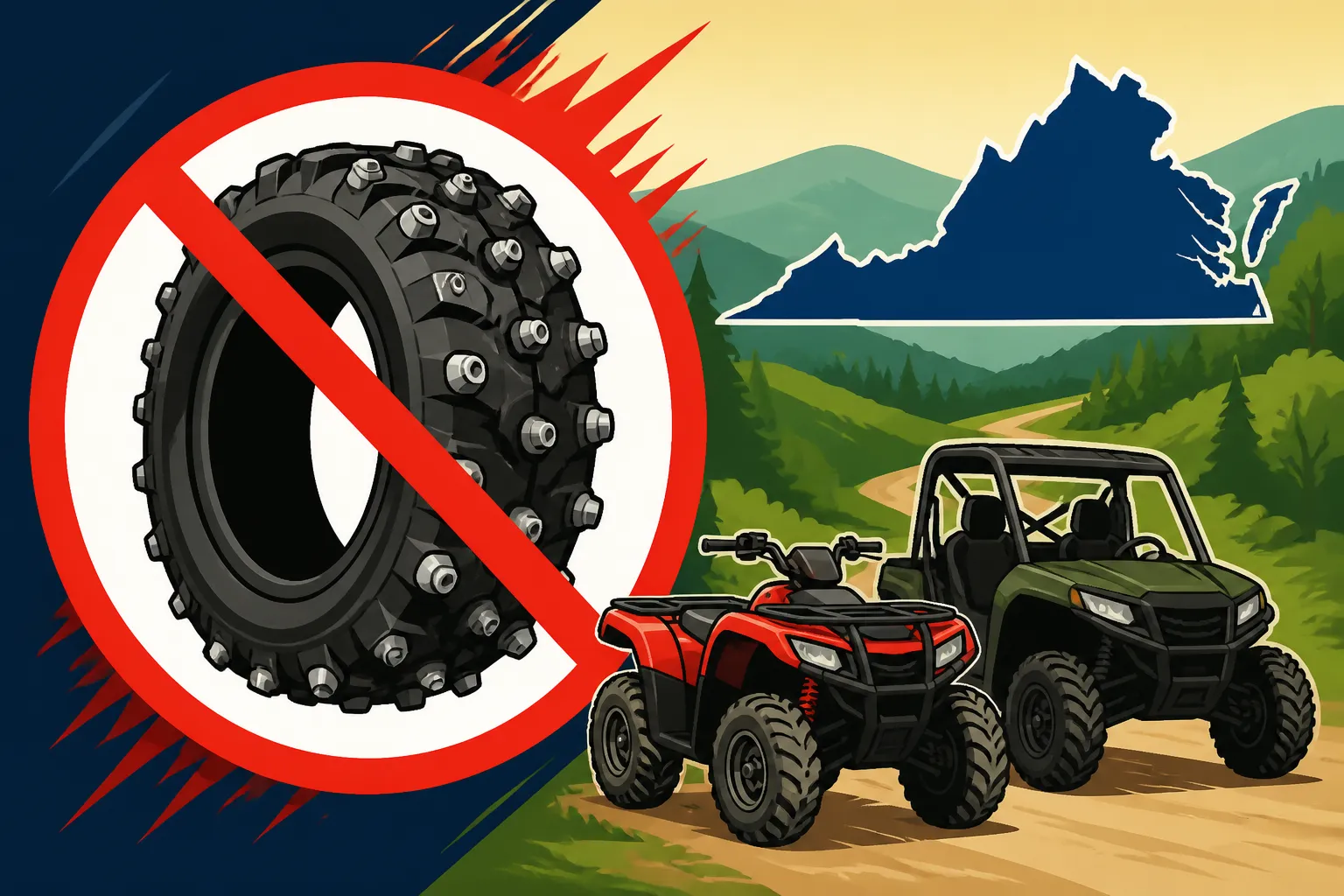
A metal-studded tire has metal pieces set into or attached to its tread. Those studs are designed to bite into ice, but on a trail surface they can create a different kind of wear and impact than rubber tread. If you are uncertain whether a tire’s construction falls under the restriction, do not rely on appearance alone. Check the tire details and ask the land manager or trail office before leaving home.
A deep-lug tire is not automatically a studded tire just because it looks aggressive. Rubber knobs, paddle-style tread, and metal traction studs are different features. The important distinction is the presence of metal studs, not simply how large or sharp the tread blocks look. When checking your machine, inspect all tires, including a spare if you carry one.
If your tires have removable studs, do not assume that taking some out makes the setup acceptable. Confirm whether all metal studs must be removed and whether the tire itself can remain in use. A quick call before loading can prevent the frustrating alternative: arriving at the trailhead, discovering a problem, and having to turn around or find a different place to ride.
How to avoid applying the rule too broadly
It is easy to hear “no studded tires” and conclude that winter riding is prohibited everywhere in Virginia. That is not the same thing. A tire restriction is an equipment requirement; seasonal closures, weather closures, and operating hours are separate issues. Check each one for your intended destination. Virginia Forest Season Closures covers another issue that can affect a forest trip even when your machine meets equipment rules.
Likewise, do not assume that a route shown on a general map is open to every kind of machine or under every condition. Maps help with orientation, but access and equipment rules come from the land manager or operator. An app such as onX Offroad can help you review route context and organize a trip, but it should not replace checking official trail information before you go.
If your plan includes more than one riding area, make a separate checklist for each destination. A tire setup that is acceptable at one privately run park may not meet a federal forest requirement, and the reverse may also be true. Treat “Where am I riding?” and “What equipment is allowed there?” as two questions that need specific answers.
How to prepare your ATV or UTV before the trip
Inspect the tires before loading
Do a close inspection in good light, especially if the tires came with a used machine or were fitted for winter riding. Look across the full tread surface and the shoulders of each tire. Metal studs can be difficult to spot when packed with dried mud, so brush off debris and inspect the tire from several angles.
Check the spare as well. Riders often focus on the tires mounted on the ATV or UTV and forget that a spare could still have studs. If you plan to bring a second machine for a passenger or riding partner, inspect that machine too. A pre-trip check is much easier in your garage or driveway than at a trailhead with a trailer still attached.
Keep tire details handy if you need to ask whether a particular setup is allowed. The brand and model, a clear description, and a photo can help a trail office understand what you mean. If the answer is unclear, ask directly whether the specific tire is permitted on the route you plan to ride.
Choose a suitable non-studded setup
For a forest ride, use tires that comply with the destination’s equipment rules and suit the terrain. Virginia trails can involve rocks, roots, mud, and changing conditions, so choosing a tire is not only about avoiding studs. Think about the kind of surface you expect, the machine’s weight, the ride’s difficulty, and the condition of the tread.
Do not assume that the most aggressive-looking tire is automatically the safest choice. A tire that works well for one machine or terrain may feel different on another, and the rider still needs to manage speed and traction carefully. For more help thinking through trail-specific tire choices, see Tires for Appalachian Rock.
If you have removed studded tires, confirm the replacement setup is properly mounted and in good condition before the trip. Look for visible damage, unusual wear, low pressure, and anything that could affect handling. Follow the tire and vehicle manufacturers’ instructions for inflation and maintenance rather than guessing based on another rider’s setup.
Build a full equipment checklist
Tires are only one item in a responsible pre-ride inspection. Check brakes, steering, throttle return, lights where required, and the condition of the machine’s controls. Secure loose cargo and make sure anything you carry will stay put over rough sections. A small problem that seems manageable in the driveway can become a much bigger nuisance far from the trailer.
It also helps to check sound and other equipment requirements that may apply to forest riding. Federal trail rules can cover several parts of a machine, not just tires. Review Virginia Forest Equipment Requirements alongside the destination’s current information so you do not prepare for one restriction while overlooking another.
Finally, make sure your permit and route plan are in order. Virginia National Forest OHV Permits is a useful starting point for understanding the separate permit question. Keep proof of any required permit accessible, and plan for limited cell service rather than assuming you will be able to look up details once you reach a remote trailhead.
| Before you leave | What to check | Why it matters |
|---|---|---|
| Tire inspection | Look for metal studs on every mounted tire and any spare | A compliant machine can still be delayed by an overlooked spare |
| Destination rules | Confirm requirements for the exact trail system | Forest, private, and other riding areas may differ |
| Trail status | Check closures and conditions | A route may be closed even when your equipment is compliant |
| Machine inspection | Check brakes, steering, controls, and cargo | Basic problems are harder to deal with on the trail |
| Trip information | Confirm permits, access, and route details | Avoid relying on a map app alone |
What to do when winter conditions make traction a concern
Do not treat studs as the only way to prepare
Cold weather can make a trail ride more demanding, but metal studs are not the only way to think about traction and safety. Start by checking whether the route is open and whether conditions are appropriate for your machine and experience. If the trail is icy, deteriorating, or outside your comfort level, postponing the ride may be the better decision.
A map can help you understand where a route goes and how it fits into your trip, but it cannot tell you everything about the surface under your tires right now. You can use onX Offroad to review route information and plan where you intend to ride, then check trail-specific updates through the responsible land manager before setting out. That extra step matters when weather can change access or trail conditions.
If you ride with a group, make sure everyone understands the tire restriction before the trip. One person arriving with a studded setup can disrupt the plans for the whole group, especially if the trailhead is far from services. A quick message to the group with the destination rules and a reminder to inspect tires can prevent an awkward last-minute problem.
Adjust the trip plan to the conditions
A legal, compliant tire setup does not guarantee that a route is safe on a particular day. Mud, ice, standing water, fallen branches, and poor visibility can all change the character of a trail. Check the forecast and route conditions, and be prepared to shorten the ride or turn back if the surface is more difficult than expected. Virginia Trail Conditions Before You Haul offers a useful reminder to check conditions before committing to the drive.
After heavy rain or a freeze-thaw cycle, avoid assuming the trail will be in its usual condition. Water and soft ground can create ruts or make slopes harder to manage, while packed snow or ice may affect control. Virginia Trail Closures After Rain is relevant when precipitation has changed access or trail conditions. If a route is closed, do not try to bypass the closure by entering from another point.
A practical winter plan includes a turnaround point and enough time to reach it without rushing. Let someone know where you plan to ride, carry clothing suited to changing mountain weather, and keep your phone and navigation tools usable in the cold. onX Offroad may help you keep your route plan organized, but download or save what you need before you lose signal and do not depend on a single device for navigation.
Keep your riding choices considerate
Trail etiquette matters in every season. Give other users room, avoid spinning tires unnecessarily, and do not ride around closed or muddy sections to create a new path. Even when you are focused on traction, remember that repeated wheelspin can damage the surface and make a route worse for the next rider.
If you come across a sign or a gate, follow it rather than treating it as a suggestion. Report a confusing condition or an apparent access problem to the appropriate trail office instead of trying to resolve it by taking an unmarked route. Virginia Trail Etiquette Locals Expect provides more context on the considerate habits riders value.
Before you head home, clean mud and debris from your tires and machine where practical, and check for damage that may have happened during the ride. If you used a different tire setup for winter, note what worked and what did not while it is fresh in your mind. That makes the next trip easier to plan—and helps you avoid being surprised by the same equipment question again.
A simple pre-trip decision process
When you are unsure whether your tires are allowed, work through these steps before loading:
- Identify the exact destination. Confirm whether you are riding on National Forest land, a private park, or another managed system.
- Check the destination’s equipment rules. Look specifically for language about metal-studded or studded tires.
- Inspect every tire. Include the spare and any second machine in your group.
- Ask if the wording is unclear. Provide the tire model or a clear description and ask about that exact setup.
- Check access separately. Confirm permits, closures, and current trail conditions.
- Make a backup plan. If the setup is not allowed or the route is closed, choose another legal destination or postpone the ride.
This process is more reliable than assuming a rule applies everywhere—or assuming it does not apply because you have ridden elsewhere without a problem. A few minutes of checking can save a long drive, a disappointed group, and an avoidable conflict at the trailhead. Use mapping tools such as onX Offroad to help organize the route, while treating the land manager’s rules and updates as the authority for access and equipment.
Disclaimer
This article is for general informational purposes only and does not constitute professional advice. Laws, prices and regulations vary by location and change over time. Consult a qualified professional for guidance on your specific situation.