Ordering a Forest OHV Permit by Mail
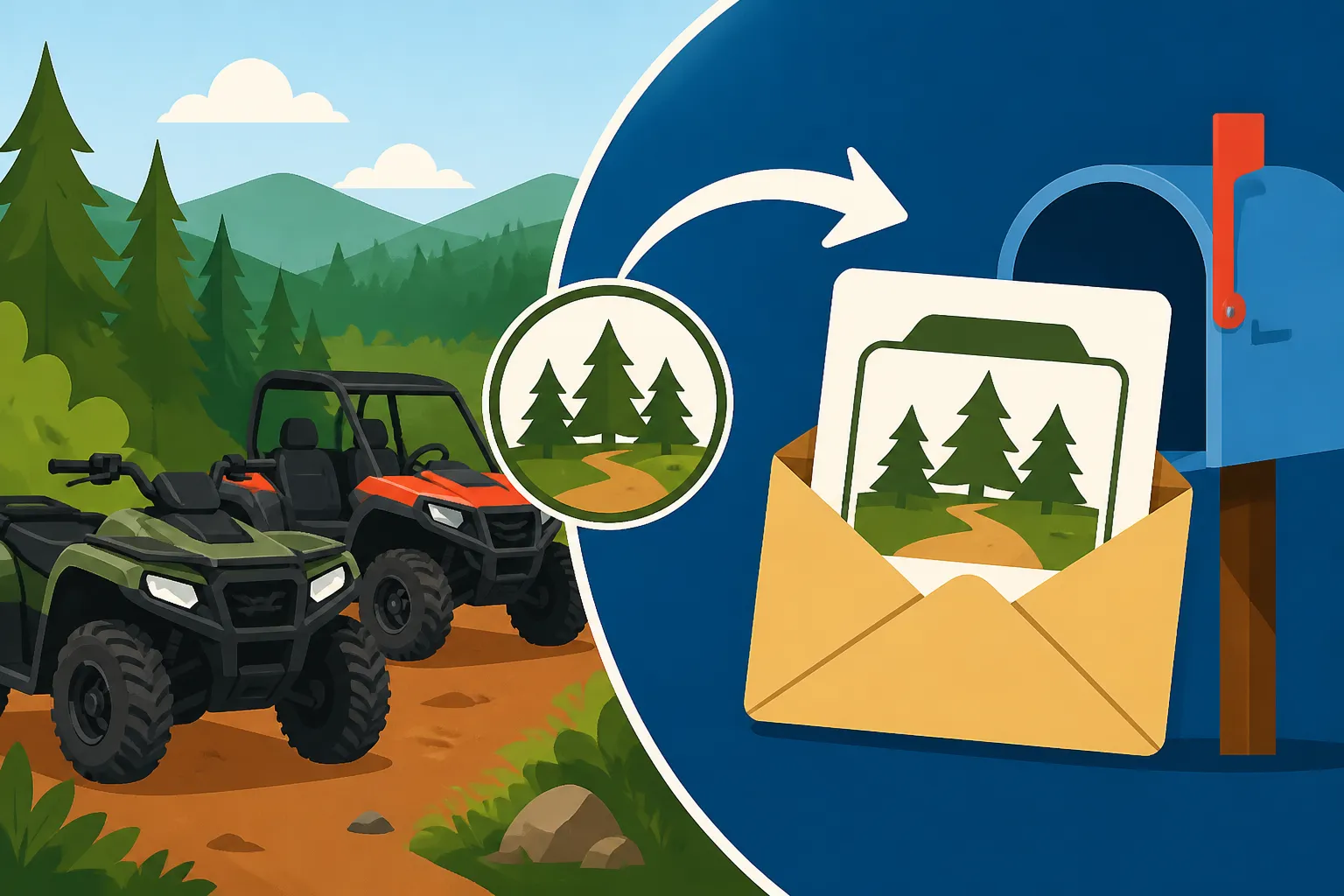
Ordering a Forest OHV permit by mail can be a practical option when you’re planning ahead for a ride near Peters Mill Run or Taskers Gap. The frustrating part is that a permit form, payment, mailing address, and trail rules all need to line up before you haul your machine. This guide walks through the mail-order process and the details to check first.
Confirm the permit covers your riding area
Forest permits are not universal Virginia trail passes
A National Forest OHV permit applies to the Forest Service riding area and routes identified by the permit issuer. It is not a general pass for every Virginia trail system, private riding park, or county road. Before filling out an application, confirm that the place you plan to ride accepts that specific permit.
Peters Mill Run and Taskers Gap are common reasons riders look into Forest OHV permits. Their rules and access conditions can differ from those at other riding areas, so check the current information for the exact trail system you intend to visit. Virginia National Forest OHV Permits explains the broader permit category, while Virginia Trail Conditions Before You Haul is useful to review before setting out.
Don’t assume a permit for National Forest land also covers Spearhead trails. The systems have separate permit arrangements, and buying one does not automatically grant access to the other. If your itinerary includes more than one riding network, make a list of each area and verify its permit requirements separately.
Check the permit type before sending payment
Forest OHV permits may be offered in different durations, such as a day option, a multi-day option, or an annual option. Which one makes sense depends on your trip: a single-day visit is different from a long weekend or several rides spread across the season. Check the issuer’s current options and instructions rather than relying on an old form or a friend’s previous purchase.
Also confirm that the permit you are ordering is appropriate for your machine and intended use. A trail system may have additional restrictions involving vehicle type, width, equipment, or operator eligibility. A permit is not a substitute for meeting those requirements.
If you are still deciding whether mail is the right route, compare it with the available purchase methods in Virginia Forest Permit Purchase Options. Mail can be convenient when you plan ahead, but it is less forgiving if your trip is close or you discover a missing requirement at the last minute.
Prepare a complete mail-order application
Find the current form and mailing instructions
Start with the official Forest Service or ranger district information for the riding area. Use the current application form and follow the mailing address and payment instructions printed on it or provided with it. Do not rely on an address copied from an old envelope, online discussion, or form that may have been revised.
The right office can depend on the forest or trail area. If the instructions are unclear, contact the relevant ranger district before mailing anything. Ask which form to use, where to send it, what payment methods are accepted, and whether the permit will be mailed back to you or handled another way. Where to Buy a Forest Permit Before You Leave Home can help you compare mail ordering with other purchase options.
When you’re checking the instructions, make sure you understand whether the application is for one rider, one vehicle, or another defined permit unit. Don’t guess based on how a different trail system handles its permits. What to Put on a Mailed Permit Order Form is a helpful companion if you’re assembling the information before you fill out the paperwork.
Fill in every requested detail legibly
Take a few minutes to complete the form carefully. A smudged address or blank required field can create avoidable delays, especially when the application and permit are moving through the mail. Write clearly, use the format requested, and make sure your mailing address can receive the return item.
Before sealing the envelope, check the application against a simple list:
| Item to check | What to confirm |
|---|---|
| Permit selection | The duration and permit type match your trip |
| Applicant information | Required name and contact details are complete |
| Mailing address | The address is current, complete, and readable |
| Machine or rider details | Any requested identifying information is included |
| Payment | The amount and payment method follow the current instructions |
| Signature | Every required signature or certification is completed |
| Return instructions | Any required self-addressed envelope or other return item is included |
This list is a prompt, not a replacement for the actual form. If a field does not apply, follow the form’s directions rather than leaving it blank by default. Keep a copy or clear photo of the completed application and the payment record for your own files.
Match payment to the form’s instructions
Check the form for the accepted payment methods and exact amount before sending your application. Do not assume that cash, a personal check, a money order, or a card will be accepted just because another office accepts it. If payment must be made payable to a named agency or office, copy that wording exactly.
Fees and permit options can change, so verify the current figures directly with the permit issuer before you mail payment. Virginia Forest Permit Cost provides related context, but the form or official Forest Service instructions should control the amount you send.
If the form asks for a return envelope or specifies how the permit will be sent, follow that direction precisely. Keep the envelope’s tracking or mailing receipt if you use a trackable service. That record won’t speed up processing, but it can help you confirm when your application was sent and give you a reference if you need to ask the office about it.
Mail early and plan for the permit to arrive
Give yourself room for postal and office handling
A common planning mistake is mailing the application shortly before leaving home and assuming the permit will arrive in time. Postal delivery and office handling both take time, and neither should be treated as guaranteed to match your travel schedule. Send the application well ahead of the ride, especially if you’re traveling from outside the area or planning a group trip.
If your departure date is getting close, contact the ranger district before mailing. Ask whether mail ordering is still practical for your timeline and whether there is another approved way to obtain the permit. Don’t assume that showing an application receipt at the trailhead will count as a valid permit; only rely on an alternative if the issuing office confirms it.
For people traveling toward Edinburg and the surrounding area, it can be tempting to settle the paperwork after arriving. Confirm any in-person purchase option and office details before changing your plan. The fact that a permit can be ordered by mail does not mean every local business or trailhead sells one.
Keep a record and check for a response
Save a copy of the application, note the date you mailed it, and keep proof of payment. If the permit does not arrive within the period you expected, contact the office using the contact details provided in the official instructions. Have your name, mailing date, permit selection, and payment information ready so the office can understand what you sent.
Avoid mailing a second payment or duplicate application immediately if you are unsure what happened to the first one. First ask the issuing office whether the original application was received and what to do next. Sending duplicates without checking can make it harder to sort out the paperwork.
When the permit arrives, read it rather than putting it straight into your gear bag. Check that the details are correct and follow any instructions about carrying, displaying, or presenting it. A permit is only one part of being ready to ride; machine requirements, trail hours, seasonal closures, and access rules still apply. For winter planning, review Virginia Forest Season Closures before choosing your travel dates.
Get ready for the trail after ordering
Verify the remaining rules for your machine and route
A permit does not necessarily mean every machine can use every route. Check the specific trail system’s equipment requirements, including any rules on width, sound, tires, brakes, or other safety features. For Peters Mill Run, review the driver and vehicle requirements before you load up; Peters Mill Run Requires a Valid Driver’s License covers one important eligibility detail.
Confirm that your planned route is open and suitable for your machine. Weather, maintenance, seasonal closures, and trail conditions can affect access. A route shown on an older map may not reflect a closure or a current restriction, so verify details close to your trip.
Navigation tools can help you prepare, but they do not replace official rules or current closure information. Some riders use onX Offroad to review off-road routes and organize a trip plan. Use it as a planning aid, then compare your route with the trail operator’s instructions and any official maps or notices.
Build a practical trip plan before you leave
Before loading the machine, check the permit, required identification, vehicle equipment, and any documents the trail system says riders must carry. Put the permit somewhere it will stay readable and accessible. If the instructions require it to be displayed in a particular way, follow those instructions rather than improvising.
Plan for the conditions around the trail, not just the trail itself. Mountain weather can change, cell reception may be limited, and a group can lose time if someone’s machine needs attention. Share the route and expected return time with someone who is not riding with you. Carry a paper map or other reliable backup if your navigation depends on a phone signal; onX Offroad may be useful for route planning, but a dead battery or poor reception can complicate a day outdoors.
For a longer trip, check the route again before you haul. onX Offroad can help you keep your intended route organized, while the Forest Service or ranger district remains the place to verify official access information. This small double-check can prevent the unpleasant surprise of reaching a trailhead with a permit in hand but an unsuitable machine, a closed route, or a missing requirement.
If you are ordering for several riders, make sure everyone understands which permits they need and what each person must carry. One person’s paperwork should not be assumed to cover an entire group unless the official permit terms explicitly say so. Confirm each rider’s obligations before departure, especially when people are bringing different types of machines.
Disclaimer
This article is for general informational purposes only and does not constitute professional advice. Laws, prices and regulations vary by location and change over time. Consult a qualified professional for guidance on your specific situation.