Virginia Snake Season on the Trail
A warm afternoon on a Virginia trail can turn a routine stop into an unnerving moment when you notice a snake near your machine, your dog, or the path ahead. Knowing when snakes are active, where they tend to hide, and how to respond without getting closer can make spring, summer, and fall rides safer and less stressful.
When snakes are active on Virginia trails
Season depends on warmth, not a fixed calendar
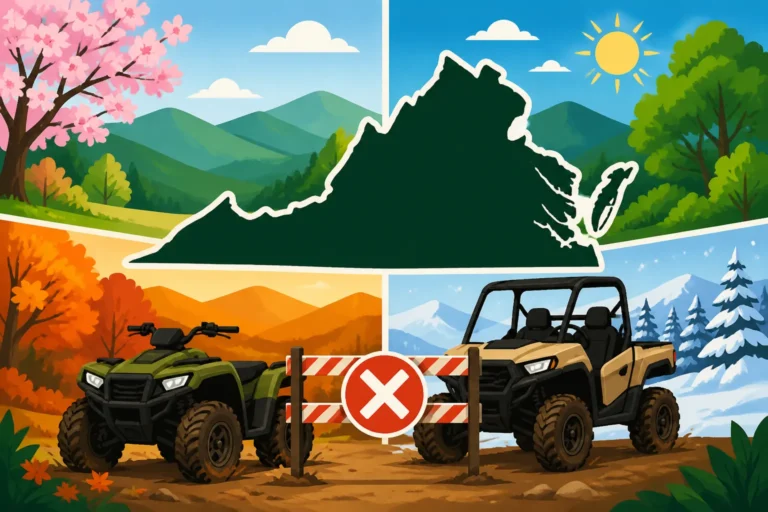
In Virginia, snakes are generally more active during the warmer months, often from spring into fall. But there isn’t one statewide “snake season” with a reliable start and end date. A cool spring can keep snakes tucked away longer, while a run of warm days may bring them out earlier. In autumn, activity can continue on mild days before colder weather sets in.
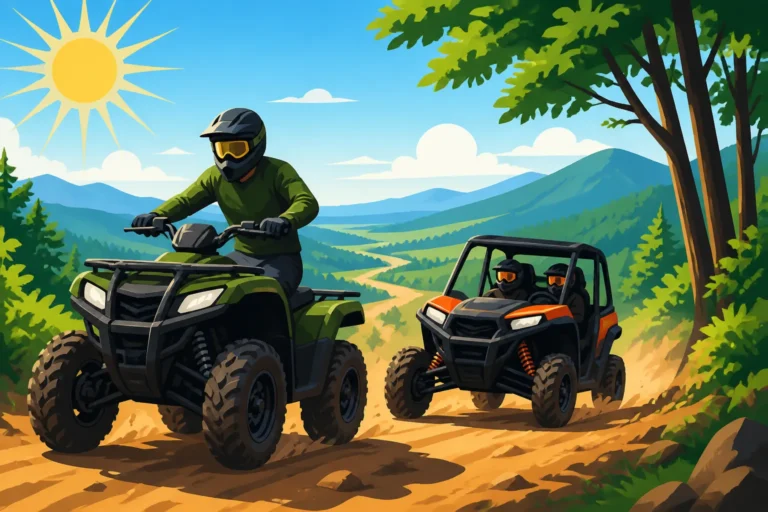
That matters when you’re planning a ride near places such as the George Washington and Jefferson National Forests, the Shenandoah Valley, or Southwest Virginia’s coalfield trail systems. Conditions can differ from one region, elevation, and day to the next. A sunny trail beside a rocky slope may feel warm enough for a snake to be out, even when the air is cool in the shade.
Think of a season as a reminder to stay alert, not a forecast that tells you whether a snake will be present. Check the expected temperature and weather before leaving, and be especially watchful during warm spells after cooler weather. [Virginia Mountain Weather on the Trail] can help you think through how changing mountain conditions affect a day outside.
Time of day and habitat matter
Snakes may be easier to encounter where cover and food are available: tall grass, brush, leaf litter, rock edges, fallen logs, and damp areas near streams. They can also turn up near trail margins, staging areas, and campsites. A snake may be resting in cover or crossing an open section to get somewhere else; either way, it can be hard to spot before you’re close.
On a ride, the riskiest moments may happen when you stop and step off the machine. Riders naturally focus on parking, checking a map, helping a friend, or reaching for something in a storage box. Before putting your feet down, scan the ground around the tires and footrests. Look before you reach into brush or pick up a log, and don’t place a hand where you can’t see it.
Warmer seasons also bring other trail nuisances. If you’re sorting out clothing for a spring or summer ride, [Virginia Tick Season and Riding Gear] offers a useful companion topic. Long pants and sturdy footwear can help protect against scratches and ticks, though no clothing makes a snake encounter risk-free.
How to reduce the chance of an encounter
Make every stop a deliberate one
Choose a visible, relatively open place to pull over when you can. Avoid stepping into tall grass, piles of leaves, brush, or the space beneath a log or rock ledge. If a friend has stopped in a questionable spot, give them room rather than crowding around the machine. A quick, calm scan is more useful than hurriedly jumping off to help.
Keep your hands away from hidden spaces. Don’t reach under a machine, into a woodpile, or through vegetation without looking first. If you need to retrieve gear from a bag or cargo box, stand where you can see the ground and avoid setting items down in dense cover. When walking around a parked ATV or UTV, watch where you place each step.
A route-planning app such as onX Offroad can help you review mapped routes and plan stops before a ride, but it is not a live snake-spotting tool. Don’t rely on a digital map to identify hazards at your feet, and check that you have a way to navigate if your phone loses service. On remote rides, [Carrying a Paper Map in the Coalfields] is a good reminder to bring a backup instead of depending on one device.
| Situation | Safer choice | Avoid |
|---|---|---|
| Pulling over | Stop in a visible, open area when possible | Parking beside dense brush or tall grass |
| Getting off the machine | Scan around the tires and footrests first | Stepping down without checking the ground |
| Reaching for gear | Look into the space before reaching | Putting a hand under a machine or into cover |
| Seeing a snake | Give it room and wait for a clear route around | Touching, moving, trapping, or provoking it |
| Riding with a dog | Keep the dog close and watch where it explores | Letting it investigate brush or approach a snake |
Keep your group and pets from crowding the snake
If you spot a snake, pause and give it space. Don’t try to identify it by moving closer, and don’t attempt to kill, capture, or relocate it. Even a snake that appears still should be treated as an animal capable of defending itself if approached or cornered. Let it move away on its own, or choose a safe route around it with plenty of distance.
Tell your riding companions where it is without gathering everyone around it. If you’re leading a group, calmly ask riders behind you to stop back from the area. A crowd can block the snake’s escape route and increase the chance that someone steps too close while trying to get a better look. [Virginia Trail Etiquette Locals Expect] is useful reading for the broader habit of sharing trail space thoughtfully.
Dogs can make an encounter harder because they may rush toward a snake before you can react. Keep a dog leashed where required and under close control everywhere else. Don’t let it sniff around rocks, woodpiles, or thick vegetation. If a dog is bitten, contact a veterinarian promptly and avoid trying home remedies or waiting to see whether symptoms develop.
What to do if you encounter or are bitten by a snake
If you see one, create distance
Stop moving toward the snake and give it a clear way to leave. If it is directly across the trail, wait at a safe distance rather than trying to drive over it or shoo it away. Once it has moved, continue only when the route is clear. If it stays in place and there’s no safe way past, turn around or choose another route.
Do not use a stick to prod it, throw objects, or attempt to handle it for a photo. Even an apparently dead snake can be dangerous to touch. You also don’t need to establish whether it is venomous before deciding to keep away. From a practical safety standpoint, distance is the right response to any unidentified snake.
For a long ride, make sure someone in your group knows how to contact emergency services and can describe your location. A mapping app such as onX Offroad may help you understand where your route is, but confirm how you’ll communicate if there is no cell signal. Before you head out, [First Aid on a Long Coalfield Loop] can help you think through basic preparation for a remote outing.
If someone is bitten, treat it as an emergency
If a bite may be from a venomous snake, call 911 immediately. Don’t wait for symptoms, and don’t spend time trying to catch or kill the snake. If it can be observed safely from a distance, details such as its general appearance may help responders, but a photo is never worth getting closer.
Keep the bitten person as calm and still as possible while help is arranged. Remove rings, watches, or tight clothing near the affected area before swelling makes them difficult to remove. If practical, keep the affected limb at rest and follow instructions from emergency dispatchers. Don’t let the person walk farther than necessary, and don’t have them drive themselves.
Avoid common but harmful responses: don’t cut the bite, try to suck out venom, apply ice, use a tourniquet, or attempt to capture the snake. Don’t give alcohol or rely on folk remedies. If you’re on a remote trail, send someone for help only if it can be done safely and without leaving the injured person without support. Tell responders the route or trail system you’re on and describe a nearby trail marker, junction, or access point.
Plan rides around conditions and trail access
Match your precautions to the day
A ride in cool, wet weather may feel very different from a hot afternoon after several warm days. Before setting out, check the forecast, trail status, and access rules for the specific riding area. Conditions can change quickly in the mountains, and a route that looks straightforward on a screen may include muddy sections, rough ground, or limited places to turn around.
Build in time for safe stops rather than trying to keep a tight schedule. If you’re riding with children, newer riders, or a large group, agree in advance on where to stop and how to handle a hazard. A calm plan helps prevent the scramble that can lead someone to step into brush without looking. For seasonal planning, [Virginia Riding in Spring] and [Virginia Riding in Summer] provide useful context for how riding conditions shift through the year.
onX Offroad can be one part of preparing a route, especially when you want to review mapped trails and potential junctions before leaving. Still, confirm current access information with the trail operator or land manager, carry a backup navigation option, and don’t treat a route line as a guarantee that every section is open or suitable for your machine. [Virginia Trail Conditions Before You Haul] and [Virginia Trail Closures and Seasons] are worth checking before you load up and drive to a trailhead.
Leave room to change the plan
If the trail is overgrown, visibility is poor, or you’re uncomfortable with the available stopping areas, slow down and adjust the ride. You don’t have to push through a section just because it was on your original plan. A shorter loop, a different route, or an early return can be the sensible choice, especially when a group is tired or the weather has changed.
The same applies after an encounter. Give the area time and space, then decide whether the route ahead remains safe and practical. Keep your group together, let everyone know what happened, and avoid turning a close call into a rush to get back on schedule. The goal is not to guarantee a snake-free ride—no trail plan can do that—but to make it less likely that a brief sighting becomes an injury.
Disclaimer
This article is for general informational purposes only and does not constitute professional advice. Laws, prices and regulations vary by location and change over time. Consult a qualified professional for guidance on your specific situation.