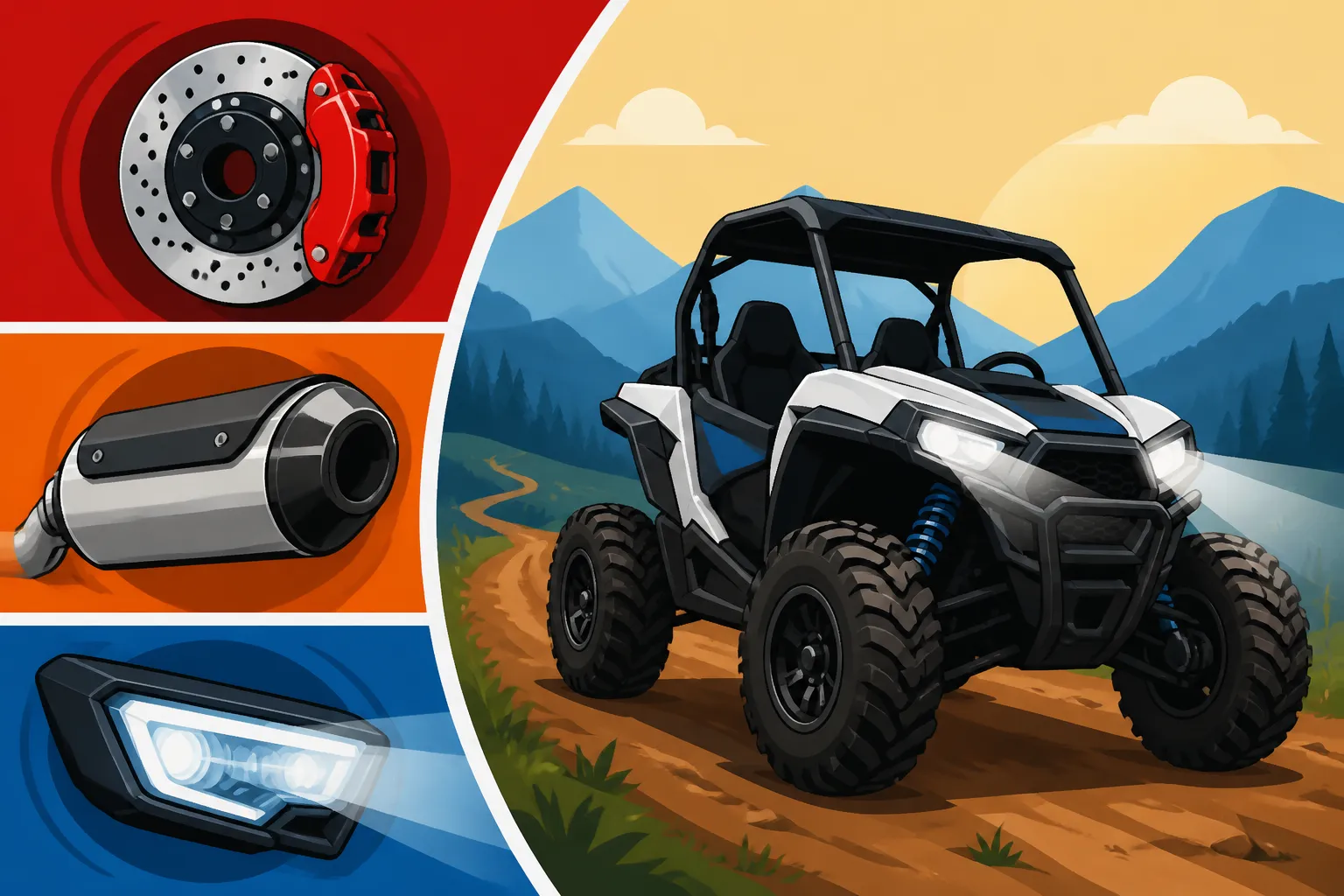
Brakes, a Muffler and Lights
A machine that starts, moves, and looks trail-ready can still be turned away if its brakes, muffler, or lights are missing or not working. That is frustrating after you have loaded the ATV or UTV and driven to a Virginia trailhead. This guide explains what to inspect, why requirements can differ by riding area, and how to prepare before you haul.
Why brakes, a muffler, and lights matter on Virginia trails
Brakes are essential even when the route is off-road
A trail can change from a wide, gentle track to a steep, uneven descent in a short distance. On mountain routes near Edinburg or along the Peters Mill Run and Taskers Gap system, loose gravel, rocks, ruts, and wet leaves can all affect how quickly a machine stops. Working brakes give you a way to manage those surprises and keep a controlled gap from the rider ahead.
Check more than whether the brake lever or pedal feels familiar. Look for sponginess, excessive travel, leaks, damaged lines, worn pads, or a machine that pulls sharply to one side when braking. If the brakes feel different from the last time you rode, fix the problem before loading up. A trailhead is a poor place to discover that a brake needs adjustment.
A UTV’s greater size and weight can make brake condition especially important on a descent or while carrying passengers and gear. Do not assume that a machine can stop safely just because it is moving slowly. A loaded vehicle on a downhill grade behaves differently from the same vehicle on a flat driveway.
A muffler helps limit noise and protect the riding experience
A muffler is not just a comfort feature. Excessive exhaust noise can disturb nearby residents, wildlife, and other trail users, and some riding areas set sound limits or equipment rules. A machine with a damaged exhaust, a missing muffler, or a loose connection may sound noticeably louder than usual. It can also be a sign that the exhaust system needs repair.
Listen for a new rattle, sharp popping, or an unusually loud exhaust note before your trip. Inspect the muffler and its mounting points for cracks, holes, loose hardware, or damage from rocks. If you have modified the exhaust, do not assume that a part described as “performance” will meet the requirements of the trail system you plan to ride.
Rules are not identical across every Virginia riding area. A route on national forest land may have different equipment and sound requirements from a privately operated park or a managed trail network in the coalfields. Check the rules for the specific destination, including any applicable Virginia Forest Noise Limits. That is more reliable than treating a rule from one trailhead as a statewide standard.
Lights support visibility, but requirements depend on the route
A working headlight and taillight can help other riders see your machine in shade, dust, fog, or changing mountain weather. They are useful even on a daytime ride: a wooded trail can be much darker than an open parking area, and a cloudburst can reduce visibility quickly. On a UTV, inspect the lights from the driver’s seat and ask someone to confirm that the rear lights illuminate.
Do not assume that having lights means you may ride after dark wherever you choose. Equipment rules and permitted riding hours are separate questions. A trail may require or expect certain equipment while still restricting access to particular hours. Check both before departure, especially if a slow group ride or a mechanical problem could make you finish later than planned.
Also inspect the wiring and lenses. A light that works only when the machine is parked may fail after vibration loosens a connection. Mud can cover lenses, while a cracked housing can let water in. Clean the lights before leaving and carry a basic repair kit suited to your machine.
How to inspect your machine before leaving home
Use a repeatable pre-ride equipment check
A short inspection before every trip is easier than trying to remember everything at the trailhead. Start with the brakes, then check the exhaust and lights. Look for visible damage, loose fasteners, fluid leaks, and anything that has changed since the previous ride. If your machine has been stored through winter or has sat unused, give it extra attention before you load it.
A practical check can follow this order:
- Test the brakes. With the machine stationary, operate each control and check for an unusually soft feel, excessive movement, or signs of a leak. In a safe open area, confirm that the machine slows and stops as expected.
- Inspect the muffler and exhaust. Look for holes, cracks, loose mounts, missing parts, or signs that the exhaust is contacting another component.
- Test the lights. Switch on the headlight and check the taillight. If your machine has separate high and low beams or brake lights, test those as well.
- Look for trail-specific equipment. Some destinations have additional requirements, including rules about spark arresters, sound levels, vehicle dimensions, or permitted machine types. Review Virginia Forest Equipment Requirements and the rules for the network you intend to ride.
- Recheck after loading. A trailer ride can loosen a strap, shift gear, or reveal an issue you did not notice in the garage.
This does not replace a mechanic’s inspection when a part is damaged or a system is behaving abnormally. If a brake feels unreliable, the exhaust is damaged, or an electrical fault keeps a light from working, postpone the ride until the machine is safe to operate.
Consider the whole trip, not only the machine
The ride begins before you reach the trail. Confirm that the area is open, that your vehicle is allowed on the route, and that you have the correct permit or other required documentation. This matters when traveling to the national forest near Edinburg or heading southwest toward the Spearhead trail systems, where access rules and management are not interchangeable.
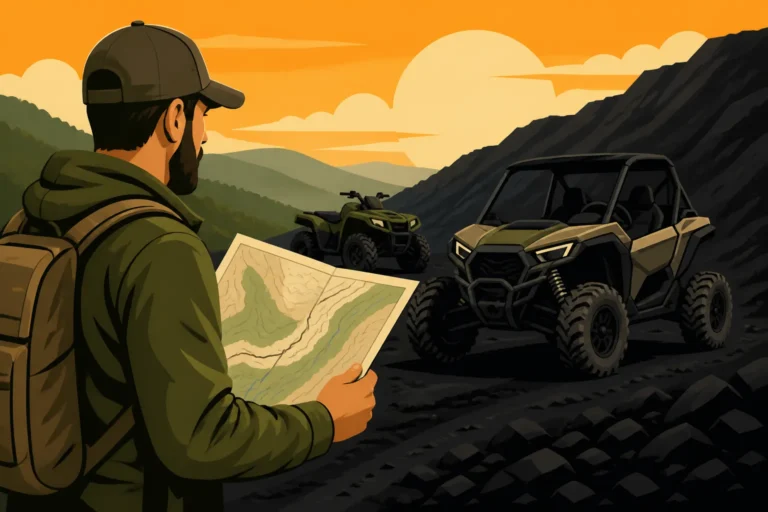
A navigation app can help you understand where you are and plan a route, but it should not be treated as the final authority on closures or equipment rules. Riders may use onX Offroad to review mapped routes and orient themselves, then confirm access and current conditions with the land manager or trail operator. Carrying an offline map or another backup is sensible where cell service is unreliable.
Before a long drive, check Virginia Trail Conditions Before You Haul. Rain can change trail conditions, and some routes may close or become unsuitable after wet weather. A machine that is mechanically ready still needs a legal, open, appropriate place to ride.
| Item to inspect | What to look for | Why it matters |
|---|---|---|
| Brakes | Firm, predictable controls; no leaks or obvious damage | Helps you control speed and stop on steep or uneven ground |
| Muffler and exhaust | Secure mounts; no holes, cracks, or unusual noise | Supports safe operation and helps meet area-specific noise rules |
| Headlight and taillight | Both illuminate; lenses are clean and wiring is secure | Improves visibility in shade, dust, and changing conditions |
| Additional required equipment | Check rules for the specific trail system | Requirements can differ between public land, managed networks, and private parks |
| Access and conditions | Confirm permits, closures, and allowed vehicle types | Prevents an unnecessary trip and reduces the risk of riding somewhere closed |
Requirements can differ between Virginia riding areas
Do not treat one trail’s rules as statewide rules
Virginia riders may use public forest roads and OHV routes, managed systems such as Spearhead, and privately operated parks. Each type of destination can have its own access rules. A machine that meets one location’s requirements may not satisfy another location’s rules, and an equipment checklist from a different state may not apply in Virginia.
That is why it helps to identify the exact destination before you inspect the machine. For example, national forest access near Peters Mill Run is not the same as riding a managed coalfield trail system near Grundy or a privately operated park. Read the specific destination’s rules, including equipment requirements and any sound limits. For national forest riding, review [Virginia Spark Arrester Requirements] as well as the broader equipment guidance.
If the rules are unclear, contact the land manager or trail office before you load the machine. Ask whether the requirement applies to ATVs, UTVs, or both; whether lights must be present or illuminated; and whether a modified exhaust or nonstandard machine setup is allowed. Clear answers before the trip can prevent an awkward conversation at the gate.
Separate equipment rules from riding-hour and road rules
A headlight does not make an otherwise prohibited route legal, and a muffler does not make every public road open to ATV or UTV traffic. Equipment requirements address the machine. Access rules address where and when you may ride. Keep those questions separate when planning.
For instance, a designated trail may have set operating hours, while another location may have its own route restrictions. A machine with all the expected equipment still has to stay on an authorized route and obey posted signs and closures. Review relevant guidance such as Virginia Rules for Riding After Dark and Virginia Trail Closures After Rain when those issues apply to your outing.
This distinction can save you from a common planning mistake: assuming that a machine is “trail legal” everywhere because it passed an inspection at one location. In Virginia, confirm the specific system, the exact route, and any temporary notices rather than relying on a general label or old advice from a friend.
A practical plan for a safer trail day
Prepare for the route you actually intend to ride
Choose your destination first, then check route access, closures, permits, machine restrictions, and equipment requirements. A narrow forest trail, a wide UTV route, and a private park can have very different expectations. Use Virginia Trail Difficulty Ratings to think about whether the route fits your group’s experience and equipment.
For a group, agree on the route and a turnaround plan before setting out. Make sure each rider understands where to regroup and what to do if someone falls behind. If the group includes a new rider or a child, choose a route that allows everyone to ride at a manageable pace. A machine with working brakes and lights is part of preparation, but it cannot compensate for a route that is beyond the rider’s ability.
A navigation tool such as onX Offroad can be useful for reviewing mapped routes and keeping track of your position, especially when mountain roads and trails branch unexpectedly. Download or save the information you need before entering an area with weak reception. Then verify route status and rules with the responsible trail operator, because a map does not guarantee that a route is open or that your vehicle is allowed.
Stop and reassess if something changes
During the ride, pay attention to changes in braking feel, exhaust noise, or lighting. A new grinding sound, a brake lever that suddenly travels farther, or a headlight that cuts out after a bump deserves attention. Pull over somewhere safe, keep the group clear of the trail, and inspect the machine before continuing.
If a repair cannot be made safely, do not ride on simply because you are close to the end of the route. Arrange a safe way to recover the machine and notify your group. On remote trails, let someone outside the riding party know your planned route and expected return. Cell reception can be inconsistent in mountainous areas, so do not rely on a phone call as your only backup plan.
Good preparation also means respecting other riders and the land. Keep noise under control, avoid riding around a closure, and leave enough room for people traveling in both directions. For broader trail manners, Virginia Trail Etiquette Locals Expect can help round out your checklist. When the machine is mechanically sound and the route is confirmed, the day is more likely to be enjoyable for everyone sharing the trail.
Disclaimer
This article is for general informational purposes only and does not constitute professional advice. Laws, prices and regulations vary by location and change over time. Consult a qualified professional for guidance on your specific situation.