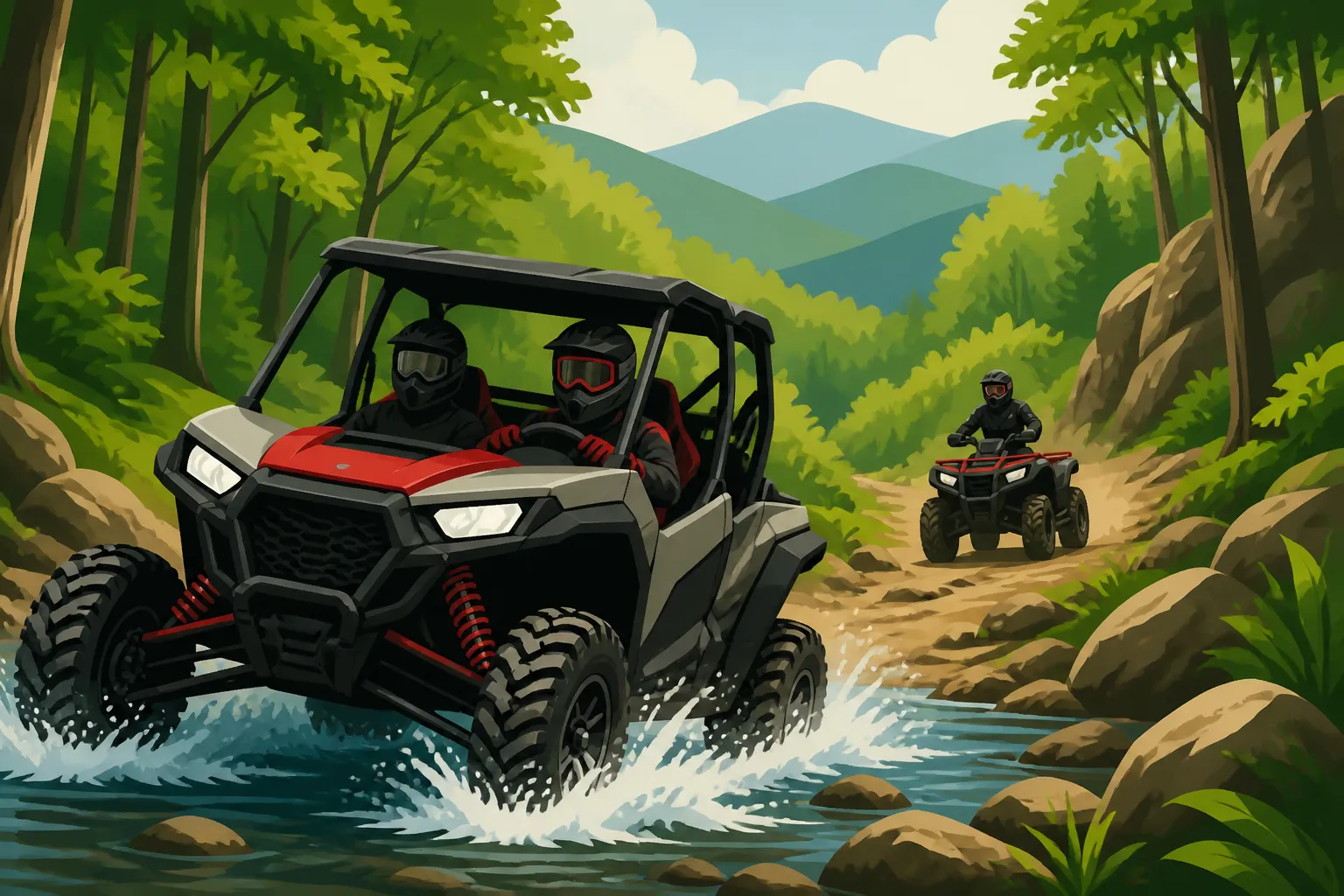
Riding the 12 Miles of Peters Mill Run
Peters Mill Run offers roughly 12 miles of off-highway riding in George Washington National Forest, but the trip can go sideways before you reach the trail: permits, winter closures, changing conditions, and confusion about nearby routes all matter. This guide explains how to plan the ride, what to bring, and how to avoid common surprises around the Edinburg trailhead.
What to expect on Peters Mill Run
The 12-mile route and the larger trail system
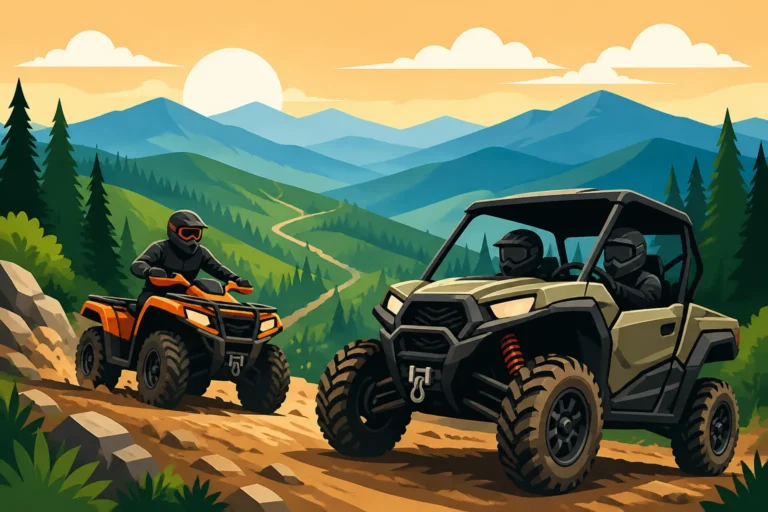
Peters Mill Run is a designated off-highway vehicle route in the George Washington National Forest, near Edinburg in the Shenandoah Valley. The Peters Mill Run route is about 12 miles long, but riders often talk about it alongside the connected Taskers Gap area. Together, those routes make up a larger riding system, so a description of the full area may refer to considerably more mileage than Peters Mill Run itself. For context on how the routes fit together, see [Virginia's 36-Mile Peters Mill Run and Taskers Gap System].
That distinction is worth keeping in mind when you plan your day. If your group wants a manageable out-and-back or a shorter ride, focus on the Peters Mill Run route rather than assuming every nearby trail is part of the same 12-mile outing. If you are hoping to explore farther, check the official forest map and route markers to understand which connectors are open to your machine.
The area attracts different types of off-highway vehicles, and route rules can vary within the larger network. Do not assume that a trail you can see on a map is open to every vehicle, or that one route’s width rule applies to another. In particular, [Why Peters Mill Run Has No Width Limit] and [Virginia's Taskers Gap Width Limit] explain an important distinction riders should check before unloading.
Terrain, pace, and riding expectations
Expect a forest-road ride rather than a groomed recreational loop. Surface conditions can change with rainfall, seasonal use, and maintenance, and a route that feels straightforward in dry weather may be slower or more demanding after a wet spell. Give yourself time to navigate, take breaks, and turn around if the route or conditions are not right for your group.
A relaxed pace is especially helpful if riders have different experience levels or machines. It is easy for the more confident rider to pull ahead on a forest route, leaving newer riders feeling rushed or unsure where to turn. Agree on a pace before setting out, stop at safe places to regroup, and make sure everyone knows what to do if the group becomes separated.
The trail is also a shared-use environment. Keep noise and speed under control, yield where appropriate, and avoid creating dust or blocking the route while you stop. A little courtesy makes the ride easier for other visitors and helps keep the area pleasant for everyone. For more planning and on-trail etiquette ideas, see [Virginia Trail Etiquette Locals Expect].
Stay oriented without relying on cell service
Do not build your navigation plan around having a dependable phone signal. Coverage can be inconsistent in forested and mountainous areas, and a phone that works at the trailhead may not work farther along the route. Download or carry the relevant map before you leave home, and keep enough battery for the ride back.
A mapping app such as onX Offroad can help you review routes and save maps for offline use before you arrive. Treat any app as a planning aid, not the final authority on closures or access. At the trailhead, check posted notices and follow the forest’s signs and directions. If a map and a closure notice disagree, the posted restriction should guide your decision.
It also helps to give one person in your group a paper map or a saved offline copy, rather than having everyone depend on a single phone. If the phone gets wet, runs out of battery, or is dropped, the group still has a way to orient itself. [Virginia ATV Trail Map Downloads] is a useful related topic when you are comparing map options.
Permits, closures, and route rules
Get the forest permit before you haul
Riders should plan for the required National Forest OHV permit before leaving for the trail. Do not count on buying one at the trailhead: Peters Mill Run has no permit kiosk there, so arriving without the required permit can leave you stuck before the ride begins. Check [Virginia Forest Permit Purchase Options] and [Where to Buy a Forest Permit Before You Leave Home] while you are planning.
A practical approach is to sort out the permit, map, and vehicle requirements together a few days before the trip. That gives you time to resolve a purchase or eligibility question without a trailer full of gear waiting in a parking area. Keep the permit information accessible, and make sure the person responsible for the group knows how to show it if asked.
If your group includes visitors who ride elsewhere, do not assume another state’s permit covers this route. Forest access requirements are specific to the riding area, and the fact that you have a permit for a different trail network does not automatically make it valid here. Check the current forest information before you travel.
Check seasonal closures and conditions
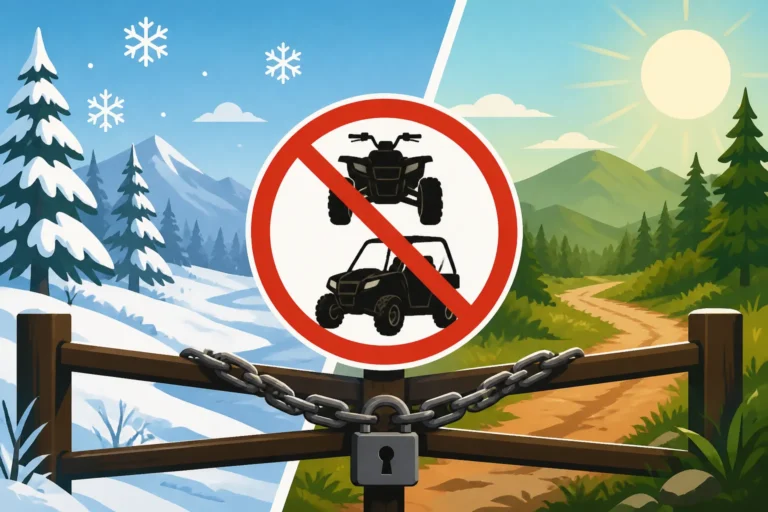
Peters Mill Run has a winter closure period, generally described as running from mid-January through mid-March. The closure is one reason to check current notices before loading up, especially if your trip falls near the expected reopening. See [Peters Mill Run Closes Mid-January Through Mid-March] and [Virginia Trail Closures and Seasons] when choosing a date.
Seasonal closure dates are not the only reason a route may be unavailable. Weather-related conditions can affect access outside the regular winter shutdown, and a recent storm can make a forest ride unpleasant or unsafe even when the trail is technically open. Check for the latest information before you drive, and be prepared to change plans if the route is closed or conditions have deteriorated.
This check matters even if you have ridden the area before. A familiar route can feel very different after heavy rain, wind damage, or maintenance work. [Virginia Trail Conditions Before You Haul] offers more guidance on what to look into before committing to a long drive.
Confirm the rules for your specific machine
Do not assume that a rule for one part of the Peters Mill Run and Taskers Gap system applies across the whole network. Vehicle dimensions, route designations, and access permissions can differ. Check the official map and posted signs for the exact route you intend to ride, particularly if you are bringing a wide side-by-side or another machine that may not fit every trail.
The same caution applies to vehicle equipment. Before leaving, review the forest’s requirements for items such as brakes, a muffler, lights, tires, and a spark arrester. The details are collected in [Virginia Forest Equipment Requirements]. A quick inspection in your driveway is much less stressful than discovering a problem at the trailhead.
If your group has several machine types, compare each one against the rules instead of assuming that the least restricted machine sets the rules for everyone. Make sure the planned route works for the whole group. If it does not, choose an appropriate route or leave the machine that cannot meet the requirements at home.
| Planning item | What to do before leaving | Why it matters |
|---|---|---|
| Permit | Arrange the National Forest OHV permit before arrival | There is no kiosk at the Peters Mill Run trailhead |
| Closure status | Check forest notices close to your ride date | Winter and weather-related closures can affect access |
| Route choice | Identify the exact trails your group plans to ride | Rules and vehicle access may vary across the system |
| Navigation | Download a map and carry a backup | Cell service may be unreliable in the forest |
| Machine condition | Inspect required equipment and basic safety items | Prevents avoidable problems at the trailhead or on the route |
| Weather | Check recent conditions and prepare for changes | Rain and mountain weather can affect comfort and trail conditions |
Pack and prepare for a smoother ride
Give your machine a practical pre-ride check
Before loading, inspect the items that can spoil a day quickly: tires, brakes, steering, lights, fuel, and any required equipment. Look for loose fasteners, damaged wiring, fluid leaks, or a winch line that is not properly secured. If you find a problem, fix it at home rather than hoping it will hold together on the trail.
Pack tools and basic repair supplies that match your machine and the ride. A small kit might include the tools needed for routine adjustments, tire-repair supplies, a compact air source, and a way to secure loose parts. The goal is not to carry a workshop; it is to handle minor problems without leaving someone stranded over an easily fixed issue.
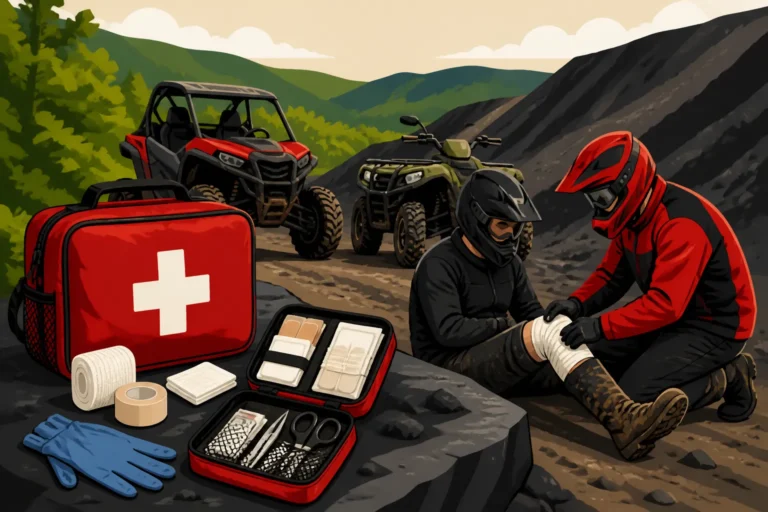
If you are riding with a group, agree on who is carrying shared items such as first aid supplies, a tow strap, or a tire repair kit. That avoids both extremes: one person carrying everything, or everyone assuming someone else brought it.
Prepare for mountain weather and a slower day
Conditions in the Shenandoah Valley and surrounding forest can change over the course of a ride. Pack layers, rain protection, water, and food even if the forecast looks friendly when you leave home. A ride that takes longer than planned can turn a comfortable afternoon into a cold, hungry return if no one brought an extra layer.
Set a realistic turnaround time. A group may ride more slowly than expected because of stops, route-finding, machine issues, or changing conditions. Leave enough daylight to return without rushing, and avoid treating the 12-mile distance as a promise that the whole outing will take only a short time.
It is also sensible to tell someone who is not on the ride where you are going and when you expect to be back. If the plan changes, update them when you can. This simple step is especially helpful when cell service is limited and the group is far from its vehicles.
Sort out parking and the drive in
Check your route to the trailhead before you leave, including where you plan to park and how much room your truck and trailer need. Unfamiliar forest roads can feel tight when you are towing, and a group arriving in multiple vehicles can quickly take up more space than expected. Keep access clear for other visitors and follow posted parking instructions.
Use onX Offroad or another offline mapping option to plan your approach, but compare the route with current forest directions. A navigation app may suggest a road that is unsuitable for a loaded trailer, or may not reflect a closure. Save the route before you lose service and consider sharing the meeting location with the rest of the group.
If you are traveling from a distance, build in time for fuel, food, and a final equipment check before reaching the trailhead. That way, a minor stop does not force the group to rush through the safety and permit checks that make the outing go more smoothly.
A simple plan for riding Peters Mill Run
Before the trip
Start by choosing a date and checking the current closure and conditions information. Confirm the exact route you plan to ride, whether your machines are permitted on it, and which permit each rider or vehicle needs. Then download a map, save directions, and tell your group where and when to meet.
Ask everyone to arrive with a machine that has been checked at home, suitable riding gear, water, and a way to navigate without mobile service. If one person is new to the area, make sure they understand that Peters Mill Run is about 12 miles and is part of a larger system with different route rules.
At the trailhead
Pause before unloading. Read the posted notices, confirm the route is open, and make sure the group has the right permit and equipment. This is also a good time to review the route, set a meeting point, and agree on what to do if someone has a mechanical issue or loses contact with the group.
Take a few minutes to check that phones and radios are charged, helmets and other gear fit properly, and loose cargo is secure. A strap that comes undone or a forgotten water bottle is easier to deal with before the ride begins than after the group has spread out.
On the route
Keep the group together at a comfortable pace and stop only where you can do so safely without blocking other users. Watch for changing surfaces, other visitors, and signs that indicate a route restriction. If a section appears closed or conditions feel beyond the group’s ability, turn around rather than pressing on just because it was part of the plan.
Using onX Offroad to follow a saved route can help you stay oriented, but check it against signs on the ground. When the ride is over, pack out trash, leave the parking area tidy, and make sure everyone and every machine is accounted for before heading home.
Disclaimer
This article is for general informational purposes only and does not constitute professional advice. Laws, prices and regulations vary by location and change over time. Consult a qualified professional for guidance on your specific situation.