Which Policy Pays After a Virginia ATV Collision
A Virginia ATV collision can leave you sorting out damage to the machine, medical bills, and questions about who was responsible—all while trying to remember which policy might apply. The answer depends on the crash location, who caused it, the coverage each person actually has, and any exclusions in the policies. This guide explains where to start and what to check.
Which insurance policy may pay after an ATV crash
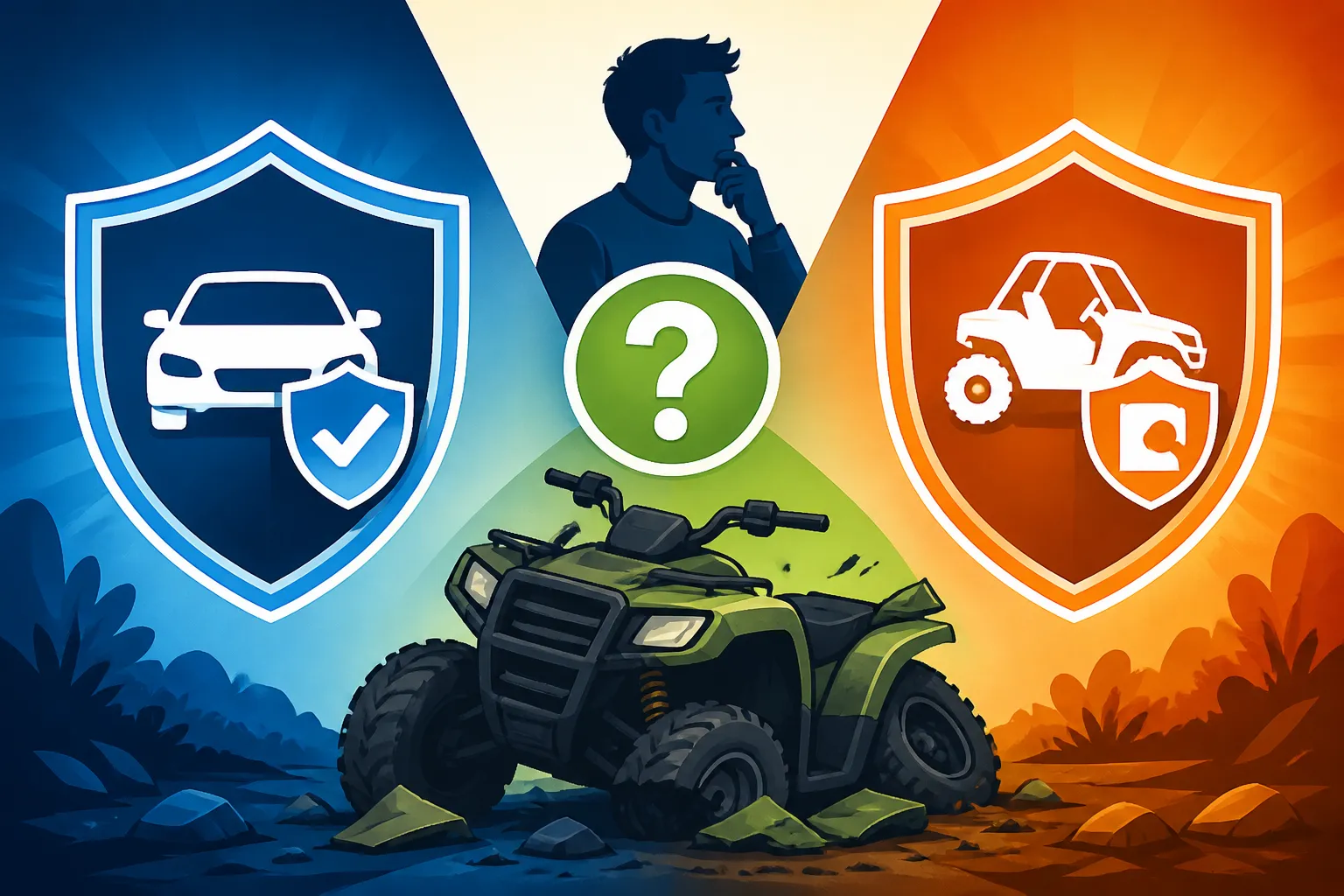
Virginia does not require ATV insurance in the same way many drivers must carry insurance for a registered road vehicle. That does not mean a collision is automatically uninsured: a rider’s own policy, another person’s liability coverage, or health insurance may be relevant, depending on the facts and policy language. For context on the state’s requirement, see [Virginia Requires No ATV Insurance](Virginia Requires No ATV Insurance).
Your ATV policy and damage to your own machine
If you bought an ATV policy, check whether it includes collision coverage. Collision coverage commonly applies to damage to your machine after a collision, subject to the policy’s terms, deductible, and exclusions. The specific cause of the crash and where it happened can matter, so don’t assume that “collision coverage” means every crash is covered.
For example, imagine your quad rolls after striking a rut on a permitted trail. Your policy may treat that differently from a crash involving another vehicle on a road, or an incident while the ATV is being used for a purpose excluded by the contract. Report the incident accurately and ask the insurer to identify the language it is applying.
Comprehensive coverage is different. It commonly addresses certain losses that are not collisions, such as theft or some types of weather damage. It generally is not a substitute for collision coverage when your machine hits another vehicle, a tree, or an obstacle. Confirm the coverage names on your declarations page rather than relying on a sales conversation or a memory of what you selected.
If your ATV has accessories or modifications, gather receipts and photographs. That includes equipment such as racks, winches, tires, or accessories from brands like SuperATV. Whether those items are covered, and how they are valued, depends on the policy and any limits for added equipment. Mention them when you report the claim, and ask what documentation the adjuster needs.
Another rider’s liability coverage
If someone else caused the collision, that person’s liability coverage may be a possible source of payment for your injuries or property damage. But a claim is not the same as an automatic payout. The insurer may investigate who was responsible, whether its insured was using the machine in a covered way, and whether the policy applies to the location and circumstances.
A crash involving a car or truck may raise different questions from a collision between two ATVs. Don’t assume the other driver’s automobile policy covers every off-road machine or every trail incident. Give the insurer the facts and ask it to explain whether the policy covers the vehicle and use involved.
If the other rider has no applicable coverage, or the coverage is disputed, your own policy may have provisions worth checking. Some policies offer coverage for certain losses involving an uninsured or underinsured person, but availability and scope vary. Ask your insurer directly whether your ATV policy includes such protection and what conditions apply.
Health insurance and medical-payment coverage
Medical bills may be handled separately from repairs to the ATV. If you have health insurance, contact the insurer or benefits administrator to ask how to submit bills related to the crash. Keep copies of bills, treatment records, and any claim correspondence. A health plan may ask whether another person or insurer could be responsible, so answer those questions carefully and consistently.
Some recreational-vehicle policies offer medical-payments coverage or similar benefits. If your policy includes it, ask whether it can help with eligible medical expenses regardless of who caused the crash, and whether the coverage has conditions or limits. Do not assume the coverage exists just because you have an ATV policy.
If another party may be responsible for your injuries, coordinate communications. A health insurer, the other person’s liability insurer, and your own ATV insurer may each ask for information. Keep a simple log of who you spoke with, when you spoke, and what documents you sent. This can prevent the frustrating cycle of repeating the same details without knowing which claim file has them.
| Loss after the crash | Coverage that may be relevant | What to verify |
|---|---|---|
| Damage to your ATV | Your collision coverage or another party’s liability coverage | Deductible, exclusions, valuation method, and whether the location is covered |
| Theft or certain non-collision damage | Your comprehensive coverage, if included | Covered causes of loss and any equipment limits |
| Your medical bills | Health insurance or medical-payments coverage, if included | How to submit bills and whether coordination with another claim is required |
| Damage caused by another rider | That rider’s liability coverage, if applicable | Whether the policy covers the ATV, rider, and use involved |
| Added accessories | ATV policy provisions for equipment or modifications | Required receipts, documentation, and applicable limits |
Why the crash location and road use matter
A trail crash, a private-property crash, and a crash on a public road can raise different insurance questions. The place itself does not tell you who pays, but it can affect which policy provisions apply. Be precise when describing where the collision happened, including the trail or road name, nearby landmarks, and whether the area was private, public, or part of an organized riding system.
A trail or private-property collision
For a crash on a trail, the policy may ask whether the trail was open to the rider, whether a permit or other access requirement applied, and whether the machine was being used within the policy’s terms. These details can matter even when the rider was not on a public road. Keep any trail permit, waiver, trip record, and photographs that help establish where the incident happened.
On private property, landowner permission and the circumstances of access may also become part of the account of the incident. Permission to ride does not automatically determine insurance coverage or responsibility. If another person, a property condition, or an object on the land may have contributed, record what you observed without guessing about fault.
A useful record is straightforward: the time, location, trail or property name, direction of travel, weather, surface conditions, and names of witnesses. If you were riding with a group, ask each person to write down what they independently remember before memories blur together. Avoid coordinating or polishing accounts; accurate independent recollections are more helpful.
A collision on or near a public road
Virginia generally restricts ATV use on public highways, subject to specific exceptions. A crash on a public road can therefore involve both insurance questions and questions about whether the ride was lawful. Review [Can You Ride an ATV on the Road in Virginia?](Can You Ride an ATV on the Road in Virginia?) and [Virginia ATV Road Rules Under 46.2-915.1](Virginia ATV Road Rules Under 46.2-915.1) for the road-use context.
An alleged violation does not, by itself, answer every insurance question. The policy language and crash facts still matter, and responsibility for the collision may be disputed. At the same time, an insurer may ask how the ATV came to be on that road and whether the use falls within the contract. Explain the route and circumstances honestly; don’t describe a road as a trail or leave out how the crash occurred.
If a vehicle was involved, make a note of its type, identifying details, and the driver’s insurance information if it is safe and appropriate to collect. If you are uncertain whether a road segment was open to ATV use, write down its location and check with the relevant local authority later. Don’t rely on another rider’s assumption that a road is permitted.
A claim does not replace a road-use review
The question “Which policy pays?” is different from “Was the ATV allowed there?” A claim can involve several separate issues: the applicable policy, the cause of the collision, road-use rules, and any injuries or property damage. Keep those questions distinct when speaking with insurers and other parties.
If the crash happened during a permitted route or crossing, document the details that explain why you were there. If the machine was on a road, preserve the exact location and the circumstances of the trip. For broader context on road access and exceptions, see [Virginia Rules for Crossing a Highway](Virginia Rules for Crossing a Highway).
What to do after a Virginia ATV collision
The first priorities are safety and medical care. Once the immediate danger has passed, a calm, organized record can make the insurance process easier. It is normal to feel shaken and to forget small details; write them down as soon as you can, and update the record if you remember something later.
Get help and preserve the scene details
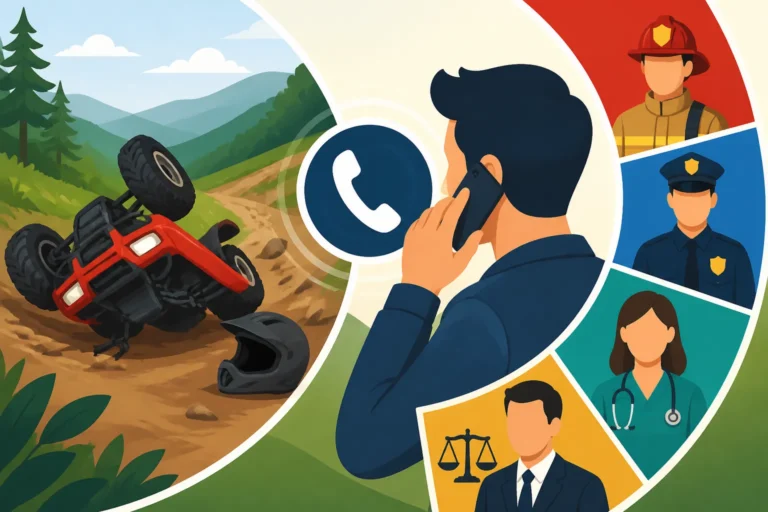
Call for emergency assistance when someone is seriously hurt, the scene is unsafe, or you need help managing the incident. Don’t delay medical attention because you are worried about who might pay. If you receive care, keep discharge instructions, bills, and records of follow-up appointments.
When it is safe, take photographs of the machines, visible damage, the surrounding area, road or trail conditions, signs, and any relevant obstacles. Photograph damage from several angles, but don’t put yourself or anyone else in danger to get a better image. Note whether the ATV was moved before the photos were taken.
Collect contact information from witnesses and the other people involved. Record what you know, not what you assume. For example, “I saw the other ATV enter the bend” is more useful than a confident conclusion about fault that you cannot support. Avoid arguing about responsibility at the scene.
Notify the relevant insurers promptly
Contact your own insurer and ask how to open a claim, what documents it needs, and whether the machine should be inspected before repairs begin. If another person may be responsible, ask how to report that information and whether the insurer will communicate with the other party’s insurer. Keep claim numbers and written instructions in one place.
Before authorizing repairs, clarify whether the insurer wants an inspection or photographs of the damage. Keep damaged parts and receipts when practical, and ask before disposing of anything the adjuster may need to examine. If the ATV has upgraded parts, including accessories from SuperATV, provide receipts, product details, and photographs that show what was installed before the crash.
Be accurate about the machine’s use, location, and modifications. If you are unsure about a detail, say so rather than filling in a gap. Ask the adjuster to explain any denial, delay, or valuation decision in writing and to identify the policy provision involved. Keep copies of emails, letters, estimates, and repair invoices.
Keep a clean record and avoid rushed decisions
Create a basic timeline with the date, location, people involved, calls made, and documents submitted. Save original photos and messages, and make a separate note of important phone conversations. If you receive an estimate or settlement offer, review what damage or expenses it includes before agreeing.
If you have questions about whether a particular policy applies, ask the insurer to identify the relevant coverage and exclusions. If the dispute involves significant injuries, a substantial loss, or unclear responsibility, consider speaking with a qualified professional who can review the specific facts and documents. General guidance cannot decide what a contract covers in an individual claim.
The same record-keeping helps when an older or used machine’s ownership paperwork is incomplete. For a separate look at ownership documentation, see [Virginia Machines With No Paperwork](Virginia Machines With No Paperwork) and [Building a Paper Trail When You Buy a Used Quad](Building a Paper Trail When You Buy a Used Quad).
How to prepare before the next ride
A few checks before riding can make a stressful claim less confusing later. You do not need to predict every possible accident; the goal is to know what protection you have and what information you would need if something happened.
Read the declarations page and ask targeted questions
Find your policy declarations page and check which vehicles are listed, what coverages are shown, and whether the machine’s identifying details are correct. Ask whether coverage changes by location or activity, including trail riding, road crossings, transport, or use by another household member. Request clear answers about deductibles, added equipment, and any exclusions that concern you.
If you have installed accessories, keep a current list with receipts and photographs. This is particularly useful for equipment such as tires, guards, racks, or winches, whether made by SuperATV or another manufacturer. Don’t assume a receipt guarantees full reimbursement; ask how the insurer treats added equipment and what documentation it expects.
Carry the information you may need
Store your policy contact information, emergency contacts, and ownership documents somewhere accessible, while taking reasonable care to protect personal information. Tell riding companions where the documents are. On a group ride, it helps if someone knows the route, planned return time, and who to contact if a rider does not return as expected.
For trail-specific issues, check the access rules and permit requirements before hauling out. A permit or riding permission does not replace insurance, and insurance does not grant permission to ride. Separating those responsibilities can prevent confusion at a trailhead and after a collision.
If you are considering insurance because the cost of repairs or medical bills would be difficult to absorb, compare the policy’s actual protections rather than choosing by name alone. Ask what is covered, what is excluded, and how claims are handled for the riding you do. For practical context on optional protection, see [Buying ATV Insurance When No Law Requires It](Buying ATV Insurance When No Law Requires It) and [What an Insurer Asks for on an Untitled Virginia Quad](What an Insurer Asks for on an Untitled Virginia Quad).
Disclaimer
This article is for general informational purposes only and does not constitute professional advice. Laws, prices and regulations vary by location and change over time. Consult a qualified professional for guidance on your specific situation.