Virginia Emergency Responder Exceptions
For most of us in Virginia, the idea of legally riding an ATV or UTV on a public road is nothing more than a pipe dream, often leading to hefty fines and headaches if we try. However, there's a crucial exception written into state law that allows our dedicated emergency responders to utilize these versatile machines when saving lives and protecting property. This guide will walk you through the specific allowances and critical limitations that empower emergency personnel to navigate off-road terrain and even public thoroughfares when circumstances demand it.
The General Ban on ATVs and UTVs on Virginia Public Highways
Virginia's legal framework for off-road vehicles like ATVs and UTVs is quite clear and, for the average rider, quite restrictive when it comes to public roads. The general rule is simple: if it's a public highway, an ATV or UTV doesn't belong there. This can be a frustrating reality for riders who see these machines as practical tools or just a fun way to get around, but the law prioritizes public safety and the distinct differences between off-road vehicles and street-legal automobiles.
The Underlying Philosophy of the Ban
The Commonwealth of Virginia, like many states, defines "all-terrain vehicles" (ATVs) and "utility vehicles" (UTVs) specifically as off-road machines. They are designed for rugged terrain, not asphalt. Their tires are aggressive for grip on dirt and rocks, not smooth for pavement. Their suspension systems are built for absorbing impacts off-road, not for stable, high-speed travel on paved surfaces. Furthermore, many lack the safety features required for highway use, such as proper lighting, turn signals, and crash protection systems found on street-legal vehicles. The legislative intent is to prevent serious accidents that could arise from these inherent design differences. [Virginia Bans ATVs on Public Highways] clearly outlines this foundational prohibition for most riders.
What Constitutes a Public Highway
When we talk about "public highways" in Virginia, we're not just referring to interstates or major state routes. This term broadly encompasses any street, road, or alley that is open to the public for vehicular travel, maintained by the Commonwealth or a locality. This includes rural paved roads, gravel county roads, and even the unassuming street in front of your house. It doesn't matter if it's a bustling four-lane highway or a quiet, two-lane country road; if the public can drive on it, it's generally off-limits for ATVs and UTVs. This blanket prohibition is often a point of confusion and frustration for riders, especially those in rural areas where such machines might seem like a natural fit for short trips between properties.
Why ATVs Are Different from Other Vehicles
The distinction is crucial. Unlike dirt bikes that, under specific conditions, can sometimes be converted to street-legal motorcycles in Virginia, ATVs and UTVs generally have no path to becoming street-legal. [Why a Side-by-Side Can Never Be Made Street Legal] explains this in more detail. They typically lack the necessary Department of Transportation (DOT) approved components, such as automotive-grade tires, windshields, and safety glass, to meet federal highway standards. Their seating positions, weight distribution, and handling characteristics are optimized for off-road performance, not for sharing lanes with cars and trucks at highway speeds. This fundamental design difference is why the law treats them so differently from other motor vehicles, except in very specific, critical scenarios.
Defining Emergency Responders and Their Roles in Virginia Law
While the general public faces a strict ban, Virginia law carves out specific exemptions for those who put their lives on the line for the community. Understanding who qualifies as an "emergency responder" in this context is paramount, as is recognizing the unique scenarios where ATVs and UTVs become indispensable tools for these brave individuals.
Who Qualifies as an Emergency Responder
In Virginia, when we talk about emergency responders, the law typically refers to sworn law enforcement officers, firefighters, and emergency medical services (EMS) personnel. This can include paid professionals and dedicated volunteers from departments like the sheriff's office, local police, state police, fire departments, and rescue squads. These are the individuals tasked with responding to accidents, natural disasters, medical emergencies, and other critical incidents. Their qualifications and training are rigorous, and they operate under the authority and specific protocols of their respective agencies. The law acknowledges their distinct needs and responsibilities compared to the general public.
Types of Emergencies Where ATVs and UTVs Are Essential
The utility of ATVs and UTVs for emergency services often comes to light in situations where traditional vehicles struggle or cannot access. Think about search and rescue operations in densely wooded areas, mountainous terrain, or along rugged coastlines. During major snowstorms or floods, when roads become impassable for cars and trucks, these machines can be equipped with tracks or specialized tires to reach stranded individuals or deliver vital supplies.
For instance, after a severe ice storm, power lines might be down, trees might block roads, and remote homes could be cut off. An emergency UTV, equipped with a winch from a company like SuperATV and additional lighting, could be the only way for utility crews or EMS to reach a distressed resident. Similarly, in major public events or large gatherings, medical teams often use UTVs to quickly navigate crowds and respond to medical emergencies, transporting patients efficiently to waiting ambulances.
Specific Statutory Exceptions for Emergency Use
Virginia Code § 46.2-915.1, the very section that generally bans ATVs and UTVs from public highways, includes a critical subsection detailing exceptions for emergency responders. This isn't just a casual nod; it's a specific legal allowance recognizing the necessity of these machines in dire situations.
The Exact Legal Language of the Exception
The code states that the general prohibition "shall not apply to any person operating an all-terrain vehicle or utility vehicle in an emergency situation or when assisting a law-enforcement officer, firefighter, or emergency medical services personnel in the performance of their official duties." This language is precise and important. It doesn't give a blank check for any activity, but specifically ties the exception to "emergency situations" or "assisting" official duties. This means a responder isn't just driving their personal ATV to work; they are actively engaged in a crisis or aiding sworn personnel in their responsibilities. For example, a volunteer rescue squad member might use their UTV to navigate a flooded road to reach a victim, or a sheriff's deputy might use an ATV to pursue a suspect through wooded trails.
How It Differs from Other States
While many states have similar provisions for emergency vehicles, the specifics can vary. Some states might define "emergency" more broadly or restrict it more narrowly. Virginia's law provides a clear, concise exemption that focuses on the function of the ATV or UTV in an emergency context, rather than requiring the vehicle itself to be specially registered or equipped as an emergency vehicle in the same way an ambulance or fire truck is. This flexibility is crucial for smaller departments or volunteer organizations that might not have the budget for custom-built emergency off-road vehicles but can adapt standard ATVs and UTVs with appropriate gear.
Historical Context and Reasons for the Exception
The inclusion of this exception isn't an accident; it's a recognition of practical needs. As ATVs and UTVs became more common and capable, emergency services quickly identified their potential. Before such exemptions, responders often faced legal dilemmas when using these machines during critical events. Imagine a scenario where a missing hiker needed to be found deep in a national forest, and the quickest way to get a search team in was by ATV. Without the legal cover, responders might have hesitated, fearing personal liability or departmental repercussions. The law was updated to ensure that these valuable tools could be deployed without legal impediment when lives were on the line. It ensures that localities, particularly those in rugged areas like the Appalachian foothills, have every tool available to them. [Virginia Rescue Squad Title Exemptions] highlights another aspect of how the state supports these critical services.
Conditions and Limitations for Emergency Responder Operations
Even with the emergency exception, operating an ATV or UTV on public roads or in emergency scenarios isn't a free-for-all. Virginia law, and good common sense, dictates certain conditions and limitations to ensure safety and accountability, even in the most urgent situations.
Speed Limits and Operating Hours
While an emergency might imply urgency, it doesn't always grant carte blanche to disregard all traffic laws. The exception is for use on a highway, not necessarily for speeding. While some emergency vehicles (like fire trucks and ambulances) have specific allowances for exceeding speed limits with lights and sirens, this ATV/UTV exception is typically interpreted as allowing highway access rather than granting blanket exemptions from all rules of the road. It is reasonable to assume that emergency responders would still be expected to operate these machines safely and responsibly, adhering to posted speed limits unless specific operational protocols for that type of emergency dictate otherwise and are supported by agency policy. Furthermore, even in emergencies, visibility and safety are paramount. Operating hours might be impacted by the need for additional lighting and visibility, especially during dawn, dusk, or nighttime operations.
Lighting and Visibility Requirements
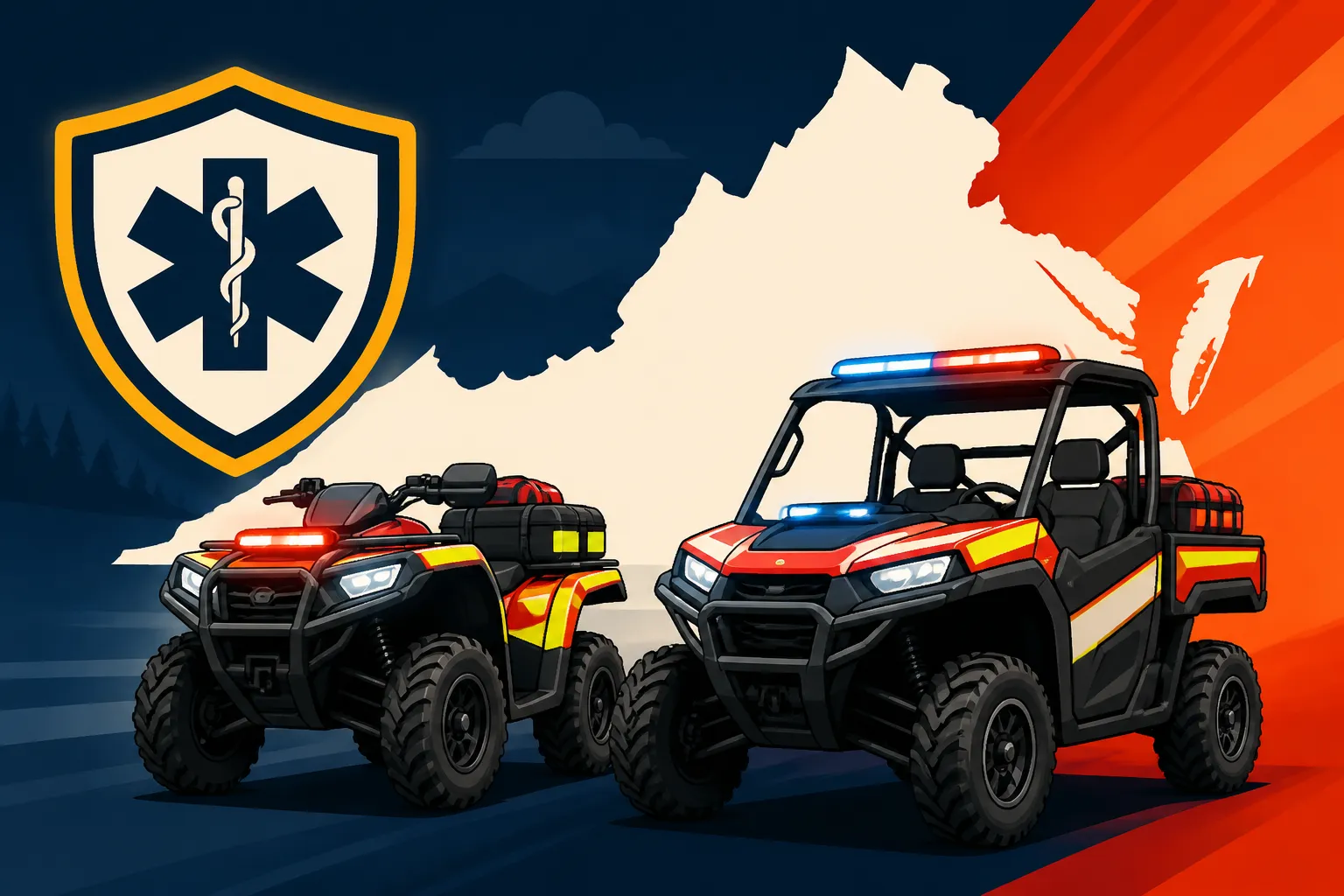
Visibility is a huge concern for any vehicle on public roads, and even more so for ATVs and UTVs, which are often smaller and less conspicuous than cars or trucks. Emergency ATVs and UTVs must be equipped with appropriate lighting, including headlights, taillights, and often additional auxiliary lighting, especially if they are operating at night or in adverse weather. Many departments will install additional warning lights, such as flashing strobes or light bars, to make these vehicles highly visible to other traffic and pedestrians during an emergency response. This is not just a suggestion; it's a critical safety measure to prevent further incidents. A basic UTV might need a heavy-duty light bar and emergency warning lights, perhaps even a beacon, which could be sourced from a company like SuperATV, to meet the necessary visibility standards for a public road response. [Virginia Lighting Rules on a Machine] provides context for general ATV lighting, which would be amplified for emergency use.
Training and Certification for Operators
Just because someone is an emergency responder doesn't automatically mean they're an expert ATV or UTV operator. Agencies typically require specialized training for personnel who will be using these machines, especially in demanding or emergency situations. This training often covers safe operation on varied terrain, advanced maneuvering techniques, winch operation, patient transport protocols, and navigation. Furthermore, responders must understand the specific legal limitations and agency policies regarding their use on public ways. This ensures that the person behind the handlebars is not only capable of operating the machine but also fully aware of their responsibilities and the legal framework governing their actions. Safety courses and regular refreshers are common practice to maintain proficiency and adherence to best practices.
Practical Considerations for Emergency Response Teams
Beyond the letter of the law, emergency response teams face numerous practical considerations when integrating ATVs and UTVs into their operations. These machines, while invaluable, require careful planning, investment, and ongoing management to be truly effective assets.
Department Policies and Procedures
Every emergency response agency should have clear, written policies and procedures outlining the authorized use of ATVs and UTVs. These policies should cover everything from when and where these vehicles can be deployed, to who is authorized to operate them, and what equipment must be on board. Such guidelines ensure consistency, mitigate risk, and provide legal protection for both the operators and the agency. Without well-defined policies, responders could inadvertently exceed their authority or operate in ways that create unnecessary hazards. These policies often align with the strict guidelines on [Virginia Rules for Riding a County Road] or [Virginia Rules for Crossing a Highway], ensuring that even in an emergency, safety remains a priority.
Insurance Implications
Operating ATVs and UTVs, especially in emergency situations on public ways, carries significant insurance implications. Agencies need to ensure they have adequate liability coverage for their operators and the machines themselves. This isn't just about covering potential damage to the vehicle; it's about protecting against claims related to accidents involving other vehicles or individuals. Given the unique nature of emergency response and the off-road characteristics of these machines, special insurance riders or policies may be necessary. Departments should consult with their insurance providers to confirm that their coverage is comprehensive and specifically addresses the risks associated with emergency ATV/UTV deployment. [Virginia Accident Reporting for an ATV Crash] is a good reference point for the procedures that would kick in if an incident occurred.
Equipping an Emergency ATV/UTV
An ATV or UTV pressed into emergency service is rarely a stock machine. They often require specialized equipment to perform their duties effectively and safely. This can include:
- Medical Transport: Stretchers, litters, or specialized patient platforms for safely moving injured individuals.
- Search and Rescue: GPS units, communication equipment, advanced lighting, and perhaps even thermal imaging cameras.
- Fire Suppression: Small pump and tank systems for brush fires or remote access.
- Utility & Hauling: Winches, cargo beds, toolboxes, and perhaps even plow attachments for snow removal.
- Safety & Visibility: Emergency lights (strobes, light bars), sirens, reflective markings, and heavy-duty bumpers.
For instance, a search and rescue UTV might be outfitted with a roof rack and a bed extender for carrying extra gear, along with a powerful winch kit from SuperATV for self-recovery or clearing obstacles. These modifications transform a recreational vehicle into a purpose-built tool.
Beyond the Exceptions: Maintaining Readiness and Community Safety
While the legal exceptions are vital, the ongoing readiness of emergency ATVs and UTVs, and their operators, extends far beyond simply having the legal right to use them. It encompasses maintenance, continuous training, and public awareness.
Maintenance Schedules and Pre-Deployment Checks
Emergency vehicles, including ATVs and UTVs, must be meticulously maintained. Regular service, fluid checks, tire inspections, and brake overhauls are not just good practice; they are critical to ensuring the machine performs reliably when lives are on the line. Imagine an emergency response vehicle failing due to a preventable mechanical issue during a critical mission. Beyond scheduled maintenance, pre-deployment checks are essential before every call. This quick but thorough inspection ensures that all lights are working, tires are properly inflated, fuel levels are adequate, and all specialized equipment is secure and functional. A reliable winch, perhaps a high-quality unit from SuperATV, is only useful if it's regularly inspected and maintained.
Safety Gear for Responders
Operating an ATV or UTV in an emergency, especially off-road or in adverse conditions, demands appropriate safety gear for the responders themselves. While [Virginia Helmet Law Applies to Every Rider] is a general rule, emergency personnel often require additional protection. This typically includes:
- DOT-Approved Helmets: Essential for head protection.
- Eye Protection: Goggles or face shields to protect against dust, debris, and impacts.
- Gloves: For grip and protection from abrasions.
- Sturdy Footwear: Boots that provide ankle support and traction.
- Protective Clothing: Long sleeves and pants, often in high-visibility colors, to guard against scrapes, branches, and improve visibility.
- Specialized Suits: For cold weather, water operations, or fire response, if applicable.
Ensuring every responder is properly equipped minimizes the risk of injury to those who are trying to help others.
Community Engagement and Public Awareness
Even with legal exemptions, public perception and safety are important. Emergency response teams can proactively engage with their communities to educate residents about the appropriate use of ATVs and UTVs during emergencies. This can help prevent confusion or even unnecessary calls to report what might appear to be illegal ATV activity. Explaining why these machines are used, and when they are used, can foster understanding and support. This engagement also provides an opportunity to remind the public about general ATV safety and rules, such as [Virginia Penalties for Illegal Riding] or [Virginia Age Limits by Engine Size], reinforcing a culture of responsible riding throughout the community.
Comparative Overview of ATV Road Use
To help illustrate the distinct legal framework for emergency responders, here's a comparison of typical ATV road rules versus the special considerations for emergency use in Virginia.
| Feature | General Public ATV/UTV Use | Emergency Responder ATV/UTV Use |
|---|---|---|
| Public Roads | Generally prohibited on all public highways. | Permitted during "emergency situations" or "assisting official duties." |
| Permitted Crossing | Limited to direct crossings of public highways at a 90-degree angle. | Broader access may be granted as dictated by emergency needs. |
| Speed Limits | Not applicable due to general ban; implied adherence if crossing. | Expected to operate safely, adhering to limits unless specific emergency protocols apply. |
| Lighting | Headlights/taillights required for off-road use; often insufficient for road. | Enhanced lighting (warning lights, strobes) required for visibility in emergency. |
| Registration/Title | Required if bought new since July 2006, optional for used. | Same titling rules apply, but often not registered for street use. |
| Insurance | Optional; not legally required for off-road use. | Agency typically carries liability insurance for emergency operations. |
| Operator License | No specific license for off-road operation. | Operators usually hold a valid driver's license and specialized agency training. |
| Helmet Requirement | Required for all riders, regardless of age or property type. | Required for all emergency responders for safety. |
| Passenger Rules | Only on machines designed for more than one rider. | Can transport personnel/patients as required by emergency protocols and machine design. |
Disclaimer
This article is for general informational purposes only and does not constitute professional advice. Laws, prices and regulations vary by location and change over time. Consult a qualified professional for guidance on your specific situation.