Virginia Riders Under 12 and 70cc
It's incredibly frustrating for parents who want to introduce their kids to the joys of ATV riding in Virginia, only to be met with a labyrinth of rules about age, engine size, and where they can even ride. You're trying to do the right thing and keep your child safe, but the exact legal requirements often feel like a moving target. This guide is here to untangle the specific laws in Virginia concerning riders under 12 years old and the limitations on engine size, helping you understand precisely what's expected to keep your young rider legal and secure.
The Foundation of Virginia's Youth ATV Laws
Virginia takes a clear stance on youth ATV operation, especially when it comes to the youngest riders. Unlike some states that might have more lenient supervision clauses, Virginia's law is quite explicit, leaving little room for interpretation regarding who can ride what and where. This can feel restrictive, especially for families accustomed to different regulations in neighboring states, but it's designed with rider safety in mind. Understanding these core principles is the first step toward responsible off-road enjoyment.
Statutory Age and Engine Size Limits
The bedrock of Virginia's ATV laws for minors is found in its state code, specifically detailing age and engine displacement. For riders under the age of 12, the law mandates that they shall not operate an ATV with an engine size exceeding 70 cubic centimeters (cc). This isn't a suggestion; it's a hard and fast rule. It means if your child hasn't hit their twelfth birthday, they absolutely cannot legally be on a machine larger than 70cc, regardless of their skill level, their size, or how much supervision they have.
This particular clause is one of the most significant pieces of legislation for families to grasp. Many parents might naturally think, "My child is big for their age," or "I'll be right there next to them." While parental presence and a child's physical stature are crucial for safety, they do not override this specific engine size limitation under Virginia law. It's a proactive measure to prevent young children from operating machines that are simply too powerful or heavy for their developmental stage, reducing the risk of accidents.
No Supervision Escape Clause for Young Riders
A critical point often misunderstood by both new and experienced ATV families is the absence of a "supervision escape clause" in Virginia's statutes. Many parents assume that if they are actively supervising their child, certain age or engine restrictions might be waived. This is not the case in Virginia. The law regarding engine size for riders under 12 is absolute: no ATV over 70cc, period. There's no provision that says, "unless accompanied by an adult," or "unless riding on private land with parental consent."
This means that even if you're riding on your own private property, with your child directly in front of you, if they are under 12 and operating an ATV larger than 70cc, you could be in violation of the law. This can be a tough pill to swallow for some, especially those who grew up in eras or regions with more flexible rules. However, the intent is to create an unequivocal safety standard for the youngest riders. The best approach is to ensure your child is on an appropriately sized machine that meets the legal requirements before their boots ever touch the pegs. [Virginia Has No Supervision Escape Clause] further clarifies this strict interpretation.
Specifics for Under 12 and 70cc Machines
Diving deeper into the regulations for riders under 12 years old operating 70cc ATVs, it's not just about the engine size itself, but also about the types of machines, the environments they're allowed in, and the essential safety gear required. These specifics paint a more complete picture for parents striving for compliance and safety.
What Constitutes a 70cc Machine for Young Riders
When the law specifies "not exceeding 70cc," it's generally referring to the manufacturer's stated engine displacement. Most major ATV manufacturers produce youth models specifically designed to fit these regulatory niches. These aren't just scaled-down adult ATVs; they're engineered with features appropriate for younger riders, such as throttles that can be limited, lower top speeds, lighter weights, and smaller overall dimensions.
It's crucial for parents to verify the actual engine size of any ATV their child will be riding. Don't rely solely on visual appearance or a seller's casual description. Always check the vehicle's manual, the manufacturer's specifications, or the engine casing itself. You might encounter older machines that hover around the 70-90cc mark; if your child is under 12, anything even slightly over 70cc is non-compliant. The goal is to ensure that the machine's power and weight are manageable for a developing child, reducing fatigue and improving control. [A 70cc Machine for a Rider Under 12] expands on this topic.
Where a Rider Under 12 Can Legally Operate
Virginia's laws, including those for youth riders, are very particular about where ATVs can be operated. Generally, ATVs are banned from public highways and public property unless specifically designated for off-road use. For a rider under 12 on a 70cc machine, this means they are primarily limited to private land with the landowner's express permission, or on designated public OHV trails.
It's vital to remember that even on private land, the engine size rule for under-12 riders still applies. You cannot circumvent the 70cc limit by simply riding on your own farm. When it comes to designated OHV trails, like those found within the Spearhead Trails system or Peters Mill Run, there will often be additional rules specific to the trail system regarding age, engine size, and supervision. Always check the specific rules of any trail system before you go, as they can sometimes have their own age or machine restrictions that are even stricter than state law. [Virginia Written Consent on Private Land] is essential if you plan to ride anywhere other than your own property.
Helmet and Eye Protection Requirements
Virginia's commitment to ATV safety extends beyond just age and engine size, mandating essential protective gear for all riders, regardless of age or skill level. This is non-negotiable and a critical component of safe ATV operation for children. Every single rider on an ATV in Virginia must wear a helmet that meets federal safety standards, typically identified by a DOT certification sticker. This applies equally to a seasoned adult rider and a child under 12 on a 70cc quad.
Beyond helmets, eye protection is also a must. Goggles or a helmet with a face shield are required to shield eyes from dust, debris, branches, and insects. These seemingly simple pieces of gear are your child's first line of defense against serious injury. Parents should ensure that helmets fit snugly, don't obstruct vision, and are free from damage. High-quality gear is an investment in your child's safety, and many riders look to brands like SuperATV for various accessories, though helmets and goggles are typically from specialized safety gear manufacturers. [Virginia Helmet Law Applies to Every Rider] provides further details on these crucial safety requirements.
Beyond the Law: Safety Gear and Supervision
While adhering to Virginia's specific laws for young riders is paramount, true safety goes beyond mere compliance. As parents, our responsibility extends to ensuring our children have the best possible protection and guidance, even in areas where the law might not explicitly mandate it. This holistic approach to safety can make a world of difference in preventing accidents and fostering responsible riding habits.
Choosing the Right Protective Gear
Beyond the legally mandated helmet and eye protection, there's a wealth of other protective gear that every young rider should wear. This includes sturdy over-the-ankle boots to protect against foot and ankle injuries, long pants and a long-sleeved shirt (or specialized riding pants and jersey) to guard against scrapes, branches, and sun exposure, and gloves to protect hands and improve grip. Chest protectors and knee pads are also highly recommended, especially for newer or more adventurous young riders.
Investing in good quality gear means it will withstand the rigors of riding and provide better protection in the event of a fall. It's not just about looking the part; it's about creating a protective barrier between your child and potential hazards. When considering upgrades or specialized protective equipment for a youth ATV, many parents explore options from reputable aftermarket companies. For example, some might look to brands like SuperATV for robust skid plates or bumper systems that offer additional protection to the machine itself, indirectly safeguarding the rider by preserving the ATV's integrity during minor impacts.
The Critical Role of Adult Supervision
Even though Virginia law doesn't have a specific "supervision clause" that waives age or engine size limits, active adult supervision is still absolutely critical for any child operating an ATV. A 70cc machine for a rider under 12 is still a powerful piece of equipment that requires focus and respect. An adult should always be present, monitoring the child's riding, the terrain, and any potential hazards. This isn't just about being a watchful eye; it's about being an active coach and mentor.
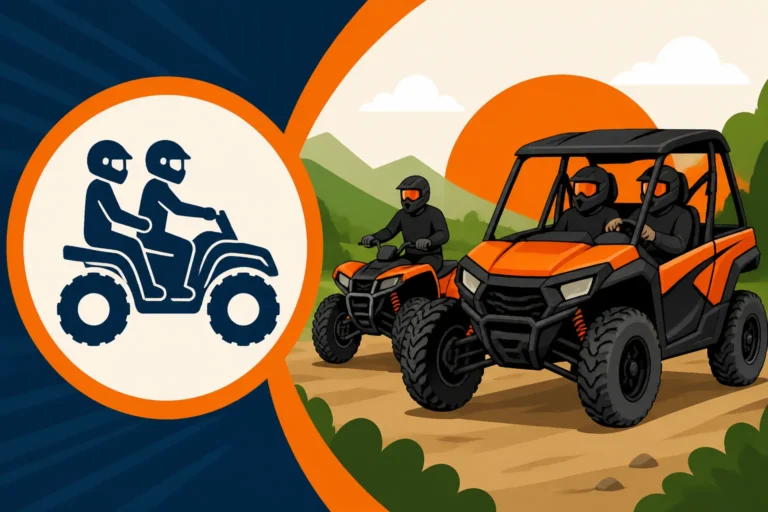
Supervision involves teaching proper riding techniques, reinforcing safety rules, identifying appropriate riding areas, and intervening immediately if a situation becomes unsafe. It's about leading by example, always wearing your own protective gear, and demonstrating responsible riding practices. Parents should also ensure the riding environment is suitable for the child's skill level, starting in open, flat areas before progressing to more challenging terrain. Remember, the law sets a minimum standard; active, engaged supervision takes safety to the next level. [Virginia Rules for a Child Passenger] also highlights the need for machines specifically designed for passengers if you're riding together.
Pre-Ride Inspections and Machine Maintenance
Before any young rider even starts their ATV, a thorough pre-ride inspection by an adult is essential. This includes checking tire pressure, brake function, throttle operation, chain tension, and ensuring all controls are working smoothly. Any issues should be addressed before the ride begins. A well-maintained machine is a safer machine. This also means regularly scheduled maintenance, like oil changes, air filter cleaning, and checking fluid levels, should be diligently performed.
For youth ATVs, these checks are even more important, as components can wear out faster under enthusiastic young riders. Keep the ATV clean, inspect for loose bolts or damaged parts after each ride, and address any concerns promptly. Teaching children to respect their machine through proper care and inspection also instills responsibility. When looking for replacement parts or maintenance tools, many riders turn to reliable aftermarket suppliers for quality components to keep their youth ATVs in top condition.
Common Misconceptions and Legal Pitfalls
Despite clear statutory language, several common misconceptions persist regarding youth ATV riding in Virginia. These misunderstandings can inadvertently lead to legal trouble or, more importantly, put young riders at risk. Understanding these pitfalls is as crucial as knowing the rules themselves.
Misinterpreting the "On Your Own Land" Exception
One of the most widespread myths is the idea that "laws don't apply on your own property." While property owners generally have more latitude on their private land, this does not negate Virginia's specific age and engine size restrictions for ATV riders under 12. As previously mentioned, if your child is under 12 and riding an ATV exceeding 70cc on your family farm, you are still in violation of state law.
The confusion often arises because some other ATV regulations, such as helmet laws for adults, might have exemptions for private property. However, for youth age and engine size limits, the law is written to protect children regardless of the riding location. An officer could potentially issue a citation if they observe a violation, even if it's on private land visible from a public right-of-way. The safest course is always to ensure your young rider is on a machine that complies with the 70cc limit until they turn 12.
Believing "Skill Level" Overrides Engine Size
Parents often assess their child's skill level and confidence on an ATV, which is a good practice for determining readiness for challenging terrain. However, skill level, no matter how advanced, does not supersede the legal engine size restrictions for riders under 12. A child might be an exceptional rider, capable of handling a larger machine with ease in a controlled environment. But legally, if they are under 12, they cannot operate an ATV over 70cc.
This can be a point of contention for parents who feel their child is mature and competent enough for a slightly larger machine. However, the law provides a clear, objective benchmark to protect all children, acknowledging that even the most skilled young riders are still developing physically and cognitively. Stick to the 70cc limit until the twelfth birthday, and then they can graduate to a machine up to 90cc until they turn 16. [Virginia ATV Age Requirements] details the progression of these limits.
Overlooking Manufacturer Age Recommendations
While Virginia law sets the minimum legal standard, ATV manufacturers also provide age recommendations for their machines. These recommendations are based on extensive testing, design considerations, and safety data. For instance, a manufacturer might state that their 70cc ATV is recommended for riders ages 6 and up, or 10 and up. It's crucial for parents to consider these recommendations in conjunction with state law.
Sometimes, a child might legally fit the state's age and engine size criteria (e.g., an 11-year-old on a 70cc machine), but they might be too small or lack the coordination for a particular model according to the manufacturer. Always cross-reference Virginia's legal requirements with the specific ATV manufacturer's guidelines. Choosing a machine that aligns with both will ensure the safest and most enjoyable experience for your young rider.
Planning for a Safe Ride with Young Riders
Preparing for a safe and enjoyable ATV outing with young riders involves more than just understanding the legal limits. It requires thoughtful planning, communication, and a proactive approach to safety that covers everything from the physical environment to emergency preparedness.
Identifying Appropriate Riding Locations
When planning to ride with a child under 12 on a 70cc ATV, the first step is to identify suitable and legal riding locations. This primarily means private land with permission or designated OHV trail systems that explicitly allow youth ATVs. Public roads, sidewalks, or undesignated public lands are off-limits.
When choosing a spot, consider the terrain. For younger, less experienced riders, flat, open areas free of obstacles are ideal. As they gain confidence and skill, gently rolling hills or wider, less technical trails might be appropriate. Always scout the area beforehand or consult trail maps to understand the difficulty ratings. The Spearhead Trails systems, for example, offer various difficulty levels, but even the "green" (easy) trails require careful consideration for very young riders. [Virginia ATV Trails: Spearhead and the Forest] offers more information on available trail systems.
What to Carry for Emergencies
When riding with young children, being prepared for the unexpected is non-negotiable. Even on short, seemingly safe rides, a small first-aid kit is essential. This should include bandages, antiseptic wipes, pain relievers, and any personal medications. Beyond that, consider carrying water, snacks, a basic tool kit for minor repairs, a small flashlight, and a fully charged cell phone (though be aware of potential dead zones in rural Virginia).
For longer rides or more remote locations, additional items like a map (paper, in case cell service fails), a whistle, and perhaps a small blanket or emergency shelter might be wise. It's also a good idea for an adult to carry some form of identification for both themselves and their child, along with any necessary landowner permission slips or trail permits. Think through worst-case scenarios and pack accordingly, ensuring you have the means to handle minor mishaps or call for help if needed.
Teaching Responsible Riding Habits
Beyond the legal and safety gear requirements, instilling responsible riding habits from a young age is perhaps the most valuable lesson a parent can offer. This goes beyond simply following rules; it's about developing a respect for the machine, the environment, and other riders. Teach your child about staying on marked trails, respecting private property boundaries, and maintaining appropriate speeds.
Emphasize environmental stewardship: "Leave No Trace." Teach them not to litter, to avoid excessive noise, and to ride in a way that minimizes impact on the terrain. Encourage courtesy towards other trail users, whether they are hikers, cyclists, or other ATV riders. These lessons not only make your child a safer rider but also a more conscientious and respected member of the off-road community. This foundation will serve them well as they grow into larger machines and more challenging trails.
Virginia ATV Age and Engine Size Overview
To help visualize the progression of age and engine size requirements in Virginia, here's a quick reference table. This can be a useful tool for parents to understand when their child can transition to a larger machine and what general rules apply at each stage.
| Rider Age Category | Maximum Engine Size | Legal Requirements & Notes |
|---|---|---|
| Under 12 years old | Not exceeding 70cc | Mandatory helmet & eye protection. No supervision exception for engine size. Primarily private land or designated OHV trails. |
| 12 to 15 years old | Not exceeding 90cc | Mandatory helmet & eye protection. Must be 12 to operate 90cc. Primarily private land or designated OHV trails. |
| 16 years and older | No engine size limit | Mandatory helmet & eye protection. Can operate any size ATV. Primarily private land or designated OHV trails. |
It’s important to remember that this table provides a summary of the legal minimums. Parents should always consider a child's individual size, maturity, skill level, and the manufacturer's recommendations when choosing an ATV. [Virginia Riders 12 to 16 and 90cc] covers the next age bracket of rules for your growing rider.
Disclaimer
This article is for general informational purposes only and does not constitute professional advice. Laws, prices and regulations vary by location and change over time. Consult a qualified professional for guidance on your specific situation.