Virginia Violations and Negligence Evidence
Riding ATVs and UTVs in Virginia can be an exhilarating experience, offering a unique way to explore the beautiful backroads, trails, and farmlands of the Commonwealth. However, the thrill can quickly turn into a nightmare if you're involved in an incident or cited for a violation, especially when the specter of negligence looms large. Many riders are simply unaware that seemingly minor infractions can not only lead to hefty fines and machine impoundment but also form the bedrock of a civil lawsuit, potentially costing far more than just a day of riding fun. This guide is here to shed light on Virginia's ATV and UTV laws, detailing how violations are handled, what evidence can be used against you, and how even a small mistake can open the door to serious negligence claims, helping you understand how to protect yourself on and off the trail.
Understanding Virginia's Core ATV and UTV Restrictions
Virginia has specific rules governing the operation of all-terrain vehicles and utility vehicles, designed to ensure safety and prevent conflicts with traditional road traffic. These aren't just suggestions; they are laws that, if broken, can lead to immediate consequences and serve as evidence in future legal disputes. It's not enough to simply have a machine; you need to understand where it can and cannot go, and who can legally operate it.
Where Riding is Strictly Prohibited
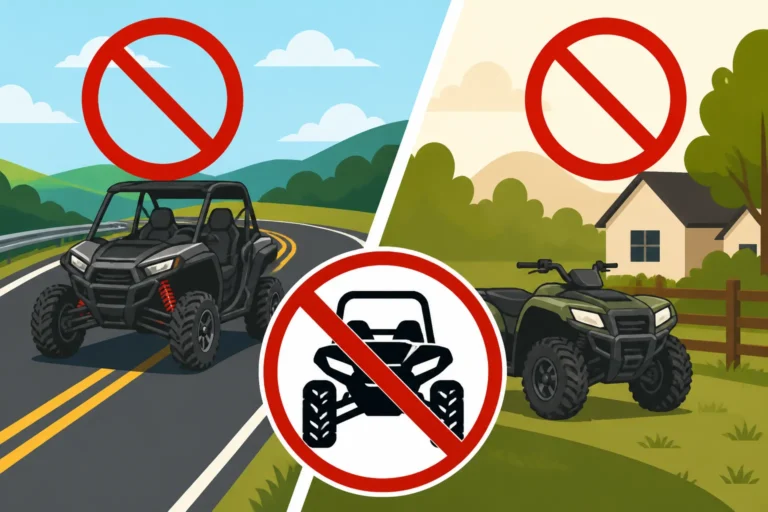
One of the most fundamental rules for ATV and UTV riders in Virginia is knowing where you absolutely cannot operate your machine. The state's default position is that ATVs and UTVs are not designed or intended for public roads and highways. This isn't just a recommendation; it's a hard rule with very few, specific exceptions. Imagine cruising down a scenic country road, thinking it’s quiet enough, only to be pulled over by law enforcement. That quiet road is still a public highway in the eyes of the law, and your ATV is unwelcome. This prohibition extends beyond just paved highways to include most public property like sidewalks, school grounds, and parks, unless explicitly designated for off-road vehicle use. The legislature understands the difference between a paved interstate and a dirt logging road, but the law draws a clear line at what constitutes a "highway" or "public property." For a deep dive into this, you might find [Virginia Bans ATVs on Public Highways] particularly insightful.
The rationale behind these bans is rooted in safety and the design of the machines. ATVs and UTVs lack many safety features mandated for street-legal vehicles, such as turn signals, side mirrors, and often, the ability to keep up with traffic speeds without becoming unstable. They are built for uneven terrain, not the consistent speeds and abrupt stops of road traffic. An incident on a public road involving an ATV or UTV carries a much higher risk of severe injury to all parties involved, including other motorists. Therefore, if you're found riding on these restricted areas, it's not just a minor ticket; it's an action that immediately flags you as having disregarded established safety protocols. In a court of law, this disregard can be powerful [Public Highways and Public Property Are Both Off Limits]. Even if you're just cutting across a corner of a parking lot to get to a trail, or briefly using a sidewalk to bypass an obstacle, you're potentially creating evidence of a violation that could be leveraged against you if an accident occurs. This is why cities often have specific ordinances against riding on sidewalks; your local municipality may have specific [Riding an ATV on a City Sidewalk] laws in place to prevent dangerous situations.
Age, Helmet, and Passenger Regulations
Beyond where you can ride, Virginia also meticulously regulates who can ride and how they must be equipped. These rules are non-negotiable and are in place to prevent injuries, particularly among younger riders. For instance, Virginia has a very clear [Virginia ATV Helmet Law Explained] that applies to every rider, regardless of age, on private or public land. Many riders mistakenly believe that if they are on their own private property, helmets are optional, but this is a dangerous misconception. The law states that anyone operating or riding on an ATV must wear a helmet that meets state police standards. This isn't just for show; a helmet can be the difference between a minor bump and a life-altering head injury. When an accident occurs, the absence of a helmet, or one that doesn't meet standards, is immediate and compelling evidence of a safety violation. Consider that [Why Virginia Adults Must Wear a Helmet, Not Just Kids] is an important distinction that many riders overlook.
Furthermore, Virginia implements strict [Virginia ATV Age Requirements] linked to engine displacement, especially for youth riders. For example, riders under 12 are restricted to machines with engines 70cc or less, while those 12-16 years old are capped at 90cc. These rules are designed to match a rider's skill and physical development with the power and size of the machine. Handing a child a machine beyond their legal capacity is not only illegal but a significant lapse in judgment that can easily contribute to an accident. Virginia also has specific [Virginia Passenger Rules on an ATV], generally limiting ATVs to a single operator unless the machine is specifically designed by the manufacturer to carry a passenger, with a designated seat and handholds. Utility vehicles (UTVs) often have multiple seats and roll cages, making them suitable for passengers, but a traditional single-rider ATV does not. Ignoring these passenger rules significantly increases the risk of injury and, again, provides clear evidence of a violation that can be used to establish negligence in an accident scenario.
Exceptions and Designated Access Routes
While Virginia generally prohibits ATVs and UTVs on public highways, the law does carve out specific, narrow exceptions for practical purposes. It’s crucial to understand that these are exceptions to the rule, not broad permissions to ride wherever you please. The most common exceptions involve agricultural or utility work, allowing operators to use public roads for short distances to access adjacent private property. For example, a farmer might need to cross a secondary road to move their UTV from one field to another. This is covered under [Virginia Farming and Household Exceptions], but it’s strictly limited to the most direct route and for genuine agricultural purposes, not joyriding. Similarly, [Virginia Emergency Responder Exceptions] allow fire, rescue, and law enforcement agencies to use ATVs and UTVs on public roads during emergency situations, recognizing their utility in off-road recovery or remote access.
Beyond these functional exceptions, Virginia has made specific provisions for recreational riding in certain areas, particularly in the coalfields of Southwest Virginia. Through local county ordinances, Buchanan and Tazewell counties have designated specific secondary roads that can be legally used to connect segments of approved trail systems, like the Spearhead Trails. This creates a unique opportunity for riders to experience extended trail networks. However, even these designated routes come with stringent conditions: specific speed limits (often 25 mph), daylight-only operation, and the requirement that the ATV or UTV is being used to access an official trail system. Simply being in one of these counties does not grant blanket permission to ride on all public roads. Understanding [Virginia Road Access in the Coalfields] is vital if you plan to explore these specific areas. Any deviation from these strict conditions, such as riding at night or exceeding the speed limit on a designated connector road, instantly removes the protection of the exception and reverts your operation back to an illegal act, carrying the same risks of penalties and negligence claims as riding on any other forbidden road.
The Immediate Consequences of an ATV or UTV Violation
Getting caught breaking Virginia's ATV and UTV laws isn't just a slap on the wrist. The state has clear penalties in place, ranging from significant fines to the impoundment of your prized machine. These consequences are designed to deter illegal riding and reinforce the importance of safety and compliance. When a law enforcement officer observes a violation, they have the authority to act swiftly, and those actions can have a lasting impact on your wallet and your riding future.
Citations and Civil Penalties
Unlike many traffic offenses that might result in criminal charges or points on your driving record, most ATV and UTV violations in Virginia are categorized as civil penalties. This means you won't typically face jail time or have it impact your driver's license points, but don't let the term "civil" lull you into a false sense of security. The financial costs can be substantial. Virginia code specifically outlines a [Virginia's Civil Penalty for Illegal Riding] of up to $500 for a violation. This isn't just a theoretical maximum; officers frequently issue citations that come with hefty fines, and these can add up quickly if multiple infractions are noted. Imagine getting pulled over for riding on a public road without a helmet – that could be two separate violations, each carrying its own potential penalty. The fine is not discretionary in some cases, and it's a direct charge for disregarding state law.
When you receive a citation, you'll be directed to either pay the fine or appear in court to contest it. Ignoring the citation isn't an option; it will lead to further legal trouble. Even if you believe the officer was mistaken, you'll need to present your case to a judge. The court process involves additional fees and can take up valuable time. While these are civil penalties, they still create a record of your non-compliance. Should you later be involved in an accident, even if it's on private property, past citations for violating ATV laws could be presented as evidence of a pattern of reckless behavior or disregard for safety, potentially strengthening a negligence claim against you. Understanding the typical [Virginia Ticket Costs for Riders] is essential for any rider, as these penalties can quickly overshadow the enjoyment of a day out on the trails. It's a sobering thought that [Riding Illegally Costs Up to $500 in Virginia], a significant sum that could otherwise be spent on machine maintenance or trail permits.
Impoundment of Your Machine
Perhaps one of the most frustrating and costly consequences of an ATV or UTV violation in Virginia is the impoundment of your machine. When law enforcement encounters an ATV or UTV being operated illegally, especially on public roads or property where it's strictly prohibited, they have the authority to seize and impound the vehicle. This isn't just a theoretical power; cities and counties have explicit [Virginia City Impoundment Powers] to enforce these rules. Imagine being out for a ride, getting cited for a violation, and then watching your ATV or UTV being loaded onto a tow truck. Not only is your ride over, but the headache has just begun. The immediate goal of impoundment is to stop the illegal operation and remove the hazard from public areas.
Retrieving an impounded machine is neither simple nor cheap. First, you'll likely need to satisfy the initial citation and pay any associated fines. Then, you'll be responsible for towing fees from the scene of the violation to the impound lot, as well as daily storage fees that accrue every day your machine sits there. These charges can mount rapidly, turning a $500 fine into a bill well over a thousand dollars, all before you even get your machine back. The process often involves navigating impound lot procedures, which can be time-consuming and frustrating. If your ATV or UTV is subject to impoundment, understanding [Impound Costs After a Machine Is Seized] becomes critical. Furthermore, if your machine is heavily modified or lacks proper identification, proving ownership and getting it released can add another layer of complexity. The sheer inconvenience and financial burden of [Getting an Impounded ATV Back From a City] serve as a powerful deterrent against illegal riding, highlighting the state's seriousness about keeping these machines off restricted public access ways.
How Violations Can Lead to Negligence Claims
While civil penalties and impoundment deal with the immediate legal repercussions of violating ATV laws, the impact can extend far beyond a fine. If an accident occurs, especially one involving injury or property damage, your previous or current violations can become central to a civil lawsuit for negligence. Understanding this connection is crucial for every Virginia ATV and UTV rider, as the stakes can be incredibly high.
The Concept of Negligence in Virginia ATV Accidents
In Virginia, a negligence claim generally requires proving four key elements: duty, breach, causation, and damages. Simply put, someone owed you a duty of care, they failed that duty (breach), that failure directly caused your injury (causation), and you suffered actual harm (damages). When it comes to ATV and UTV operation, every rider has a duty to operate their machine safely and legally, adhering to all state laws and regulations. If you violate a specific ATV law – say, riding on a public highway or operating without a helmet – you've immediately established a "breach" of that duty. This is where the concept of "negligence per se" often comes into play. In Virginia, if a person violates a safety statute (like an ATV law) and that violation causes an injury of the type the statute was designed to prevent, they may be found negligent as a matter of law.
Consider a scenario: A rider is operating an ATV on a public road, which is illegal in Virginia. They swerve to avoid a deer and collide with a mailbox, injuring themselves and damaging the property. Even if the deer was the direct cause of the swerve, the rider's initial action of being on the public road in violation of the law could be considered negligence per se. The law prohibiting ATVs on public roads is designed to prevent accidents involving off-road vehicles in traffic. By being on the road, the rider breached their duty, and that breach directly contributed to the accident and damages. Furthermore, if they weren't wearing a helmet, that's another breach of duty that could be argued as contributing to their injuries. This interplay between specific legal violations and general negligent behavior is a critical aspect of personal injury law in Virginia. This entire discussion on [Virginia Violations and Negligence Evidence] is meant to clarify these intricate connections.
Evidence Used to Prove Negligence
When a civil claim for negligence arises from an ATV or UTV accident, a wide array of evidence can be collected and presented to a court or insurance company. The goal is to reconstruct the events, identify who was at fault, and determine the extent of damages. Police reports are often the starting point, detailing the officer's observations, statements from those involved, and any citations issued. If you were cited for riding on a public road, for example, that citation becomes a powerful piece of evidence establishing a violation. Witness statements from other riders, property owners, or even bystanders can provide crucial perspectives on how the accident occurred and the behavior of the operators involved. Photographic and video evidence, whether from cell phones, trail cameras, or dashcams, can visually corroborate events, showing the accident scene, machine damage, and even the immediate aftermath.
The condition of the ATV or UTV itself can also be critical evidence. Were the brakes in good working order? Were the tires properly inflated and suitable for the terrain? Were there any modifications that might have contributed to the accident? For example, if a machine had poorly installed aftermarket parts, it could be argued that the modifications contributed to mechanical failure. Conversely, if a rider made proactive safety upgrades, such as reinforced roll cages or robust skid plates from reputable brands, this could be presented to demonstrate a commitment to safety. Even parts from companies like SuperATV, known for their aftermarket accessories, could be scrutinized. If an incident occurs, documenting the condition of your machine, including any aftermarket components, is key. Keep in mind that thorough documentation and immediate reporting, as detailed in [Virginia Accident Reporting for an ATV Crash], can make a significant difference in how negligence claims are handled.
Contributory Negligence and Its Impact
Virginia adheres to a strict legal doctrine known as "contributory negligence." This is one of the most important, and often harshest, aspects of personal injury law in the Commonwealth. Under contributory negligence, if the injured party is found to be even 1% at fault for their own injuries, they are completely barred from recovering any damages from the other party, regardless of how much more at fault the other party might have been. This is a stark contrast to "comparative negligence" rules adopted by most other states, where fault is apportioned, and you can still recover something even if you share some blame.
For ATV and UTV riders in Virginia, the implications of contributory negligence are profound. If you're involved in an accident and it's discovered that you were violating an ATV law – for instance, riding without a helmet, having a passenger on a single-rider ATV, or operating on a prohibited road – even if another party caused the majority of the accident, your violation could be enough to deny your claim entirely. Imagine you're riding legally on a designated trail, but you made a minor mistake of briefly operating your machine in an area where your manufacturer-specified age limits were exceeded by your rider (a common misstep for parents). If an accident occurs and your age violation is identified as even a tiny contributing factor to your injury, you could lose your entire claim. This stringent rule underscores why strict adherence to all Virginia ATV laws, no matter how minor they seem, is critical. Any infraction, however small, could be deemed contributory negligence, costing you dearly in a civil suit.
Navigating the Aftermath: Legal and Practical Steps
If you find yourself involved in an ATV or UTV incident, whether it's a minor scrape or a serious collision, knowing what to do in the immediate aftermath can significantly impact the legal and financial outcomes. Panic can set in quickly, but taking structured, thoughtful steps is crucial for protecting your interests.
What to Do After an ATV Incident
The moments immediately following an ATV or UTV incident can be chaotic, but your actions during this time are critically important. First and foremost, assess for injuries. Ensure the safety of yourself and anyone else involved. If there are injuries, or if property damage is significant, contact emergency services immediately. Even if it seems minor, it's often wise to call the local sheriff's department or state police, especially if the incident occurred on public land, involves another party, or led to property damage. An official police report, as encouraged by [Virginia Accident Reporting for an ATV Crash], provides an unbiased account of the scene, which can be invaluable later. Do not admit fault at the scene, even casually. Stick to the facts.
While waiting for authorities, if it's safe to do so, begin documenting the scene. Use your phone to take photographs or videos from multiple angles. Capture images of the machines involved, any damage, skid marks, trail conditions, relevant signage, and the overall environment. Note the time, date, and weather conditions. If there are witnesses, get their contact information. It's also wise to photograph your own machine's condition, including any aftermarket accessories you might have installed. After the immediate aftermath, it's highly advisable to consult with an attorney specializing in personal injury or ATV law. They can guide you through the complexities of Virginia's legal system, especially given the state's strict contributory negligence rules, and help you understand your rights and options.
Addressing Equipment and Maintenance as Evidence
In any ATV or UTV accident investigation, the condition of the machine itself can become a crucial piece of evidence, either supporting or undermining a claim of negligence. This includes not only factory-installed components but also any aftermarket modifications or accessories. For example, if an accident is caused by brake failure, and it's discovered that the brakes were severely worn or improperly maintained, that could point to operator negligence. Similarly, bald tires, non-functional lights (especially if the incident occurred near dusk or dawn), or structural damage from previous unreported accidents could all be used to argue that the machine was not safely operable. Regular pre-ride inspections and consistent maintenance are not just good practice; they build a defense against claims that your machine was somehow at fault.
Conversely, if your machine is well-maintained and equipped with quality, safety-enhancing aftermarket parts, this can work in your favor. For instance, if you've installed a robust front bumper or rock sliders from a brand like SuperATV which are designed to protect critical components during impacts, this can demonstrate a proactive approach to safety and machine integrity. Or, if you've upgraded your lighting system with brighter LEDs to improve visibility, that shows an effort to mitigate risk. It's important to keep maintenance records, receipts for parts and service, and even photographs of your machine's condition. These documents can help prove that you were a responsible owner who took steps to ensure your machine was safe to operate, potentially countering arguments of negligence related to equipment failure. Always ensure any modifications are installed correctly and do not compromise the machine's safe operation.
Mitigating Risks and Protecting Yourself
The best defense against violations, penalties, and negligence claims is proactive prevention. Understanding the rules and consistently applying safe riding practices will not only enhance your enjoyment of Virginia's off-road opportunities but also safeguard your finances and legal standing.
Always Ride Legally and Responsibly
The foundation of safe and responsible ATV and UTV riding in Virginia is unwavering adherence to the law. This means always knowing and following [The Virginia Law Behind Every ATV Rule], not just the ones that seem convenient. It involves riding only on legally designated trails or private property with explicit permission. Never assume a road or trail is open to ATVs just because you see tracks or others are riding there; always verify its legality. The penalties for illegal riding are clear, and the risks of a civil negligence claim are too high to take chances.
Beyond legal compliance, responsible riding includes practicing good judgment. Respect trail etiquette, operate at safe speeds appropriate for conditions, and never ride under the influence of alcohol or drugs. Always ensure that every rider, regardless of age, wears an approved helmet, as [Virginia Helmet Law Applies to Every Rider]. This isn't just a legal mandate; it's a critical safety measure. If you're riding on private property, always ensure you have [Written Consent From a Landowner] to avoid trespass charges, which can complicate any incident you might encounter. Proactive steps like these demonstrate a commitment to safety and responsibility, which can be invaluable if you ever face a citation or a legal challenge.
The Role of ATV Insurance
While Virginia does not legally require ATV or UTV owners to carry insurance, choosing to ride without it is a significant financial risk. The law states [Why Virginia Sets No Insurance Minimum for ATVs], leaving the decision to the owner. However, this lack of a mandate does not exempt you from financial responsibility if you cause an accident. If you're involved in an incident where you are at fault, even partially, and cause injury or property damage to another party, you will be personally liable for those costs. These expenses can quickly escalate into tens or hundreds of thousands of dollars, potentially wiping out savings or even leading to bankruptcy.
This is why purchasing [Buying ATV Insurance When No Law Requires It] is a wise investment for any rider. A comprehensive ATV insurance policy can offer several crucial coverages. Liability coverage, for instance, would protect you if you injure someone or damage their property while riding. Medical payments coverage can help with your own medical bills, regardless of fault. Comprehensive and collision coverages can protect your machine itself from theft, fire, or damage. Having insurance means that if [Which Policy Pays After a Virginia ATV Collision] is asked, you have a clear answer and a financial safety net. When considering a policy, think about the value of your machine, how often and where you ride, and your overall risk tolerance. The peace of mind alone that comes with knowing you’re protected is often well worth the cost of the premiums.
Proactive Safety Measures and Equipment Checks
Beyond legal compliance and insurance, taking proactive steps to enhance safety and properly maintain your ATV or UTV can significantly reduce risks and provide a strong defense should an incident occur. Before every ride, perform a quick but thorough inspection of your machine. Check tire pressure, brake function, fluid levels, and ensure all lights are working. Confirm that your throttle operates smoothly and that your machine starts easily. This simple routine can catch potential mechanical issues before they lead to an accident.
Furthermore, invest in appropriate riding gear beyond just a helmet. This includes eye protection (goggles or a face shield), sturdy boots that cover your ankles, long pants, a long-sleeved shirt, and gloves. These items can prevent scrapes, cuts, and sprains, making a big difference in the outcome of a fall or collision. Consider adding safety-enhancing accessories to your machine from reputable manufacturers. For instance, SuperATV offers a wide range of products designed for durability and protection, such as reinforced skid plates, A-arm guards, and robust windshields for UTVs. These additions can protect both the machine and its occupants from environmental hazards, demonstrating a commitment to safety. Maintaining a clean machine also makes it easier to spot potential problems and helps preserve its components. By combining legal adherence, appropriate insurance, and diligent safety practices, you can maximize your enjoyment of Virginia's off-road adventures while minimizing your exposure to legal and financial risks.
Disclaimer
This article is for general informational purposes only and does not constitute professional advice. Laws, prices and regulations vary by location and change over time. Consult a qualified professional for guidance on your specific situation.