Virginia Penalties for Illegal Riding
It's an unfortunate truth that hitting the trails or using your ATV for work on your property can sometimes lead to misunderstandings with the law, especially when you venture onto public roads or unfamiliar land. The lines can feel blurry, and the consequences of not knowing Virginia's specific regulations can range from a hefty fine to losing your beloved machine. This guide aims to clear up those confusing rules, explaining the various penalties you could face for illegal ATV and UTV riding in the Commonwealth.
Understanding What Constitutes Illegal Riding in Virginia
Navigating the rules for ATV and UTV use in Virginia can feel like trying to read a map in the dark sometimes. Many riders, with the best intentions, find themselves on the wrong side of the law simply because they weren't fully aware of what's allowed and what's strictly forbidden. The core of Virginia's ATV and UTV laws is designed around safety and property rights, but it's easy to overlook specific nuances that can lead to significant penalties.
Where ATVs and UTVs Are Banned
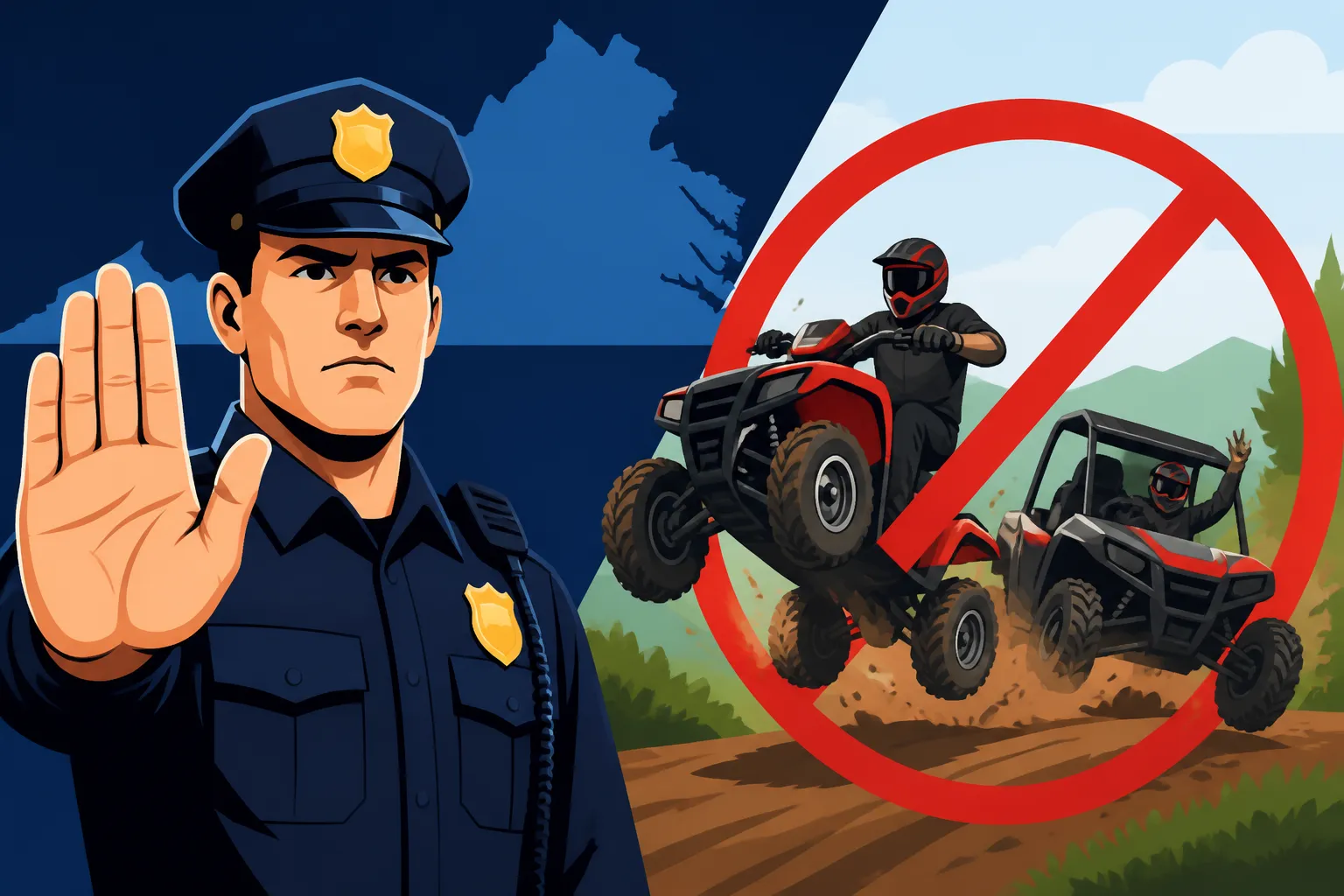
One of the most common ways riders unintentionally break the law is by operating their machines where they simply aren't allowed. Virginia is quite clear: ATVs and UTVs are generally prohibited on public highways and public property. This isn't just about busy interstates; it includes most paved, publicly maintained roads, sidewalks, and even many public parks that aren't specifically designated for off-road vehicle use. It's a fundamental rule that catches many visitors and even long-time residents off guard, especially those used to more lenient laws in neighboring states. The idea is to keep these off-road machines, which aren't designed for road travel, away from regular traffic where they pose a significant safety hazard to themselves and others. Ignoring this often leads to a quick encounter with law enforcement and a citation.
Think about a small, quiet country road near your house. It might seem harmless to zip down it for a short distance to get to a friend's property or a nearby trail, but if that road is publicly maintained and used by cars, it's very likely off-limits. This also extends to undeveloped public land, like state forests or wildlife management areas, unless they have clearly marked and authorized trails. Just because a patch of woods looks empty doesn't mean it's fair game. Law enforcement agencies are often keenly aware of areas where illegal riding frequently occurs and patrol them, sometimes covertly. Understanding [Virginia Bans ATVs on Public Highways] is critical before you even turn the key.
Age and Helmet Violations
Virginia takes the safety of ATV and UTV riders very seriously, especially when it comes to younger operators and essential safety gear. The state has specific age limits tied to engine size, ensuring that riders aren't on machines too powerful for their skill level. For example, a child under 12 isn't permitted to operate an ATV with an engine size exceeding 70cc. These aren't just recommendations; they are enforceable laws designed to prevent serious injuries. If a minor is caught riding a machine that's too large for their age group, not only could the minor face consequences, but the adult who allowed or supervised the riding could also be held responsible. This means that parents, guardians, or even friends need to be meticulous about checking these age and engine size guidelines. You can learn more about [Virginia Age Limits by Engine Size].
Equally non-negotiable is the helmet law. In Virginia, every person operating or riding as a passenger on an ATV or UTV must wear an approved helmet. This isn't just for kids; it applies to adults, too, regardless of whether you're on your own private land or a designated trail system. Many riders mistakenly believe that if they're on private property, helmets are optional, but that's simply not the case in Virginia. A suitable helmet, typically one that meets Department of Transportation (DOT) standards, is a must-have piece of equipment. Without it, you're not just risking a severe head injury in an accident; you're also opening yourself up to a citation. The state's stance on [Virginia Helmet Law Applies to Every Rider] is unequivocally firm, reflecting the high risk of head trauma in ATV accidents.
Passenger and Equipment Issues
Beyond where and by whom a machine is ridden, how it's equipped and whether it carries passengers can also lead to legal trouble. ATVs, by their design, are generally single-operator vehicles. Unless an ATV is specifically designed by the manufacturer to carry a passenger and has a designated passenger seat and handholds, riding with a passenger is illegal. This is a crucial safety measure, as carrying a passenger on a single-rider ATV can drastically alter the machine's balance and handling, making it much more prone to rollovers and accidents.
UTVs, or side-by-sides, are different, as they are often designed for multiple occupants and come with seatbelts and roll cages. However, even with UTVs, it's essential to ensure that every occupant has a designated seat and is properly restrained with a seatbelt if the machine is so equipped. Overloading a UTV with more passengers than it's designed for, or allowing passengers to ride in unsafe positions (like standing in the bed), can also lead to penalties. When it comes to equipment, machines must also be in safe operating condition, with working brakes and a functional muffler to reduce noise. While Virginia does not have a comprehensive inspection program for off-road vehicles like it does for cars, officers can still issue citations for unsafe equipment. Many riders invest in high-quality aftermarket parts from companies like SuperATV for enhanced safety and performance, such as robust skid plates or upgraded suspension components, but these modifications must still adhere to basic safety and noise regulations.
Specific Penalties: Fines and Civil Implications
When you run afoul of Virginia's ATV and UTV laws, the most immediate consequence you're likely to face is a financial penalty. It's not just a slap on the wrist; these fines are designed to deter illegal activity and can quickly add up, making a fun day out turn into a very expensive lesson. Understanding the nature of these penalties, particularly their civil status, is important for riders in the Commonwealth.
The $500 Civil Penalty
Virginia's legal framework for illegal ATV and UTV riding specifies that violations are typically considered civil offenses, not criminal ones. This is a key distinction. For most infractions under Virginia Code § 46.2-915.1, the penalty is a civil fine of up to $500. This is a significant amount for what might seem like a minor offense, such as crossing a public highway without authorization or riding on unapproved public land. The civil nature means that while you'll have to pay the fine, these violations generally won't result in a criminal record, which is a relief for many. However, don't mistake "civil" for "unimportant." These penalties still carry weight and are actively enforced. The maximum $500 fine can be imposed for each violation, so if an officer cites you for multiple infractions during a single stop (e.g., no helmet, illegal road use, and underage operator), the costs can escalate quickly. This strong deterrent is why it’s so important to be familiar with [Riding Illegally Costs Up to $500 in Virginia].
For example, imagine you decide to take a shortcut down a paved county road for about a mile to link up with a different trail. An officer spots you. You might receive a citation for riding on a public highway, which could carry the maximum $500 civil penalty. If you also weren't wearing a helmet, that could be another, separate fine. These aren't minor traffic tickets that might be a few tens of dollars; they are substantial fines that underscore the state's commitment to regulating off-road vehicle use.
Distinction from Criminal Charges
While most ATV and UTV violations fall under civil penalties, it's crucial to understand that certain actions can indeed lead to criminal charges. The civil nature of the $500 fine applies to offenses directly related to the operation restrictions outlined in the ATV statute. However, if your illegal riding involves other criminal acts, the situation changes dramatically. For instance, operating an ATV or UTV while under the influence of alcohol or drugs is a criminal offense, just as it would be in a car. [Virginia DUI Law and Off-Road Machines] applies to ATVs, even if you're on private property or off-road. Such charges can lead to jail time, significant criminal fines, and the suspension of your driver's license, even if you don't need a license to operate the ATV itself.
Similarly, if your actions while riding illegally lead to property damage, reckless endangerment of others, or assault, you could face criminal charges related to those specific acts. These are not civil infractions but serious crimes that will result in a criminal record and much more severe consequences than a simple $500 civil penalty. The distinction serves as a reminder that while Virginia tries to keep ATV infractions civil, riders are still fully accountable for their broader conduct and any harm they cause. It's a fine line to walk, and responsible riding means staying well within both the civil and criminal boundaries of the law.
Court Costs and Fees
Beyond the base fine, riders cited for illegal ATV or UTV use should prepare for additional financial burdens in the form of court costs and administrative fees. Even for civil infractions, if you choose to contest the citation or if the case goes through the court system, there will be associated costs. These can include court processing fees, service fees, and other administrative charges that are added to the penalty if you are found liable. These fees are standard for any legal proceeding and can easily add another hundred dollars or more to your total bill, pushing the true cost well beyond the initial fine amount.
For example, a $500 civil penalty could quickly become $600 or more once all court costs are factored in. This makes the decision to contest a citation a careful consideration; unless you have a strong defense, it might be more cost-effective in the long run to pay the penalty and learn from the experience, rather than incurring additional court expenses. It’s also important to remember that failing to pay civil penalties or appear in court can lead to further legal complications, including driver's license suspension (even if you don't need a license for your ATV), and collection actions. The system is designed to ensure compliance, and ignoring a citation will only compound the problem.
Impoundment and Machine Seizure: The Ultimate Consequence
Perhaps the most dreaded outcome of illegal ATV or UTV riding is the potential for your machine to be impounded or seized. This isn't just about a fine; it's about losing physical possession of your expensive off-road vehicle, often for an extended period, and incurring substantial costs to get it back. It's a severe penalty designed to remove unlawfully operated machines from public spaces and acts as a powerful deterrent.
City Impoundment Powers
While state law sets the general framework, individual cities and counties in Virginia have the authority to enact local ordinances that allow for the impoundment of ATVs and UTVs operated illegally. This is particularly common in urban or densely populated areas where illegal off-road riding on sidewalks, parks, or streets causes significant nuisance and safety concerns. If you're caught riding your machine on public property in a jurisdiction with such an ordinance, law enforcement can have your ATV or UTV towed and impounded. This is not a temporary detention; the machine will be held until all fines, towing fees, and storage fees are paid. The specific conditions for impoundment and the process for retrieving your machine will vary by locality, so it's essential to check local ordinances if you plan to ride anywhere near urban centers. Understanding [Cities Can Impound an ATV Ridden on a Sidewalk] highlights how serious this can be.
Imagine you're visiting a friend in a town and decide to ride your UTV down the sidewalk to their house, thinking it's a quick, harmless trip. A local police officer, armed with a city ordinance, could pull you over, issue a citation, and then call a tow truck to impound your machine. You're left on foot, potentially hundreds of miles from home, with a significant legal and financial headache awaiting you. This scenario underscores the importance of not just knowing state laws but also being aware of any specific local rules that might apply to where you plan to ride.
Process to Reclaim an Impounded Machine
Retrieving an impounded ATV or UTV is rarely a simple or quick process. First, you'll typically need to satisfy all outstanding fines related to the violation that led to the impoundment. This might mean paying the civil penalty at the courthouse or specific city office. Once the fines are settled, you'll then be directed to the towing company or impound lot where your machine is being held. This is where the true costs often begin to mount. Towing fees can be substantial, especially if your machine needed specialized equipment to be moved or traveled a long distance.
On top of towing, you'll face daily storage fees for every day your ATV or UTV was held in the impound lot. These daily rates can quickly accumulate, turning a few days into hundreds of dollars. Many impound lots also have specific hours for pickup, require proof of ownership, and may only accept certain forms of payment. If you don't retrieve your machine within a certain timeframe, typically 30 to 60 days, the impound lot may begin the process of selling your ATV or UTV to recover their costs. This means you could permanently lose your machine. For this reason, many riders install accessories like heavy-duty winches and recovery gear from reputable brands like SuperATV, not just for the trails, but also to aid in self-recovery should they ever find themselves in a minor predicament that doesn't involve impoundment.
Costs Associated with Impoundment
The financial impact of impoundment is often far greater than the initial civil penalty. Let's break down the potential costs:
- Civil Penalty: Up to $500, plus court costs.
- Towing Fee: This can vary significantly, but it's not uncommon for a tow of an ATV or UTV to cost anywhere from $100 to several hundred dollars, depending on the distance and circumstances. If specialized equipment or personnel are needed (e.g., if the machine is stuck in a ditch), it could be even more.
- Daily Storage Fees: These are perhaps the most insidious costs. Storage fees can range from $20 to $50 or more per day. If your machine is impounded for two weeks, those storage fees alone could easily exceed $300-$700.
- Administrative Fees: Some localities or impound lots may add their own administrative fees for processing paperwork or releasing the vehicle.
Consider a scenario where your UTV is impounded in a city for riding on a closed path. You receive a $500 fine. The tow costs $250, and it sits in the lot for 10 days at $35/day ($350). Add $50 in court fees. Suddenly, your total bill is $1150, all for one infraction. This doesn't even account for any lost wages from time off work to deal with the situation. The true cost of impoundment serves as a stark reminder of why it's so important to know and follow Virginia's ATV and UTV laws, and to only ride on legal trails and designated areas, such as those covered by [Virginia Spearhead Trail Permits].
Other Consequences Beyond Direct Penalties
While fines and impoundment are the most direct and immediate penalties for illegal ATV and UTV riding, the ripple effects can extend much further, impacting your financial stability, insurance coverage, and even your future legal standing. It's not just about what happens immediately after an incident; it's about the longer-term repercussions that many riders don't consider until it's too late.
Insurance Repercussions
One of the often-overlooked consequences of illegal riding is the impact it can have on your ATV or UTV insurance. While Virginia does not legally require ATV insurance, many responsible riders choose to carry policies to protect against theft, damage, or liability in case of an accident. If you are involved in an accident while operating your machine illegally—for example, on a public road where ATVs are banned, or without a helmet—your insurance company may deny your claim. Most insurance policies have clauses that exclude coverage for damages or injuries sustained during illegal activities. This means that if you crash your machine while riding illegally, you could be stuck with the entire repair bill, which for a modern ATV or UTV can run into thousands of dollars.
Furthermore, if your illegal riding results in property damage to others or causes injury to another person, and your insurance company denies your claim, you could be personally liable for those costs. This could lead to a lawsuit and significant financial judgment against you, potentially wiping out savings or even impacting future earnings. Even if your claim is paid, having an incident report detailing illegal activity could lead to higher premiums in the future or even the cancellation of your policy. For more information on coverage, check out [Why Virginia Riders Can Legally Skip Insurance] and understand why it's still a good idea. Many riders upgrade their machines with robust protective accessories, from windshields to sturdy bumpers often sourced from suppliers like SuperATV, but even the best protection won't save you from insurance woes if you're riding outside the law.
Legal Defense Costs
If your illegal riding escalates beyond a simple civil penalty to a situation involving criminal charges, property damage lawsuits, or personal injury claims, you will almost certainly incur legal defense costs. Hiring an attorney to represent you in court can be incredibly expensive. Even for seemingly minor legal issues, attorney fees can quickly accumulate into thousands of dollars. This financial burden comes on top of any fines, restitution, or damages you might ultimately be ordered to pay.
Consider a scenario where an ATV rider, operating illegally on public land, accidentally causes a wildfire. Even if it was an accident, the rider could face criminal charges, civil lawsuits for damages, and substantial legal fees to mount a defense. The legal system can be complex and intimidating, and navigating it without professional legal counsel is often ill-advised. These costs are not covered by standard ATV insurance if the activity was illegal, meaning the burden falls entirely on the rider. It highlights how a seemingly minor infraction can spiral into a severe financial crisis.
Potential Criminal Charges (e.g., DUI, Reckless Endangerment)
As mentioned, while many ATV violations are civil, certain egregious actions can lead to criminal charges. The most prominent example is operating an ATV or UTV under the influence of alcohol or drugs. A conviction for [Virginia DUI Law and Off-Road Machines] carries severe penalties, including potential jail time, large fines, mandatory alcohol education programs, and the suspension of your driver's license, even if you weren't driving a car. This can have a lasting impact on your employment, insurance rates, and overall reputation.
Beyond DUI, reckless endangerment is another serious criminal charge that can arise from illegal ATV riding. If your actions are deemed to show a "willful or wanton disregard for the safety of persons or property," you could be charged. This might include performing stunts in populated areas, riding at excessive speeds in a dangerous manner, or operating a machine in a way that puts others at significant risk. Such charges are taken very seriously by the courts and can lead to significant criminal penalties, including incarceration. Causing an accident that results in serious injury or death while operating an ATV illegally can lead to even more severe felony charges, demonstrating just how high the stakes can become when riders disregard safety and the law. For information on reporting an accident, see [Virginia Accident Reporting for an ATV Crash].
Preventing Penalties: Knowing the Rules and Riding Responsibly
Avoiding the costly and stressful consequences of illegal ATV and UTV riding in Virginia boils down to one simple principle: know the rules and ride responsibly. This isn't just about escaping fines; it's about ensuring your safety, protecting your property, and respecting the rights of others. A proactive approach to understanding the law can save you a world of trouble.
Understanding Virginia Code 46.2-915.1
The cornerstone of ATV and UTV regulation in Virginia is found in Virginia Code § 46.2-915.1. This statute comprehensively outlines where, when, and how these machines can be legally operated. Riders absolutely must familiarize themselves with this specific code section. It details the general prohibition on public highways, the limited exceptions for crossing public roads, the conditions for operating on private land, and the penalties for violations. Simply put, if you plan to ride an ATV or UTV in Virginia, this code section should be your primary reference. Ignorance of the law is not a valid defense, and officers are trained to enforce these specific provisions.
Taking the time to read and understand this statute can prevent countless headaches. It clarifies, for instance, that even crossing a public road is only permissible "by the most direct route" and requires a stop and yielding to traffic, and that you cannot ride alongside a public road within the highway right-of-way. It also specifies the few counties that have special provisions for road access, like Buchanan and Tazewell, but even there, strict rules about speed limits (25 mph), daylight hours, and designated routes apply. For a deeper dive, review [Virginia ATV Road Rules Under 46.2-915.1]. Many clubs and rider groups advocate for changes to these laws, but as they stand, compliance is the only way to avoid penalties.
Obtaining Landowner Consent
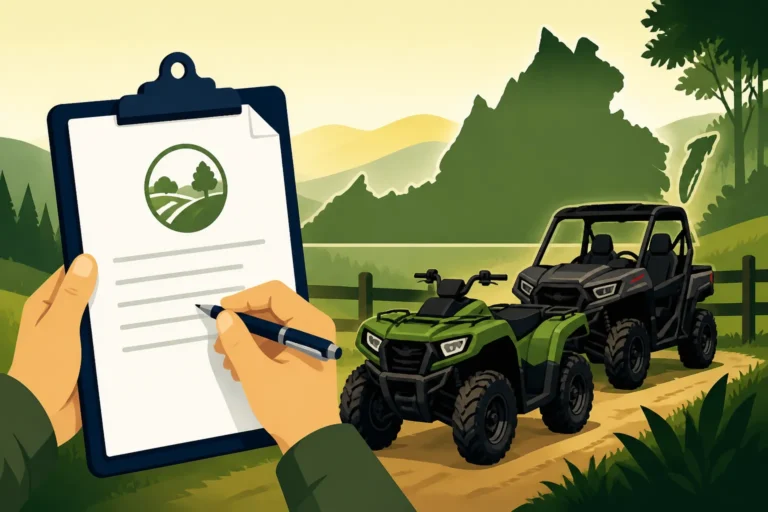
One of the most frequent sources of trouble for off-road riders is trespassing. While it might seem obvious, many assume that if land isn't explicitly marked with "No Trespassing" signs, it's okay to ride there. This is a dangerous and incorrect assumption. In Virginia, it is illegal to operate an ATV or UTV on private property without the express written consent of the landowner. Verbal permission is often insufficient and difficult to prove, especially if challenged. This rule applies whether the land is undeveloped woods, farmland, or even a private trail system that you haven't secured permission for.
Always secure written permission before riding on private land. A simple, dated note signed by the landowner, clearly stating permission for you (and anyone else you're riding with) to operate your machine on their property, can save you from a trespassing charge and a potential civil penalty. This protects both you and the landowner. Without it, even if you thought you had permission, an officer can cite you, and the landowner could press charges. This is a fundamental aspect of [Virginia Written Consent on Private Land]. It's crucial to understand that even if you know the landowner, having it in writing is the safest and most legally sound approach.
Riding Designated Trails and Parks
The safest and most enjoyable way to ride an ATV or UTV in Virginia, while entirely avoiding legal penalties, is to stick to designated off-road trails and parks. Virginia boasts several excellent trail systems, such as the Spearhead Trails network in Southwest Virginia, which offers hundreds of miles of diverse terrain. These systems are specifically designed for off-road vehicles, are clearly marked, and have established rules for safe operation. While they often require permits (like [Virginia Spearhead Trail Permits] or National Forest OHV permits) and may have specific equipment or age rules, adhering to these guidelines ensures you're riding legally and safely.
These designated areas not only provide a legal place to ride but also often offer amenities like parking, restrooms, and sometimes even emergency services access. They are managed to minimize environmental impact and provide a sustainable riding experience. By choosing to ride on these official trails, you eliminate the risk of violating public highway bans, trespassing laws, and many other potential infractions. It's a clear-cut way to enjoy your machine without the constant worry of an unexpected encounter with law enforcement or the crushing burden of penalties. Exploring options like [Spearhead Trails in Virginia Explained] can open up a world of legal and thrilling riding opportunities.
Summary of Common Violations and Potential Penalties
To help bring it all together, here's a quick overview of some common ATV/UTV violations in Virginia and the potential consequences you might face. Remember, these are general guidelines, and specific situations can vary.
| Violation Type | Example Scenario | Primary Legal Consequence (Civil) | Potential Additional Consequences (Civil/Criminal) |
|---|---|---|---|
| Illegal Road Use | Riding an ATV down a paved public road. | Civil penalty up to $500, plus court costs. | Machine impoundment, insurance claim denial, personal liability for accidents. |
| No Helmet | Adult riding a UTV on a trail without a helmet. | Civil penalty up to $500, plus court costs. | Machine impoundment (if part of other violations), insurance claim denial for injuries. |
| Underage/Inappropriate Machine | 10-year-old riding a 125cc ATV. | Civil penalty up to $500 for the adult allowing/supervising. | Machine impoundment, insurance claim denial, personal liability for injuries. |
| Trespassing | Riding on private land without written permission. | Civil penalty up to $500, plus court costs. | Property damage lawsuits, criminal trespassing charges (at landowner's discretion). |
| Illegal Passenger | Carrying a passenger on a single-rider ATV. | Civil penalty up to $500, plus court costs. | Insurance claim denial for injuries to passenger, personal liability. |
| Operating Under Influence (DUI) | Riding an ATV on public or private land while intoxicated. | Criminal charge, fines, jail time, license suspension. | Machine impoundment, criminal record, increased insurance premiums, attorney fees. |
| Reckless Endangerment | Performing dangerous stunts in a populated area. | Criminal charge, fines, potential jail time. | Machine impoundment, criminal record, lawsuits for damage/injury, attorney fees. |
This table is a simplified guide. Each situation is unique, and consulting with legal counsel is always recommended if you face charges. However, it should give you a clear picture of the risks involved. By understanding the rules and committing to responsible riding, you can ensure your time on the trails is enjoyable, safe, and free from legal complications. Always prioritize safety and legality, whether you're navigating the coalfield trails or simply using your machine on your farm.
Disclaimer
This article is for general informational purposes only and does not constitute professional advice. Laws, prices and regulations vary by location and change over time. Consult a qualified professional for guidance on your specific situation.