Virginia Named Routes Open to ATVs
Navigating where you can legally ride your ATV or UTV in Virginia can feel like trying to solve a complicated puzzle, often leaving riders confused and worried about getting a ticket. Many folks mistakenly think that just because they own an off-road vehicle, they can take it on any backroad, only to find out the hard way that Virginia's laws are very strict. This guide is here to untangle the specifics of Virginia's named routes for ATVs, helping you understand where you can ride and the crucial rules you must follow to stay safe and legal.
The Frustration of Virginia's Road Rules for ATVs
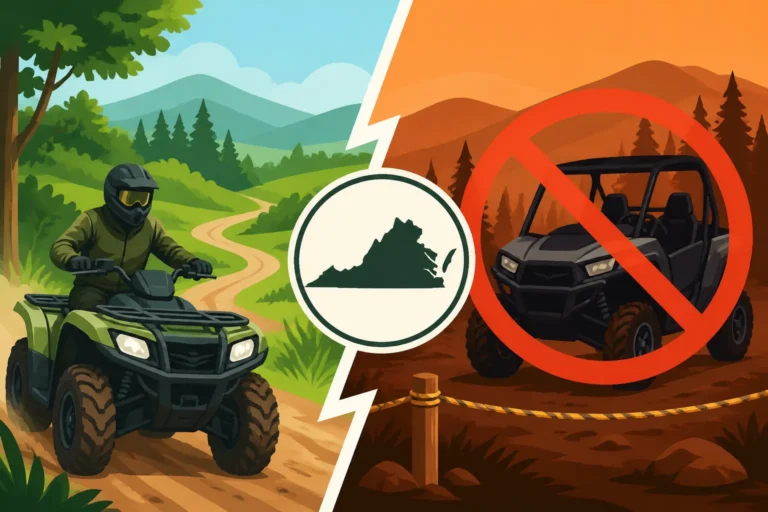
It's a common story: you've got your side-by-side loaded up, a full tank of gas, and you're ready for an adventure. But as you pull out of your driveway, you wonder, "Can I even ride this down the street to the trailhead?" For many ATV and UTV owners in Virginia, the answer is a resounding "no" for the vast majority of public roads. This can be incredibly frustrating, especially if you live in a rural area where roads might seem perfectly suited for off-road vehicles. The reality is, Virginia's statutes are primarily designed to keep ATVs and UTVs off public highways and roads, treating them as off-road recreational vehicles, not street-legal transportation.
Why Most Roads Are Off-Limits
The core of the issue lies in Virginia's legal definitions and classifications. An ATV is not considered a "motor vehicle" in the same way a car or motorcycle is for most road-use purposes. This means they generally don't meet the safety and equipment standards required for highway travel. While a car has airbags, turn signals, and specific lighting designed for road speeds and traffic, your typical ATV is built for trails, mud, and rough terrain. Even if you've kitted out your machine with high-quality aftermarket accessories from a brand like SuperATV, like a windshield or mirrors, these additions don't magically make it street-legal under state law. The state code explicitly bans ATVs from public highways and other public property unless very specific conditions are met. This can lead to a lot of headaches and potential fines if you're caught riding on a road that isn't designated for ATV use. [Virginia Bans ATVs on Public Highways] clearly outlines these restrictions.
Imagine you're trying to get from one section of a vast hunting property to another, and the easiest way is a short stretch on a county road. It might seem harmless, especially if there's no traffic. However, without a specific legal exemption, that brief ride is illegal. The law prioritizes public safety and the orderly flow of traffic, which is why these vehicles are kept separate from traditional road users. This strict approach can feel overly restrictive to riders who simply want to enjoy their machines responsibly and safely, but it's the framework we operate within here in the Commonwealth.
The Specificity of the Coalfield Exception
The good news for riders in certain parts of Virginia, particularly in the southwestern coalfields, is that there are some crucial exceptions. The Virginia General Assembly recognized the unique recreational and economic potential of off-road tourism in specific areas and carved out a narrow path for legal road access. This isn't a blanket permission for all rural roads, though. Instead, it's a highly localized, specific designation that applies only to certain counties and very particular "named routes." These exceptions are a direct result of efforts to promote tourism and provide access to vast trail systems like the Spearhead Trails. Without these specific designations, riders would be limited to trailer-hauling their machines directly to trailheads, which often are far from amenities and accommodations.
This exception is a testament to the dedication of local communities and off-road advocates who understood the potential for economic growth in areas like Buchanan and Tazewell counties. It's a lifeline for riders seeking longer, more integrated experiences that combine trail riding with the ability to reach local businesses for gas, food, or lodging without having to load their machine onto a trailer every time they want to move. This distinct legal framework means that while most of Virginia remains off-limits, a few special places offer a different kind of riding experience.
Understanding Virginia's Named Routes for ATVs
For off-road enthusiasts in Virginia, the concept of "named routes" is critically important. These aren't just any old dirt roads or back country lanes; they are specific, legislatively approved sections of secondary highways and roads that have been opened for ATV and UTV use under very strict conditions. This isn't about general road access; it's about connecting existing trail systems and allowing riders to support local businesses in specific areas. It’s a carefully balanced act designed to maximize recreational opportunities while maintaining safety for all road users.
Buchanan County's Designated Routes
Buchanan County, nestled deep in the Appalachian Mountains, is one of the pioneering areas in Virginia to embrace the off-road tourism economy. The county's Board of Supervisors, under the authority granted by the state legislature, has officially designated certain roads for ATV and UTV use. These routes are specifically intended to link the county's extensive Spearhead Trail systems, like the Coal Canyon Trail, with local services and towns. This means riders can disembark from a trail, ride a short distance on a designated road, grab a bite to eat, refuel, or access lodging, and then hop back on another trail section.
It's crucial to understand that these routes are clearly marked. You won't just stumble upon them and know they're legal; there will be specific signage indicating ATV access. These signs are often paid for by local ATV clubs or the Spearhead Trails authority itself, guiding riders and informing other motorists. [Virginia's Named Route in Buchanan County] provides more details on this. Riding on any road not explicitly marked as a named route, even within Buchanan County, can still result in fines. Always look for the official signs before you venture onto a paved or gravel road section.
Tazewell County's Designated Routes
Similar to Buchanan County, Tazewell County has also designated specific routes for ATV and UTV use, particularly connecting to the Pocahontas and Richlands trail systems. These routes are vital for the economic vitality of towns like Pocahontas and Richlands, allowing riders to flow directly into the community. The goal is to create a seamless experience where the adventure doesn't stop when the dirt trail ends, but rather continues into the vibrant local communities. These routes are equally as well-defined and signed as those in Buchanan County.
These Tazewell County routes, just like their Buchanan counterparts, are not open-ended invitations to ride anywhere. They are meticulously selected corridors designed to facilitate tourism. For instance, you might find a designated route that allows you to ride from a trailhead directly to a gas station or a restaurant. These are not high-speed thoroughfares but rather connectors. Riders should always be on the lookout for [Virginia Signs Paid For by a Club] that delineate these specific areas. It's important to remember that these county ordinances are the specific legal mechanism that opens these roads, and they are always subject to specific conditions and state law overrides.
Key Conditions for Riding These Routes
While these named routes offer exciting access, they come with a stringent set of rules that riders must adhere to. Ignoring these rules can lead to serious penalties and jeopardize the future of such access. Here are some of the most critical conditions:
- Speed Limit: A strict 25 mph speed limit applies to all ATVs and UTVs on these named routes in the coalfields. This limit is critical for safety, as these are shared roads, often used by residents, local traffic, and even coal trucks. Exceeding this limit is not only dangerous but also a surefire way to attract law enforcement attention. [Virginia's 25 mph Coalfield Road Limit] is a key point to remember.
- Daylight Hours Only: Riding on these designated routes is generally permitted only during daylight hours. This is a safety measure, ensuring visibility for both ATV riders and other vehicles. While many modern UTVs might have sophisticated lighting systems, like LED light bars from SuperATV, the legal permission for road use often stops when the sun goes down. [Virginia Daylight Hours on a Road Trail] highlights this important rule.
- Helmet Requirement: Every rider, regardless of age, must wear an approved helmet. This is non-negotiable and applies to all ATV and UTV operation in Virginia, whether on a trail or a designated road. This isn't just a suggestion; it's a fundamental safety law. [Virginia Helmet Law Applies to Every Rider]
- No Passengers Unless Designed For It: Passengers are only permitted on machines specifically designed by the manufacturer to carry more than one person, typically a side-by-side with multiple seats and seatbelts. Riding double on a single-rider ATV is illegal and highly dangerous.
- Age Restrictions: Standard Virginia ATV age restrictions apply. For example, riders under 16 have limitations on engine size, and there are no exceptions for road sections. [Virginia ATV Age Requirements] is a crucial resource for understanding who can ride what.
- Equipment: While not full street-legal requirements, machines on these routes should have functioning brakes, headlights, taillights, and a muffler. Keep your machine in good working order, and consider adding aftermarket mirrors, though not strictly required, to enhance visibility on shared roads.
- Direct Route Crossing: For specific highway crossings, the law requires using the "most direct route" to cross from one trail segment to another. This is not for cruising down the highway, but for brief, necessary transitions. [Virginia Crossings by the Most Direct Route] explains this.
Here’s a quick overview of the key conditions:
| Condition | Description | Why It Matters |
|---|---|---|
| Speed Limit | Max 25 mph on all designated routes. | Safety for riders and other vehicles, avoiding citations. |
| Daylight Hours | Riding permitted only from sunrise to sunset. | Ensures maximum visibility, reduces accident risk. |
| Helmet Use | All riders, regardless of age, must wear an approved helmet. | Critical for head protection, mandated by state law. |
| Passenger Limits | Only on machines designed by manufacturer for multiple occupants. | Prevents dangerous overloading on single-rider ATVs. |
| Age Restrictions | Adherence to state age limits based on engine size. | Ensures riders have appropriate skill for their machine. |
| Functional Equipment | Working brakes, headlights, taillights, muffler, spark arrester. | Basic operational safety and environmental responsibility. |
| Trail Specificity | Routes are for connecting trails and accessing local services. | Not a general allowance for cruising; stay on marked paths. |
| Designated Routes Only | Ride only on roads clearly marked with official ATV access signs. | Riding unmarked roads is illegal and carries penalties. |
Practical Advice for Riding Virginia's Named Routes
Riding Virginia's named routes is a privilege, not a right, and it comes with a responsibility to be prepared, safe, and respectful. Taking the time to understand the nuances and prepare properly will make your experience much more enjoyable and keep you out of trouble. It’s about being a good ambassador for the sport, ensuring these unique access points remain open for years to come.
Preparing Your Machine and Gear
Before you even load up your ATV or UTV, a thorough check of your machine is essential. Ensure your brakes are in perfect working order, your tires are properly inflated for both trail and road surfaces, and all your lights (headlights, taillights, brake lights) are fully functional. Remember, while you might not be going highway speeds, you're sharing the road with other vehicles, and visibility is key. Even during daylight hours, proper lighting makes you more noticeable.
Consider equipping your machine with a few practical additions. For example, mirrors, while not always legally mandated on these specific routes, are incredibly useful for situational awareness when sharing the road with cars and trucks. A horn can also be a valuable safety feature to alert others to your presence. Many riders also find a secure storage box invaluable for carrying essentials like water, snacks, a first-aid kit, and any necessary paperwork (like your trail permit). Brands like SuperATV offer a wide range of accessories, from storage boxes to windshields, that can enhance both the safety and comfort of your ride, especially when transitioning between trail and road.
Finally, always remember your personal protective equipment. A DOT-approved helmet is legally required for everyone, regardless of age or experience. Eye protection, such as goggles or a visor, is also critical to shield your eyes from dust, debris, and glare. Sturdy riding boots, long pants, a long-sleeved shirt or jacket, and gloves will protect you in the event of a fall and from trailside hazards. [Virginia Equipment Checks by Officers] can happen, so being prepared is important.
Respecting the Rules and Local Communities
Riding on designated public roads means you're no longer just out in the wilderness; you're in a shared space with local residents, other drivers, and often children and pets. Your behavior reflects on the entire off-road community, and responsible conduct is paramount. Adhere strictly to the 25 mph speed limit; it's there for a reason and helps integrate off-road vehicles smoothly with local traffic. Keep your exhaust system in good repair; excessive noise can quickly generate complaints and lead to tighter regulations.
Be mindful of dust, especially when transitioning from gravel roads to paved sections or passing through residential areas. Slow down and avoid kicking up unnecessary dust. Always yield to traditional vehicle traffic, pedestrians, and cyclists. Remember that locals are sharing their community roads with you, and showing courtesy goes a long way. This includes not blocking driveways or local businesses, and always parking in designated areas. Supporting local businesses is a big reason these routes exist, so make sure your presence is a positive one. Ignoring these considerations can lead to [Virginia Penalties for Illegal Riding] or community backlash that could threaten future access.
Combining Trail Riding with Road Sections
The beauty of Virginia's named routes is the seamless connection they offer between vast trail systems and local amenities. To make the most of this, plan your routes carefully. Use maps provided by Spearhead Trails or other local tourism offices that clearly mark both the trail networks and the designated road connectors. This planning allows you to create longer, more diverse rides, stopping in towns for lunch or gas, and then continuing your off-road adventure.
For instance, you might spend the morning tackling challenging trails, then use a named route to reach a nearby town like Grundy or Pocahontas for a meal, and then connect to another trail section in the afternoon. This hub-and-spoke approach allows for a full day of riding without the constant need to load and unload your machine. Always be aware of the specific boundaries where the legal road access begins and ends. The routes are meant to be functional connectors, not joyrides through residential streets. For example, ensure you're aware of [Virginia's 1-Mile Road Limit] if you're using a short connection between two trail systems. You might also want to look into [Virginia Riding Areas That Take Reservations] if you're planning an extended trip and need to secure lodging near these trail systems.
Staying Informed and Riding Responsibly
The landscape of off-road access can change, and what's legal today might be modified tomorrow. Therefore, staying informed and consistently demonstrating responsible riding habits are essential for preserving the unique opportunities that Virginia's named routes provide. Our off-road community plays a huge role in advocating for and maintaining these privileges.
The Importance of Local Ordinances
The named routes in Buchanan and Tazewell counties exist because local governing bodies—specifically their Boards of Supervisors—passed ordinances to allow them, under state guidance. This means that these rules are subject to local review and public input. If local residents experience persistent issues with ATV riders—whether it's excessive noise, speeding, or disregard for property—there's a risk that these hard-won permissions could be revoked or further restricted. This is why being a respectful and responsible rider is not just about avoiding a ticket, but about protecting access for everyone.
Before you head out, especially if it's your first time riding in a particular area or if it's been a while, it’s always a good idea to check the official websites for Spearhead Trails and the respective county tourism offices. They often post updates on trail conditions, temporary closures, and any changes to road access rules. This vigilance ensures you're always operating within the current legal framework and are aware of any local specifics. Knowing about [Virginia Buchanan and Tazewell County Road Access] is a good start, but continuous checking keeps you up-to-date.
The Evolving Landscape of Off-Road Access
The push for more off-road access in Virginia is ongoing, with various bills and proposals emerging over the years to expand riding opportunities. While some of these have focused on titling and registration, others have explored broader road access. The success of the named routes in the coalfields could potentially serve as a model for other regions, but this largely depends on the continued responsible behavior of riders and the positive economic impact seen in these areas.
However, it's also important to recognize that ATV and UTV use is often met with resistance due to concerns about environmental impact, noise pollution, and safety. Therefore, the off-road community must remain proactive in demonstrating responsible land use and advocating for legal, sustainable riding areas. This means supporting organizations like local ATV clubs, participating in trail maintenance days, and always adhering to the "Tread Lightly!" principles. By doing so, we ensure that the enjoyment of off-road vehicles can coexist harmoniously with public safety and environmental preservation, paving the way for potential future opportunities.
Disclaimer
This article is for general informational purposes only and does not constitute professional advice. Laws, prices and regulations vary by location and change over time. Consult a qualified professional for guidance on your specific situation.