Snorkels for a Mountain Creek
A creek crossing can look harmless from the bank and still leave an ATV or UTV stranded with water in its engine, belt housing, or electrical system. A snorkel can reduce some water-ingestion risks, but it does not make a machine waterproof or make every creek legal to ride. This guide explains what snorkels do, what they cannot do, and how to plan safer rides in Virginia.
What an ATV or UTV snorkel actually does
How a snorkel helps protect air intakes and driveline vents
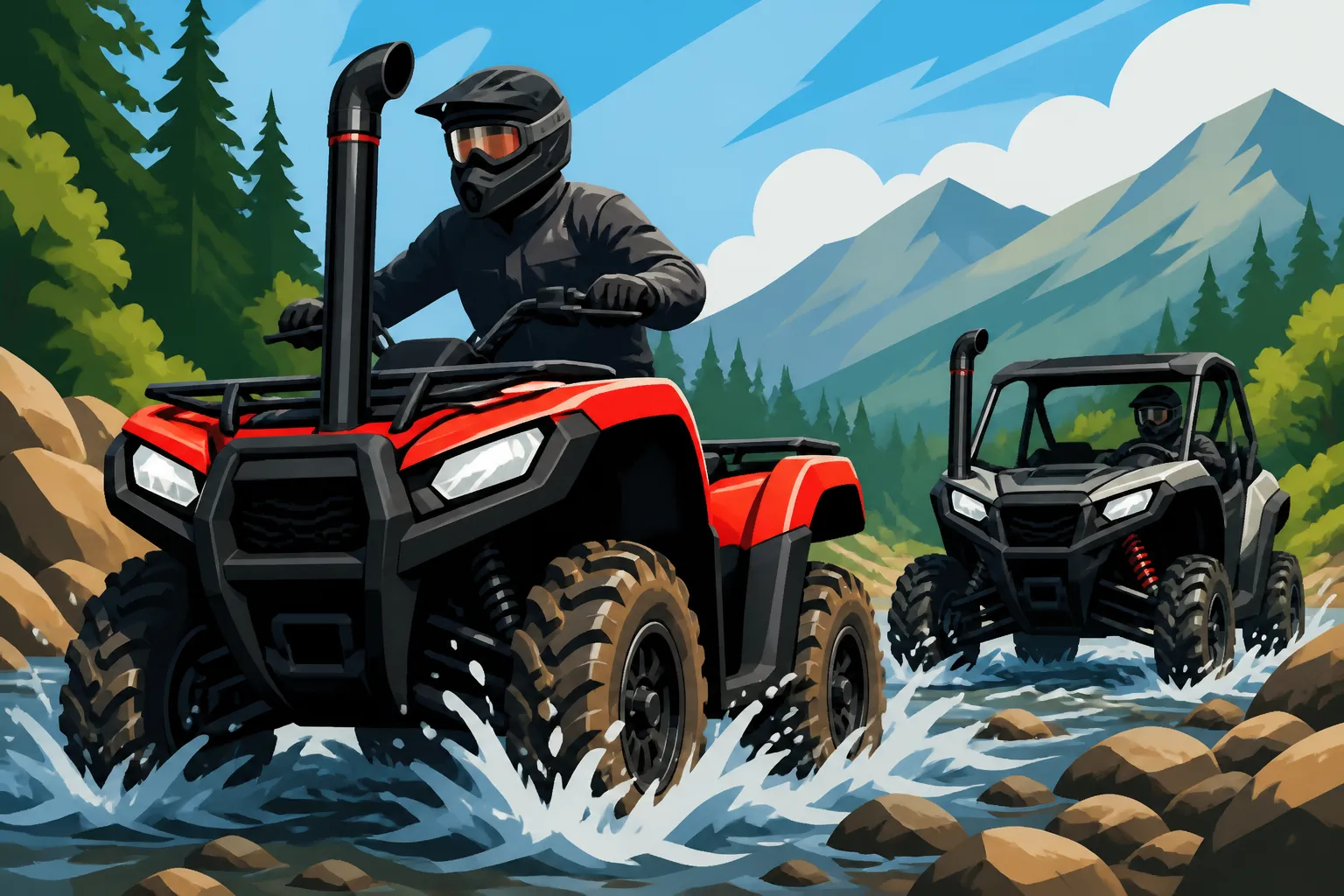
A snorkel raises one or more openings that would otherwise sit low on the machine. Depending on the vehicle and kit, those openings may include the engine air intake, the continuously variable transmission intake and outlet, or breather lines for components such as the differentials. Moving these openings higher can reduce the chance of drawing in water or mud during a wet crossing.
That protection depends on the entire setup—not just the visible pipes near the hood or roll cage. A raised engine intake does little good if the CVT intake remains low and water reaches the belt housing. Likewise, a differential breather that still ends beneath the waterline can allow water to enter as the component cools. Before buying a kit, identify which openings it addresses and compare the proposed installation with your machine’s service information.
A snorkel is best understood as one part of a water-risk plan. It may help when a properly assessed crossing sends splashes toward the machine or when the trail is wet and muddy. It cannot guarantee protection if the vehicle is submerged, if a fitting leaks, or if water enters through an unmodified opening. That distinction matters on Virginia trails, where a shallow-looking creek can hide a sudden drop, loose rock, or a stronger current than it appears to have from the bank.
What a snorkel does not make safe
A raised intake does not make it safe to drive through deep water. Water can reach electrical connections, wheel bearings, brakes, the engine, or the CVT through routes that a snorkel does not seal. A machine that stalls in water can also be damaged if the engine is restarted before the cause is understood. If you suspect water has entered the engine, stop and get qualified help rather than repeatedly trying the starter.
A snorkel also does not create a safe water-depth rating. The maximum depth, if the manufacturer provides one, is specific to the machine and its configuration. Tires, suspension, load, water movement, and the shape of the creek bed all affect the real risk. Use the owner’s manual and manufacturer guidance for your exact model, and do not treat a snorkel installation as permission to exceed those limits.
There is a practical tradeoff, too. Poorly routed or poorly sealed snorkel plumbing can create new problems, including restricted airflow, loose connections, or water pooling in a low section of tubing. A kit may also change how the machine sounds or how easily it fits beneath a roof, through a trailer, or into a garage. For more on places where riding in water may be restricted, review Virginia Rules for Riding a Creek Bed and Virginia Rules for Riding Private Land.
Before you approach a creek crossing
Check whether the route and crossing are allowed
The first question is not how deep the water is. It is whether you are allowed to ride there at all. A creek running through private land is not automatically open to riders, and a visible track does not prove that a crossing is authorized. Virginia riders should confirm land access and route rules before unloading, especially when a trail passes near private property, a timber road, or a public road.
On organized trail systems, stay on designated routes and follow the posted rules. The systems around Grundy and Coeburn, for example, are managed trail networks, not invitations to explore every nearby stream or cut-through. A map can help you understand the route, but it cannot replace current signs, closures, or permission from the landowner or trail operator. Virginia Trail Etiquette Locals Expect is a useful companion when you are planning a ride with other people.
Digital mapping tools such as onX Offroad can help riders review route information and orient themselves before a trip. Use a map as one planning aid—not as proof that a particular creek crossing is open. Compare what you see on-screen with official trail information, posted signs, and access permission. If those sources conflict or you cannot establish that the crossing is permitted, take another route.
Assess the water from a safe place
If the crossing is authorized, stop well back from the bank and look carefully before approaching. Check for current, submerged rocks, a soft or undercut edge, debris, and a clear place to exit on the far side. Water that looks calm at the surface can still move forcefully around rocks or change depth across a short distance. Recent rain can make conditions very different from what you saw earlier in the day.
Do not assume that the visible surface tells you what the tires will encounter. A rut or hole can hide beneath cloudy water, and a firm-looking bank may give way under a heavy machine. If you cannot judge the bottom or identify a dependable exit, do not ride in to find out. Turning around is frustrating, especially after a long haul to a trailhead, but recovering a submerged machine on a remote route can be far worse.
Avoid entering a crossing simply because another rider has done it. Their machine may have a different setup, their route may have been approved for access, or the conditions may have changed. If there is any uncertainty about depth, current, traction, or permission, choose a dry route or wait for conditions to improve. A snorkel should never be the deciding factor between crossing and turning back.
Preparing a snorkeled machine for wet conditions
Inspect the installation before the ride
Before a trip, check that the snorkel tubing is firmly attached and that the joints are sealed according to the kit maker’s instructions. Look for cracked hoses, loose clamps, pinched lines, and tubing that has sagged into a place where it could collect water. Inspect the airbox and filter as well; an elevated intake cannot compensate for a damaged lid or a poor seal elsewhere.
Check the CVT intake and outlet arrangement, along with any breather extensions included in the installation. Make sure lines are routed securely and are not rubbing against sharp edges, hot parts, or moving components. On a UTV, confirm that added pipes do not interfere with the roof, windshield, storage accessories, or other equipment. If you are unsure whether a connection is sealed correctly, have a qualified technician inspect it before you ride.
A simple pre-ride inspection is especially useful after transporting the machine over rough roads or making repairs. Vibration can loosen a clamp, and mud or vegetation can block an opening. Keep the machine’s service instructions and snorkel-kit guidance in mind; improvised changes can create a new failure point even when they appear to raise the intake.
Make a cautious plan for the ride
Tell your riding group that you intend to avoid unverified crossings. Agree in advance that no one will pressure another rider to enter water, and decide how the group will handle a machine that needs assistance. On a remote ride, bring basic recovery and first-aid supplies suited to the trip, and avoid putting a person in moving water to guide or pull a machine.
A table can help clarify why a snorkel is only one part of the decision:
| Concern | What a snorkel may help with | What it does not resolve |
|---|---|---|
| Water near the engine intake | Raises the intake opening when installed and sealed correctly | Does not protect the engine from every water-entry path |
| Water near the CVT | May raise the CVT intake and outlet, depending on the kit | Does not prevent water entry through gaps or faulty routing |
| Differential or gearbox breathers | May allow breather lines to be routed higher | Does not repair damaged seals or confirm the components are dry |
| Deep or moving water | May reduce risk during some approved, assessed crossings | Does not make an unsafe crossing safe or establish a safe depth |
| Trail access | Has no effect on land access or trail rules | Does not grant permission to ride a creek or enter private land |
If your group uses a mapping app, download or review the route before leaving an area with dependable cell service. In parts of the Virginia coalfields, reception can be inconsistent, and a phone may not be a reliable source of directions once you are on the trail. onX Offroad may help you prepare and keep track of your planned route, but carry a backup navigation plan and confirm access rules independently. For local route and riding-area planning, see Virginia Trail Conditions Before You Haul and Virginia Trails With Creek Crossings.
After a wet ride and when to get help
Look for signs of water intrusion
After riding in wet conditions, inspect the airbox, filter, and accessible snorkel connections for moisture, mud, or debris. Check the CVT area and breather components as recommended in the machine’s service information. Water contamination may not be obvious from the outside, so follow the manufacturer’s inspection and maintenance guidance rather than assuming everything is fine because the machine still starts.
Pay attention to changes in how the vehicle runs. A new hesitation, unusual belt behavior, warning light, rough idle, or electrical problem is a reason to stop and investigate. If the machine stalled in water or you believe water reached the engine, do not keep trying to start it. Arrange for recovery and inspection; attempting to run a water-affected engine can turn a manageable problem into more serious damage.
Mud and creek debris can also hide damage to the underbody, tires, brakes, and cooling system. Once you are safely back at the staging area, clear packed debris and inspect for loose parts or damaged lines. Do not direct high-pressure water at electrical connectors or seals unless the manufacturer’s cleaning instructions permit it. Virginia Trail Closures After Rain can help frame why wet-weather conditions deserve attention before and after a ride.
Decide whether a snorkel is right for your riding
A snorkel may be a reasonable modification for riders whose approved routes regularly involve wet, muddy conditions and who understand the installation and maintenance requirements. It is less useful if your riding is mostly on dry trails, or if the main reason for adding one is the hope of taking deeper crossings. In that situation, the safer improvement may be better route planning and a firm decision to avoid water you cannot assess.
Think about the whole machine, not only the kit. Consider whether the snorkel system is compatible with your model, whether you can maintain it, whether it affects storage or transport, and whether a professional installation is appropriate. Ask the manufacturer or a qualified service shop about the exact intake and breather arrangement for your vehicle. A setup that looks similar to a friend’s machine may not be correct for yours.
Most importantly, keep the order of decisions straight: confirm that the route is permitted, assess the crossing, consult your machine’s limits, and only then consider whether your equipment is suitable. A snorkel can help manage a particular mechanical risk, but it cannot remove the judgment required around water. For broader planning, including permits and trail rules, review Virginia Trail Rules for Riders Under 18 when riding with young people and Virginia Private Park Waivers and Rules when visiting a privately operated park.
Disclaimer
This article is for general informational purposes only and does not constitute professional advice. Laws, prices and regulations vary by location and change over time. Consult a qualified professional for guidance on your specific situation.