Skid Plates for Coalfield Ledge
Coalfield ledges can turn a routine Virginia trail ride into an expensive recovery if a rock catches your ATV or UTV’s underside. A skid plate helps shield vulnerable components, but the right setup depends on your machine, trail conditions, and riding style. This guide explains what to protect, how to choose and install armor, and how to check it before heading out.
Why Coalfield Ledges Put Your Machine at Risk
What can get damaged underneath
On rocky Appalachian routes, the underside of a machine may contact more than soft dirt. A ledge can catch the frame or skid plate, while loose rock can be pushed into exposed areas as the tires climb. The result may be scraped plastic, a bent guard, or damage to a vulnerable component. Even a short, slow ride can cause trouble if a wheel drops into a rut and the machine settles onto a sharp edge.
The parts at risk depend on the model. Common concerns include the engine and transmission cases, frame rails, lower suspension components, and the area around the center of the chassis. Some machines have factory panels that offer useful coverage; others leave gaps or use thinner material intended mainly to keep mud and debris away.
Before buying anything, check your owner’s manual and look underneath your own machine. A generic photo of the same model family may not show differences in trim, year, or installed accessories. If you ride a side-by-side, factor in its wider footprint and greater weight: it may bridge an obstacle differently from a quad, but when its underside settles onto a ledge, the added mass can make the contact more consequential.
Why riding technique still matters
Armor is a backup, not permission to charge over every rock. A skid plate may help the machine slide across an obstacle, but it cannot make a poor line safe or guarantee that a hard impact won’t bend a component. Sharp, uneven rock can also concentrate force at a small point, while a plate that is loose or poorly fitted can shift when it hits.
Approach ledges slowly enough to choose a line and keep your weight balanced. If a spot looks too difficult to assess from the seat, stop somewhere stable and look before proceeding. Avoid dropping the chassis onto a rock to force the machine forward; backing up and taking a different line is often less costly than discovering that a shield has been punctured or pushed into a component.
If you are learning the terrain, review Virginia Trail Difficulty Ratings and choose routes that match both your experience and your machine. The challenge of a trail is not determined by a single obstacle; conditions can change with rain, traffic, and erosion. For planning rides around the Grundy area, Virginia Riding Near Grundy offers useful trail-area context.
Choosing Skid Plate Coverage and Material
Full coverage or targeted protection
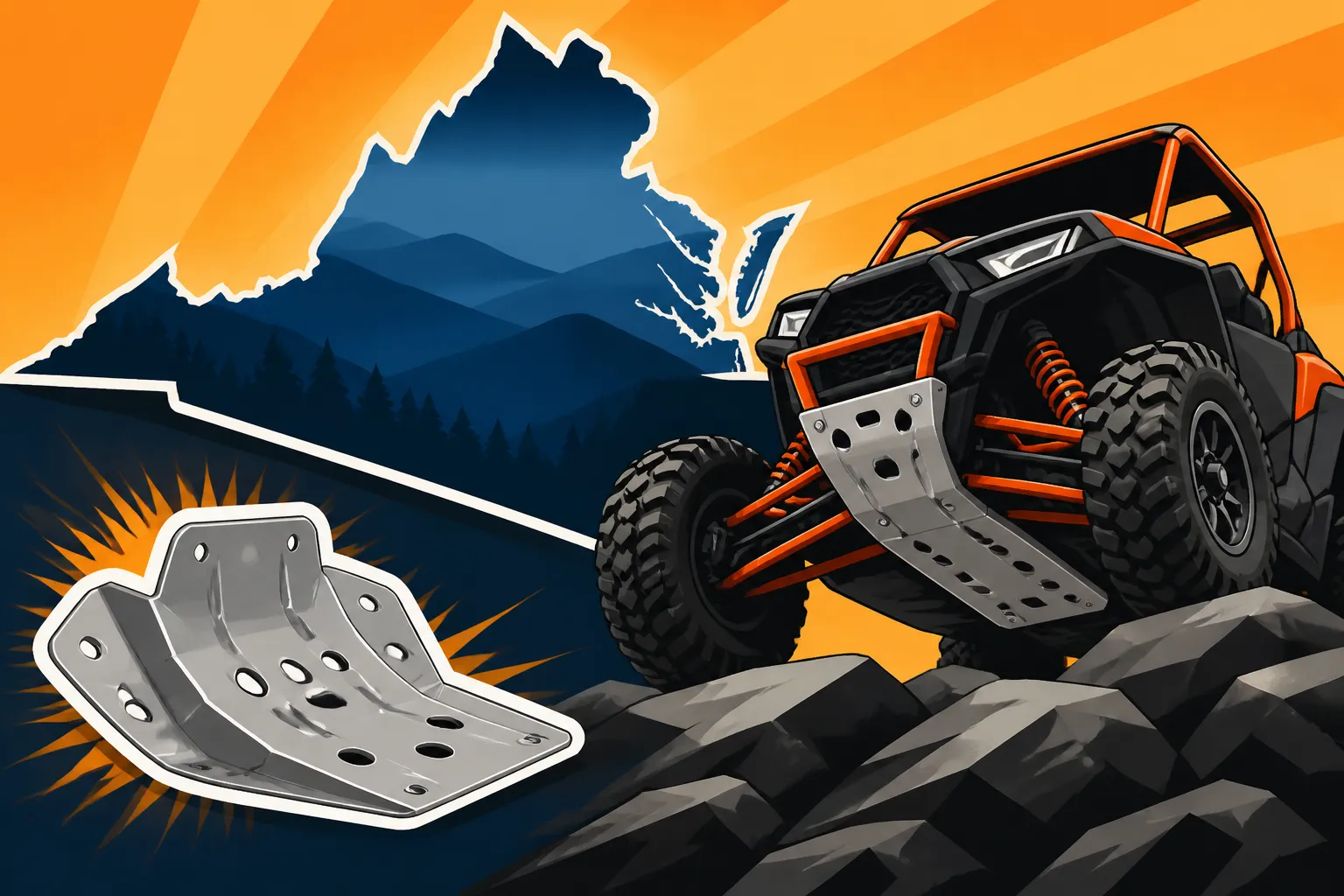
A full skid plate covers a larger portion of the underbody, often including sections beneath the engine, transmission, and frame. This can be appealing if you regularly ride rocky routes, carry passengers or cargo, or prefer broader coverage over deciding which section to protect first. Full coverage can also help reduce the chance of debris entering open areas beneath the machine.
The tradeoff is that more coverage can mean more weight, more attachment points, and more surfaces to clean. Some designs may affect access to drain plugs or other service points. Check how the plate is removed before purchase, especially if you handle routine maintenance yourself. A shield that is difficult to remove may be more likely to stay on while trapped mud or grit accumulates behind it.
Targeted guards can make sense when you know which areas are most exposed or want to protect a specific component without replacing every factory panel. But a partial system can leave gaps between guards, and a rock can catch an uncovered edge. Compare the actual coverage map for your exact machine rather than relying on a product label such as “full set.”
| Protection option | Best fit | Potential drawback | What to check |
|---|---|---|---|
| Full underbody system | Frequent rocky riding and broad coverage needs | More weight and more areas to clean | Service access, fitment, and fastener locations |
| Targeted guards | Protecting a known vulnerable area | Gaps may remain between protected sections | Coverage around edges and neighboring components |
| Factory panels | Light riding or existing adequate protection | May not be designed for repeated rock contact | Material condition, coverage, and secure mounting |
| Frame or A-arm guards | Protecting exposed rails or suspension areas | Does not replace central underbody protection | Clearance through the suspension’s full movement |
Comparing common materials
Aluminum is often chosen for its balance of weight and protection. It can slide over obstacles, but it may dent or bend when hit hard. That deformation can be useful if the plate absorbs an impact instead of passing it directly to a more expensive component, but a severely bent plate may need repair or replacement. Check for smooth, finished edges and hardware that does not protrude where rocks can snag it.
Plastic and composite plates vary considerably by design. Some are designed to flex and slide over rocks; others may be more vulnerable to cuts or punctures from sharp edges. Steel is generally robust but can add noticeable weight, which matters on a smaller ATV or when the machine already carries accessories. The best material is not automatically the thickest or heaviest one. Fit, coverage, mounting, clearance, and the way you ride all matter.
Ask the manufacturer or dealer whether the plate is intended for your specific year and trim, and whether it works with any accessories already installed. A winch mount, aftermarket exhaust, or other modification can change fitment. For related equipment planning, Tires for Appalachian Rock and Winches for a Steep Coalfield Climb cover other choices that can affect how a machine handles demanding terrain.
Fitting and Maintaining Skid Plates
Check compatibility before installation
Start with the exact make, model, year, and trim of your ATV or UTV. Similar-looking machines can have different frame layouts or mounting points. Confirm whether the plate uses factory holes, replacement hardware, or model-specific brackets. If an instruction sheet calls for a modification you are not comfortable making, pause and consult a qualified installer rather than improvising.
Before installing the plate, inspect the machine for existing damage and clean the mounting surfaces. Mud packed against a frame rail can hide a crack or prevent a bracket from sitting flush. Lay out the pieces and fasteners, then compare them with the instructions. If a bolt seems too short, a hole does not line up, or the plate contacts a hose or moving component, do not force it into place.
When tightening hardware, follow the manufacturer’s directions. Over-tightening can damage threads or distort a plate; under-tightening can allow it to rattle or shift. After the first short ride, inspect the fasteners and contact points again. This is especially worthwhile after the machine has crossed rough ground or taken a noticeable hit.
Clean and inspect after rocky rides
A skid plate can hide the very area it is meant to protect. After a ride, look for fresh dents, gouges, cracks, loose fasteners, and marks that suggest the plate has contacted something hard. Pay attention to areas near openings and seams, where mud and grit may gather. If the plate is designed to be removed for cleaning or inspection, follow the specified maintenance process.
Rinse away accumulated dirt when appropriate, but avoid directing high-pressure water into electrical connectors, seals, or other sensitive areas. Let the machine cool before working near hot components. If the plate has been pushed upward or is touching a moving part, do not continue riding until the fit has been checked and corrected.
Keep a simple record of what you find. A note such as “new scrape on left frame rail after rocky loop” can help you spot a repeated line-choice problem or identify a weak point in the coverage. If a plate is badly bent, cracked, or loose, treat it as a repair issue rather than assuming it will still protect the machine on the next ride.
Planning a Virginia Ride With Underbody Protection
Match protection to the route
The protection you need depends on where you ride and how you use the machine. A smoother route and an occasional recreational outing may not justify the same setup as repeated trips over rocky climbs. Consider how often you expect to encounter ledges, whether you ride solo or with a group, and whether your machine carries extra weight from passengers, tools, or cargo.
For the Spearhead area, research the specific system and routes rather than relying on a broad description of “coalfield riding.” Coal Canyon Trail System in Virginia can help with area planning, while Virginia Trails That Allow Side-by-Sides is relevant if you ride a wider machine. Verify access and riding conditions before you haul. Virginia Trail Conditions Before You Haul is a useful reminder that a route you have ridden before may not feel the same after weather or maintenance changes.
A route-planning app such as onX Offroad can help you review trail maps and organize a ride, but a digital map is only one planning tool. Do not assume that every visible road or track is open to recreational riding. Confirm the rules for the system, stay on permitted routes, and plan with the group’s least experienced rider and most restrictive machine in mind. onX Offroad can also help you keep route information organized before leaving an area where cell service may be unreliable.
Make a pre-ride protection check
A short inspection at home or the staging area can prevent a small problem from becoming a trail-side breakdown. Use the same routine every time so you are less likely to overlook a loose plate or a new crack.
- Look over the plate for deep gouges, cracks, sharp edges, and signs that it has shifted.
- Check accessible fasteners and brackets for looseness or missing hardware.
- Look for mud, leaves, or stones packed between the plate and the chassis.
- Confirm that the plate does not interfere with suspension movement, steering, hoses, or other components.
- Carry basic repair supplies appropriate to your machine, but do not treat a temporary trail-side fix as a substitute for a proper inspection.
- Share the route plan and expected return with someone who is not on the ride.
Good preparation includes more than armor. Check the forecast, allow extra time for changing mountain conditions, and avoid pushing into a difficult section just because the group has already reached it. Virginia Trail Closures After Rain can help riders think through how weather affects access, while Virginia Trail Etiquette Locals Expect is useful when planning to share a route responsibly. onX Offroad may support your route review, but posted signs and official trail-system information should guide access decisions.
The most useful skid plate is one that fits correctly, covers the areas exposed on your machine, and gets inspected after hard use. Pair that protection with deliberate line choice, a route suited to your experience, and a willingness to turn around when conditions exceed your comfort level. Those habits help reduce avoidable damage without pretending that any piece of armor can make rocky terrain risk-free.
Disclaimer
This article is for general informational purposes only and does not constitute professional advice. Laws, prices and regulations vary by location and change over time. Consult a qualified professional for guidance on your specific situation.