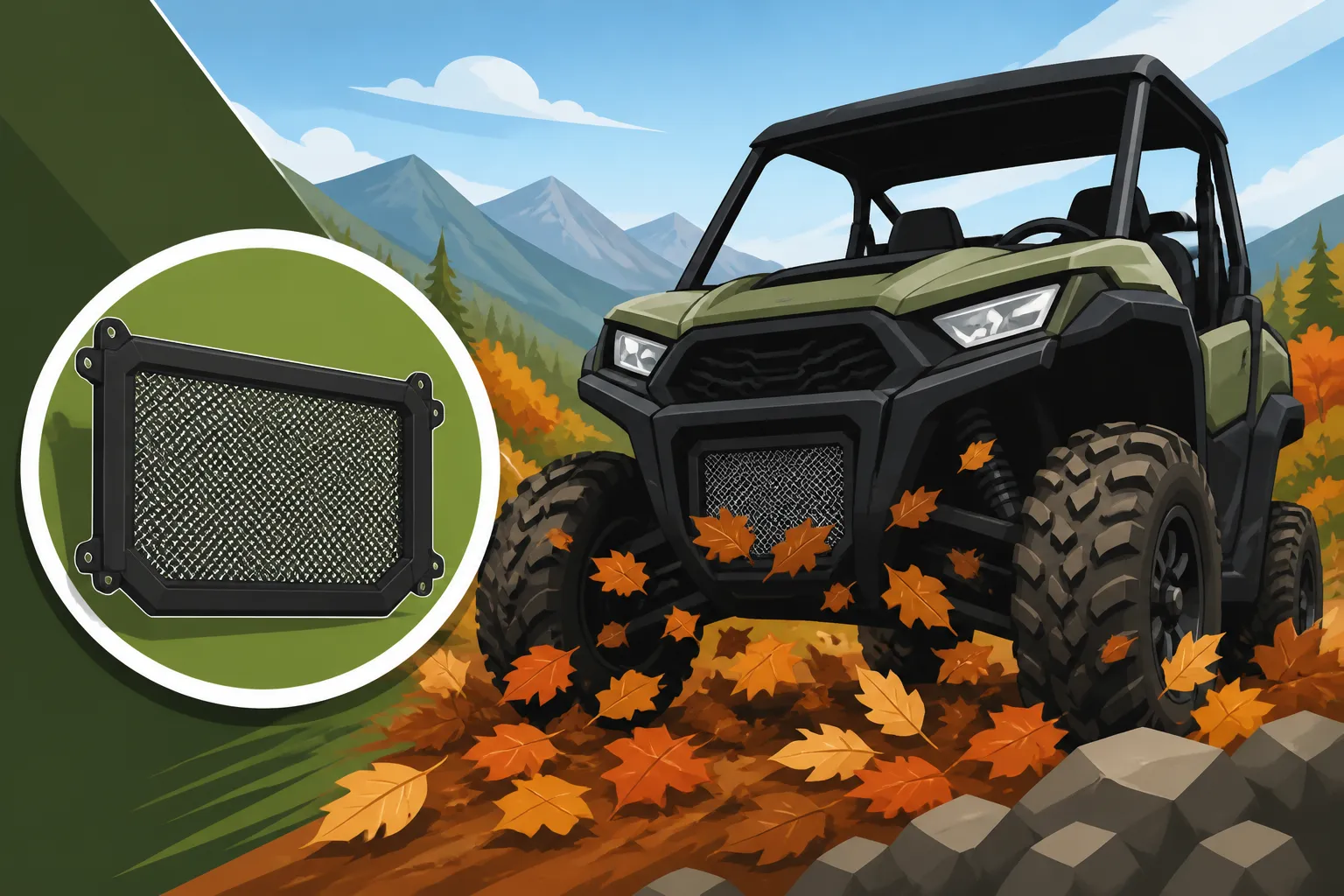
Radiator Screens for Mountain Leaf Litter
A radiator screen can keep wet leaves, seed pods, and trail debris from packing against your ATV or UTV’s cooling fins, especially on wooded Virginia rides in fall. But a screen that is too fine, clogged, or poorly fitted can restrict airflow and create a different problem. This guide explains how to choose, fit, inspect, and clean a radiator screen for mountain leaf litter.
Why mountain leaf litter can clog an ATV or UTV radiator
How leaves and trail debris block airflow
A radiator needs air to pass through its fins to carry heat away from the engine. On a wooded trail, leaves can stick to the front of the radiator and build up into a mat. Damp leaf litter is especially troublesome: instead of blowing away, it can cling to the screen and gradually close off the openings that air needs to pass through.
It’s not just big leaves that cause trouble. Fine plant fibers, pine needles, seed fluff, mud, and dust can collect along with them. A machine crawling slowly over a steep or rough section may be working hard while moving too slowly for much air to flow across the radiator. That combination can make a partial blockage more important than it would be at higher speed.
The problem can show up on trails around the Appalachian coalfields, on wooded forest routes, or anywhere a machine pushes through brush. Virginia riding conditions also change with the season and after rain. Before a trip, check local conditions and route information, including Virginia Trail Conditions Before You Haul and Virginia Riding in Fall Foliage. A screen helps catch debris, but it doesn’t remove the need to stop and check the machine during a ride.
Signs your radiator may be getting restricted
A rising temperature reading, a warning light, or a cooling fan that seems to be running more than usual can be a sign to stop and investigate. Those symptoms don’t prove the radiator is clogged—there may be another cause—but visible leaves or mud over the cooling surface make a blockage worth addressing.
If you notice a hot smell, steam, or a sudden change in engine behavior, don’t keep pushing on in the hope that the problem will clear itself. Move to a safe place, shut the machine down, and let it cool. Never remove a hot radiator cap. Pressurized coolant can cause serious burns.
A quick glance at the screen during a break can prevent a small buildup from turning into a frustrating interruption. This matters particularly on narrow or technical routes, where stopping later may be difficult. Review Virginia Trail Difficulty Ratings before planning a ride so you can think through where it will be safe to pull over and check your machine.
Choosing a radiator screen for leaf litter
Compare screen types and tradeoffs
A radiator screen’s job is to intercept debris without preventing the airflow the radiator needs. There isn’t one ideal mesh for every machine or riding style. Screen size, material, radiator position, and how often you ride through thick vegetation all matter.
| Screen option | Helpful for | Tradeoff to consider |
|---|---|---|
| Factory-installed screen | Basic protection with a fit intended for that machine | Openings may not catch very fine debris |
| Removable mesh screen | Frequent cleaning and added protection from leaves and plant matter | Needs regular inspection so debris does not build up |
| Coarser protective guard | Larger debris and impact protection | May not stop fine leaves or fluff |
| Very fine mesh | Catching small debris | Can clog quickly and restrict airflow if neglected |
For many riders, a removable screen is useful because it can be taken off and cleaned without trying to pick every piece of debris from a cramped opening. A coarse screen may be enough if the main concern is larger leaves and sticks. Very fine material might seem like the safest choice, but if it becomes covered in damp debris, it can act like a blanket over the radiator.
Check your owner’s manual and the screen manufacturer’s fitment guidance before buying or modifying anything. A screen should not rub against the radiator fins, block a fan opening, or interfere with a shroud or other cooling component. If your machine has more than one radiator or a radiator positioned away from the front grille, make sure you understand which surfaces need protection.
Match the screen to your machine and riding conditions
ATVs and side-by-sides can have different radiator locations and access points. On one machine, the radiator may sit behind a front grille; on another, it may be mounted in a location more exposed to dust or plant material. A screen that fits one model may not fit another, even if the machines look similar. For vehicle-specific questions, check the manual or ask a dealer or qualified mechanic.
Think about what you ride through most often. If your usual routes are open and dry, a simple factory screen that’s easy to inspect may be adequate. If you regularly ride through wet leaves, brush, or fine plant debris, a removable screen may make cleanup easier. On group rides, a quick stop to check screens can be more practical than waiting until a temperature warning appears.
It also helps to consider where you ride and what the route allows. Rules, permitted vehicles, and trail conditions can vary, so check the relevant trail information before setting out. For example, Virginia Trails That Allow Side-by-Sides can help you plan around machine access, while onX Offroad can be one tool for organizing your route. Confirm access and closures with the trail operator or official notices rather than relying on a map alone.
How to install and maintain a radiator screen
Fit the screen without compromising cooling
Start with a cool machine parked on a stable surface. Read the screen instructions and your owner’s manual before removing covers or fasteners. If installation requires taking apart components you aren’t comfortable handling, stop and get help rather than forcing a part or bending a radiator fin.
Before fitting the screen, look over the radiator and surrounding parts. Check for bent fins, trapped leaves, damaged wiring, loose fasteners, and anything that could touch the fan. A screen should sit securely and leave room for the cooling system to work as designed. Avoid stretching a universal screen tightly across an opening if it can sag, shift, or press against the radiator.
After installation, check that the grille or shroud goes back in place correctly and that no part of the screen can move into the fan. Follow the manufacturer’s directions for attachment and removal. If the screen is difficult to access, consider whether you’ll realistically clean it during a ride. A screen that’s protective but awkward to inspect can be easy to neglect.
Inspect it during the ride and clean it carefully
Make a screen check part of your normal trail-stop routine. Look for leaves packed into corners, mud across the mesh, or a buildup that covers a large part of the surface. Check more often after riding through wet foliage or a dusty stretch, and stop sooner if the temperature reading changes.
To clean a removable screen, let the machine cool, then remove the screen according to its instructions. Brush off loose debris gently. If you rinse it, use a mild flow of water; high-pressure spray can damage the mesh or drive debris deeper into the cooling area. Avoid scraping the radiator fins with a tool. They bend easily, and bent fins can reduce airflow.
If debris has reached the radiator itself, clean carefully and follow the owner’s manual. In some cases, access from the back of the radiator helps push debris out the way it came in, but the layout differs by machine. Don’t spray directly at a fan, electrical connector, or other sensitive component. For more general cleaning ideas after a muddy or dusty trip, see Washing Coal Dust Off a Machine.
Build radiator checks into your Virginia ride plan
Adjust your routine for weather and route conditions
Wet leaves are more likely to stick than dry ones, and muddy sections can add another layer of debris to a screen. After heavy rain, a route may also become slippery or closed. Check Virginia Trail Closures After Rain before hauling out, and remember that trail surfaces and conditions can vary from one section to the next.
When mapping a ride, leave time for inspections instead of treating them as an inconvenience. A short pause at a safe pull-off can help you spot a clogged screen, loose gear, or a change in machine temperature before you continue into a remote section. onX Offroad may help with route planning, but use trail-system information and posted signs to confirm what is open and permitted.
If your group is riding together, tell everyone that a screen check is part of the plan. That small expectation can prevent one rider from feeling pressured to keep moving when their machine needs attention. It also makes it easier to choose safe stopping points before the trail gets narrow or steep. Good planning and consideration for other trail users go together; Virginia Trail Etiquette Locals Expect is useful background for keeping shared routes pleasant.
Know when a screen is not enough
A radiator screen is not a fix for an overheating machine, a damaged cooling system, or a radiator already packed with mud. If the temperature warning returns after you clear the screen, or if you see coolant leaking, damaged fins, or a fan that isn’t operating as expected, stop riding and have the machine inspected.
Likewise, don’t assume that adding finer mesh will solve every debris problem. A screen can catch more material, but it may also need more frequent cleaning. The practical choice is the one that suits your machine, can be fitted safely, and is easy enough to inspect consistently.
Before your next wooded ride, make a simple checklist: confirm the screen is secure, bring the tools needed to remove or clean it if appropriate, know where you can stop safely, and check the machine after particularly leafy or muddy sections. That routine is often more useful than choosing the most complicated screen on the market.
Disclaimer
This article is for general informational purposes only and does not constitute professional advice. Laws, prices and regulations vary by location and change over time. Consult a qualified professional for guidance on your specific situation.