Dust and Blind Corners on a Mountain Gravel Road
Riding your ATV or UTV through the majestic mountains of Virginia, especially on those scenic gravel roads, is an experience unlike any other. But let's be real, it's not always smooth sailing. The constant dust clouds kicked up by your own machine or others, combined with those infamous blind corners and crests, can turn a thrilling ride into a white-knuckle test of nerves. This guide is here to walk you through those challenges, offering practical advice and strategies to help you navigate Virginia's mountain gravel roads safely and confidently, so you can truly enjoy the breathtaking beauty without the constant worry.
Understanding the Unique Challenges of Mountain Gravel Roads in Virginia
Picture this: you're cruising along a beautiful mountain road, the engine humming, the scenery a blur of green. Then, suddenly, a thick cloud of dust engulfs you, reducing your visibility to mere feet. Or you approach a sharp bend, knowing full well something could be coming around it, completely unseen. These aren't just minor inconveniences; they're significant hazards that demand respect and preparation when you're exploring the Old Dominion's off-road offerings.
The Ever-Present Cloud of Dust
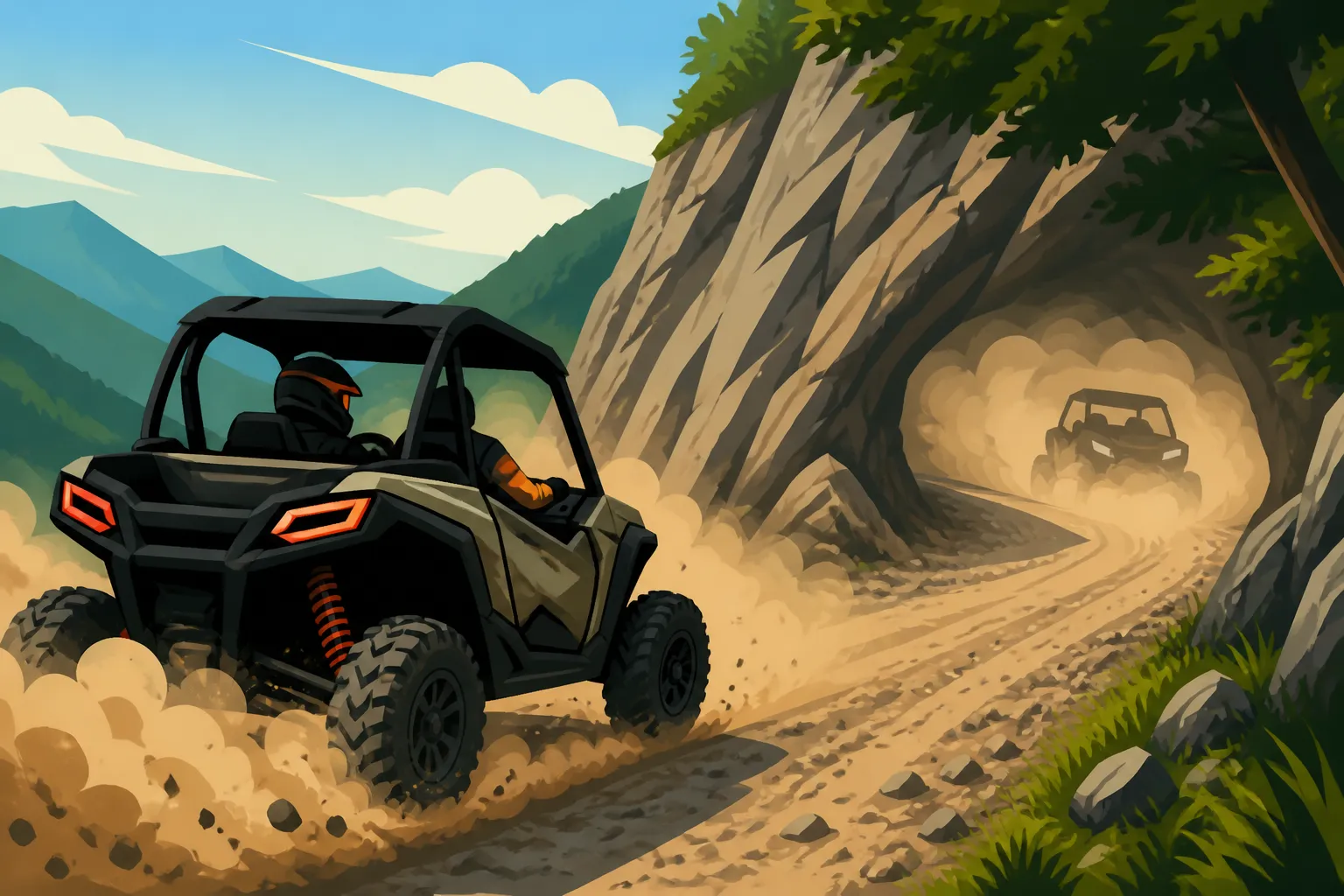
Ah, the dust. It's almost as iconic as the mountains themselves in many parts of Virginia, especially on dry days. When multiple machines are on the trail, or even just one, the fine, loose gravel and dirt quickly transform into a choking, vision-obscuring plume. This isn't just about getting dirty; it's a serious safety concern. You lose your ability to see what's ahead – obstacles, dips, other riders, or even wildlife.
Imagine trailing a friend on a particularly dry stretch of road near the [Coal Canyon Trail System in Virginia]. One moment you're admiring the distant ridge, the next you're enveloped in a brown fog so thick you can't even see their taillights. It creates a domino effect: you slow down, but if the rider behind you isn't prepared, they might not realize you've decelerated, leading to potential close calls. And it's not just the riders ahead; oncoming traffic, though less common on designated ATV routes, can emerge from a dust cloud completely unexpectedly. This constant battle with dust requires a proactive approach to maintain safety for everyone on the trail.
The Deceptive Nature of Blind Corners and Crests
Virginia's mountainous terrain is renowned for its winding roads, and with those curves come countless blind corners and crests. These are spots where the road bends sharply, or rises over a hill, obscuring your view of what lies beyond. You simply cannot see what's coming, or what might be stopped just out of sight. It's like playing a constant game of peek-a-boo, but with much higher stakes.
Consider a steep uphill climb on one of the [Virginia Spearhead Trails]. As you reach the top, the road crests, and for a split second, all you see is sky. What if there's a fallen tree just over that crest? Or a group of riders stopped to enjoy the view? Or, worse, another machine heading towards you that also can't see you? The danger is compounded when you combine blind corners with dust. A machine could be coming around a bend, completely hidden by its own dust trail, making detection almost impossible until it's too late. These situations demand a disciplined approach to speed and road positioning.
Varying Road Conditions and Terrain
It's never just uniform gravel out there. One moment you might be on a fairly smooth, packed section, and the next you hit a patch of loose, deep gravel that feels like marbles under your tires. Then there are washouts from recent rains, exposed bedrock, ruts, potholes, and unexpected changes in elevation. Mountain gravel roads are constantly evolving, influenced by weather, traffic, and natural erosion.
You might be enjoying a smooth section on the [Mountain View Trail System in Virginia], only to suddenly encounter a patch of large, sharp rocks hidden just beyond a curve. A sudden change in surface can cause a loss of traction, making steering difficult, especially if you're already trying to navigate a blind corner or a dust cloud. Furthermore, some sections might be shared with other vehicles like logging trucks or farm equipment, particularly on less-traveled county roads, adding another layer of unpredictability. Understanding that the road beneath your tires is a living, breathing thing that changes often is crucial for maintaining control and reacting safely to whatever comes your way.
Essential Safety Strategies for Dusty, Winding Paths
Navigating Virginia's challenging mountain gravel roads safely requires more than just good riding skills; it demands a proactive mindset, careful planning, and a commitment to visibility and control. These strategies are about minimizing risk and ensuring you, your passengers, and your fellow riders have an enjoyable and incident-free experience.
Visibility: Seeing and Being Seen
On dusty roads with blind corners, visibility is your ultimate defense. If you can't see what's coming, and others can't see you, the chances of an accident skyrocket. This isn't just about your line of sight; it's about making yourself as conspicuous as possible to everyone else, whether they're coming towards you, or riding behind you.
First, and perhaps most importantly, is wearing appropriate gear. A full-face helmet with a clear visor, or eye protection like goggles, is non-negotiable. [Virginia Helmet Law Applies to Every Rider], and it's doubly important when dust is flying. Tinted visors or goggles might be great for sunny days, but can become a liability when you suddenly plunge into a dust cloud or enter a shaded, tree-lined section of road. Consider carrying both clear and tinted options, or a visor that quickly adapts to light changes. For riders without windshields, especially on ATVs, dust can quickly coat goggles, so having tear-offs or a way to quickly clean them is vital. When riding in a group, maintain a sensible distance between machines to reduce the amount of dust you're individually exposed to, allowing each rider a better chance to see the path ahead.
Being seen is equally critical. Headlights and taillights should be on at all times, even during daylight hours. This might seem excessive on a bright day, but a headlight shining through a dust cloud can make a huge difference in an oncoming rider spotting you. Consider supplemental lighting, especially for UTVs, like an LED light bar or brighter aftermarket headlights. Brands like SuperATV offer a range of powerful lighting solutions that can significantly cut through dust and gloom. Reflective tape on your machine or riding gear can also enhance visibility, particularly in twilight or shaded areas. [Adding Reflective Tape to a Quad for Road Sections] can be a simple, yet effective, safety upgrade.
Controlling Your Speed and Position
Speed is your enemy on roads with blind corners and thick dust. While the thrill of speed is undeniable, it dramatically reduces your reaction time and the distance you need to stop. The golden rule here is simple: if you can't see what's coming, slow down. This isn't just advice; it's a necessity for survival on these types of trails.
When approaching a blind corner or crest, always assume there's something on the other side. This means decelerating well before you enter the blind spot. Tap your brakes lightly to activate your taillights, alerting any riders behind you to your speed change. As you navigate the turn, keep your machine as far to the right as safely possible, giving yourself maximum buffer space from any unseen oncoming traffic. This principle also applies to roads where [Virginia Rules for Riding a County Road] might permit a mix of traffic. Never cut corners by riding in the middle of the road, even if it feels like the smoother line. You never know when a larger vehicle, or another ATV, could be coming the other way, also hugging the inside of the turn.
In dusty conditions, it's also about managing the space between you and other riders. If you're riding in a group, communicate clearly about speed changes, hazards, or when you need to stop. Hand signals, radio communication, or even pre-arranged horn signals can be invaluable. If the dust becomes too thick, don't be afraid to pull over safely and wait for it to settle, or for conditions to improve. A few minutes delay is always better than a potential accident. Remember, you're not in a race; you're there to enjoy the ride safely.
Communicating Within Your Riding Group
Riding with friends or family is a blast, but it also adds another layer of responsibility, especially on challenging terrain. Effective communication within your group can literally be a lifesaver when dealing with dust and blind corners. Relying on hand signals alone can be tricky when you're focusing on the trail and covered in gear.
Before you even hit the trails, establish a clear communication plan. This could involve simple hand signals for common actions like "slowing down," "stopping," or "hazard ahead." But for truly effective communication, especially over engine noise and wind, consider investing in helmet-to-helmet communicators. Systems like Sena or Cardo allow riders to talk to each other clearly, sharing real-time information about trail conditions, approaching turns, or unexpected obstacles. Imagine being able to tell the rider behind you, "Blind corner ahead, slowing down!" or "Large rock in the middle of the trail!" – it's a game-changer for group safety.
Another crucial aspect is designating a lead rider and a sweep rider. The lead rider is responsible for setting a safe pace, observing trail conditions, and alerting the group to hazards. The sweep rider, at the very back, ensures no one gets left behind and can communicate if a rider has issues or needs to stop. Regularly check your rearview mirrors to ensure everyone is still with the group. If you lose sight of a rider for an extended period, safely pull over and wait. Never assume they're just catching up. When navigating areas known for their deep dust or multiple blind curves, keep your group tighter and communicate more frequently. This collective awareness helps everyone anticipate and react to challenges more effectively.
Equipping Your ATV or UTV for Appalachian Gravel
The right gear, both for you and your machine, can make a huge difference in your safety and enjoyment when tackling Virginia's dusty, blind-cornered mountain roads. While skill and caution are paramount, thoughtful equipment choices can mitigate many of the inherent risks.
Gearing Up for Dust Protection
Dust isn't just an annoyance; it's a pervasive irritant that can affect your vision, breathing, and the longevity of your machine. Protecting yourself and your passengers from inhaling fine particulate matter is paramount for health and comfort.
For riders, a good quality dust mask or neck gaiter pulled over your nose and mouth is essential. There are many options, from simple bandanas to purpose-built reusable masks with filters, which are far more effective. These will help filter out some of the dust, making breathing much more comfortable and preventing that gritty feeling in your throat. For UTVs, a windshield is a game-changer for reducing dust kicked up by your own machine or those ahead. Brands like SuperATV offer a variety of windshields, including full, half, and flip-up options, which can vastly improve cabin air quality. Pairing a windshield with a rear dust panel or cargo net can further reduce the amount of dust swirling into the cabin from behind, creating a much more pleasant ride for everyone.
Don't forget about your eyes. Even with a windshield, ATVs and UTVs often kick up dust from the front and sides. Good quality goggles that seal well around your eyes are a must. They prevent irritation and allow you to focus on the trail. For those who wear prescription glasses, look for "over-the-glasses" (OTG) goggle designs. Consider carrying extra tear-offs or cleaning wipes for your goggles, as they can quickly become obscured, especially if you're riding behind another machine. [Virginia Equipment Checks by Officers] might include checking for appropriate safety gear, so be prepared.
Enhancing Your Machine's Visibility
Beyond personal protective equipment, making your ATV or UTV as visible as possible is a critical safety measure, especially when cresting hills or rounding blind turns. Standard factory lighting might be sufficient for casual use, but on these challenging roads, more is often better.
As mentioned, running your headlights and taillights at all times is a basic but important step. For UTVs, consider adding a flashing amber strobe light to the rear, especially if you're frequently riding in a group or on shared-use roads. This greatly increases your visibility in dusty conditions, allowing riders behind you to spot you earlier. For both ATVs and UTVs, upgrading to brighter LED headlights can improve your ability to see the trail and make you more visible to others. [Virginia Lighting Rules on a Machine] dictate what's acceptable, but enhancing your visibility beyond the minimum is always a smart move.
Reflective tape is another low-cost, high-impact upgrade. Apply it to the front, rear, and sides of your machine. Even small strips can catch the light, especially from other vehicles' headlights, making your presence known when dust or shadows might otherwise hide you. This is particularly useful for those moments when you might encounter larger vehicles on [Virginia Rules for Riding a County Road] sections that intersect off-road trails. Remember, the goal is to stand out, even in adverse conditions, to give other riders and drivers maximum time to react.
Maintenance Tips for Dusty Conditions
Dust isn't just hard on riders; it's incredibly tough on your machine. The fine particles can get into every crevice, accelerating wear and tear if not properly managed. Regular maintenance becomes even more critical when frequently riding on dusty gravel roads.
The most important component to monitor is your air filter. Dust clogs air filters quickly, choking your engine and reducing performance. Check and clean or replace your air filter much more frequently than the manufacturer's recommendations if you're often riding in dusty conditions. A pre-filter or a foam air filter (which can be washed and re-oiled) can be excellent investments. Keeping your engine breathing clean air is vital for its longevity and performance. [Packing for Mountain Weather] should always include thinking about your machine's specific needs.
Beyond the air filter, pay attention to all moving parts. Dust mixed with moisture creates a grinding paste that can accelerate wear on bearings, bushings, chains, and suspension components. Regularly clean and grease all accessible zerks. Inspect brake pads and rotors frequently, as dust can contaminate brake systems. After a particularly dusty ride, a thorough washing is highly recommended, focusing on the underside and suspension components to remove accumulated grit. Also, check your tire pressure regularly; proper inflation helps maintain traction on loose surfaces. Taking these proactive steps will ensure your machine runs smoothly and reliably, mile after dusty mile, and prevents costly repairs down the line.
Navigating Specific Hazards and Unexpected Encounters
Even with the best preparation and equipment, Virginia's mountain gravel roads can throw curveballs. Being mentally prepared for unexpected encounters and specific hazards can make all the difference in staying safe and enjoying your ride.
Encountering Other Trail Users and Vehicles
It's easy to feel like you have the whole trail to yourself, especially on a remote gravel road. However, you're rarely truly alone. You could encounter other ATVs or UTVs, hikers, mountain bikers, horseback riders, or even larger vehicles like logging trucks, farm equipment, or local residents in their personal cars, especially on multi-use trails or public roads that connect trail systems.
The key is to anticipate and react courteously and safely. When you see others approaching, slow down significantly. For hikers, bikers, or horseback riders, pull over to the side of the trail, kill your engine, and give them ample space to pass. A friendly wave and a smile go a long way in fostering good relations between different trail user groups. Dust can be particularly problematic for these users, so showing extra consideration by minimizing your dust plume is appreciated. For oncoming vehicles, be prepared to yield. If you're on a single-lane road with a blind corner, the vehicle going uphill generally has the right of way, but safety always trumps etiquette. If in doubt, stop, make eye contact, and communicate to ensure a safe pass. Familiarizing yourself with [Virginia Trail Etiquette Locals Expect] can smooth these interactions.
When you're riding a side-by-side, remember that your larger footprint might make others perceive you differently. [Virginia Rules for a Side-by-Side Driver] often align with ATV rules, but the sheer size difference means you need to be even more mindful of space and visibility for others. Always be on the lookout for unexpected obstacles or people around blind corners or crests. If riding in a group, ensure there's enough space for the entire group to react to an oncoming vehicle safely.
Dealing with Wildlife and Livestock
Virginia's mountains are teeming with wildlife, and it's not uncommon to encounter deer, turkeys, bears, or other creatures crossing the trail. In agricultural areas, you might even find livestock, like cattle or horses, near or sometimes even on the roads. These encounters are often sudden and require a quick, calm response.
If you spot an animal, especially deer or bear, slow down immediately and be prepared to stop. Animals can be unpredictable; they might dart across your path, or they might stand frozen. Give them space and time to move away. Never try to "herd" or scare an animal with your machine. This can provoke an aggressive response or cause them to run into traffic. For larger animals like bears, make noise to make your presence known, but maintain a safe distance. If you encounter livestock, remember that they are someone's property. Slow down, pass cautiously, and avoid startling them. If gates are present on a road or trail, always leave them as you found them – open if they were open, closed if they were closed. This respects landowners and helps keep animals where they belong. [Virginia Written Consent on Private Land] often includes provisions for respecting wildlife and property.
Sudden stops to avoid animals can also create hazards for riders behind you, especially in dusty conditions. This is where good group communication becomes vital. If the lead rider spots an animal, a quick radio call or clear hand signal about "stopping" or "hazard ahead" can give the entire group time to slow down safely and avoid a pile-up.
What to Do in Reduced Visibility Conditions
Sometimes, despite all your preparations, conditions might deteriorate significantly due to unexpected weather changes, or an unusually thick dust storm. Knowing how to react in these reduced visibility scenarios is crucial for preventing accidents.
If a sudden downpour turns the trail into a muddy, foggy mess, or if a dust cloud becomes so dense you can't see more than a few feet, the safest course of action is often to pull over to a safe spot and wait it out. Find a wide shoulder or a clearing where you are completely off the main travel path and won't be hit by other machines. Turn on your headlights and taillights, and if you have a flashing beacon, activate it. This makes you visible even while stationary. If you're in a group, try to pull over together, but ensure enough space between machines to prevent bumping in the low visibility.
If you absolutely must continue moving in reduced visibility, proceed at an extremely slow crawl. Keep your eyes peeled for trail markers, the edge of the road, or any familiar landmarks. If riding in a group, maintain very close proximity (but still safe stopping distance) to the machine in front, using their taillights as a guide. [Virginia Lighting Rules on a Machine] will be particularly critical here. If you have a passenger, they can assist by looking for hazards on their side of the machine. Remember, your priority is safety over making good time. A slow, cautious journey is always better than a risky dash that ends in an incident. And always have a basic [First Aid on a Long Coalfield Loop] kit with you, just in case.
| Aspect | Recommendation for Dusty, Blind Roads | Why It Matters | Key Equipment/Action |
|---|---|---|---|
| Visibility (Self) | Always wear clear eye protection; use dust mask/gaiter; carry cleaning wipes. | Prevents eye irritation, ensures clear vision, protects respiratory health. | Goggles (OTG if needed), dust mask with filter, helmet with clear visor. |
| Visibility (Machine) | Run headlights/taillights at all times; add auxiliary lights; use reflective tape. | Makes you seen by others (oncoming/following) through dust and around bends. | LED headlights, amber strobe (UTV), [Adding Reflective Tape to a Quad for Road Sections], SuperATV light bar. |
| Speed Control | Decelerate before blind corners/crests; assume something is on the other side. | Increases reaction time, reduces stopping distance, minimizes collision risk. | Constant vigilance, proactive braking, conservative throttle input. |
| Road Position | Stay as far right as safely possible on bends; avoid cutting corners. | Creates buffer from oncoming traffic, reduces head-on collision potential. | Discipline in maintaining lane position. |
| Group Communication | Establish hand signals; use helmet communicators; designate lead/sweep riders. | Alerts group to hazards, speed changes, and ensures no one is left behind. | Helmet-to-helmet comms, pre-arranged signals. |
| Dust Mitigation | Maintain distance in groups; use UTV windshields/rear panels; clean air filter often. | Reduces dust ingestion for rider/machine, improves cabin air quality. | SuperATV windshield, dust mask, frequent air filter cleaning. |
| Hazard Awareness | Anticipate other users (hikers, vehicles, wildlife); slow down and yield respectfully. | Prevents conflicts, protects vulnerable users, avoids animal collisions. | Constant scanning, courteous behavior, knowledge of [Virginia Trail Etiquette Locals Expect]. |
| Machine Maintenance | Regularly clean/replace air filter; grease moving parts; check brakes and tires. | Extends machine life, maintains performance, prevents mechanical failures. | Air filter kit, grease gun, pre-ride checks. |
Disclaimer
This article is for general informational purposes only and does not constitute professional advice. Laws, prices and regulations vary by location and change over time. Consult a qualified professional for guidance on your specific situation.