Virginia Rules for a Side-by-Side Driver
Navigating the rules for driving a side-by-side in Virginia can feel like trying to solve a puzzle with half the pieces missing. Many folks invest in these versatile machines for work, recreation, or just getting around their property, only to find themselves confused by what's legal on public roads. This guide aims to clear up the common misunderstandings and lay out the exact Virginia regulations that every side-by-side driver needs to know, ensuring you stay safe and on the right side of the law.
Understanding Virginia's Definition of a Side-by-Side (and Why It Matters)
First things first, let's talk about what Virginia actually considers a side-by-side. You might call it a UTV, an SxS, a utility vehicle, or even just a "four-wheeler" with seats. But the law has its own specific language, and understanding that language is key to understanding where you can and cannot drive your machine. This isn't just bureaucratic jargon; it directly impacts your legal standing.
What the Law Says About Utility Vehicles vs. ATVs
In Virginia, your side-by-side typically falls under the umbrella of an "all-terrain vehicle" or, more specifically, a "utility vehicle" within the broader ATV definition. The Code of Virginia defines an all-terrain vehicle quite broadly, encompassing those designed for off-road use, with three or more wheels, a seat designed to be straddled by the operator, and handlebars for steering. However, it also carves out a specific definition for "utility vehicles." These are generally wider, have a steering wheel and bucket seats (or a bench seat), and are often designed to carry cargo in a bed.
The critical thing to remember is that whether it's called an ATV or a utility vehicle by the letter of the law, both share similar restrictions when it comes to public road use. Many people assume that because a side-by-side has more features like a steering wheel, a roof, or even doors, it's somehow closer to a car and thus might have different road privileges. That's a common and understandable mistake, but unfortunately, it's not how Virginia sees it. The core design for off-road use lumps them together for most purposes. For more on these definitions, check out [Virginia ATV and Utility Vehicle Definitions].
The Critical Distinction for Road Use
The most crucial distinction for side-by-side drivers isn't between an ATV and a utility vehicle, but rather between an off-road vehicle and a motor vehicle designed for highway use. Virginia law is pretty clear: if a vehicle wasn't manufactured and certified for highway use (meaning it doesn't meet federal safety standards for cars, trucks, or motorcycles), it generally isn't allowed on public roads. This is where most side-by-side dreams of cruising down Main Street hit a brick wall.
A side-by-side, no matter how tricked out with turn signals, horns, or a windshield from a brand like SuperATV, is still fundamentally designed and sold as an off-road machine. It lacks crucial safety features, crash protection, and emissions certifications required for highway vehicles. So, while you might customize your machine for better trail performance or comfort, these modifications don't magically make it street legal in the eyes of Virginia's Department of Motor Vehicles (DMV) or local law enforcement. It's a hard pill to swallow, especially when you see similar machines legally driving in other states, but Virginia has its own distinct stance. You can find more detail on this in [Why Your Side-by-Side Counts as an ATV].
Common Misconceptions About UTVs and Street Legality
It’s easy to get caught up in rumors or misunderstandings about side-by-side legality. One common misconception is that if you title your machine with the DMV, it suddenly becomes street legal. While [Virginia Titles ATVs but Never Registers Them], titling merely establishes ownership and is often required for new machines or when financing. It does not grant permission for road use or equate to vehicle registration for highway travel. Virginia issues no license plates or annual registration fees for ATVs or UTVs, further signaling their non-highway status.
Another prevalent myth is that slow-moving vehicle signs or flags are enough to grant road access. While these are important safety devices for any slow-moving equipment, they do not override the fundamental prohibition on off-road vehicles on public highways. It's frustrating when you see farmers using similar equipment on rural roads, and you wonder why your side-by-side can't do the same. This is typically due to specific agricultural exemptions that apply to farm machinery, which usually don't extend to recreational side-by-sides. We'll dive into those specific exceptions next.
Can You Drive a Side-by-Side on Virginia Roads? The Hard Truth
This is often the question that brings the most disappointment. Many riders dream of connecting trails by road or just taking a quick trip to the store on their side-by-side. Unfortunately, Virginia’s general rule is quite restrictive, though there are specific, limited exceptions that are important to understand.
The General Ban on Public Highways and Streets
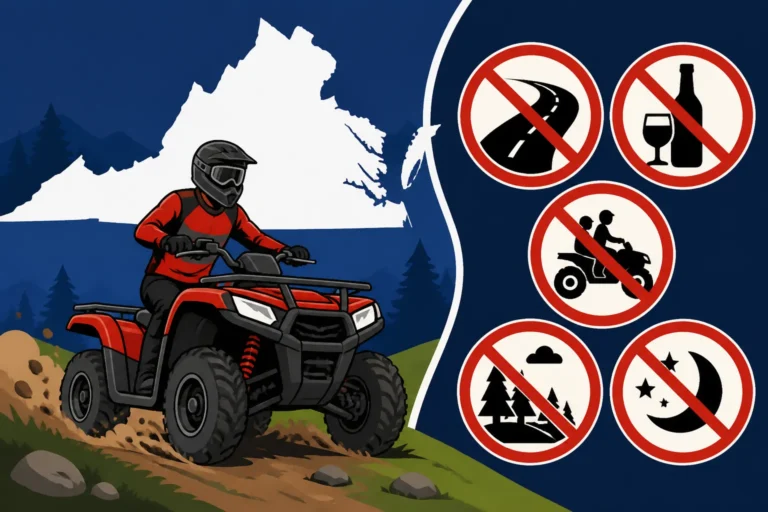
Let's be direct: in Virginia, it is generally illegal to operate a side-by-side on any public highway or street. This includes paved roads, gravel roads maintained by the state or county, and even the shoulders of these roads. The law, Virginia Code § 46.2-915.1, explicitly states that "No all-terrain vehicle or off-road motorcycle shall be operated on any public highway, or other public property, unless otherwise provided in this section." This is the foundational rule every side-by-side owner in Virginia must know.
The reasoning behind this ban primarily revolves around safety. Side-by-sides, by design, are built for off-road terrain, not for interacting with highway traffic. Their suspension, braking, and steering systems are optimized for uneven ground, not high-speed pavement. They often lack the mandated lights, signals, mirrors, and safety glass of street-legal vehicles. Attempting to drive them on public roads exposes both the operator and other motorists to significant risk. Understanding [Virginia Bans ATVs on Public Highways] is critical to avoiding fines and potential accidents.
Specific Exceptions: Farm, Emergency, and Limited Road Access
While the general ban is strict, Virginia law does provide a few very specific, narrowly defined exceptions where a side-by-side might legally touch a public road. It’s crucial to understand these nuances, as they are not blanket permissions.
- Agricultural or Utility Purposes: If you're using your side-by-side for genuine agricultural or utility purposes on land owned or leased by you, you might be able to cross a public highway by the most direct route to get from one part of your property to another. This exception is primarily for farmers or landowners needing to move equipment between fields. It is not for joyriding or going to town. The machine must be directly involved in the farm or utility operation. [Virginia Farming and Household Exceptions] clarifies this further, often requiring the machine to be equipped with a slow-moving vehicle sign.
- Emergency Personnel: Law enforcement, fire, and emergency medical services personnel can operate ATVs and side-by-sides on public highways when performing official duties during an emergency or in training for such duties. This exception is strictly for professional emergency response and doesn't apply to private citizens.
- Crossing the Road: In some limited scenarios, you might be allowed to cross a public highway, but only by the most direct route, not travel along it. This typically applies when a trail crosses a road, and even then, there might be specific local ordinances or trail rules that govern such crossings. This is often misunderstood, with riders believing a brief jaunt down the road is permissible. It is not. [Virginia Crossings by the Most Direct Route] is a good resource here.
- Specific Designations: Very rarely, a specific locality might have an ordinance allowing limited use, but these are exceptions to the rule and must be explicitly stated. It's never safe to assume.
These exceptions are interpreted very strictly by law enforcement. Just because you have a shovel in the back of your SuperATV utility vehicle doesn't automatically qualify it as an "agricultural or utility purpose" if you're not actively engaged in such work on your own property. It's always best to err on the side of caution.
Special Rules for Buchanan and Tazewell Counties
There's a unique situation in Virginia's coalfield region that often sparks confusion and gives false hope to riders outside these areas. Buchanan and Tazewell Counties have been granted special permission by the General Assembly to designate certain unpaved roads and specific sections of paved primary and secondary highways as open for ATV and side-by-side use. This is a significant exception to the statewide ban and is intended to support the region's burgeoning off-road tourism industry, particularly related to the Spearhead Trails system.
Within these designated areas, typically posted with clear signage, side-by-side drivers can legally operate their machines under specific conditions. These conditions often include:
- Daylight Hours Only: Riding is usually restricted to between sunrise and sunset.
- Speed Limits: There are often specific speed limits, such as 25 mph, that must be observed.
- Helmet and Eye Protection: Even within these designated areas, helmets are generally required for all operators and passengers. [Virginia Helmet Law Applies to Every Rider].
- Designated Routes Only: You must stay on the explicitly marked routes. Veering off onto undesignated public roads is still illegal.
- No Alcohol: Operating under the influence is strictly prohibited, just as with any motor vehicle.
It's vital to stress that these specific rules apply only within the clearly marked sections of Buchanan and Tazewell counties. If you're riding in Chesterfield, Rockingham, or even a neighboring county like Russell, these exceptions do not apply to you. Always confirm the specific, current regulations for these areas before you ride, as they can change. For more details on this unique arrangement, refer to [Virginia Buchanan and Tazewell County Road Access].
| Location | General Road Rule | Specific Exceptions | Notes for Side-by-Side |
|---|---|---|---|
| Most VA Counties | Banned on public roads | Farm/Utility crossings, Emergency | No street-legal path for UTVs. |
| Buchanan County | Specific designated routes | Day use, speed limits, helmet law | Part of Spearhead Trails access. |
| Tazewell County | Specific designated routes | Day use, speed limits, helmet law | Part of Spearhead Trails access. |
| Private Property | Generally allowed | Landowner consent, local noise | Ideal for most side-by-side riding. |
Essential Gear and Rules for Any Virginia Side-by-Side Journey
Whether you're sticking to the trails, using your side-by-side on your farm, or riding in one of the approved coalfield counties, there are universal rules and essential gear that every driver and passenger needs to be aware of. Safety is paramount, and ignoring these guidelines can lead to serious injury or legal trouble.
Mandatory Protective Gear for Drivers and Passengers
Virginia takes rider safety seriously, especially when it comes to head protection. For any ATV or utility vehicle, including side-by-sides, operated anywhere in the state, the law requires certain protective gear. This isn't just a suggestion; it's a legal mandate designed to prevent severe injuries.
- Helmets: Every person operating or riding as a passenger on a side-by-side in Virginia must wear an approved helmet. This applies to adults and children alike, regardless of whether you're on public land, designated trails, or even your own private property. The helmet must meet certain safety standards, such as those set by the Department of Transportation (DOT). Don't try to get by with a bicycle helmet; it won't offer the necessary protection and won't satisfy the legal requirement. [Virginia Helmet Law Applies to Every Rider] clearly outlines this rule.
- Eye Protection: Operators of ATVs and side-by-sides are also required to wear eye protection, such as goggles or a face shield. This is crucial for shielding your eyes from dust, debris, branches, and insects, which can impair vision and cause accidents. If your helmet has a full face shield, that counts as eye protection.
- Other Recommended Gear: While not legally mandated statewide, it's highly recommended to wear long sleeves, long pants, gloves, and over-the-ankle boots. This gear provides vital protection against abrasions, cuts, and impacts, whether you're taking a casual ride or tackling aggressive terrain. A quality set of riding gear can make a huge difference in comfort and safety, especially when you encounter branches or kick up rocks.
Even if you're just driving a short distance to check the mail on your private land, the helmet law still applies. It's better to be safe and compliant than to risk a fine or, worse, a head injury.
Operating Within Private Land and Designated Trails
Most side-by-side riding in Virginia happens on private land or within designated off-road trail systems. These are generally the safest and most legal places to enjoy your machine. However, even here, rules and etiquette are crucial.
- Private Land Consent: If you plan to ride on someone else's private property, you must have their express written consent. Trespassing with an ATV or side-by-side can lead to significant penalties, including fines and impoundment of your machine. A simple verbal "yeah, sure" might not hold up if there's a problem. A written note from the landowner specifying the dates and areas you're allowed to ride is always the best practice. This is covered in [Virginia Written Landowner Consent].
- Designated Trail Systems: Virginia is home to fantastic trail systems like the Spearhead Trails, which offer miles of diverse terrain for side-by-sides. When riding these trails, you'll need to purchase a permit and adhere to their specific rules, which cover everything from speed limits and hours of operation to age restrictions and required safety features like spark arresters and seatbelts. For example, some trails might require all riders to be over a certain age or might have specific rules for youth riders. [Virginia Trail Rules for Riders Under 18] and [Virginia Manufacturer Age Rules on Trail] are important resources for families. Brands like SuperATV offer a range of accessories like winches, skid plates, and suspension upgrades that can enhance your experience on these rugged trails.
- Respecting the Environment: Always stay on marked trails, avoid riding in sensitive ecological areas, and pack out everything you pack in. Leaving a clean trail helps ensure these riding areas remain open for everyone to enjoy for years to come. Noise limits can also be a factor, particularly in federal forest areas.
What to Expect from Law Enforcement
If you're stopped by law enforcement while operating a side-by-side, whether on a public road or a designated trail, remaining calm and cooperative is essential. Officers are enforcing laws designed for public safety.
- Proof of Ownership/Permit: Be prepared to show proof of ownership (like your title or bill of sale) and, if you're on a designated trail system, your valid riding permit. Officers might also ask for photo identification to verify you are the permitted operator.
- Compliance Checks: They will likely check for compliance with Virginia's helmet and eye protection laws, as well as ensure any passengers meet age and safety requirements. If you're in one of the specific coalfield counties, they'll verify you're on a designated route and adhering to speed limits and daylight hours.
- Penalties: Operating a side-by-side illegally on Virginia's public roads can result in significant civil penalties, often up to $500, plus court costs. Repeated offenses or serious infractions could lead to impoundment of your machine. Unlike some other states, Virginia's ATV and UTV violations are generally civil, not criminal, but they can still be costly and inconvenient. [Virginia Penalties for Illegal Riding] details these consequences.
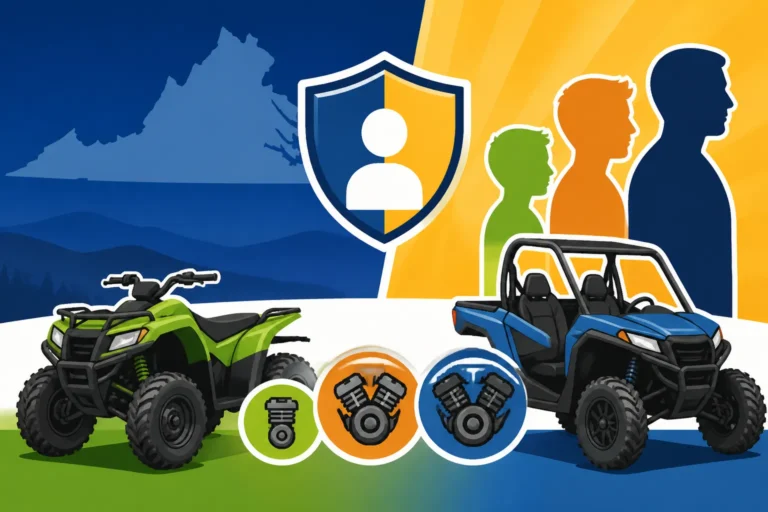
- No License Required (But Age Rules Apply): While Virginia does not require a driver's license to operate a side-by-side off-road or in approved trail areas, age restrictions based on engine size still apply. For example, riders under 16 have limits on the size of the machine they can operate, and there are no "supervised" exceptions to these engine size rules. Even if you're an adult with a driver's license, if you're caught operating a side-by-side illegally on a public highway, you're still in violation of the law. [Virginia Age Limits by Engine Size] is crucial reading for families.
Knowing these rules and always being prepared will not only help you avoid legal issues but will also contribute to a safer and more enjoyable riding experience for everyone in the Old Dominion.
Disclaimer
This article is for general informational purposes only and does not constitute professional advice. Laws, prices and regulations vary by location and change over time. Consult a qualified professional for guidance on your specific situation.