Public Highways and Public Property Are Both Off Limits
It’s a common scenario across Virginia: you’ve got your ATV or UTV, the sun is shining, and you just want to get out and ride. But the open road, or that inviting patch of public land you’ve driven past countless times, often presents a confusing legal minefield. Many riders mistakenly assume that because they own the machine, they can take it almost anywhere. The truth, however, is far more nuanced, and misunderstanding Virginia’s laws regarding public highways and public property can lead to hefty fines, impoundment, and a whole lot of frustration. This guide is here to clear up that confusion, explaining in plain language why public roads and general public lands are largely off-limits for your off-road machine in Virginia, and where you can legally and safely enjoy your ride.
Understanding Virginia's Core ATV & UTV Road Laws
Let's get straight to the heart of the matter. Virginia's legal framework for ATVs and UTVs is designed to keep these machines off standard public roads and general public property. It's not always intuitive, especially if you're used to seeing certain vehicles on roads in other states, but the reasons are rooted in safety, design, and land management.
The Blanket Ban: Why Public Highways are Generally Off-Limits
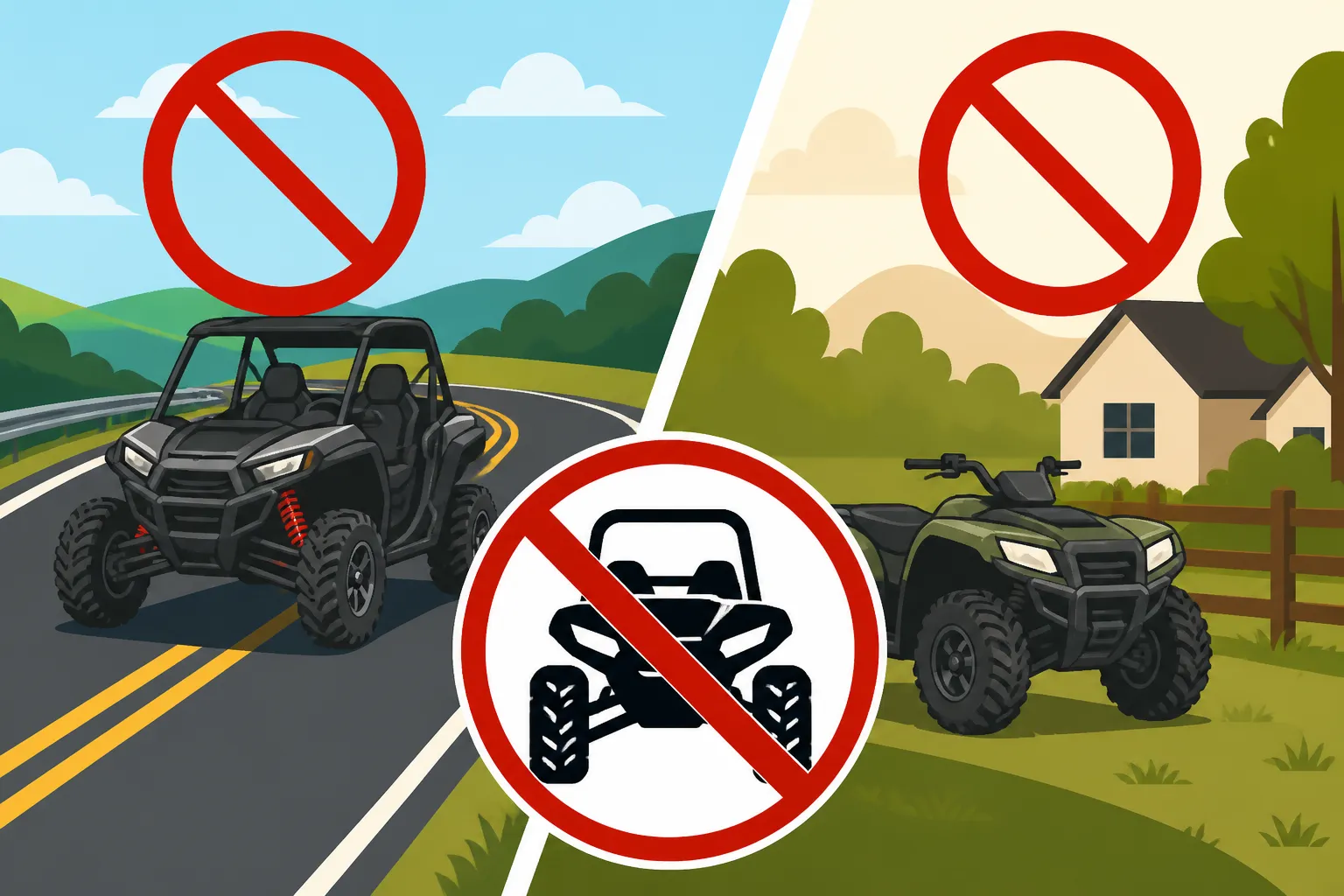
The most fundamental rule for ATV and UTV owners in Virginia is this: these machines are generally prohibited from operating on public highways. This isn't just a suggestion; it's enshrined in state code, specifically Virginia Code § 46.2-915.1. This statute clearly defines ATVs and utility vehicles and then explicitly states that they are not to be operated on any public highway, or other public property, with very limited exceptions.
The core of this prohibition lies in the legal definition of what constitutes a "motor vehicle" for highway use. While your ATV or UTV is a motor vehicle in a broad sense, it's not equipped with the safety features, lighting, braking systems, or emissions controls required for street-legal operation alongside cars and trucks. Imagine taking your quad, designed for dirt, mud, and uneven terrain, onto an interstate highway. It lacks turn signals, rearview mirrors, a proper headlight beam for road use, and often, the stability at higher speeds required for traffic. It's a recipe for disaster, not just for the rider but for other motorists. This distinction, why a "motor vehicle" for off-road use is distinct from one for on-road use, is crucial to understanding the law. This is why [Virginia Bans ATVs on Public Highways].
Many riders feel this is unfair, especially when their machines are capable of speeds equal to or greater than cars on certain roads. But the law looks at the design intent of the vehicle. A [Why Your Side-by-Side Counts as an ATV] for legal purposes, even if it has a steering wheel and seatbelts, is still built for off-road conditions, not the rigors of highway traffic. The danger isn't just speed, but also visibility, the lack of crumple zones, and the inherent instability of many ATVs on paved surfaces at speed.
The "Public Property" Restriction: Beyond Just Roads
The law extends beyond just paved highways to encompass "other public property." This broader category can be even more confusing for riders. What exactly does this mean? It includes publicly owned land that isn't specifically designated and managed for off-road vehicle use. This can range from state park property (where [Virginia State Parks Ban ATVs] unless it's a designated trail system) to municipal parks, school grounds, government-owned easements, or even open fields owned by the state or a local county.
The rationale here is multifaceted. First, there's the environmental impact. Undesignated riding can lead to erosion, damage sensitive ecosystems, and spread invasive species. Second, there's the noise factor. ATVs and UTVs can be loud, disturbing the peace in public spaces meant for quieter recreation or residential areas. Third, and critically, is safety for other users. Public parks are often used by pedestrians, cyclists, children playing, or people simply enjoying nature. An ATV or UTV operating in these spaces creates a significant collision risk.
For example, you might see an open field owned by the county near your home and think it's a perfect place for a quick ride. However, without specific designation or explicit permission, that field falls under "other public property" and riding there is likely illegal. Similarly, utility easements that cross public land are not fair game. Even if a utility company doesn't mind you riding on their part of the easement, if that easement crosses public property, the underlying public property rules apply. This is why Public Highways and Public Property Are Both Off Limits in Virginia for most ATV and UTV use.
Navigating the Limited Exceptions and Designated Riding Areas
While the general rule is clear – no public highways, no general public property – Virginia does carve out very specific, limited exceptions and, crucially, provides designated areas where you can ride legally and safely. It's vital to understand the difference between these exceptions and thinking you have a free pass to ride anywhere.
The Critical Exceptions for Road Use
Virginia's law isn't an absolute, blanket ban without any wiggle room. There are a few, very narrowly defined circumstances where an ATV or UTV may legally operate on a public highway or property. However, these are exceptions that come with strict conditions:
- Direct Crossings: You can cross a public highway by the most direct route possible to get from one parcel of private property to another, or to access a designated riding area. This isn't an excuse to ride along the highway. It means stopping, looking both ways, and crossing straight over to the other side. This is explained in more detail under [Virginia Crossings by the Most Direct Route].
- Agricultural or Utility Use: If you're actively engaged in farming, ranching, or performing a specific utility task (like surveying or maintaining power lines) and you need to use an ATV or UTV on a public highway or property for that purpose, there are provisions. This doesn't mean joyriding on a tractor with a utility vehicle attached; it means performing necessary work directly related to your operation. [Virginia Farming and Household Exceptions] clarifies this.
- Emergency Services: Police, fire, and rescue personnel may use ATVs and UTVs on public highways or property when responding to an emergency or during official duties. These are highly specific use cases for trained professionals, and do not apply to the general public. [Virginia Emergency Responder Exceptions] discusses this.
- Designated Coalfield Roads: This is perhaps the most significant exception for recreational riders. Virginia Code § 46.2-915.1 (the same one that bans ATVs from roads) includes a subsection that allows the Boards of Supervisors in Buchanan and Tazewell counties to designate specific county roads for ATV and UTV use. These routes are typically gravel or unpaved, within designated trail systems, and come with strict rules, including a 25 mph speed limit and daylight-only operation. This provision exists because these areas have a strong history and culture of off-road riding, often connecting communities to designated trailheads. You can learn more about [Virginia Buchanan and Tazewell County Road Access] and the [Virginia's 25 mph Coalfield Road Limit]. Always confirm that the road you plan to ride has been officially designated and posted with appropriate signage. Don't assume.
It’s crucial to understand that these are not invitations to casually ride on any road. They are narrow, conditional allowances. For example, [Virginia's 1-Mile Road Limit] is an allowance within designated coalfield areas, connecting segments of a trail system, not a general allowance for a mile of road riding anywhere.
Where You Can Legally Ride: Designated Off-Road Trails
If you want to enjoy your ATV or UTV legally in Virginia, your primary focus should be on designated off-road trail systems. These are areas specifically designed, managed, and permitted for ATV and UTV use. Virginia is home to some fantastic options:
- Spearhead Trails: This is a major network in Southwest Virginia, managed by the Southwest Virginia Cultural Heritage Foundation. It includes systems like Coal Canyon, Mountain View, Original Pocahontas, Jawbone, Ridgeview, and Stone Mountain. These trails are specifically designed for off-road vehicles and require a permit to ride. You can find more information about [Virginia Spearhead Trail Permits] and the various systems like [Coal Canyon Trail System in Virginia] and [Mountain View Trail System in Virginia]. These systems often feature trail towns where you can find services, accommodations, and a welcoming atmosphere for riders. Many riders enhance their experience with aftermarket parts from companies like SuperATV, ensuring their machines are ready for the varied terrain found on these trails, from rocky climbs to muddy creek beds.
- National Forest OHV Trails: The George Washington and Jefferson National Forests also offer designated OHV trails, such as the [Peters Mill Run OHV Trails in Virginia] and Taskers Gap in the northern part of the state. These trails also require a permit, typically purchased from the National Forest Service, and have specific rules regarding machine width, spark arresters, and seasonal closures. [Virginia National Forest OHV Permits] are essential here.
These designated systems are managed environments with rules designed to ensure safety, minimize environmental impact, and provide a consistent riding experience. They are patrolled by trail rangers who check for permits and adherence to rules. This is where you can truly let your machine stretch its legs without the worry of breaking the law. Remember, these areas are the solution for legal riding, not general public land. [Virginia ATV Trails: Spearhead and the Forest] are your go-to destinations.
Consequences and Best Practices for Virginia Riders
Ignoring Virginia's ATV and UTV laws regarding public roads and property can lead to significant and costly repercussions. It’s not just a minor infraction; the state takes these regulations seriously for public safety and environmental protection. Understanding the potential penalties and adopting best practices will help you avoid trouble and ensure a more enjoyable riding experience.
The High Cost of Illegal Riding
Riding an ATV or UTV on a public highway or undesignated public property in Virginia isn't just frowned upon; it carries specific civil penalties. Virginia Code § 46.2-915.1 states that any violation of its provisions constitutes a civil penalty of up to $500. This isn't a minor traffic ticket; it's a substantial fine that can quickly turn a fun outing into a very expensive lesson. Imagine getting caught riding your side-by-side down a county road for a "quick spin"—that $500 penalty could be levied per offense, meaning repeated violations could compound. This is the sting described in [Virginia's Civil Penalty for Illegal Riding].
Beyond the fine, there's the very real risk of your machine being impounded. Many cities and counties have ordinances that allow for the seizure and impoundment of ATVs and UTVs ridden illegally on public property or roads. [Cities Can Impound an ATV Ridden on a Sidewalk], for instance, highlights how local governments can take action. Getting an impounded machine back involves not only paying the initial civil penalty but also impoundment fees, storage fees, and potentially administrative costs, which can quickly add up to hundreds or even thousands of dollars. It can be a bureaucratic nightmare just to retrieve your own property.
Furthermore, if you are riding on private land without explicit, written permission, you could face trespassing charges. Even if the land appears abandoned or undeveloped, it belongs to someone. Trespassing can lead to criminal charges, additional fines, and a permanent mark on your record. This is a common pitfall for riders who don't understand [Virginia Rules Riders Get Wrong], especially regarding private property. It's not worth the risk.
Ensuring a Legal and Enjoyable Riding Experience
To protect yourself, your machine, and your wallet, it’s essential to adopt best practices and prioritize legal riding.
- Always Get Written Permission: If you plan to ride on private land that isn't your own, always obtain [Written Consent From a Landowner]. A simple verbal agreement isn't enough; disputes can arise, and a written document protects both you and the landowner. Make sure the document specifies the dates, times, and areas where you are permitted to ride.
- Know Before You Go: Before you even load your machine onto your trailer, research your intended riding location. If it's a designated trail system like Spearhead Trails or a National Forest OHV area, ensure you have the correct permits and understand their specific rules, including age restrictions, helmet requirements (which apply to every rider in Virginia, as discussed in [Virginia ATV Helmet Law Explained]), and any equipment mandates like spark arresters.
- Carry Essential Documents: When riding, especially near roads or on public-access trails, always carry your permit, a copy of your machine's title or registration (if applicable), and any written landowner permission. This makes interactions with law enforcement or trail rangers much smoother. [Carrying Papers on a Coalfield Trail] emphasizes this.
- Equip Your Machine Wisely: While aftermarket parts from companies like SuperATV can significantly enhance your off-road experience—providing better protection, improved suspension, or added utility for trail maintenance—ensure any modifications comply with trail system rules. For instance, loud exhausts might be fine on your private property, but many designated trail systems have noise limits (e.g., 99 decibels at 20 feet for National Forest trails). Always ensure your machine has a functioning spark arrester, as this is a common requirement to prevent wildfires.
- Join a Riding Club: Local ATV and UTV clubs are invaluable resources. Members often have extensive knowledge of local laws, designated riding areas, and planned group rides. They can help you navigate the nuances of Virginia's regulations and connect you with legal and fun riding opportunities. These groups are often involved in trail maintenance and advocacy, contributing positively to the riding community.
- Respect the Land and Other Users: Even on designated trails, practicing good trail etiquette is crucial. Stay on marked trails, pack out what you pack in, and be courteous to other riders, hikers, or campers you may encounter. This ensures the continued access and positive perception of off-road enthusiasts.
By understanding where you absolutely cannot ride and embracing the fantastic opportunities available on Virginia's designated trail systems, you can avoid legal troubles and fully enjoy the thrill of ATV and UTV riding in the Commonwealth.
| Scenario | Legal Status in Virginia (Generally) | Key Conditions/Considerations |
|---|---|---|
| Riding on a paved state highway | Illegal | Designed for off-road use; not street legal. Civil penalty up to $500. |
| Riding on a county road (not Buchanan/Tazewell) | Illegal | Same as state highways. |
| Riding on a designated coalfield road (Buchanan/Tazewell) | Legal (Conditional) | Must be officially designated by Board of Supervisors, 25 mph limit, daylight only, specific routes. |
| Crossing a public highway | Legal (Conditional) | Most direct route only, to access private land or a legal trail. Not for riding along the highway. |
| Riding in a city park or school grounds | Illegal | Falls under "other public property." Risk of impoundment. |
| Riding on private land you own | Legal | Your property, your rules. Still subject to helmet laws if on an ATV (every rider in Virginia). |
| Riding on private land you don't own | Legal (Conditional) | Requires explicit [Written Consent From a Landowner]. Without it, it's trespassing. |
| Riding on Spearhead Trails (e.g., Coal Canyon) | Legal (Conditional) | Requires a valid Virginia Spearhead Trail Permit. Adhere to system-specific rules. |
| Riding on National Forest OHV Trails (e.g., Peters Mill Run) | Legal (Conditional) | Requires a valid [Virginia National Forest OHV Permits]. Adhere to Forest Service rules, seasonal closures, width limits. |
| Riding in a Virginia State Park | Illegal (Generally) | [Virginia State Parks Ban ATVs] unless a specific, rare, designated OHV trail exists (uncommon). |
| Agricultural use on a road | Legal (Conditional) | Direct use for farming/ranching purposes. Not for recreational riding. [Virginia Farming and Household Exceptions]. |
Disclaimer
This article is for general informational purposes only and does not constitute professional advice. Laws, prices and regulations vary by location and change over time. Consult a qualified professional for guidance on your specific situation.