Virginia Visitors From Tennessee
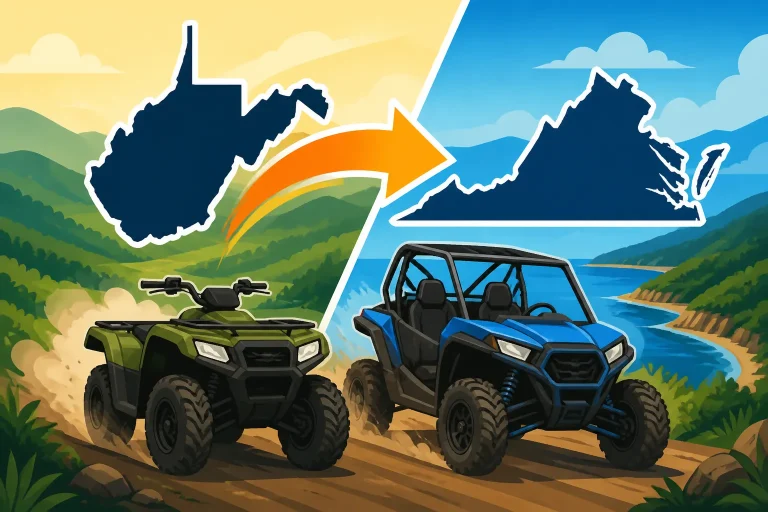
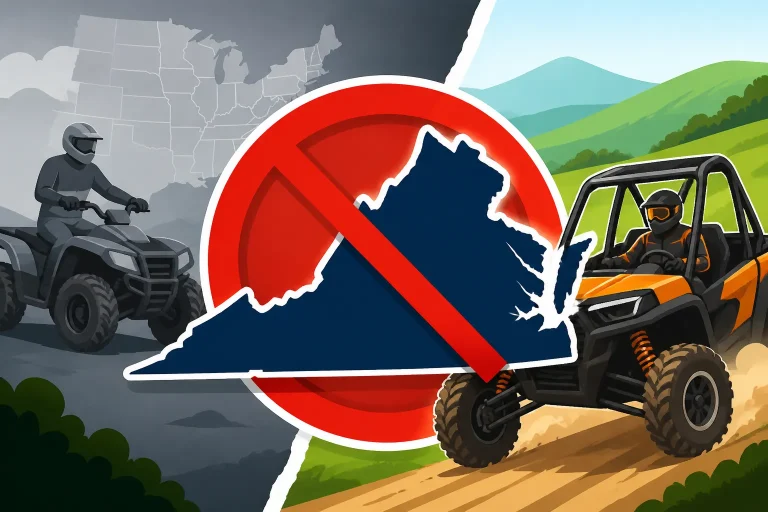
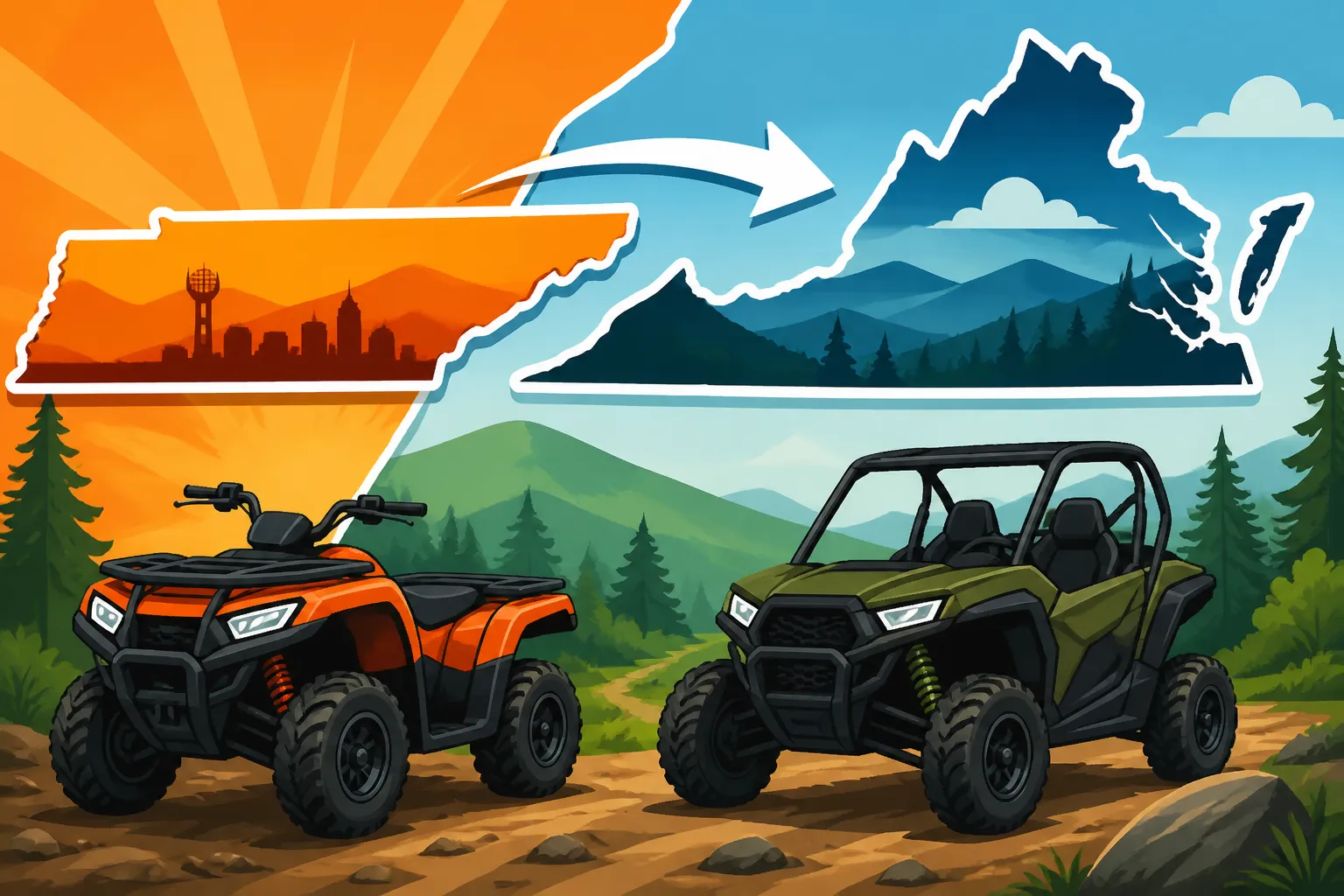
Bringing an ATV or UTV from Tennessee to ride in Virginia does not make your home-state registration or riding permissions valid everywhere here. The key is to identify the exact riding area, get its required permit, and follow Virginia rules while you are on Virginia land. Here’s how to sort out trail access, permits, paperwork, and the checks worth doing before you haul.
Does a Tennessee Permit Work on Virginia Trails?
Usually, you should not expect a Tennessee permit, registration, or trail pass to replace a Virginia riding-area permit. Virginia does not offer general permit reciprocity for visiting riders. A pass issued for one state or trail network does not automatically grant access to a different network across the state line. See Virginia Has No Permit Reciprocity.
That does not mean your Tennessee machine is automatically barred from Virginia trails. It means you need to meet the requirements of the particular place where you plan to ride. Virginia has several kinds of riding areas, and the rules are not interchangeable:
| Where you plan to ride | What to check before leaving Tennessee |
|---|---|
| Spearhead trail system | Whether your machine is eligible, which permit you need, and how to display or show it |
| National Forest OHV area | Whether the route is open to your machine, which forest permit applies, and what equipment rules are in effect |
| Private riding park | The park’s own pass, waiver, age, equipment, and operating rules |
| Public road or roadside | Whether that specific road or route is legally open to ATVs or UTVs |
| Private land | Permission from the landowner and any limits on where you may ride |
For a Spearhead trip, review Virginia Spearhead Trail Permits. For national forest riding, start with Virginia National Forest OHV Permits. A permit for one of these places should not be assumed to work at the other. Even a pass that covers a particular trail network does not make a nearby road or another riding property open to you.
Your Tennessee paperwork may still matter for your own records, transport, or an interaction with an officer, but it does not waive Virginia access rules. Likewise, a Virginia trail permit is not a general permission slip to ride on roads, land, or trail systems that the permit does not cover.
The practical rule is simple: decide where you are riding first, then check that location’s requirements directly. Confirm that the route is open to your machine type, that your permit covers the location and dates, and that no temporary closure or seasonal restriction changes the plan. If you are combining multiple areas in one trip, check each one separately.
What Rules Apply Once You Cross Into Virginia?
When you ride in Virginia, plan around Virginia law and the rules of the land manager or riding area. Your home state’s rules do not control how you operate a machine on Virginia roads or trails. This is particularly important for visitors who are used to riding on roads or paths that may have different access rules back home.
Virginia generally restricts ATVs from public highways, and a trail permit does not make an otherwise closed road legal. There may be narrow exceptions or specifically designated routes, but riders should not infer that a gravel road, forest road, or road connecting two trails is open simply because it looks suitable for an ATV. Check the rules for the exact road and riding area. For a broader overview, see Virginia Rules for a Visiting Tennessee Rider.
On private land, get permission from the owner before riding. Do not treat a gate left open, an old tire track, or a trail map as proof that the land is available for public use. A landowner may set conditions on access, and permission to cross one parcel does not necessarily extend to the land beyond it.
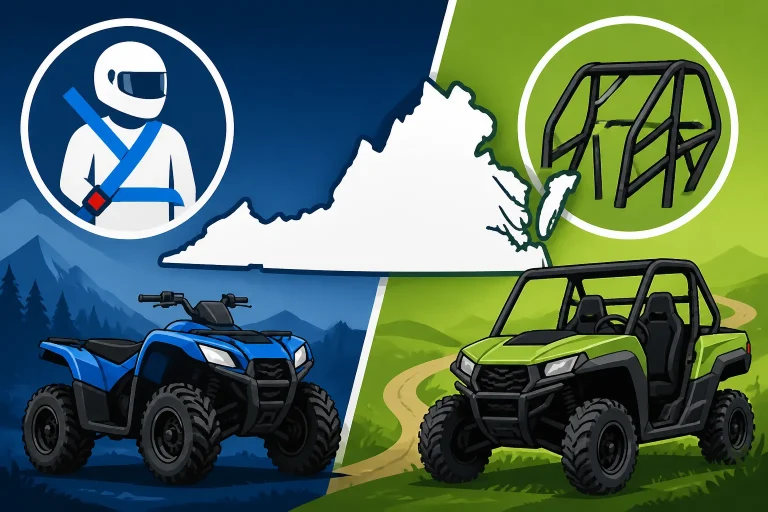
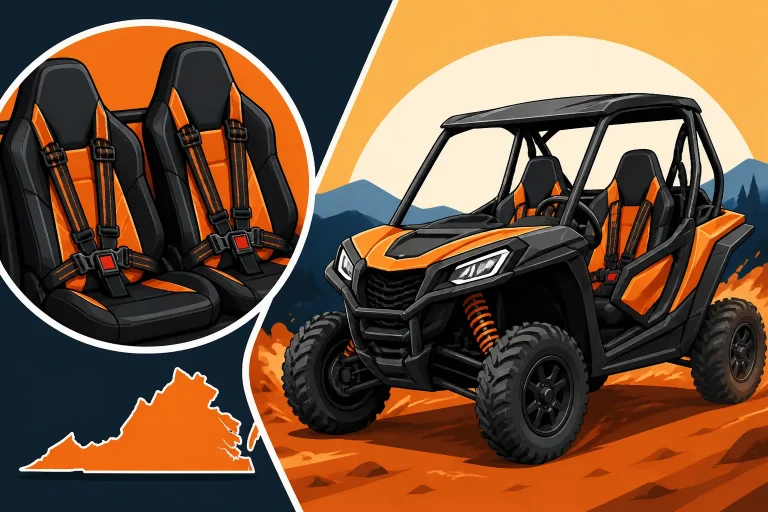
Trail-specific requirements also matter. A riding area may set its own speed, operating-hour, machine-width, age, or equipment limits. Those rules can differ between systems, even within the same region. For example, a trail network may have rules about permits, identification, passenger seating, helmets, eye protection, seatbelts, roll cages, or the minimum age recommended by the machine manufacturer. Review Virginia Helmet and Eye Protection Rules on Trail and Virginia Trail Rules for Riders Under 18 if children or teens are riding with you.
A UTV and a small ATV may not be treated the same by a trail operator. A width restriction, seating requirement, or vehicle-eligibility rule could affect a UTV even if smaller machines are allowed. Before driving a long distance, confirm that the specific machine is permitted on the intended system. Include the make and model, seating configuration, and width if the operator asks for them.
Also check whether the rules change after dark, during hunting seasons, or after severe weather. An area may close trails temporarily or restrict access to protect the route. The current status matters more than an old map, social post, or report from a previous visit. Use Virginia Trail Closures and Seasons as a reminder to check conditions shortly before departure.
Plan Permits and Documents Before You Haul
Start by choosing the exact trail system or park. Then confirm its current permit process and required documents. Some systems use a digital permit, while other land managers or private parks may have different procedures. Do not assume that a Tennessee sticker, registration card, or trail pass will substitute for the required Virginia permit.
For each riding area, make sure you know:
- Which permit or pass is needed for your machine and intended dates.
- Whether the permit covers the whole system or only a particular area.
- Whether the permit is digital, printed, or otherwise required to be available during the ride.
- Whether the operator checks permits against identification.
- Whether a driver’s license, proof of ownership, or other document is required.
- Whether children need separate permits or must ride with an accompanying adult.
- Whether refunds, transfers, or changes are allowed if your plans shift.
The details can vary by location and may change, so check with the trail operator or land manager before you set out. If you expect little or no cell service, save the confirmation and any instructions in a way you can access offline. Do not rely on being able to open an email or purchase a pass at the trailhead.
Carry enough information to identify your machine and show that you are entitled to use it. A title or registration document may help establish ownership, but it does not itself grant permission to ride a particular trail. Requirements vary, so check what the riding area actually asks visitors to carry. See Virginia Proof of Ownership on the Trail for more on this distinction.
Keep your permit information separate from documents needed to tow the machine. A trailer’s registration and road requirements are different from trail access for the ATV or UTV. If a group is travelling together, make sure each rider or machine that needs its own permit has the required confirmation. One person’s pass should not be treated as covering everyone unless the provider explicitly says so.
A final call or online check shortly before departure can prevent a wasted trip. Ask about closures, weather-related access, parking, staging, and whether the trail is suitable for your machine. If the office is closed, look for the operator’s current official notices rather than relying only on older third-party information.
A Pre-Trip Checklist for Tennessee Riders
Use this checklist before loading up. It helps separate three things that are easy to confuse: permission to own or transport a machine, permission to access a particular property, and permission to operate on a particular route.
- Choose a specific destination. Identify the trail system or park, not just the general area. Check whether the machine you plan to bring is allowed there.
- Confirm the Virginia permit. Find out whether the area requires a pass and how it must be obtained or shown. Do not assume your Tennessee permit transfers.
- Check the route and access rules. Confirm that your planned trails and connecting roads are open to ATVs or UTVs. A legal trail does not make every nearby road legal.
- Review the rules for everyone riding. Check age requirements, supervision rules, helmet and eye protection requirements, passenger seating, and any machine-specific conditions.
- Gather documents and confirmations. Bring the permit information and whatever identification or machine documents the operator requires. Save essential information offline if service may be unreliable.
- Check conditions again before departure. Look for closures, weather restrictions, construction, or changes to the permit process.
- Have a backup plan. If a trail is closed or your machine is not eligible, do not improvise by riding onto nearby land or roads. Choose another confirmed legal riding area.
If your trip includes a private park, its rules apply in addition to any state or land-manager requirements. A park may require its own waiver or have separate minimum-age and equipment policies. Check Virginia Private Park Waivers and Rules before arriving, especially when travelling with younger riders.
The safest planning assumption for a Tennessee visitor is that Virginia access must be confirmed locally. A valid home-state document may help identify your machine, but it is not a substitute for the Virginia trail permit, landowner consent, or route authorization that applies to your destination. When the rules are unclear, ask the trail operator or relevant land manager before you ride.
Disclaimer
This article is for general informational purposes only and does not constitute professional advice. Laws, prices and regulations vary by location and change over time. Consult a qualified professional for guidance on your specific situation.