Virginia Helmet and Eye Protection Rules on Trail
Virginia Helmet and Eye Protection Rules on Trail
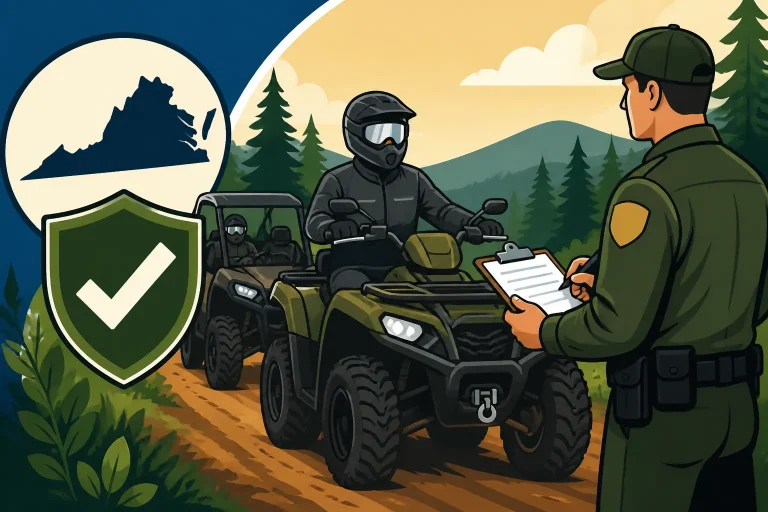
Helmet and eye-protection rules can be confusing because Virginia law, trail-system conditions and private-park policies may overlap. A rule that applies on one riding network may not apply in the same way on another. Here’s how to separate the statewide helmet requirement from trail-specific eyewear rules, choose practical gear and check what visiting riders need before unloading.
What Virginia Requires for ATV and UTV Riders
For ATV riding, Virginia requires riders to wear a protective helmet. The practical takeaway is simple: plan to wear one every time you ride, including on private property or an off-road trail. Don’t treat a short ride, a familiar trail or adult age as a reason to leave the helmet behind. The details of the state requirement and acceptable helmets are covered in Virginia Helmet Law Applies to Every Rider and Which Helmets the State Police Approve for Riders.
A helmet requirement is not the same as a requirement to register the machine, carry a particular permit or wear a specific color of riding gear. Those are separate questions. A trail permit does not replace a helmet, and a compliant helmet does not give you permission to ride somewhere that is closed or restricted.
Helmet rules and eye protection are not necessarily the same rule
The statewide helmet requirement and a trail system’s eye-protection policy should be considered separately. A trail operator may require eye protection as a condition of riding even when a rider is not sure whether a statewide law addresses eyewear in the same way. Private parks may set their own entry conditions, too.
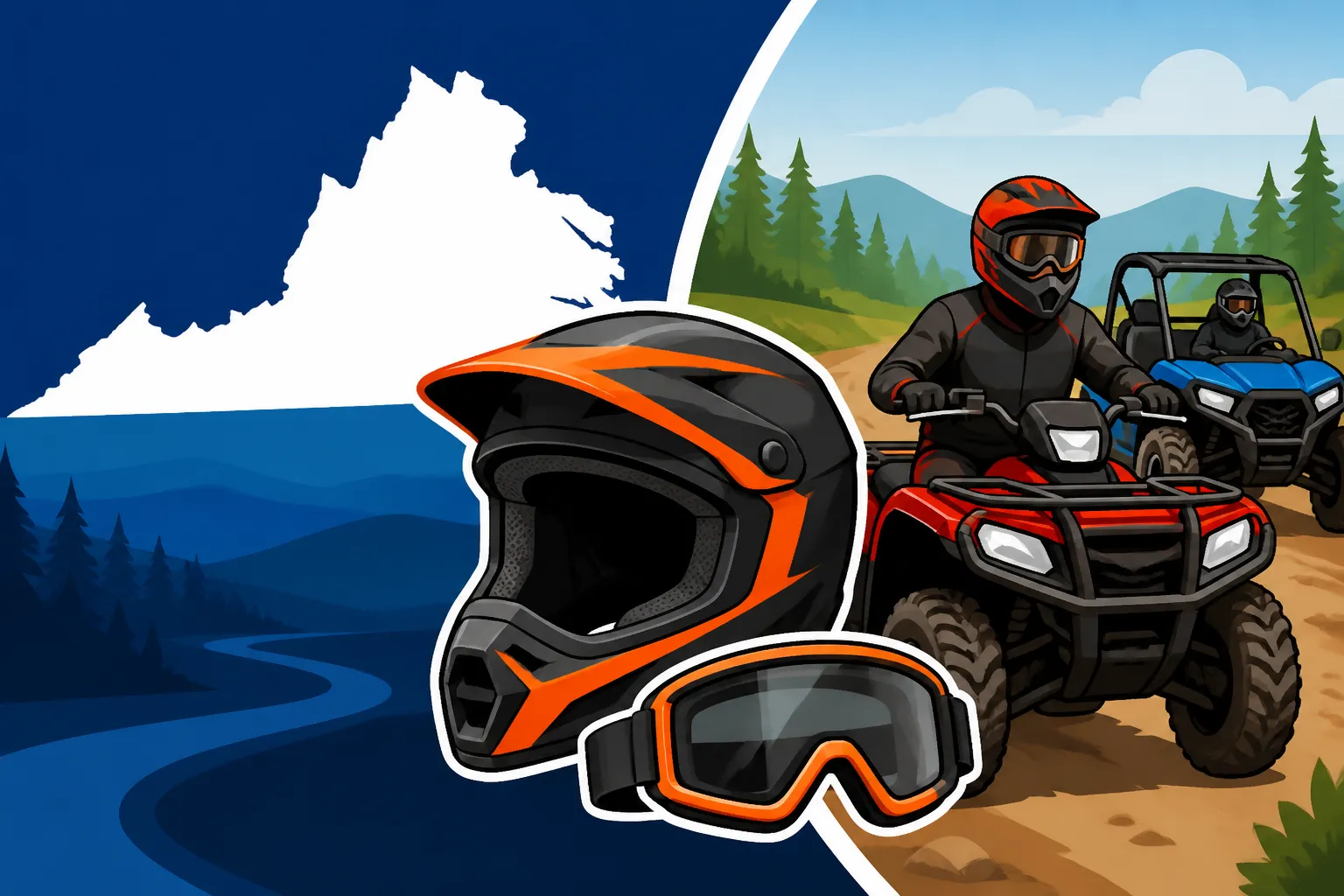
For planning, wear both a helmet and eye protection. Then check the specific trail’s current rules rather than assuming that eye protection is either required everywhere or optional everywhere. If a posted rule or permit condition says eye protection is required, follow it even if another riding area you use does not have the same condition.
Eye protection matters beyond compliance. Dust, gravel, insects, branches and rain can reach a rider’s eyes quickly, especially when another machine is ahead. A visor can help, but it may not be a substitute for goggles if the trail rules call for goggles or another specified form of eye protection.
ATV and UTV equipment can be treated differently
An ATV rider generally sits astride an open machine, while a UTV has a steering wheel, seats and a protective structure such as a roll cage. That difference can affect what gear is suitable and what a particular trail system requires. Do not assume that a rule written for ATV riders automatically answers every question about a UTV driver or passenger.
For example, a trail may require an ATV rider to wear a helmet and eye protection, while its UTV rules may also address seatbelts, doors, a factory cage or other occupant-protection equipment. A windshield does not automatically mean that a UTV occupant can skip goggles; the trail operator’s written rules decide whether a windshield counts as adequate eye protection.
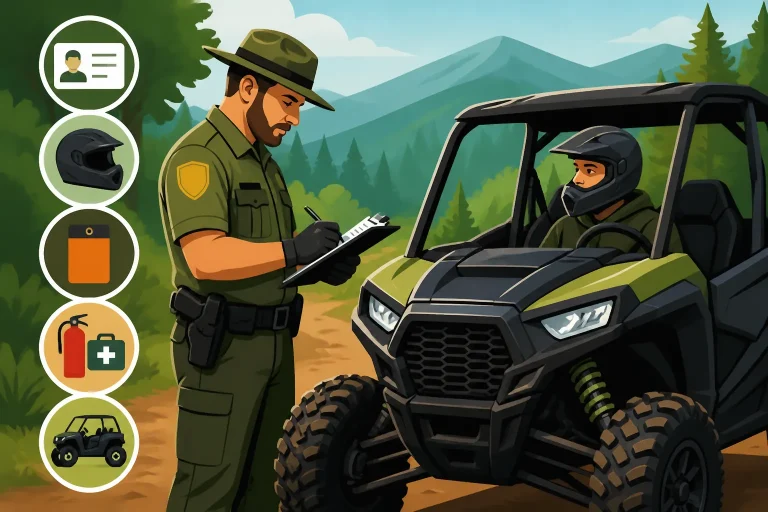
Before riding a UTV, check the rules for every seat and occupant, not just the driver. If the system requires helmets, belts or eye protection for passengers, those requirements apply to passengers as well. For riders under 18, review Virginia Trail Rules for Riders Under 18 and the trail operator’s own age and supervision rules.
| Situation | What to plan for | What to confirm |
|---|---|---|
| ATV ride in Virginia | Wear a protective helmet; use eye protection | Helmet standard and any trail-specific eyewear requirements |
| UTV ride | Bring helmets and suitable eye protection for occupants | Whether belts, doors, cage and passenger equipment meet system rules |
| Private riding park | Follow its posted protective-equipment rules | Whether it specifies goggles, a visor or another form of eye protection |
| Visit from another state | Bring gear that meets Virginia and trail-system rules | Whether your home-state permit or training credential is recognized |
| Youth rider | Bring required protective gear for the rider and any passenger | Age, supervision, machine-size and park-specific conditions |
Why Trail Systems Can Add Their Own Gear Rules
Virginia’s statewide rules are only one layer. Trail networks, parks and land managers can set additional conditions for using their property. Those conditions may cover eye protection, vehicle equipment, age limits, permitted machine types, operating hours and other safety matters. A rider needs to meet both the applicable state rules and the rules of the place where the ride is happening.
This distinction is especially important when a trail system issues its own permit. A permit is permission to use the system under its conditions; it is not a general waiver of Virginia law. Likewise, a helmet that meets the state requirement may still be insufficient if a trail operator has a more specific rule about helmet type or eye protection.
Check the actual riding area, not just a general description
A broad statement such as “helmets required” may not tell you whether the system also requires goggles, whether a UTV windshield is accepted, or whether every passenger must wear the same equipment. Look for the current rules from the trail operator or land manager, including any equipment section in the permit terms.
For a multi-system trip, check every system separately. A permit for one network may not cover another, and gear policies may differ. The same caution applies when a trail connects to a different property or crosses a public road. Once the ride enters another jurisdiction or land-management area, its rules may apply.
Permit requirements are also separate from protective gear. For background on buying the appropriate permit, see How to Buy a Virginia Trail Permit. Before leaving home, confirm whether the permit is valid for your intended trail system, how it is verified and what proof the operator expects riders to show. Virginia Permit Checks on the Trail explains why it is worth having that information accessible.
Private parks may set conditions beyond state law
A private park can make protective equipment part of its entry or riding conditions. It may require goggles even if a rider believes a face shield is enough, or it may specify requirements for UTV occupants. Parks can also have rules that are stricter than a rider’s usual local practice.
Read the park’s rider rules and waiver information before you travel. If the wording is unclear, ask the park directly whether it accepts a full-face visor, requires goggles, or has separate requirements for UTV passengers. Getting an answer before arrival is better than discovering at the gate that the gear in the truck does not meet the park’s conditions.
For state and public-land riding, identify the land manager and the specific trail network. A state law summary or an online discussion may not include a local restriction. Check for temporary closures and updated operating conditions as well as permanent equipment rules.
Treat posted instructions as part of the ride plan
Riders sometimes focus on permits and machine access while overlooking signs at the trailhead. Read the signs before unloading. They can identify a required helmet type, eye-protection condition, speed limit, restricted route or temporary closure.
If a sign appears to conflict with information you found elsewhere, don’t assume the less restrictive version applies. Ask the trail operator or land manager before riding. A permit or previous visit is not proof that the current conditions are unchanged.
Choosing a Helmet and Eye Protection That Work Together
A helmet needs to be both compliant and properly fitted. A helmet that is loose, damaged or worn incorrectly may provide poor protection even if it has the right certification marking. Check the manufacturer’s instructions and the state’s applicable standard, and replace gear that has been damaged in a crash or has deteriorated.
For the helmet standard recognized by Virginia, use the details in Which Helmets the State Police Approve for Riders. Check the label on the helmet itself rather than relying only on a product title or seller description. A label that is missing, unclear or inconsistent with the applicable standard is a reason to verify the model before riding.
Fit matters as much as the label
A well-fitting helmet should sit level and feel secure without painful pressure points. The retention strap should be fastened as directed by the manufacturer. If the helmet shifts substantially when you move your head, it may be too large or adjusted incorrectly.
When selecting a helmet, consider the riding position and conditions:
- A full-face helmet offers coverage around the jaw and face.
- An open-face helmet leaves more of the face exposed, making suitable eye protection especially important.
- A visor can reduce wind and debris, but may not satisfy a trail’s specific goggle rule.
- A helmet designed for another activity may not meet the required standard for ATV use.
For a youth rider, do not buy a larger helmet on the assumption that the rider will grow into it. An oversized helmet can move out of position. Recheck the fit as the child grows, and consult the manufacturer’s sizing guidance. Virginia’s rules for younger riders may also involve age and machine-size limits, so protective equipment is only one part of the check.
Pick eye protection for dust, impact and changing light
Use eye protection that stays in place and offers a clear, unobstructed view. Motocross-style goggles are a common choice because they can seal around the eyes and work with many helmets. A properly secured face shield may suit some rides, but check whether the relevant trail system accepts it in place of goggles.
Useful features include:
- A secure fit that does not leave large gaps around the eyes.
- A lens that remains clear and does not distort the view.
- Ventilation that helps limit fogging.
- A lens tint suited to the light conditions.
- Compatibility with the helmet and any prescription eyewear.
Dark lenses can be uncomfortable or unsafe when a ride continues into shaded forest, late afternoon or changing mountain weather. Carrying a clear lens or a second pair of goggles can make a long ride more manageable. Avoid riding with a scratched lens that makes rocks, ruts or branches difficult to see.
If you shop online, including on Amazon, check the product’s stated use and certification details carefully. Listing titles and photos are not a substitute for the manufacturer’s specifications or the helmet’s own label. For goggles, check that they fit the chosen helmet and that replacement lenses are available if you expect to ride in varied conditions.
Keep gear usable during the trip
A helmet and goggles that are packed but left in the truck do not protect the rider on the trail. Make gear part of the pre-ride routine, and keep a clean cloth or lens-cleaning method with the group. Wiping dust with a dry, gritty sleeve can scratch a lens and make visibility worse.
Carry a spare strap or other small replacement part when appropriate, but don’t improvise a repair that prevents a helmet or goggles from staying securely in place. If a helmet has taken a hard impact or has visible damage, follow its manufacturer’s replacement guidance. A cracked shell, broken retention system or damaged goggle strap is not a minor inconvenience on a remote ride.
What Visiting Riders Should Check Before Entering a Virginia Trail
A rider visiting from another state should not assume that a helmet rule, permit or safety credential from home automatically settles the Virginia requirements. The state and the trail operator can impose their own conditions. Bring gear that satisfies the rules of the Virginia riding area, and confirm whether any out-of-state permit or credential is accepted before traveling.
Virginia’s permit rules and another state’s systems do not necessarily match. A permit for a neighboring state’s trail network is not automatically permission to ride a Virginia network. Similarly, a helmet policy at a familiar riding area may not be the policy at the Virginia trailhead. For state-specific visitor information, see Virginia Rules for a Visiting West Virginia Rider or Virginia Rules for a Visiting Kentucky Rider, as applicable to your trip.
Use a pre-trip checklist
Before leaving, confirm these points for each planned riding area:
- Identify the specific trail network, park or land manager.
- Check its current permit and access requirements.
- Read its helmet and eye-protection rules for both ATV and UTV riders.
- Confirm requirements for every passenger, including children.
- Check whether the machine type and width are permitted on your intended routes.
- Make sure each rider has gear that fits and meets the applicable standard.
- Save or print the rules and permit confirmation in case mobile service is unreliable.
This check is particularly useful when your itinerary includes more than one riding area. A single helmet and goggle setup may work throughout the trip, but the system’s written requirements still need to be checked at each stop. If a passenger moves from an ATV to a UTV, or a child rides a different machine, review the requirements again.
Plan for conditions, not just the minimum
Even when a particular trail does not specify goggles, eye protection is sensible on an open machine. Mountain trails can involve dust, loose stones, low branches, wet leaves and sudden changes in light. A rider following another machine may get more debris than the lead rider. Having eyewear available for each person helps avoid an unnecessary stop or a rider continuing with irritated eyes.
A face shield can be useful in wind and light debris, but it can fog or collect mud. Goggles can offer a close fit, but lenses may need cleaning or changing. Choose a setup that works with the route, weather and helmet, while still meeting the operator’s stated rule. Keep a backup option if your group expects changing weather or long hours on the trail.
A UTV’s windshield can reduce some exposure, but it does not eliminate the need to check the rules. Dust can enter from the sides or rear, and a windshield’s condition and design affect visibility. If the operator requires eye protection, follow the rule rather than relying on your own assessment of the cab.
Frequently Asked Questions
Does Virginia require ATV riders to wear helmets on trails?
Virginia requires ATV riders to wear a protective helmet. Use a helmet that meets the applicable standard, fits correctly and is secured as directed. See Virginia Helmet Law Applies to Every Rider for more detail.
Does Virginia require goggles on every ATV trail?
Do not assume that one eyewear rule applies to every trail. Check the current requirements for the specific trail system or park. Even when goggles are not listed as a condition, eye protection is a practical way to guard against dust and debris.
Can a UTV windshield replace goggles?
Not automatically. Whether a windshield is accepted depends on the trail operator’s rules and the circumstances. Check the written requirements for UTV drivers and passengers before riding.
Does an out-of-state permit waive Virginia gear rules?
No. A permit or credential from another state should not be treated as an exemption from Virginia law or a Virginia trail operator’s conditions. Confirm permit recognition and protective-equipment rules with the system you plan to visit.
What should I do if trail rules are unclear?
Contact the trail operator or land manager before the trip. Ask specifically about helmet standards, eye protection, UTV passengers and any permit conditions. If you cannot confirm that your gear meets the rules, choose equipment that clearly does or postpone riding until you can verify it.
Disclaimer
This article is for general informational purposes only and does not constitute professional advice. Laws, prices and regulations vary by location and change over time. Consult a qualified professional for guidance on your specific situation.