Virginia National Forest OHV Permits
A National Forest OHV permit can be easy to overlook when you are focused on the machine, route and drive to the trailhead. The key is knowing what the permit actually covers, where you can buy it, and which trail rules apply in addition to the permit. This guide explains how to prepare for riding designated National Forest OHV trails in Virginia without assuming one pass opens every gate.
What a Virginia National Forest OHV permit covers
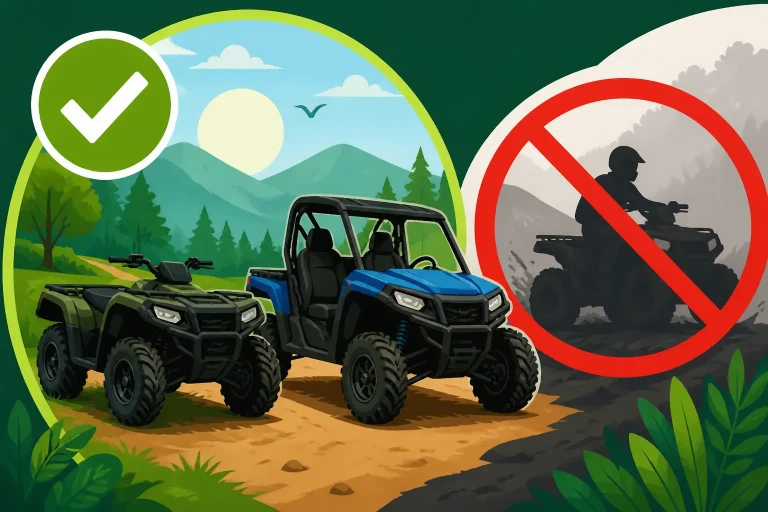
A National Forest OHV permit is an authorization for specified off-highway vehicle use on designated routes or areas. It is not a general permit to ride anywhere in a national forest, and it does not make roads open to ATVs or UTVs simply because they cross public land.
In Virginia, riders most often encounter the permit requirement when planning a trip to the Peters Mill Run and Taskers Gap OHV system in the George Washington National Forest. The permit and trail system are connected, but the permit should not be treated as a universal Virginia riding pass. It does not substitute for a permit at a private riding park or on another trail network.
Before you leave, match your plan to the specific rules for the place you intend to ride:
- Confirm the trail system is open to your kind of machine.
- Check whether your vehicle’s width, equipment or registration status affects access.
- Find out which permit option applies to the trip and how it must be carried or displayed.
- Check current closures, operating conditions and purchase instructions.
- Make sure the route you plan to ride is actually designated for OHV use.
The distinction matters because national forests contain a mix of roads, trails, closed routes and areas with restrictions. A forest boundary on a map does not mean every track inside it is open to motorized riding. Follow the current motor vehicle use map and local OHV guidance rather than relying on an old GPS track, a social-media post or a line that appears on a general mapping app.
For an overview of the Virginia system many visitors mean when they ask about forest riding, see Virginia’s 36-Mile Peters Mill Run and Taskers Gap System. Its trail segments have different characteristics and restrictions, so check the current information for the specific section you are considering.
A permit is not a road-use permission slip
A permit does not authorize riding on an ordinary public road, an undesignated forest road, private property or a route closed to your machine. It also does not replace a separate permission requirement on land outside the permitted riding area.
This is especially important when a trail or access road appears to connect with another route. A connector shown on a third-party map may be closed, limited to a different vehicle class or subject to a seasonal restriction. When the status is unclear, pause and check with the responsible Forest Service office before riding it.
Forest permits are separate from other Virginia riding permits
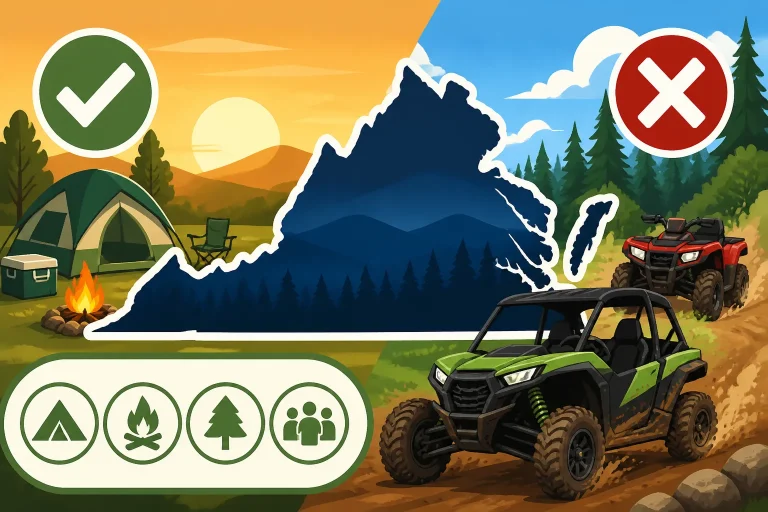
Virginia has multiple riding areas with their own systems. The National Forest permit is not interchangeable with a Spearhead permit, and neither one automatically covers a private park or a trail network in a neighboring state. If you plan to ride more than one destination on the same trip, check each place separately.
That distinction is useful when comparing a forest trip with a coalfield riding weekend. Virginia’s Annual Spearhead Trail Permit explains the separate permit system used on Spearhead trails, while Virginia Hatfield-McCoy Permits Are Separate is a reminder that crossing a state line does not make permits reciprocal.
| What you are checking | What the National Forest permit may address | What you still need to verify |
|---|---|---|
| Where you may ride | Designated OHV routes or areas covered by the permit | Whether your planned route is open to your vehicle |
| When you may ride | The permit’s stated validity period | Seasonal, weather-related or temporary closures |
| Who or what is covered | The machine or use described by the permit | Whether separate permits are needed for each vehicle |
| What equipment is required | Forest or trail-specific OHV rules | Required safety equipment, sound limits and vehicle restrictions |
| Where to buy | Authorized purchase options for the forest permit | Current sales locations, availability and purchase procedure |
| What the permit does not cover | It does not grant universal forest access | Private land, other trail systems or ordinary public roads |
Choose the right permit before you travel
National Forest OHV permit options can include a short-use permit and a longer-term permit. The right choice depends on how long you will ride, how often you expect to return and what the current permit instructions say about the covered machine or operator.
Do not base your decision only on the printed duration. Check the exact start date, end date and any limits on consecutive use. A permit described as covering several days may use calendar days rather than a rolling period of hours. If you arrive late in the day, that difference can affect how much riding time you get.
Permit charges and options can change, so confirm current details with the Forest Service before buying. The structure and practical differences are discussed in Virginia Forest Permit Cost, but treat any older price you see online as a reason to check the official current information, not as a guaranteed amount.
Estimate your actual riding days
Write down your travel and riding schedule before choosing. Include the arrival day if you expect to ride then, and count the day you plan to leave if you may ride before packing up. Then compare that schedule with the permit’s stated validity.
For example, a rider driving several hours to Virginia might arrive in the afternoon, ride the following day and head home after a morning loop. A permit option that sounds like it covers “three days” may not provide three full days on the trail if its dates are counted by calendar day. Read the terms rather than assuming the permit starts when you first turn the key.
If the trip is likely to stretch because of weather, a mechanical problem or an extra day off work, consider that when comparing options. Do not assume you can extend a permit later at the trailhead. Find out in advance whether an extension is possible and how it must be arranged.
Count machines, not just riders
A group may have several people but only one machine, or several machines with one person riding each. Permit instructions should tell you what the permit attaches to and whether it is issued for a vehicle, a rider or a period of use.
If the instructions are not clear, ask the permit office before you buy. Avoid relying on the idea that a single permit will cover every ATV or side-by-side in a convoy. Keep a copy of the permit details with the machine or person it applies to, following the current display and carry rules.
This check is also important when you switch vehicles during a trip, borrow a machine or tow someone else’s ATV to the trail. A permit tied to one vehicle may not automatically transfer to another. Confirm what to do before making the change.
Compare the permit cost with the rest of the trip
The permit is only one part of a forest riding budget. Consider fuel, trailering, food, lodging, protective gear and any maintenance needed before the trip. A day-use option may make sense for a short visit; a longer-term option may be more practical if you plan multiple trips within its validity period. The best choice is the one that matches your actual riding plans and the current permit terms.
Also budget time for buying the permit. A low-cost permit is not useful if the only sales option you planned on is closed or unavailable when you reach the trailhead. Virginia Forest Permit Purchase Options covers the kinds of places to investigate; confirm current sales arrangements directly before setting out.
Buy the permit before you reach the trailhead
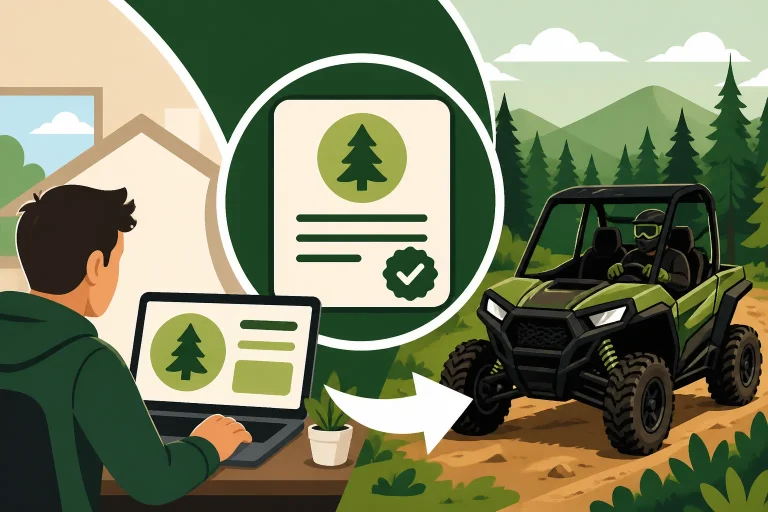
One of the most avoidable trip problems is arriving at a trailhead and discovering that there is no place there to buy the permit. Do not assume you can pay at a kiosk, ask another rider to share a pass or get an exception from a ranger.
Some forest riding areas may have limited or no on-site sales. Check the current instructions for the trail system and buy in advance when required. No Kiosk at the Trailhead: Buy the Permit First explains why this matters, especially for riders arriving after a long drive or outside normal office hours.
Check official purchase information
Use the current Forest Service information for the relevant forest or ranger district to confirm:
- Which permit types are currently offered.
- Where each type can be purchased.
- Whether a purchase can be completed online, in person or by mail.
- Whether the permit must be printed, carried digitally, attached to the machine or shown another way.
- Whether you need to allow processing or delivery time.
- What identification or vehicle details you may need to provide.
A purchase method that worked for another rider may have changed. A local store may have stopped selling permits, an office may have changed its hours, or a mail order may take longer than expected. Verify the details close to your trip rather than building a plan around a forum post from a previous season.
If you are considering a mail order, review Virginia Forest Permit Mail Orders and confirm the current form, payment method, mailing address and processing expectations with the responsible office. Do not wait until the day before departure to mail paperwork.
Save proof of purchase in more than one place
Once you have the permit, keep a usable copy with your trip materials. If it is issued digitally, save the message or file on your phone and keep an offline copy if the instructions allow it. Cell service can be unreliable in mountain terrain, so do not count on opening an email or logging into an account at the trailhead.
If the permit must be printed or displayed, follow the instructions exactly. A screenshot may be useful as a backup, but it may not replace a required printed or attached permit. Check what the ranger or permit terms actually require.
For a group, make sure every driver knows where the relevant permit information is. If one person handles all the paperwork, that person should share the permit details with the rest of the group before leaving home. A passenger who knows the purchase confirmation is in the lead vehicle is not much help if the group splits up.
Avoid unofficial shortcuts
Buying from an unauthorized seller, using another person’s permit or altering a document can create problems at a check. Use authorized channels and make sure the permit information is accurate. If you buy a permit for the wrong dates or machine, contact the issuing office for guidance rather than assuming you can correct it yourself.
Never treat a permit listing on a resale site as proof that the permit is valid or transferable. Permits may be tied to a specific use period, vehicle or purchaser. The safest course is to obtain the permit through the current official process and carry it as directed.
Confirm that your machine and rider meet the rules
A permit does not guarantee that every machine or rider is eligible for every trail. The vehicle must meet the applicable trail rules, and the rider must meet any age, license or supervision requirements that apply to that route.
Start with the current information for the exact system. Check the vehicle category, width limits, operator requirements, equipment rules and whether street registration is relevant. Do not infer that a rule for one side of a trail system applies to all routes.
Vehicle width and type matter
Trail width restrictions can make a route unsuitable for some side-by-sides even when the machine is otherwise legal for off-road use. Confirm the maximum width for each trail you plan to ride, including any connecting segment. Measure the machine as it will be ridden, taking into account tires or accessories that extend beyond the body.
Some systems have different rules for different sections. A route that accommodates a wider machine does not establish that every nearby trail does. For Taskers Gap, pay particular attention to the width restriction and verify the current limit before loading a full-size UTV. Do not rely on a sales brochure’s label or a friend’s estimate in place of the trail’s stated measurement.
For a two-wheel-drive or four-wheel-drive vehicle, also check whether the trail system permits that class of machine. Trail designations and local rules may distinguish between ATVs, motorcycles, side-by-sides and registered four-wheel-drive vehicles. If your machine is unusual, modified or homemade, ask the forest office whether it is allowed before you tow it there.
Check operator license requirements
Some forest routes have operator requirements that differ from what riders expect on private land. Confirm whether a valid driver’s license is required, whether age restrictions apply and whether a particular safety credential is accepted. A permit does not override those requirements.
If a young person will ride, check the rule for the specific trail and machine rather than relying only on a statewide age rule or the manufacturer’s age recommendation. A rider may meet one standard and still be barred from a particular route by a separate requirement.
The current information in Virginia Forest License Requirements is a useful starting point, but confirm the exact rule with the agency responsible for the trail before travelling. Keep any required identification with the rider, not just with the person who purchased the permit.
Verify equipment requirements for the forest
Equipment rules can apply even when your ATV is mechanically sound and legal on private property. Requirements may cover items such as brakes, lighting, a muffler, a spark arrester or other safety equipment. Sound limits and tire restrictions may also apply.
Use Virginia Forest Equipment Requirements as a checklist, then check the current official rules for details. Do not assume that a stock machine automatically complies: equipment may have been removed, damaged or modified since it left the factory.
A spark arrester, for example, is not something to check only when fire conditions are severe. If the trail rule requires one, it is part of the machine’s compliance. Likewise, a muffler that seems quiet to the rider may not pass a formal sound check. Review Virginia Forest Noise Limits for the relevant testing standard and verify the current limit and test procedure before arriving.
Keep modifications from creating a surprise
Aftermarket tires, exhausts, lift kits, bumpers, racks and other accessories can change a machine’s width or noise level. A modification intended for mud or rocky trails may make the machine too wide for a restricted route. A louder exhaust can cause a sound-compliance problem even if the machine runs well.
Before the trip, measure width and inspect the exhaust, brakes, lights and other required equipment. If you are unsure whether a modification meets a rule, ask the responsible office. It is far better to learn that a machine is not suitable while it is still parked at home than at the entrance after a long tow.
Plan around closures, trail conditions and access
A valid permit does not guarantee that a trail is open on the day you arrive. Seasonal closures, storm damage, maintenance, fire danger or other conditions can affect access. Check current status shortly before departure and again if weather changes during the trip.
Seasonal and temporary closures
Peters Mill Run and Taskers Gap have had seasonal operating restrictions. The exact closure dates and current status should be checked with the Forest Service; do not rely on a date copied from an old calendar. A winter closure can overlap with a holiday or a trip booked well in advance, and a temporary closure can occur outside the usual shutdown period.
Virginia Forest Season Closures explains the kinds of restrictions riders should plan for. In addition to scheduled closures, heavy rain or other damage may make a route unsafe or unavailable. If a route is closed, do not ride around a barrier or find an unmarked detour. A closure applies even if another rider says the trail is passable.
Check conditions close to the departure date
Mountain weather can change trail conditions quickly. Rain may create deep ruts, wash out a crossing or make a steep section difficult to descend. A dry forecast for your home area does not tell you what happened on the mountain overnight.
Use Virginia Trail Conditions Before You Haul to plan a final check before loading. Look for current trail notices and call the appropriate office if the information is unclear. If you are visiting from far away, have a backup plan that does not depend on riding a closed route.
The best time to check is not only before departure. Recheck if a storm moves through while you are travelling, and follow any signs or instructions posted at the site. A trail map may show where a route goes; it does not confirm that the route is open today.
Know where you can park and unload
Confirm that your vehicle and trailer fit the available parking area. A long trailer, a large group or a busy weekend can make a trailhead difficult to use. Avoid blocking gates, roadways or access needed by emergency and maintenance vehicles.
Do not assume that roadside parking is permitted because another trailer is already there. Follow posted directions and ask the responsible office if you cannot tell where parking is allowed. If your group is arriving in several trucks, choose a meeting location that will not clog the staging area.
If you plan to camp, verify whether camping is allowed at the chosen site, whether a reservation or separate fee applies and whether the area has potable water or other services. Primitive sites may have limited facilities. Bring what you need, pack out your rubbish and avoid leaving food or equipment unattended.
Carry a map that works offline
Cell coverage can disappear on mountain roads and trails. Download or print the official route map before leaving, and make sure each rider understands the intended route and where the group will meet if it gets separated.
A general-purpose phone map can be useful for navigation, but it should not be the authority on whether a route is open to OHVs. Use the current official map for route designations and restrictions. If you carry a paper copy, protect it from water and keep it accessible rather than buried at the bottom of a gear bag.
For simple gear, riders sometimes compare waterproof map sleeves, tire gauges or small tool kits on Amazon, but check dimensions and durability before relying on a purchase. Amazon listings can help you browse options; they do not replace an official forest map or tell you whether a route is open. If you shop on Amazon for a map case, make sure it is large enough for the map you actually plan to carry.
Prepare the machine and group for a forest ride
A permit gets you past one administrative hurdle. A pre-ride inspection and a realistic group plan help prevent the more common problems: a breakdown, a rider getting separated or a machine arriving with a preventable equipment issue.
Do a basic inspection before loading
Check the machine while it is still at home, where you have tools and time to fix problems. Inspect tires, wheels, brakes, throttle, controls, lights, steering and suspension. Look for loose fasteners, cracked parts, oil or coolant leaks and signs of damage from the last ride.
Bring tools that match your machine, along with the parts and supplies most likely to solve a small trail-side problem. A tire repair kit, pump, basic hand tools, tow strap and first-aid kit are common starting points. Carry more only if you know how to use it and can secure it safely.
Do not load fuel in an unsafe container or leave loose equipment where it can shift. Secure tools and cargo so they cannot fall onto the trail or interfere with a rider. If you use a winch, confirm that it works and that the cable or synthetic line is in good condition.
Amazon may be one place to compare compact tool rolls or tire-repair supplies, but do not judge gear only by the product photo. Check whether a tool fits your machine and whether the repair kit includes the parts you need. A kit that arrives in the mail is not useful if you have never opened it or do not know how to use it.
Agree on a group plan
Before the first mile, decide who leads, who rides last and where the group will stop. Keep a pace that lets the slowest rider stay with the group. At intersections, wait until everyone has made the turn rather than assuming the person behind saw the route.
Set a simple rule for a breakdown or separation. For example, riders can agree to stop at the next safe pull-off, avoid sending one person back alone and use a designated meeting point if the group becomes split. Share the planned route with someone who is not riding, especially if you expect to be out for much of the day.
A large group should consider splitting into smaller riding groups if the trail or staging area is busy. That makes it easier to keep track of people, reduce dust and give other trail users room. Respect posted speed limits and trail etiquette, and slow down where visibility is restricted.
Ride within the route and your ability
A route that looks manageable on a screen can feel very different on a steep, rocky or wet section. Choose trails appropriate for the least experienced rider and the least capable machine in the group. If a section looks unsafe, stop and assess it rather than following another vehicle blindly.
Do not widen the trail by going around mud, obstacles or standing water. Repeated detours can damage vegetation and create a second route that was never designated for riding. If you cannot safely pass, turn around when it is safe to do so.
Make room for other users and follow any right-of-way instructions posted for the route. Keep noise down, avoid unnecessary high revving and leave gates as you find them. The forest is a shared public resource, and considerate riding helps preserve access.
Common permit mistakes and a final checklist
Most permit problems are not complicated. They happen because a rider assumes the permit covers more than it does, waits until arrival to buy it, overlooks a closure or brings a machine that does not meet a route restriction.
Avoid these assumptions:
- “The trail is in a national forest, so I can ride it.” Only designated routes open to your vehicle are appropriate.
- “One permit covers the whole group.” Confirm whether permits are vehicle-specific or otherwise limited.
- “I can buy it at the trailhead.” Check purchase locations and instructions before travelling.
- “A digital receipt is always enough.” Follow the permit’s rules for carrying or displaying it.
- “A UTV that fits on one trail fits on all nearby trails.” Check width limits for every section.
- “The trail was open last weekend.” Check current closures and conditions.
- “A permit in Virginia works in West Virginia or at a private park.” Separate areas use separate access rules.
Use this pre-trip checklist
Before you load the machine, confirm each item:
- You have identified the exact trail system and the routes you plan to ride.
- The current official map shows those routes as open to your machine.
- You have checked seasonal, weather-related and temporary closures.
- You have confirmed the current permit type, validity period and purchase instructions.
- You know whether the permit applies to a vehicle, rider or specified use.
- You have saved or printed proof of purchase as required.
- Each rider meets applicable age, operator-license and supervision rules.
- The machine meets width, equipment, sound and other trail requirements.
- Your trailer and parking plan suit the trailhead.
- The group has an offline map, a communication plan and basic repair supplies.
For a fuller list of the documents and machine information riders may need, see Virginia Forest Permit Purchase Options and Virginia Forest Equipment Requirements. If you have an unusual machine or a question that cannot be answered from the current public guidance, contact the responsible Forest Service office before travelling. A quick clarification at home is easier than sorting out an eligibility question at the gate.
A little preparation makes the permit process straightforward. Confirm the scope of the permit, buy it through an authorized channel, carry it as instructed and check the route’s current status. Then focus on riding the designated trail safely and leaving the forest in good condition for the next group.
Disclaimer
This article is for general informational purposes only and does not constitute professional advice. Laws, prices and regulations vary by location and change over time. Consult a qualified professional for guidance on your specific situation.